Bible and Cover: Choosing the Right Bible Cover for Any Style
Bible and Cover: Choosing the Right Bible Cover for Any Style
Choosing the right bible cover or Scripture case is more than a matter of aesthetics. A well-made protector not only guards pages from wear, spills, and dirt, but also supports daily reading habits, institutional traditions, and personal expression. Whether you carry a compact Bible on your commute, a study edition for sermon prep, or a family heirloom in a cherished sleeve, the right cover can extend the life of the sacred text and make its presence feel deliberate and special. This guide, Bible cover in hand, explores how to select the best wrap for any style, need, and setting. We’ll cover materials, sizes, features, and care, with practical tips to help you find a protector that suits your routine and resonates with your taste.
Many readers underestimate how a bible cover influences everyday use. A thoughtful pouch or sleeve provides several tangible benefits:
Protection against dust, humidity, and accidental spills that life on the go can invite.
Durability through padding and sturdy seams that reduce wear on spine and pages during travel.
Organization with pockets for bookmarks, notes, and writing instruments, turning a Bible into a portable study kit.
Personal expression through color, texture, and design that reflect your spiritual journey, church tradition, or personal style.
Resale and gifting value when a cover is built to last and can be passed down to future generations or given as a meaningful present.
In short, a Bible cover is not a mere accessory but a protective tool that harmonizes function with form. The right cover will complement your Bible reading routine, help you stay organized, and encourage regular, hands-on engagement with sacred text.
Knowing Your Style and Purpose
Before you search, define how you’ll use the wrap. Your intended setting—home, church, classroom, outdoors, or travel—will guide material, color, and configuration. Here are several common scenarios and the kinds of features that tend to suit them best.
Traditional and Formal Settings
For folks who attend formal services, study sessions, or family pews, a classic look paired with understated durability often works best. Consider:
Materials: Leather or high-quality faux leather with a subtle grain offers timeless elegance and resilience.
Color: Deep browns, black, or burgundy convey a dignified, church-appropriate aesthetic.
Protection: A padded cover with a secure closure (zip or snap) helps protect delicate editions like leather-bound Bibles.
Practical details: A slim carry handle and a small interior pocket for a prayer list or business card.
Everyday Carry and Travel
For daily use, a cover that blends durability with portability is ideal. You’ll want something that can endure a commute, a few kids’ notes, or a weekend trip without losing its shape.
Materials: Canvas, nylon, or a rugged Cordura fabric for weather resistance and easy cleaning.
Closure: A sturdy zipper or a magnetic/elastic closure for quick, reliable access.
Organization: Internal pockets for a notebook, highlighter, and pen loop; exterior pocket for quick access to a bookmark.
Youth and Modern Aesthetics
Younger readers or those who prefer contemporary design may enjoy bold colors, patterns, or minimalist silhouettes that still protect the text.
Materials: Faux leather with vibrant color options, durable polyester blends, or playful cloth prints.
Design: Bold color blocking, geometric patterns, or language-friendly motifs that feel fresh without compromising durability.
Features: Lightweight construction, reinforced corners, and a backpack strap for hands-free carrying.
Material Choices: Leather, Fabric, and Beyond
Material selection drives durability, feel, care, and price. Here is a practical overview of common options, along with their trade-offs.
Leather and Faux Leather
Real leather: Classic, long-lasting, and develops a unique patina over time. It resists wear well when conditioned but can be sensitive to water if not treated.
Faux leather (PU or PVC): A humane, budget-friendly alternative that mimics the look and texture of real leather. It’s easier to clean and often more resistant to moisture, though it may not age as gracefully.
Care tips: Use a leather conditioner on real leather every 6–12 months; wipe faux leather with a damp cloth and mild soap if needed. Keep away from direct heat and sunlight to preserve color and texture.
Canvas, Cloth, and Fabric
Canvas and durable fabrics offer rugged protection and a casual vibe. They’re easy to clean and often feature additional pockets or straps.
Care tips: Quick spot cleaning with mild soap works well. Some fabrics may be machine washable—check care labels.
Best for: Outdoor readers, students, or anyone who appreciates a laid-back, practical aesthetic.
Vinyl, Nylon, and Synthetic Materials
Materials like nylon, Cordura, and vinyl provide water resistance and lightweight durability. They’re excellent for travel and rainy climates.
Care tips: Wipe clean; many synthetic covers resist stains and odors more effectively than natural materials.
Inner Linings and Padding
Beyond the exterior, consider what the inside offers. A soft, non-abrasive lining protects pages from scratches, while padding protects against impact.
Padding: 3–5 mm is common for everyday protection; thicker padding for rough travel or expensive editions.
Linings: Felt, microfiber, or velvet-like linings prevent scuffing on page edges and improve overall feel.
Size, Fit, and How to Measure Your Bible
An ill-fitting cover can be more frustrating than stylish. Measure carefully and compare to the cover’s interior dimensions, not just the exterior image. Here are practical steps to get a precise fit.
Measure the height of the Bible from top to bottom, not including any cover flaps.
Measure the width across the widest point (usually page block width plus margins).
Note the thickness of the spine or overall girth; some covers are designed with flexible or adjustable interiors to accommodate thicker editions.
Consider the opening style: zipper covers enclose the whole book, while open-top sleeves allow quick access while still providing protection.
Common Bible sizes to consider when shopping:
Compact or travel Bibles: Smallest size, easy to slip into a bag; look for slim, flexible covers.
Standard study Bibles: Larger, with notes and thicker pages; require a roomy interior and often a pocket for keepsakes.
Large print Bibles: Heftier editions; a cover with generous interior padding and a slightly larger opening helps with ease of use.
Gift or heirloom editions: Often leather-bound or cloth-bound with presentation inserts; ensure protection without compromising the binding.
Key Features That Make a Cover Useful
While aesthetics matter, functional features define the daily value of a Bible cover. Here are features to prioritize depending on your lifestyle.
Closures: Zippers provide full enclosure; magnets offer quick access; snaps are secure and easy to use.
Handles and straps: A carrying handle or an adjustable shoulder strap improves portability, especially for travel or Sundays away from home.
Exterior pockets: A slim pocket for a prayer list, business card, or small note can be handy during study sessions or church meals.
Pen loop and bookmarks: A built-in pen loop and page-marker ribbons help you annotate and reference passages on the go.
Interior organization: Additional slots for flashcards, sermon notes, or a card with contact information can be very practical in a church setting.
Water resistance: A cover with water-resistant exterior protects the sacred text in rain or accidental spills during travel.
Durability details: Reinforced corners, double stitching, and strong zippers extend life in daily use.
Design Trends and Color Palettes
Your Bible cover can be an extension of personal style or a statement that aligns with church or community identity. Here are some popular design directions and how they pair with different types of Bibles.
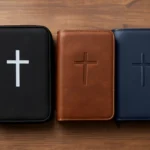
Timeless neutrals: Black, tan, navy, and charcoal dress up well in formal or office environments and age gracefully with use.
Earth tones: Browns, olive greens, and muted blues embody a rustic or outdoorsy vibe, ideal for camping trips or nature-focused retreats.
Bold colors: Deep reds, royal blues, and emeralds can brighten your study routine and bring a sense of energy to early-morning devotionals.
Patterns: Subtle embossing, simple geometric patterns, or texture-rich cloths offer personality without overwhelming the Bible’s design.
When matching a cover to a particular edition, ensure the style complements rather than overshadows the Scripture itself. A well-chosen cover supports a respectful, focused reading environment.
Protecting your bible cover and its contents requires a simple, regular care routine. The goal is to preserve both the exterior and the book it houses.
Cleaning exterior: Wipe leather with a damp cloth and apply a leather conditioner periodically. For fabric covers, spot-clean with mild soap or a gentle fabric cleaner; check washing instructions for machine washing.
Interior care: Keep the interior lining clean and free of dust. Avoid placing sticky notes directly on delicate pages; use a protective sleeve or bookmark.
Moisture control: Store in a cool, dry place. If a cover gets damp, dry it thoroughly away from direct heat to prevent warping or mildew.
Sunlight exposure: Prolonged sun exposure can fade colors and dry leather; rotate placement and store when not in use.
Storage with other items: Keep away from sharp objects or heavy items that could crease or puncture the cover or the Bible’s pages.
With thoughtful care, a high-quality Scripture cover can remain in good shape for many years, preserving the condition of the sacred text and the cover’s appearance alike.
Budgeting and Value: What to Expect
Prices for Bible covers vary widely based on material, size, and construction quality. A practical budgeting approach helps you balance immediate cost with long-term value.
Entry-level (approximate): Fabric or vinyl covers with basic features may range from modest dollars up to around $15–$40. These are suitable for light daily use or as a starter option.
Mid-range (approximate): Faux leather or genuine leather with structured padding, multiple pockets, and reinforced corners often fall in the $40–$100 range. These covers offer greater durability and a more refined feel.
Premium (approximate): Leather-bound options, handcrafted stitching, high-end textiles, and custom monogramming can exceed $100, with some luxury lines reaching several hundred dollars.
When assessing value, consider:
The expected lifespan of the cover and its ability to protect a valuable Bible edition.
Whether it includes practical features you’ll use daily (pen loops, extra pockets, adjustable straps).
Whether the style fits your lifestyle long-term, reducing the need for frequent replacements.
Personalization and Gifting Ideas
A personalized bible sleeve or Scripture carrier makes a thoughtful gift for graduations, confirmations, anniversaries, or new chapters in faith. Personalization can be subtle or bold, depending on taste and budget.
Monogramming: Initials or name in a discreet corner or along the spine.
Embroidery: A phrase, verse reference, or decorative motif stitched into the cover for a tactile, meaningful touch.
Custom color: Choose colors that hold personal significance or match a church’s color scheme.
Special edition pairing: Pair a cover with a matching bookmark, study notebook, or a set of decorative pins that align with a church or faith community.
When gifting, consider the recipient’s style and the type of Bible they use. A cover that aligns with their daily routine—whether it’s a study Bible, an illustrated Bible for youth, or a compact pocket edition—will be more valued and used over time.
Shopping Tips: Where to Buy and What to Look For
Choosing a retailer and a brand is as important as selecting a style. Look for products made with attention to detail and reliable materials, and consider practical factors such as return policies and warranty.
Brand reputation: Look for brands with clear product descriptions, customer reviews, and transparent care instructions.
Materials and stitching: Inspect stitching quality, padding density, and hardware durability (zippers, buckles, clasps).
Returns and warranties: A good return policy and warranty reflect confidence in the product’s durability.
Size accuracy: Confirm interior dimensions and ensure there is a return option if the fit isn’t perfect.
Ethical considerations: If animal welfare or sustainability matters to you, look for brands offering leather alternatives or recycled materials.
Where to shop includes specialty religious stores, church supply shops, and reputable online retailers. Reading user reviews can provide practical insights into how a cover wears after months of use, which is often more telling than product photography alone.
Complementing Your Bible and Its Edition
Not all covers fit all Bibles. Compatibility is about more than size; it’s also about the edition’s binding and the way pages angle when opened. A few tips to ensure a harmonious match:
Leather-bound editions often suit more formal, traditional covers that enhance their craftsmanship.
Study Bibles with thicker spines may require more interior padding or a flexible interior that accommodates bulky margins.
Illustrated orecumenical editions may benefit from protective fabrics that guard against ink transfer or color transfer from artwork.
For very thin, pocket-sized editions, a slim sleeve with minimal padding preserves portability while offering modest protection.
In practice, many readers choose a versatile cover in a medium weight material and neutral color that can be paired with multiple Bible editions over time.
Careful Customization for Longevity
If you decide to customize, keep in mind that personalized features can sometimes limit resale value or affect warranty terms. That said, thoughtful customizations can enhance daily use and personal significance without compromising durability:
Choose weather-resistant materials for covers you’ll take outdoors or on travel.
Prefer reinforced stitching and high-quality hardware when adding any extras like extra pockets or d-rings.
A monogram in a subtle color or tone-on-tone embroidery tends to age more gracefully than high-contrast text.
Conclusion: Making a Choice That Reflects Your Faith and Your Routine
In the journey of faith, the tools we carry can help us stay connected to Scripture, plan for growth, and share the richness of our beliefs with others. The right bible cover—whether a traditional leather case or a rugged canvas sleeve—does more than protect a sacred text. It supports a daily rhythm of reading, study, and reflection. It signals to the world your intention to treat the holy book with care and respect, while also accommodating the practical realities of your life, whether that life is spent at a desk, in the church pew, or on a camping trip.
As you evaluate options, keep in mind the key questions that will guide your decision:
What edition size do I own or expect to carry most often?
What environment will it experience—office, car, outdoors, or quiet at home?
Which features will genuinely improve my study and reading routine?
What budget aligns with the value I place on durability and style?
With these considerations, you can choose a cover that harmonizes with your style while preserving the integrity of the sacred text. Whether you favor a restrained, professional look or a vibrant, expressive design, a well-suited protector will become a trusted companion in your ongoing journey with the Bible, the Scriptures, and the holy book you cherish.









Leave a Reply