Who Was the First Apostle of Jesus? Origins, Scripture & History
The question of who was the first apostle of Jesus touches on a mix of biblical narratives, historical memory, and theological interpretation. The phrase itself can be read in several ways: it might refer to the earliest follower to encounter Jesus in a narrative, the first named or called among the Twelve, or the earliest leader and missionary among the apostolic witnesses who carried Jesus’ message after his death and resurrection. Because the four canonical Gospels do not present a single, simple answer, it is useful to examine the sources, the order of calling, and the broader traditions that grew up around these early followers. The result is a nuanced picture in which different strands point to different figures as “first,” depending on the criterion chosen. This article surveys the origins, the scriptural accounts, and the historical interpretations that contribute to the ongoing discussion about who earned the designation of being the first apostle of Jesus.
Origins of the question: different paths to the title “first apostle”
To understand who might be described as the first apostle, it helps to distinguish between several overlapping ideas:
The earliest disciple or follower who meets Jesus and begins to walk with him. In some accounts, this is identified with the person who first responds to Jesus’ call and becomes a disciple before the others.
The first named member among the Twelve in the Gospel narratives. The Twelve are the core group commissioned to preach, heal, and witness to Jesus’ life, death, and resurrection. In the synoptic Gospels (Matthew, Mark, Luke), certain names are repeatedly presented at the forefront, which has led to the sense that one or another was “first” in terms of order or prominence.
The primacy of leadership within the early church. After the Resurrection, the apostolic leadership is exercised by several figures, with Peter often highlighted as the principal leader in Jerusalem and in the early mission to Jews and Gentiles. This has informed the idea of a “first among equals” rather than a simple chronology.
The varied traditions about who first confessed Jesus or who first proclaimed him as Messiah, which sometimes shifts attention toward individuals who uniquely recognized Jesus in a particular moment or who spoke with distinctive authority.
In short, the question hinges on what exactly one means by the first. The biblical text does not supply a single, definitive label. Instead, it presents a constellation of moments and roles that have been interpreted in diverse ways by scholars, church traditions, and devotional readers over two millennia.
Scriptural foundations: what the Gospels and Acts say about the first to follow Jesus
Two primary streams of material illuminate the question: the synoptic narratives (Matthew, Mark, Luke) and the Johannine account (the Gospel of John), followed by the portrayal of apostolic leadership in Acts of the Apostles. Each stream offers a different lens on who might be considered first and why.
The calling of the first disciples in the Synoptic Gospels
In the Synoptic Gospels, Jesus begins calling some of his earliest followers as he travels along the Sea of Galilee. The pattern is similar across these accounts, though the emphasis shifts slightly from one gospel to another:
Peter and Andrew are introduced as brothers who are fishermen by trade. In Mark 1:16-18, Jesus calls Simon (Peter) and his brother Andrew with the invitation, “Come, follow me, and I will make you fishers of men.” They immediately leave their nets and follow him. In Matthew 4:18-22, the same two brothers are called in a parallel moment, and the text emphasizes that they “left their boats” to follow Jesus. This duo therefore appears at the outset as the first pair named in the living chain of followers who become apostles.
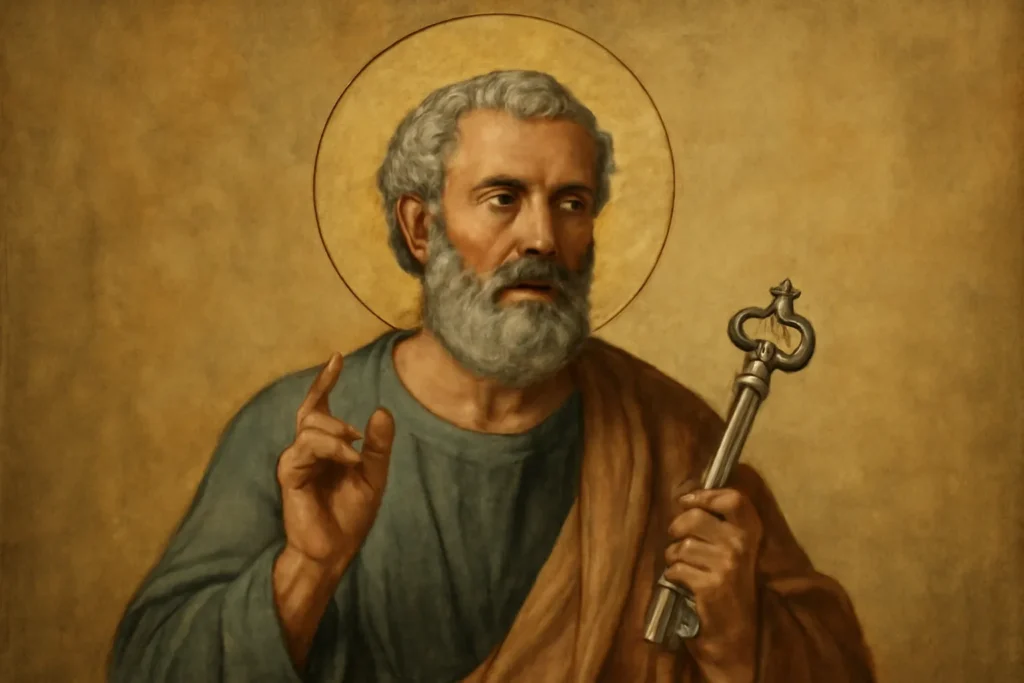
Peter as the first listed disciple in some lists. In Mark 3:16-19 and parallel passages, Peter is named first among the group of the Twelve, a placement that has echoed in later tradition as indicating a kind of primacy within the circle. The name order in Jewish and Greco-Roman lists often reflected status or role, and the early church would come to read such placement as signaling leadership, even if not strictly chronological in the moment of calling.
James and John soon appear as partners in the early circle, often in tandem with Peter. In Luke 5:1-11, after a miraculous catch of fish, Jesus calls Peter, James, and John, and they leave everything to become fishers of men. This moment is significant because it shows the expansion from a pair to a larger core group who will take on leadership responsibilities as the narrative progresses.
In the Synoptics, the emergence of the first disciples is tightly connected to the act of following Jesus and leaving behind previous livelihoods. That act is foundational for the identity of the apostles, but the texts differ on which single person should be called the “first.” The emphasis on Peter’s leadership in many of these passages—his prominent role in the calling sequences and in the early ministry—set the stage for later theological conclusions about primacy within the apostolic community.
The Gospel of John and the earliest follower
The Gospel of John presents a slightly different angle on the question of who comes first. In John 1, we encounter the disciples who were initially followers of John the Baptist before meeting Jesus directly. In this account, a disciple (often identified with Andrew) tells his brother Simon Peter that they have found the Messiah. The narrative describes Andrew as the first to encounter Jesus in this sequence and then to bring Peter to him. The text says, in effect, that Peter becomes a leading figure as a result of this early personal encounter, with Jesus giving him the name Cephas (Peter). This makes John’s Gospel compelling for readers who consider Andrew to be the earliest follower to be attracted to Jesus, and for those who view Peter as the first to receive a distinctive role through Jesus’ commissioning and renaming he would later be associated with.
John’s gospel thus fuels a sense in which the earliest follower of Jesus was a specific individual (in the Johannine account, the unnamed disciple who then brings Andrew to Jesus), while also highlighting the central place of Peter in the developing apostolic witness. The Johannine emphasis on personal recognition of Jesus, and on the intimate exchange with Peter when asked who Jesus is (as seen in the confession moments in John 6 and John 13–18), contributes to a nuanced portrait of who might be thought of as “first” in a particular ecclesial and doctrinal sense.
Terms, titles, and the meaning of “apostle”
Beyond the question of who is first, the term apostle carries essential theological weight. The word comes from the Greek apostolos, meaning “one who is sent” or “a messenger.” In the New Testament, the term refers most directly to the Twelve who were chosen by Jesus to accompany him, witness his ministry, and be sent to proclaim the good news after his Resurrection. However, the word is also used in a broader sense to describe other early Christian messengers or leaders who claim an apostolic mission, including the apostle Paul, who identifies himself as an apostle though he did not meet Jesus during Jesus’ earthly ministry in the way the Twelve did (Paul’s call on the road to Damascus is recorded in Acts 9 and elsewhere).
Some key distinctions to keep in mind include:
The Twelve as a defined group chosen by Jesus with a shared authority and mission.
Apostle as a role and title denoting someone sent with authority to preach and to establish communities.
Primacy in leadership: within the early church, Peter is often described as having a leading or “first among equals” role, even though the Twelve function collectively in mission and decision-making.
Paul as an apostle who joined the apostolic circle after the Resurrection and played a pivotal role in Gentile mission and theological development.
Thus the question of who is the “first apostle” is not simply a matter of chronology but of how the church has understood authority, leadership, and the transmission of the apostolic witness across generations.
Historical perspective: early tradition and theological interpretation
From the earliest centuries of Christian memory, different strands of tradition highlighted different figures as embodying a primacy among the apostles. These traditions have shaped, and continue to shape, how Christians think about leadership in the church and the transmission of apostolic authority.
Peter as primus inter pares (first among equals)
Within both Scripture and later church history, Peter often emerges as the principal figure among the apostles. The New Testament presents him as a central organizer in the early Christian community in Jerusalem, a focal point of preaching at Pentecost (Acts 2), and a leading figure in the conversion of the Gentiles (as described in Acts 10–11). The designation of Peter as the “rock” on which the church is built in Matthew 16:18—where Jesus tells him, “You are Peter, and on this rock I will build my church”—became a foundational text for the later understanding of Petrine primacy in many Christian traditions. The idea of primacy of Peter did not necessarily mean solo leadership, but it did establish a formal basis for a role of leadership that continued in succession and general ecclesial order.
Andrew as the first disciple
In contrast, some readers and traditions have emphasized Andrew as the first disciple to encounter Jesus, particularly from the Johannine narrative where Andrew brings Peter to Jesus and the two are set on the path of following him. The claim that Andrew is the earliest follower can be read as pointing to a pre-Peter contact with Jesus, suggesting that the chain of discipleship began with Andrew’s response. This line of interpretation has a place in patristic and post-biblical traditions that value the role of the “first called” and the way early witnesses invited others into the faith. In any discussion of “the first apostle,” Andrew’s status as the initial disciple remains a meaningful component of the broader conversation about who set the apostolic process in motion.
Paul and the wider apostolic circle
Beyond the Twelve, the New Testament also presents Paul the Apostle as a pivotal figure whose missionary activity and theological writings became foundational for Christian identity. Although Paul did not meet Jesus in life during Jesus’ earthly ministry, his own conversion and subsequent mission earned him a recognized apostolic commission in the church. The letters of Paul describe him as an apostle and a central teacher who helped articulate the church’s understanding of Jesus’ death and resurrection for Gentiles. In discussions of the first apostle, Paul’s status complicates a strictly chronological reading but enriches the idea that apostolic witness includes multiple figures who were endowed with authority to teach, heal, and establish communities.
The Twelve and the early church: role, function, and leadership
The apostles in the New Testament function as a foundational cohort for the early church. Their role included:
The proclamation of the gospel to both Jews and Gentiles;
The administration of liturgical life and the sacraments or observances as they were formed (e.g., baptism, the sharing of meals);
The leadership of the early Christian communities in Jerusalem and beyond;
The appointment of successors and the steering of doctrinal and ethical questions as the church faced new challenges in a diverse Mediterranean world.
The Acts of the Apostles is especially valuable for seeing how Peter emerges as a leader in the earliest church. He preaches at Pentecost, heals in Jesus’ name, faces opposition, and guides decisions about how to respond to Gentile inclusion. The narrative underscores that while the Twelve share a common mission, Peter’s leadership role becomes prominent in the formative years of the church. This has contributed to the sense in many Christian traditions that the first apostle is also the principal founder of the church’s mission in its earliest period.
Traditions across Christian denominations: perspectives on primacy and leadership
Throughout Christian history, different traditions have interpreted the idea of the “first apostle” in ways that reflect their own ecclesial structures and theological emphases. Here are some broad outlines, without trying to reduce a complex history to a single view:
Roman Catholic, Eastern Orthodox, and some Anglican and historic churches emphasize the importance of Peter’s successor role and the apostolic succession that connects the first century apostles to bishops who serve as the church’s leaders. The papacy and the episcopal structure in these traditions are often traced back to Peter’s leadership and mission.
Protestant traditions frequently stress the central authority of Christ rather than the primacy of a single earthly leader. The idea of primacy among the apostles is sometimes read as the Twelve together bearing witness, with emphasis on Peter’s confession (as in Matthew 16:16) or on a shared apostolic commission rather than a singular, ongoing leadership office.
Orthodox perspectives honor Peter’s important role while highlighting the cooperative leadership of the apostles in the early church and the continuous, conciliar sense of authority among bishops and church communities.
In all of these contexts, the question of who was the “first apostle” remains a productive entry point for discussions about how early Christians understood authority, mission, and the transmission of apostolic witness through the generations.
Common questions and clarifications about the first apostle
To help readers navigate the debate, here are clarified answers to several frequently asked questions. The aim is to highlight both the biblical narrative and the interpretive traditions that have grown up around it.
Was Andrew the first to follow Jesus? In the Gospel of John, Andrew is described as an early follower who brings Peter to Jesus. Some readers take this as evidence that Andrew was the first to recognize Jesus, making him the earliest follower. In the Synoptic Gospels, however, Peter and Andrew are among the first disciples called by Jesus, with Peter often appearing first in the lists.
Was Peter the first apostle? In many passages of Mark and Matthew, Peter is presented as a leading disciple and is the first named in the list of the Twelve. The tradition of primacy linked to Peter became central in later church history, especially in Catholic and Orthodox circles, but the Gospels also show that Peter’s leadership grew within a shared apostolic mission rather than in isolation.
Did Paul count as the first apostle? Paul is universally recognized as an apostle in the sense of his mission and missionary work, but he was not one of the original Twelve who accompanied Jesus during his ministry in Galilee. The New Testament treats Paul as an “apostle” in a broad sense, highlighting the diversity of apostolic witness in the early church.
Why does the question matter for Christians today? The inquiry about the first apostle touches on how communities understand apostolic authority, church leadership, and the continuity of witness from the first followers of Jesus to the present. It also invites readers to reflect on how different Gospel writers frame authority, confession of Jesus, and the spread of the gospel across cultures.
The early calling: Jesus calls Simon Peter and his brother Andrew in the Synoptic Gospels, inviting them to follow and promising a new vocation as “fishers of men.”
The expansion: Jesus calls James and John and the circle of the Twelve grows as they leave behind their livelihoods to accompany him.
The Johannine motif: in John’s account, Andrew appears as the first disciple to meet Jesus, who then introduces Peter, and the dynamic of “first disciple” is anchored to the narrative of encounter and confession.
The apostolic commission: after the Resurrection, the apostles are commissioned and empowered to witness, with Peter often featured as a central spokesperson in Acts.
Paul’s call and mission: Paul is identified as an apostle, though not part of the original Twelve, demonstrating that the apostolic witness expands beyond the original circle.
The debate about who was the first apostle has practical and theological implications. It helps readers understand:
How the early church read the foundational witnesses to Jesus’ life and ministry.
How periods of leadership and authority formed in the wake of Jesus’ death and resurrection, and how those leadership structures shaped doctrinal decisions and missionary activity.
How different Gospel writers present identity, confession, and mission, and how those presentations influence later Christian theology and practice.
Ultimately, the question invites a broader reflection on what it means to witness to Jesus in a way that is faithful to the early Christian experience. Whether one emphasizes the first moment of following (as in the earliest call), the first named leader among the Twelve (as in the Synoptic lists), or the consolidated leadership that emerges in the apostolic age (as in Acts), each strand contributes to a richer understanding of how early Christians preserved, handed on, and interpreted the message of Jesus.
Readers who want to explore the question further can use several scholarly and devotional approaches to deepen their understanding:
Compare the calling narratives across the Synoptic Gospels and John to identify how each author presents the first encounters with Jesus and the implications for leadership within the Twelve.
Examine the Acts of the Apostles to see how early Christian communities framed apostolic leadership and the spread of the gospel beyond Jerusalem.
Explore secondary literature on apostolic succession and the debates about primacy in early Christianity, noting how different denominations interpret these ideas in light of biblical and historical evidence.
Consider the role of Paul in shaping the broader concept of apostleship and how his writings complement or challenge the picture provided by the Twelve.
For readers who value a devotional angle, meditating on the figures discussed here—Peter, Andrew, and John—can illuminate how early followers encountered a transformative presence, how they responded, and how their witness continued to shape communities after Jesus’ resurrection.
In the end, the best way to approach the question is to recognize the value of all the perspectives: the Johannine emphasis on personal encounter, the Synoptic focus on call and response, and the apostolic witness that culminates in the Acts of the Apostles. Each strand adds depth to the simple, enduring question: who was the first apostle of Jesus? The answer invites us into a richer understanding of the beginnings of Christian witness and the continuing task of bearing witness to Jesus in our own time.
As a final reflection, consider how the notion of “first” functions in a living faith community. Is it about chronology, about leadership, or about the first confession of faith that sets the direction of a community? The New Testament’s varied portrayals invite readers to hold together multiple facets of the question, allowing a fuller picture of the apostolic witness to emerge across generations and traditions.










Leave a Reply