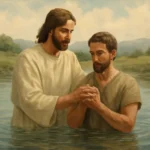
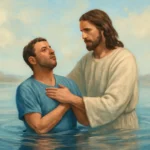
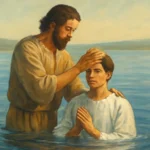
Where did baptism come from? This question invites a long historical and theological exploration. The practice of washing with water for ritual or symbolic purposes appears in many cultures and religious streams, but in Christianity it becomes the central rite of initiation, signifying cleansing, rebirth, and entry into a distinct community. To understand its origin, we must track its roots in the Judian world, examine the life and message of John the Baptist, survey the New Testament writings, and follow the development of the rite through the early church and into the diverse traditions that endure today. The journey through these layers helps us see not only where baptism originated but also what it has meant across different eras and communities.
Origins: From Jewish Ritual Washing to Early Christian Baptism
The earliest antecedents of baptism lie in ritual washings and purification practices in the Second Temple Jewish world. The concept of cleansing through water was deeply embedded in Jewish law and daily life, and it took on new meaning when applied to spiritual preparation and commitment. The most important parallel for Christian baptism is the mikveh, a ritual bath used for purification that could be required for various religious reasons, including entry into certain religious spaces, purification after contact with the dead, or before certain sacred occasions. The mikveh model demonstrates a cultural imagination in which water serves as a tangible boundary between the ordinary and the sacred, the impure and the holy, the old life and a renewed life.
From this matrix of Jewish impurity laws and purification practices, early Christians began to speak of a baptism of repentance that was closely tied to the message of John the Baptist. The gospel narratives present John as a forerunner who calls people to repentance and to prepare themselves for the coming kingdom. His baptism, however, is distinct in its emphasis on turning away from sin and turning toward God in expectation of a future spiritual renewal. In this sense, the Jewish ritual habit of immersion becomes a framework for a new kind of rite—one that signals allegiance to God and a turning to the messianic era.
Two key distinctions matter for understanding what the earliest followers of Jesus began to practice: first, the focus on confession and repentance as a precondition for baptism; second, the belief that baptism was connected to the arrival or presence of God’s Spirit in a new way. The language of forgiveness and rebirth emerges in early Christian preaching and becomes central to the symbol set of baptism. In this sense, the question “where did baptism originate” is answered not only by tracing the ritual form but by tracing the theological meaning attached to the act: cleansing as forgiveness, new birth, and incorporation into a new community under the reign of God.
Baptismal immersion as a sign of washing away sin and beginning anew.
The anticipatory dimension tied to Jesus’ own call and to the expectation of the Spirit’s arrival.
A shift from a purely purificatory ritual to a life-transformation rite within a faith community.
As the gospel narratives and the Apostolic writings circulated, the practice adopted a more explicit Christian identity, distinct from other forms of water rites. The question of the origin thus can be framed as: baptism originated in a Jewish purification tradition and was reinterpreted in light of Jesus’ life, death, and believed resurrection, so that it became a doorway into the life of the community that God was gathering through the Spirit.
The Figure of John the Baptist and the Baptism of Repentance
John the Baptist stands at the hinge of origin stories for baptism, serving as the bridge between the Jewish purification rituals and the Christian rite that would eventually be identified with the name “baptism.” John’s mission, as depicted in the canonical gospels, was to call people to repentance and to prepare the way for the coming Messiah» Jesus. His baptism, probably performed in life’s ordinary spaces—rivers and perhaps other natural waters—was understood as a sign of moral and spiritual turning, rather than merely a ritual ablution.
Two crucial questions frame this figure’s influence on the origin of baptism in Christian practice: What did John’s baptism signify? and How did Jesus’ ministry reshape the meaning of baptism? The gospel accounts show John indicting religious complacency and calling for a genuine conversion that would be publicly demonstrated by a baptism of repentance. In that sense, John’s act is not merely about washing; it communicates a conversion of the heart and a readiness to receive the coming kingdom.
From a historical perspective, early Christians did not treat John’s baptism as identical to Christian baptism, but they did inherit its expectation of turning to God through water. The book of Acts portrays individuals who were baptized after hearing the preaching about Jesus, suggesting that baptism became linked with a profession of faith in Jesus as the Messiah. In other words, John’s baptism provided the conceptual and liturgical template—water as symbol and act of turning—while Christian baptism integrated Jesus’ life and mission as its defining place and purpose.
In early Christian writings, baptism acquires a theological texture that diverges from John’s original program. Jesus himself is depicted as the one who commissions the church to make disciples of all nations and to baptize them—not just for purification but for inclusion in the new covenant community. The Great Commission, found in Matthew 28:19-20, explicitly links baptism with the sending of the disciples to all nations, and with the instruction to baptize “in the name of the Father and of the Son and of the Holy Spirit.” This formula anchors baptism in the Trinity and frames it as a corporate, ecclesial act rather than a purely individual rite of purification.
Biblical Narrative and Early Christian Practice
Beyond the figure of John, the New Testament provides a range of scenes in which baptism appears as a central practice of the earliest Christian communities. In the book of Acts, baptism accompanies the proclamation of the gospel and the reception of the Spirit. The conversion of Cornelius and his household in Acts 10 is a watershed moment, as it marks the inclusion of Gentiles into the church and their baptism with the Spirit and water becoming a sign of their incorporation into Christ. The apostle Peter’s sermon at Pentecost (Acts 2) and the subsequent baptism of the 3,000 converts illustrate baptism as a public confession of faith and a marker of new communal life.
In Paul’s letters, baptism takes on a vivid theological shape as a symbolic participation in the death and resurrection of Christ. Romans 6:3-4, for instance, speaks of baptism as a participation in Christ’s death, so that believers are raised to new life. Galatians 3:27 similarly notes that those who have been baptized into Christ have clothed themselves with Christ. These passages anchor baptism in the believer’s union with Christ and in a transformation that changes one’s identity within the Christian people. The baptismal formula seen in Acts and the apostolic exhortations emphasize not only cleansing but solidarity with the community and alignment with the divine plan revealed through Jesus.
Early Christian writers and church orders provide evidence of various practices, including the use of water in a rite of initiation administered by elders or bishops, often after instruction or catechesis. The Didache, a first-century Christian manual, reflects a baptismal practice linked to teaching and moral formation, with a note about baptism administered in the name of the Father, Son, and Holy Spirit.
Public confession of faith as a prerequisite or accompanying condition for baptism.
The integration of baptism into a broader catechetical process.
A developing sense that baptism is both a cleansing ritual and an entry into the community of faith guided by the Spirit.
Thus, the question of where baptism came from becomes twofold: it has Jewish roots in ritual washing and purification, and it develops in the Christian era as an initiatory rite that embodies the gospel’s call to repentance, faith, and incorporation into Christ’s body, the Church.
Theological Significance and Meaning
As baptism moved from its early Jewish-Purificatory context into Christian practice, its meanings multiplied and deepened. The rite came to symbolize several interwoven realities that together define the Christian understanding of baptism today. These meanings include cleansing from sin, rebirth, new life, and incorporation into God’s people through the Spirit. The depth of these ideas can be grasped through looking at several core strands that scholars and theologians have highlighted across the centuries.
One of the most persistent images linked to baptism is cleansing from sin. In Paul’s letters, water baptism is pictured not only as symbolic cleansing but as an experiential participation in the death and resurrection of Christ. This is where the language of “new birth” or regeneration often enters the conversation. The symbolic act of immersion or washing communicates that the old life is put to death and a new life begins, rooted in Christ and empowered by the Spirit.
Incorporation into the Community
Baptism is also an incorporation rite—an entry into the people of God. Those who are baptized are not merely individually cleansed; they are welcomed into a shared identity and mission. The church becomes a visible sign of the in-breaking of God’s rule, and baptism marks the moment when an individual becomes part of that communal life. This element is particularly clear in the language of the New Testament that emphasizes membership in Christ’s body and unity with other believers through baptism.
Trinitarian and Spirit-Equipped
The baptismal formula in Matthew 28:19–20 places baptism within a Trinitarian framework, naming the Father, the Son, and the Holy Spirit. Theologically, this assigns baptism a mission and a power. It is not merely the human act of getting wet; it is the Spirit-enabled incorporation into the life of the Triune God. The Spirit’s presence is often understood as the seal or mark of belonging to Christ, strengthening the believer and equipping the church for its mission.
In addition, baptism is often linked to the reception of spiritual gifts and to the formation of conscience and discipleship. The act is not an end in itself but a doorway into a life shaped by the gospel, the worshiping community, and a daily response to God’s grace.
Baptism and the Covenant Community
Baptism functions as a covenantal sign. In Christian theology, it marks entry into the new covenant that God establishes in Christ. This covenantal framing highlights continuity with the Old Testament practice of circumcision as a sign of belonging to Israel, while signaling a new inclusion of Gentiles in the people of God through Christ. The shift from circumcision to baptism is part of the broader Christian claim that faith in Christ redefines the boundary markers of belonging and identity.
Modes, Candidates, and Debates
Throughout history, the practice of baptism has exhibited variability in form and eligibility. Debates about who may be baptized (infants vs. believers), how baptism is administered (immersion, affusion, or aspersion), and under what circumstances have shaped major Christian traditions. The terms themselves—immersion, affusion, and aspersion—represent different modes of water use, each carrying particular theological and ecclesial emphases.
Infant Baptism vs Believers’ Baptism
The question of whether infants should be baptized has generated substantial historical and theological discussion. Proponents of infant baptism argue that baptism is the means by which God’s grace is applied to the child, often in continuity with the covenantal signs of the Old Testament. They emphasize the role of the church as the community that nurtures faith and raises children within a baptized community. Opponents, advocating believers’ baptism, contend that baptism should follow an individual’s personal profession of faith, emphasizing conscious choice and adult commitment. Both positions are rooted in early church practice and interpret the scriptural witness in different ways, leading to a rich diversity of practice across denominations.
Immersion, Affusion, and Aspersion
The question of modes reflects practical, symbolic, and theological considerations. Immersion—complete submersion in water—emphasizes dying and rising with Christ and the totality of baptismal symbolism. Affusion (pouring) and Aspersion (sprinkling) highlight different theological emphases, such as the Spirit’s outpouring or the cleansing nature of water, and they have been preferred in various historical and ecclesial contexts due to climate, geography, or pastoral practicality. In some traditions, the mode correlates with the rite’s age and the candidate’s circumstances (e.g., adult converts often preferred immersion; infant baptism often employs affusion or sprinkling). The resulting variety demonstrates how the same sacramental act can be understood through multiple lenses without sacrificing its core meanings.
Beyond mode and eligibility, the sequence surrounding baptism—whether it accompanies catechesis, confirmation, and reception into full communion—varies as well. Some traditions practice infant baptism followed by a separate rite of confirmation; others practice baptism after a period of instruction and profession of faith. In every case, the aim remains to mark an intentional entrance into the life of the church and into the life God offers through Jesus Christ.
Infant baptism emphasizes covenantal inclusion and grace extended to the child.
Believer’s baptism emphasizes personal faith and conscious profession.
Immersion foregrounds participation in the death and resurrection of Christ.
Affusion and Aspersion reflect historical practicality and symbolism of cleansing and Spirit reception.
Historical Practices Across Traditions
Across Christian history, different traditions have framed baptism in ways that reflect their theological emphases and ecclesial structures. The broad family of Christian communities—Roman Catholic, Orthodox, Anglican, Lutheran, Reformed, Anabaptist, Baptist, Pentecostal, and others—offers a spectrum of approaches to baptism, yet all treat it as a central sign of belonging to Christ and his church. The historical development can be traced along three general lines: the sacramental understanding of baptism, the mode and timing of administration, and the pedagogy of catechesis that often accompanies it.
Catholic and Orthodox Traditions
In Roman Catholic and Eastern Orthodox churches, baptism is typically understood as a sacramental reality that conveys grace ex opere operato, especially when combined with the proper intention and the correct form (water, Trinity formula). Infant baptism is common in these traditions, with an emphasis on the lifelong formation in faith, often followed by confirmation or chrismation, Eucharist, and ongoing catechesis. The baptismal rite is rich with liturgical symbolism—the immersion into a life in Christ, the anointing with oil, the white garment symbolizing new life, and the baptismal font as a frontier between the secular world and the sacred space of the church.
Many Protestant communities reemphasize baptism as a public confession of faith and commitment to follow Christ. Within this broad family, there is significant variation. Anglican and Lutheran churches often practice infant baptism within a liturgical framework that reads Scripture, affirms the catechetical path, and links baptism with confirmation. Baptist and Anabaptist communities tend to emphasize believer’s baptism, practicing it upon conscious profession of faith and often practicing full immersion as a sign of death to sin and new life in Christ. Pentecostal groups may emphasize baptism in the Spirit, occasionally placing greater emphasis on the experiential dimension of faith alongside water baptism.
In contemporary ecumenical life, many churches seek to affirm the validity of one another’s baptism when the form, intention, and element are recognized as legitimate according to their own doctrine. This has led to discussions about the one baptism for the forgiveness of sins principle and the shared identity of Christians across denominational lines. While theological frameworks differ, most traditions share a common conviction that baptism is a watershed moment in the life of a believer and a community—the moment when God’s grace is publicly acknowledged and the church welcomes a new member.
In addition to these main streams, there are historic instances of baptism understood as a new life in Christ that cuts across time and culture. Some of these moments include revivalist movements, missionary expansions, and reformations, all of which have reinterpreted the rite for their own contexts. The result is a richly diverse global tapestry of practice that continues to evolve as theologians, pastors, and laypeople reflect on the meaning of baptism for the church and the world.
Symbolism, Rituals, and the Breadth of Meaning
Beyond the doctrinal debates, baptism carries potent symbolisms that speak to universal human experiences. Water as a life-giving element resonates with the deep human desire for cleansing, renewal, and a fresh start. The ritual’s structure—whether it involves immersion, pouring, or sprinkling—focuses attention on the moment of transition from one state to another. The language of the rite often evokes the Trinity, the saving work of Christ, and the Spirit’s effect in the life of the believer. The symbolism can be summarized in a few core ideas:
Cleansing from sin and impurity, a spiritual purifying action that enables new life.
Death and resurrection—participation in Christ’s death and life by rising anew through him.
Identity—membership in the covenant community and the people of God.
Public declaration—a shared witness to faith, confession, and commitment among the community.
Water’s presence in baptism also invites reflection on broader theological themes, such as the relationship between grace and human response, the role of the church as the sign and instrument of salvation, and the ongoing transformation that believers undergo as they live in Christ. Each tradition emphasizes different facets of this symbolism, yet all recognize a core shared reality: baptism is a foundational act that marks the start or renewal of a life shaped by God’s grace in Jesus Christ.
Modern Implications and Ongoing Questions
Today, the question of baptism continues to motivate thoughtful dialogue within and across Christian communities. Practical concerns include how baptism relates to salvation, how it interfaces with faith formation and catechesis, and how churches can faithfully welcome children and adults into the life of faith. Theologically, ongoing questions concern the precise relationship between baptism and the Spirit, the meaning of baptism in relation to the Lord’s Supper, and the boundaries of baptismal fellowship among Christians who differ in their understanding of grace, covenant, and ecclesial authority.
In many places, ecumenical conversations seek to bridge differences while preserving the integrity of each tradition’s baptismal theology. Some common themes in modern discussion include:
The continuity between Old Testament purification imagery and Christian baptism.
The relationship between baptism and personal faith, especially in contexts of infant baptism.
The role of the church’s teaching office in catechesis and in the interpretation of baptism’s meaning.
The practical realities of mission and cultural context, which influence how baptism is celebrated and understood.
In sum, the inquiry into the origin of baptism traverses a broad landscape—from Jewish purification practices and John the Baptist’s ministry to the apostolic church and beyond. The act that began as a rite of cleansing in a Greco-Roman world transformed into a central Christian sacrament that communicates grace, identity, and mission. It remains a living sign in the church’s life—one that invites continued reflection, pastoral care, and faithful practice in diverse settings around the globe.
If you are exploring the topic for study or personal growth, consider the following points to deepen understanding:
Track the sources—read the biblical texts that discuss baptism (Gospels, Acts, Paul’s letters) and the early church writings that reflect practice and teaching.
Compare traditions—note how different Christian communities affirm baptism’s meaning in terms of grace, community, and mission.
Ask about practice—reflect on how baptism is celebrated in your own church or faith community and how it relates to catechesis and discipleship.
Ultimately, the story of baptism is a story about belonging—belonging to Christ, belonging to a community that follows him, and belonging to a world that God intends to be renewed. By tracing its origins, history, and meaning, we gain a richer understanding of how water can signify not just purification in a physical sense but transformation in the deepest sense of human life.