Disciples with Jesus: Who They Were and What They Did
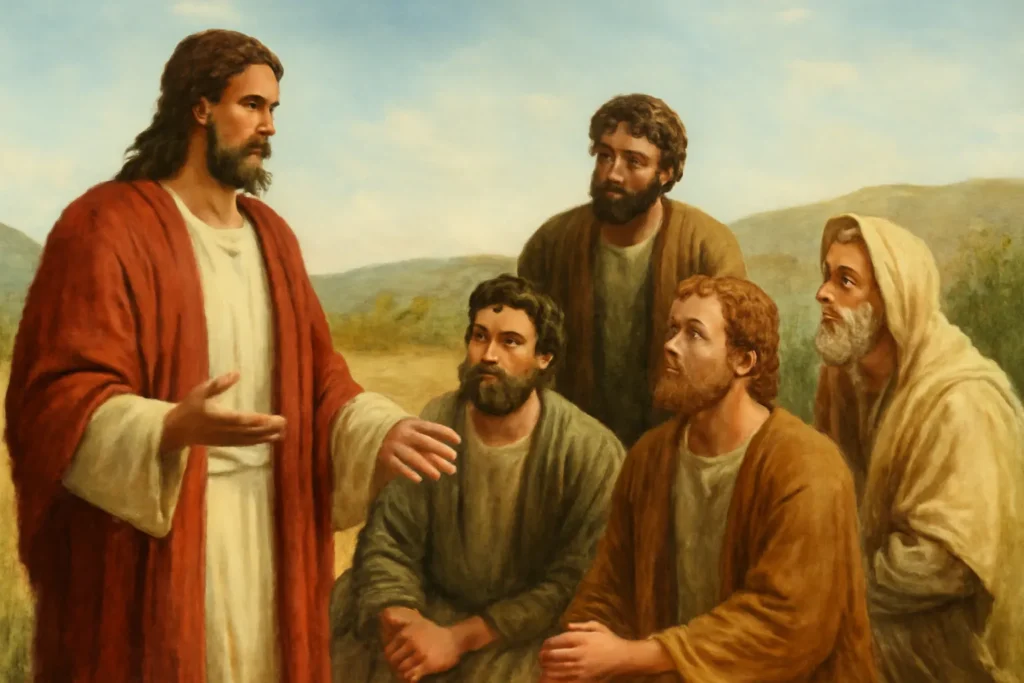
The story of Jesus is inseparable from the people who walked with him, listened to his teachings, witnessed his signs, and carried his message beyond the borders of Galilee. In Christian tradition, these people are described in modern terms as disciples and apostles, a group defined not only by proximity to Jesus but by a shared mission. This article explores who the disciples were, especially the core circle known as the Twelve, and what they did as they learned from Jesus, observed his works, and eventually became the foundational witnesses and leaders of the early church.
Throughout the biblical narrative, the terms disciple, follower, and apostle are used in related, yet distinct ways. A disciple is generally a learner or student who embraces a teacher’s message and seeks to imitate a way of life. An apostle is a messenger or envoy, often one who is sent with authority to represent the one who sent him. In the New Testament, the group commonly known as the Twelve Apostles emerges as Jesus selects twelve men to accompany him, to be witnesses of his ministry, and to carry out a mission after his departure. As we dive into who these men were and what they did, we’ll also acknowledge the broader circle of Jesus’ followers, including women and others who joined in the journey.
The Twelve Apostles: Names and Backgrounds
The core group of disciples with Jesus during his earthly ministry is traditionally known as the Twelve. These men came from varied backgrounds—fishermen, a tax collector, a political zealot, a former publican, and more—yet they shared a common calling: to walk with Jesus, to hear his teachings, and to participate in his mission. The canonical lists of the twelve appear in the Synoptic Gospels (Matthew, Mark, and Luke) and are slightly varied in order and naming. In Acts, they are referred to as the apostles following the Resurrection, with a later appointment to replace Judas Iscariot after his betrayal.
Simon Peter (also called Peter or Cephas) — a fisherman at the outset, who becomes a leading voice among the disciples and a foundational figure in the early church.
Andrew — Peter’s brother, also a fisherman, who brings people to Jesus and is often described as a connector between others and the Teacher.
James (son of Zebedee) — part of the inner circle with his brother John; noted for his bold responses to Jesus and for being present at key moments.
John (the son of Zebedee) — often referred to as “the beloved disciple,” a close intimate observer of Jesus who becomes a pillar of the church and author of several New Testament writings.
Philip — a thoughtful questioner who seeks to understand and then invites others to encounter Jesus.
Nathanael (often identified with Bartholomew in Gospel lists) — portrayed as sincere and straightforward, recognizing Jesus as the Son of God after an initial encounter.
Matthew (also called Levi) — a tax collector who leaves his post to follow Jesus, later credited with writing the Gospel that bears his name in the New Testament.
Thomas (often called Didymus) — known for his initial doubt and later profession of faith when he encounters the resurrected Jesus.
James (son of Alphaeus) — sometimes called James the Less; part of the broader circle of followers and a contemporary of the others.
Simon the Zealot — likely a political activist before following Jesus, representing a range of backgrounds within the group.
Judas Iscariot — the one who betrays Jesus; his role within the apostolic circle remains a somber reminder of human frailty, leading to the selection of a replacement after the Resurrection.
Judas, son of James (also called Thaddaeus or Lebbaeus in some lists) — a member of the Twelve who appears less prominently in the Gospel narratives, yet is named as one of the apostles who followed Jesus.
Selected portraits: a closer look at a few of the Twelve
While all twelve shared a common call, some stand out in biblical narrative for particular moments and roles.
Simon Peter: The fisher’s instinct and the rock of the church
Peter emerges early as a spontaneous, impassioned follower who often serves as the spokesperson for the group. He is quick to recognize Jesus’ identity, speaks boldly yet falters in moments of fear, and ultimately receives a charge to shepherd Christ’s flock after the Resurrection. His trajectory from a simple fisherman to a leader in the early Christian movement illustrates how a disciple can grow from immediate obedience to significant responsibility.
John: The beloved disciple and the intimate witness
John is portrayed as someone deeply close to Jesus—an observer who writes with a sense of intimate trust and theological reflection. His Gospel and letters emphasize themes such as love, truth, and eternal life, and his perspective helps illuminate how a follower’s life can mature into a sustained testimony of faith.
Matthew: The tax collector who chronicles a new story
Matthew brings a dual identity—an outsider turned insider—into the circle of Jesus’ followers. His background as a tax collector makes his decision to follow Jesus a powerful sign of inclusion and transformation, and his Gospel presents Jesus as the fulfillment of the Jewish scriptures, inviting a new audience to participate in the Kingdom.
What the Disciples Did with Jesus: Learning, Witnessing, and Proclaiming
The life of the Twelve under Jesus’ guidance was marked by a dynamic balance of instruction, demonstration, and mission. They heard parables, witnessed healing and exorcisms, and learned to interpret the mysteries of the Kingdom of God. Their activities can be understood through several core strands: immersion in teaching, participation in miracles and ministry, and preparation for a continuing mission after Jesus’ departure.
Leaving livelihoods to walk with Jesus, demonstrating urgent commitment to the calling.
Listening to Jesus’ teachings, including parables that reveal the nature of God’s kingdom.
Observing Jesus’ example in humility, service, prayer, and dependence on the Father.
Participating in miracles and ministry
Healing the sick and casting out demons—acts that reveal the arrival of God’s reign among people who were marginalized.
Witnessing nature miracles, such as calming storms or feeding thousands, which demonstrate Jesus’ authority over creation.
Engaging in collaborative ministry, including journeying in pairs to towns, preaching, and teaching.
Receiving and articulating Jesus’ message
Learning to articulate the core message of the Kingdom of God, including the call to repentance, faith, and obedience.
Asking questions that encourage deeper understanding, such as inquiries about humility, greatness, and what it means to follow Jesus.
Preparing to articulate their experiences and encounters in a way that would encourage others to believe.
Transformation through encounter: moments that shaped the mission
Across the narratives, certain episodes stand out as defining moments for the disciples’ transformation:
The initial call by the Sea of Galilee, where Jesus invites them to drop their nets and follow him.
The turning point at Peter’s confession of Jesus as the Messiah, which signals a turning point in how the disciples understand Jesus’ identity.
The Transfiguration scene, where Jesus is revealed in radiant glory and the disciples glimpse the deeper reality of his mission.
Apostolic instructions, where Jesus sends them out in pairs to preach, heal, and cast out demons, with a focus on dependence on God’s provision.
The Call and Mission: From Followers to Messengers
The arc from follower to messenger is central to understanding the role of the Twelve. When Jesus gathers these men, he does more than assemble a group of learners; he entrusts them with authority, responsibility, and a vision for a movement that would endure beyond his earthly life.
In the wake of Jesus’ life, death, and resurrection, he commands his followers to go and make disciples of all nations, baptizing people in the name of the Father, Son, and Holy Spirit, and teaching them to observe all he has commanded. This mandate, often called the Great Commission, marks a shift from a localized ministry to a global mission. The apostles become primary witnesses who proclaim a message of forgiveness, reconciliation, and new life through faith in Jesus.
Empowerment at Pentecost
After the Resurrection, the apostles receive the Holy Spirit's empowering presence at Pentecost. This event marks the moment when their boldness, courage, and ability to testify in various languages become a transformative force. The disciples with Jesus, now empowered by the Spirit, begin to preach fearlessly, perform signs, and organize communities of believers that become the early church.
They devote themselves to teaching, fellowship, breaking of bread, and prayer.
They share resources, care for the poor, and grow in numbers as new believers are added daily.
They confront challenges, address conflicts, and establish patterns for worship and leadership that would influence Christian communities for centuries.
Variation within the Circle: Beyond the Twelve
While the Twelve Apostles occupy a central place in the gospel narratives, the circle of disciples with Jesus extends far beyond this select group. The New Testament often speaks of a broader cohort of followers who traveled with Jesus, listened to his parables, and supported his ministry. Women in Jesus’ entourage—such as Mary Magdalene, Salome, Martha, and others—play critical roles as supporters, witnesses, and sometimes financial contributors to the mission. In addition, the Gospels reference others who traveled with Jesus and responded to his message, and the book of Acts describes a growing community of believers who contributed to the spread of the early church.
Women as disciples and witnesses
Women who provided for Jesus and his disciples from their own means, demonstrating practical support and faith.
Several women who witnessed the crucifixion and discovered the empty tomb, becoming key witnesses to the resurrection.
In early Christian tradition, women who encountered the resurrected Jesus also played a role in proclaiming the good news to others.
The seventy-two (or seventy) as a broader circle
In Luke’s Gospel, Jesus appoints a larger group of seventy (or seventy-two) disciples and sends them out in pairs to prepare towns for his visit. This episode illustrates a broader pattern of discipleship that extends beyond the Twelve and models how Jesus valued collaborative mission, shared responsibility, and careful preparation for missionary work.
Who they were and how they related to the core group
The broader circle of Jesus’ followers helped sustain the ministry and ensured that messages, teachings, and examples of the Kingdom could reach diverse communities. The presence of both men and women in these networks demonstrates that discipleship in early Christian life was inclusive in practice, even if the central narrative centers on the Twelve.
After the Resurrection: Continuity, Leadership, and Legacy
The story of disciples with Jesus does not end with the crucifixion; their experience becomes the foundation for a continuing movement. After the Resurrection, the apostles, especially those in the Twelve, assume leadership roles, organize communities, and articulate a message that will shape Christian faith for centuries to come.
Leadership in the early church
The early church relied on the apostles to teach, shepherd, and ordain others. Peter emerges as a principal leader in the Acts of the Apostles, while Paul (a later convert not one of the Twelve) expands the church’s mission to the Gentiles. The apostles’ leadership includes defense of essential beliefs, guidance on ethical practice, and governance of the growing Christian communities.
The apostolic witness and writing
The teachings and experiences of the disciples with Jesus become the core material for the earliest Christian writings. The Gospels recount the life and ministry of Jesus through the voices of eyewitnesses, while the Epistles reflect on how new believers should live in light of faith in Christ. The biblical narrative presents the Twelve not merely as historical figures but as living witnesses whose experiences formed the bedrock of Christian doctrine and practice.
Apostolic mission and cultural impact
The message of Jesus spreads from a localized Galilean movement to a global faith community.
Communities of believers develop spiritual disciplines (prayer, teaching, breaking bread) and ethical norms shaped by Jesus’ teachings.
Traditions and liturgies emerge from the early church’s memory of the disciples’ lives, their leadership, and their missionary journeys.
Common Questions and Clarifications
The topic of disciples with Jesus often prompts questions about terminology, roles, and historical context. Here are some clarifications that can help readers distinguish between terms and understand the historical setting.
What is the difference between a disciple and an apostle?
In the biblical context, a disciple is a learner who follows a teacher, while an apostle is a messenger who is sent with authority. The group known as the Twelve began as disciples and later are described as apostles, reflecting their expanded role after Jesus’ Resurrection.
Why are there variations in the lists of the Twelve?
The Gospels provide slightly different orders and names for the twelve. These variations arise from different Gospel writers emphasizing particular details, as well as the existence of parallel traditions. Nevertheless, the core set of individuals remains recognizable across the accounts.
No. While the core group of the Twelve Apostles were a distinct subset with a special commission, many other followers of Jesus contributed to the mission and formed part of the early church. The New Testament presents a broad circle of believers who supported, learned from, and extended Jesus’ teaching beyond the original group.
What role did women play among Jesus’ followers?
Women were integral to Jesus’ ministry, serving as supporters, witnesses, and active participants in the mission. The presence of female disciples highlights an important dimension of discipleship that includes hospitality, discernment, and proclamation of the resurrection.
Legacy and Significance: Why the Disciples Matter Today
The disciples with Jesus in the first century provide a concrete example of how committed learners can become transformative leaders. Their example speaks to several enduring themes:
Call and response: The invitation to follow Jesus requires a decisive response, often involving sacrifice and a shift in priorities.
Humility and growth: The disciples’ journeys show that faith matures through questions, mistakes, and ongoing dependence on God.
Shared life and mission: The early Christian communities modeled living in solidarity, sharing resources, and bearing witness together.
Witness and proclamation: The disciples’ testimony about Jesus became the seed of Christian preaching and evangelism for generations to come.
For readers exploring faith, the lives of the disciples with Jesus offer a portrait of accessible faith—how ordinary people can hear a call, grow in understanding, and participate in something larger than themselves. Their experiences invite reflection on personal commitment, community, and the courage to share a transformative message with sincerity and integrity.
Questions to consider
What does it mean to be a disciple in today’s world?
How can communities cultivate the kind of mentorship and mutual support seen in the early church?
What can modern followers learn from the strengths and weaknesses of the Apostles?
Glossary of Key Terms
Disciple
A learner or follower who adheres to a teacher’s message and seeks to imitate a way of life.
Apostle
A messenger or envoy sent with authority to represent the one who sent him; in the New Testament, the Twelve Apostles are the core group sent to proclaim the Good News.
The Twelve
The original circle of twelve men chosen by Jesus to accompany him, learn from him, and carry on his mission after his departure.
Great Commission
The imperative given by Jesus to his followers to make disciples of all nations, baptizing and teaching them to obey all that he commanded.
Pentecost
The event described in Acts when the Holy Spirit empowers the disciples to proclaim the gospel in various languages and to begin the church’s mission in earnest.
Conclusion: The Enduring Story of the Disciples with Jesus
The narrative of the disciples with Jesus—their calling, their journey of learning, their witness to miracles, and their mission to spread the message—forms a foundational chapter in the story of Christianity. These men, alongside the women and other followers who supported Jesus’ work, illustrate how faith can begin with a personal invitation and grow into a communal movement that shapes history. By studying who the disciples were and what they did, readers gain insight into the heart of the Christian tradition: a life of attentive discipleship, courageous proclamation, and a reliance on the Holy Spirit to continue the work begun by Jesus and carried forward by the earliest believers.
Whether described as disciples of Jesus, the Twelve, or the apostles, their legacy invites readers to consider what it means to follow, learn, and participate in a mission that transcends time and culture. The journey of these early followers remains a compelling invitation to engage with questions of faith, community, service, and purpose—questions that continue to resonate for people of diverse backgrounds who seek to understand who Jesus was, what he taught, and what it means to live as his followers today.











Leave a Reply