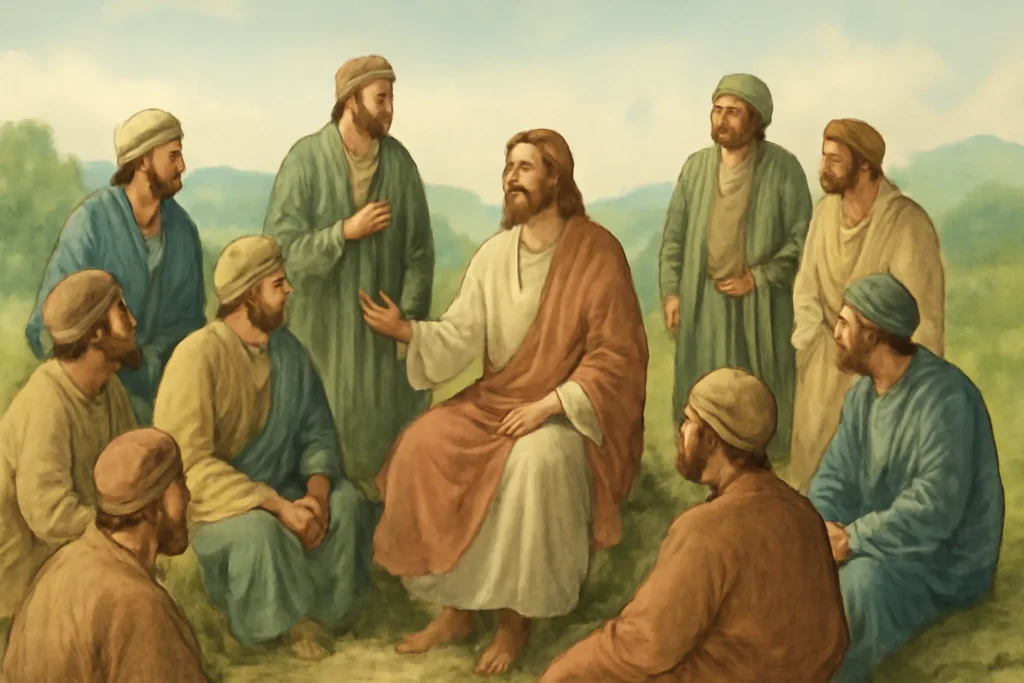
What were the occupations of the twelve apostles? This question sits at the intersection of biblical text, historical context, and tradition. The New Testament offers clear and limited clues about the trades some of the disciples practiced before they joined Jesus, while for many others the records are silent. In exploring the question, it is important to distinguish between what is explicitly stated in the scriptures and what later church traditions have suggested. The result is a nuanced portrait in which a core group is identified by a concrete occupation, and several others are described only by their social or political identity rather than a specific line of work.
Peter, one of the most prominent leaders among the Twelve, is repeatedly described as a fisherman by trade. Early in the Gospel narratives, he is depicted alongside his brother Andrew, mending nets and casting them into the Sea of Galilee. The firing of their calling is dramatic: they leave their nets to follow Jesus, signifying a radical shift from a daily occupation to a life of ministry. The reference to Peter’s fishing background is not just a casual detail; it helps set the stage for his later role as a foundational figure in the church’s leadership and in the spread of the gospel to both Jews and Gentiles. When considering the social and economic realities of first-century Galilee, the work of fishermen was a respectable, stable occupation that connected ordinary people to the rhythms of the local economy and the water-based trade routes of the region.
Andrew
Andrew, Peter’s brother, is also identified as a fisherman in the Gospel accounts. The brothers’ shared vocation helps explain why Jesus first called them in the same location and with a shared sense of vocation. As the original witnesses from the lakeside, Peter and Andrew represent a cluster of early followers whose livelihoods anchored them in a familiar, working-class milieu. The characterization of Andrew as a fisherman reinforces the sense that the earliest apostles came from ordinary, everyday occupations before being drawn into a broader mission.
James son of Zebedee
James, the son of Zebedee, is identified in the Gospels as one of the fishermen called by Jesus along with his brother John. He is consistently described as a fisherman and part of the inner circle that received special instruction from Jesus, such as the events on the Mount of Transfiguration. James’s occupation places him in the same social and economic sphere as Peter and Andrew, underscoring a pattern in which Jesus called ordinary workers to participate in a transformative, world-changing ministry.
John son of Zebedee
John, the brother of James, is likewise presented as a fisherman before his discipleship. The close partnership between John and James is well documented in the Gospels, and John’s later role as “the beloved disciple” and a key theological interpreter of Jesus’s message adds depth to the understanding of how a fisherman could become a foundational voice in the early church. The fishermen-turned-disciples pattern emphasizes a recurring motif: God often works through people whose daily labor grounds them in concrete, practical realities.
The Tax Collector Turned Apostle
Matthew (Levi) the Tax Collector
The Gospel tradition presents Matthew as a distinctive case: he is identified as a tax collector (also called a publican) before he becomes a follower of Jesus. The term "tax collector" in first-century Palestine carries complex social implications, because tax collectors were often viewed with distrust and animosity by fellow Jews for collaborating with the Roman authorities and for perceived greed. Matthew’s transformation from a financer of the empire’s system to a herald of the kingdom of God is frequently highlighted as a sign of Jesus’s inclusive call to repentance and transformation. The shift from a taxed economy to a message of grace reflects a dramatic reorientation of priorities and loyalties. The occupation of a tax collector is not merely a biographical footnote; it signals a willingness to leave behind a position of external financial control for an itinerant life of preaching and teaching about the kingdom.
Other Disciples and the Uncertain Trades
Beyond Peter, Andrew, James, John, and Matthew, the New Testament provides limited information about the specific trades of the remaining disciples. In many cases, the scriptures describe them primarily by their family background, place of origin, or their role within Jesus’s ministry, rather than by an explicit occupation. In this section, we explore the scholarly understanding and traditional attributions, carefully noting where evidence is strong, where it is speculative, and where later tradition has filled gaps with possible, but not definite, identifications.
Philip
For Philip, the biblical record does not supply a definite occupational description. In the canonical texts, Philip appears as a thoughtful interviewer of Jesus and a practical organizer of his own company, yet there is no explicit declaration of a trade in the same way that Peter or Matthew’s Vak. Some later traditions attach regional associations or stories about his background, but the scriptures themselves do not define an established craft or profession for Philip prior to his calling. In discussions of the Twelve, Philip is often categorized as one of the more administrative or organizational figures among the early followers, rather than by a particular craft. This ambiguity highlights how the early church often preserves a sense of vocation without constraining it to a single earthly occupation.
Bartholomew is identified in the lists of the twelve as Bartholomew, sometimes equated with Nathanael in the Gospel of John. The New Testament provides no explicit occupation for Bartholomew, and traditional identifications rarely assign him a specific trade. Some later legends and traditions attribute misionary activity to Bartholomew across various regions, sometimes including craft or trade in passing, but these are not canonical and vary by tradition. The absence of a clear occupational label in the sources means Bartholomew’s pre-discipleship work remains uncertain in the primary texts, underscoring the broader point that many of the Twelve are named for their role rather than for a particular profession before following Jesus.
Thomas
Thomas (also called Didymus) is another disciple whose pre-Jesus occupation is not stated in the canonical Gospels. The Gospel narratives focus on his skeptical, investigative posture after Jesus’s resurrection rather than on any first-century craft or trade. The lack of a known trade invites readers to see Thomas primarily as a seeker of truth and a witness to the risen Christ, rather than as a representative of a particular economic sector. In devotional and scholarly discussions, Thomas is often highlighted for his role in questioning and confirming faith rather than for a specific vocational identity.
James the Less (James son of Alphaeus)
James the Less (often identified as James, son of Alphaeus) is another member of the Twelve for whom the Scriptures do not specify an occupation. He is frequently listed in the same group with Peter, James the Greater, and John in terms of family or lineage, but the texts do not indicate a trade or profession. Some traditions identify him as a relative of Jesus or connected to a particular local setting; however, none of these details provide a reliable occupational description from the biblical record itself. The absence of a known craft for James the Less emphasizes the broader theme that many disciples entered Jesus’s mission from a position outside a well-documented trade.
Simon the Zealot
Simon the Zealot is named for a political-religious designation rather than a craft. The title "the Zealot" suggests prior association with militant or political movements protesting Roman rule, but the canonical texts do not specify any specific trade or livelihood he practiced before following Jesus. The Zealot label has been understood in various ways by scholars and theologians, often highlighting how Jesus called people from varied backgrounds into a common mission. Because no explicit occupational description accompanies Simon in the scriptures, his pre-discipleship work remains speculative in the absence of other ancient sources.
Jude Thaddeus (Judas, son of James)
Jude Thaddeus (also known as Judas, son of James, or Jude Thaddaeus) is another disciple about whom the New Testament provides limited biographical detail regarding occupation. In most lists, he is distinguished from Judas Iscariot but shares the same role as a follower of Jesus. Traditional attributions regarding his trade are not found in the canonical Gospels; consequently, any proposed occupation remains conjectural. The lack of concrete occupational data for Jude Thaddeus reinforces the sense that the Twelve were assembled from a spectrum of social backgrounds, not all of which were anchored in a single, easily identifiable craft.
Judas Iscariot
Judas Iscariot is known for a very specific and controversial role within the Twelve: he is the one who would later betray Jesus. The Gospels do not state a pre-discesion occupation for Judas in the same way they do for Peter or Matthew, but they do reference him as the keeper of the money bag, a role that involved handling funds and financial affairs for the group. In John 12:6, Judas is described as someone who used to help himself to the money in the bag, implying a fiduciary responsibility and a preexisting engagement with resources. This description has led some scholars to speculate about a background in commerce or trade, but there is no definitive canonical evidence tying Judas Iscariot to a specific craft. The moral and theological weight of Judas’s actions often takes center stage in discussions about the Twelve, while his occupational background remains a matter of interpretation rather than a firmly documented fact in the biblical text.
Judas Iscariot and Matthias: The Replacement and the Money Trail
After the betrayal and death of Judas Iscariot, the early church sought to restore the Twelve to a complete circle. The Acts of the Apostles records the choice of Matthias to take Judas’s place (Acts 1:15-26). This transition raises additional questions about the nature of the twelve as a functional group in the church’s early life. If a few of the disciples had well-defined trades, did these occupations inform the mission in a lasting way? The Acts account emphasizes the spiritual calling and apostolic witness rather than a fixed professional identity. The process of selecting Matthias shows a priority on apostolic witness, holy discernment, and continuity with Jesus’s mission over the maintenance of specific occupational categories within the group. The moral and communal aspects of the early Christian community take precedence over a catalog of trades, reinforcing the idea that the core identity of the Twelve lay in their call and commissioning rather than in their pre-existing livelihoods.
Why Occupations Matter for Understanding This Group
Why spend time tracing the occupations of the Twelve? The answer lies in how these details illuminate several facets of the early Christian movement. First, the fact that several of the core apostles came from ordinary, working-class trades helps readers relate to their message and its accessibility. A fisherman’s life is a life of perseverance, practical skills, patience, and dependence on the natural world—traits that can resonate with communities engaged in daily labor. Second, the presence of a tax collector in Matthew demonstrates a striking social bridge: Jesus is willing to call individuals who represent or have engaged with the structures of power and governance. This juxtaposition invites reflection on the breadth of the gospel’s appeal and the way Jesus challenges social boundaries. Third, the lack of explicit occupations for several other disciples underscores a theological point: discipleship is not primarily about a person’s trade but about their call to follow and witness. The occupations (or lack thereof) reveal how early Christian authors framed a diverse movement that drew people from varied backgrounds into a shared mission.
Historical and Cultural Context for First-CCentury Occupations
To understand the significance of these occupational notes, it helps to situate them in the broader historical and regional context of 1st-century Galilee and Judea. The Sea of Galilee region was a hub of fishing communities, small-scale commerce, agricultural work, and service-based crafts. A fisherman like Peter or Andrew would have relied on nets, boats, and seasonal catches, with a social network that included other fishermen, merchants, and boat builders. A tax collector worked in a different sphere, often employed by the Roman authorities to collect taxes from Jews and others, sometimes aligning with local moneylenders or sellers who served as intermediaries. This was a job that could generate social tension because it involved cooperation with imperial governance and perceptions of greed or corruption among peers. The presence of a disciple with such a background demonstrates the gospel’s willingness to engage people embedded in the economic structures of the day, creating a dynamic where the gospel speaks to varied life situations.
In addition, the label Zealot attached to Simon reveals a political dimension. The Zealots were a movement opposed to Roman rule, and their association signals that the Twelve were not a monolith of social classes but a spectrum of political and religious identities. The early church’s insistence on unity in mission despite diverse backgrounds is reflected in the apostles’ stories and in later tradition. The economic, social, and political diversity among the Twelve can be read as a deliberate reflection of the inclusive nature of Jesus’s call: a mission that summons ordinary people from different walks of life to become witnesses to the kingdom of God.
Modern Perspectives: How Scholars Approach the Question
Scholars approach the question of the disciples’ occupations with careful attention to biblical exegesis, textual criticism, and historical context. The primary sources—the canonical Gospels (Matthew, Mark, Luke, and John)—provide the most reliable information about the trades of those named explicitly as fishermen or as a tax collector. The rest of the disciples are described in terms of their role within Jesus’s ministry or by their place in lists of the Twelve, rather than by a concrete trade. This has led to a range of scholarly conclusions, from firm statements about the clear trades of Peter, Andrew, James, John, and Matthew to more cautious notes about the remaining disciples, where the pre-discipleship occupations remain speculative or are only inferred from later tradition.
In addition to scriptural texts, early Christian writers and later traditions have offered various identifications. Some of these traditions were shaped by regional legends, the needs of Christian communities seeking to understand the backgrounds of their leaders, or harmonizations that tried to reconcile different Gospel accounts. Contemporary historians emphasize the importance of distinguishing between what is securely attested in the biblical text and what emerges from later ecclesiastical tradition or apocryphal literature. This approach helps prevent overinterpretation and maintains a focus on the gospel’s message and the apostles’ calling rather than on a potentially anachronistic catalog of trades.
From a theological perspective, the occupations of the Twelve can be read as a narrative device that highlights the universal reach of Jesus’s message. The invitation to leave one’s nets, to abandon a tax-collector’s booth, or to step away from any Zealot-influenced agenda signals a radical reorientation: the kingdom of God requires a different allegiance. The faithful who answer that call—from fishermen to tax collectors to those whose trades remain unnamed—become witnesses who testify not to how they earned their living but to how they encountered the living Christ and chose to follow him.
A Practical Guide to Remembering the Twelve and Their Trades
To help readers retain a clear picture of the apostles and their known or suggested occupations, here is a concise reference that blends canonical data with historical context. This section is organized to facilitate study or quick review, whether you’re preparing a lesson, writing, or simply exploring the topic.
Peter — fisherman; one of Jesus’s first disciples; leadership role in the early church.
Andrew — fisherman; Peter’s brother; early ally in ministry.
James (son of Zebedee) — fisherman; part of the inner circle with Peter and John.
John (son of Zebedee) — fisherman; the “beloved disciple”; deep theological interpreter of Jesus’s word.
Matthew — tax collector; author/editing role in the Gospel tradition; represents a bridge between Jewish and Roman-influenced contexts.
Philip — Occupation not explicitly stated in the canonical texts; often discussed in terms of organizational or pastoral roles within the group.
Nathanael (Bartholomew) — Occupation not specified in the canonical record; identity is often linked to Nathanael’s signs and testimony in John.
Thomas — Occupation not specified in the canonical record; portrayed as a seeker of truth and a witness to the risen Christ.
James (son of Alphaeus) — Occupation not specified in the canonical record; sometimes called James the Less in lists.
Simon the Zealot — Occupation not stated; identified by a political-religious label rather than a trade.
Judas Thaddeus (Jude) — Occupation not specified; distinguished in lists from Judas Iscariot.
Judas Iscariot — treasurer or money-keeper for the group; later the betrayer of Jesus.
For readers seeking a deeper dive, consider cross-referencing these notes with the Gospel passages that mention the fishermen and the tax collector. Look at how the calling narratives in Matthew 4 and Mark 1 place ordinary labor at the heart of radical discipleship. Observe how the act of leaving one’s nets is a powerful symbol of entrusting one’s life to a higher mission. And reflect on how Matthew’s transformation from publican to apostle demonstrates the inclusive reach of Jesus’s message, inviting people from both marginalized and privileged social spheres to participate in the kingdom of God.
What These Occupational Clues Tell Us About the Mission
Occupations provide a lens through which to understand the apostles’ ministerial priorities and methods. The fishermen among the Twelve were accustomed to hard work, teamwork, and weathering uncertain conditions. Their practical experience with nets, boats, and the sea could translate into a willingness to navigate the unpredictable currents of public ministry, to bear witness in diverse environments, and to endure hardships for the sake of the message. The tax collector among them embodies a bridge figure—a person who understands taxation, governance, and the dynamics of a Roman-occupied land, which could contribute to nuanced discussions about the relationship between faith, politics, and social structures. The absence or ambiguity of trades for several others invites readers to focus less on how a person earned a living prior to following Jesus and more on the transformative encounter with him that redirected their lives toward service, proclamation, and community formation.
In sum, the occupations of the Twelve—where known and where uncertain—offer more than biographical trivia. They reveal themes of calling, transformation, inclusion, and mission. They illustrate how the early Christian movement emerged from a cross-section of society and how the gospel invited people from different walks of life to participate in a shared purpose. Whether by explicit scriptural statement or by cautious historical inference, the narrative of the Twelve underscores a central claim of Christian tradition: personal history can become part of a grand, trans-generational purpose when one answers the call to follow.
As you reflect on the question, what were the occupations of the twelve disciples, consider how the details—clear or obscure—fit into a larger story about vocation, witness, and faith. The answer, in its fullness, is not simply a catalog of trades but a window into the diverse backgrounds that God used to carry a message that has endured for two millennia. Whether you approach the topic as a student of scripture, a historian, or a curious reader, you are invited into a conversation that connects ancient livelihoods with timeless questions about purpose, identity, and mission.
For educators and learners, this topic offers several practical paths. You can build a lesson that contrasts explicit scriptural references with later traditions, inviting critical thinking about sources and interpretation. You can create a timeline mapping when these figures are called in relation to Jesus’s ministry. You can also develop discussion prompts about how a person’s background intersects with their faith journey. The occupations of the Twelve are not merely background notes; they are entry points into wider conversations about vocation, community, and the transformative power of following a teacher who invites a diverse group of ordinary people into an extraordinary mission.
Ultimately, the question of the apostles’ trades helps illuminate how the early Christian community understood leadership and calling. It shows that a person’s pre-Christian life mattered less than their willingness to respond to Jesus’s invitation. The different paths—whether grounded in fishing, taxation, or silence about a trade—converged in a shared commitment to bear witness, spread a message of hope, and establish a community that could endure across cultures and generations. The occupations, then, are a doorway into a larger, richer story about how a disparate group became the core of a movement that has shaped world history in enduring ways.









Leave a Reply