Jesus first apostle: Who Was the First Disciple Sent by Jesus?
Jesus first apostle: Who Was the First Disciple Sent by Jesus?
Understanding who was the first disciple or the first apostle of Jesus can feel like chasing a moving target. The Gospels present multiple layers of calling, sending, and leadership that can be read in different ways. Some readers ask, “Who was the first disciple Jesus called?” Others wonder, “Who was the first apostle sent by Jesus on a mission?” Still others seek to know who stood first among the group of the Twelve and what that position signified in the early Christian movement. This article explores the question from historical, textual, and interpretive angles, and it does so with care to distinguish between terms like disciple, follower, and apostle.
Understanding the terms: disciple, follower, and apostle
Before asking who is the first disciple, it helps to clarify the vocabulary used in the New Testament and in Christian tradition. The word disciple generally refers to a student or admirer of a teacher who follows that teacher’s way. In the Gospels, Jesus calls many people his disciples, and some of them become leaders within the movement after their encounters with him. The term apostle (from the Greek apostolos) is more specific: it denotes someone who is sent by Jesus with a particular mission. In Christian usage, the Twelve are the primary group of apostles chosen by Jesus to receive authority, preach the kingdom, and bear witness after his resurrection.
Every “first” question about Jesus’ earliest disciples depends on which moment in the gospel story you emphasize: the initial calling (who was among the first to follow Jesus), the ordering of the Twelve (who is listed first in the gospel lists), or the sending of those who would go out on mission (who was First to be sent as a messenger to others). Below we trace these strands and highlight what the ancient texts and later tradition say about the first disciple and the first apostle in the broadest sense.
The candidate for “the first disciple”: Andrew or Peter?
Two names commonly surface when people ask about the very first person to become a follower of Jesus: Andrew and Peter (also known as Simon). The evidence is interpreted differently depending on the Gospel account you consult and the tradition you follow.
Andrew: the first follower introduced in the Gospel of John
In the Gospel of John, the narrative of the earliest encounters with Jesus emphasizes Andrew as an initial bridge to Jesus. John 1:40–41 records that Andrew was one of John the Baptist’s disciples who heard Jesus speak and then followed him. The verse notes that Andrew first found his brother Simon and said, “We have found the Messiah,” and brought him to Jesus. In this sense, Andrew is presented as the earliest named follower who acts as a connector to others.
John’s account then records Jesus giving Simon the new name Cephas (Peter), which in turn lays the groundwork for the pairing that becomes central in much of the Gospel narrative: Peter as a leading figure among the followers.
From this perspective, some readers describe Andrew as the first disciple in the sense of being the first person documented in John’s gospel to respond to Jesus and to introduce another potential leader to him. This reading highlights the theme of mission and testimony: a disciple who sees Jesus, follows him, and brings others into his presence.
Peter: the first named apostle and the leader among the Twelve
In the broader canonical tradition, Peter is often described as the primary or leading apostle among the group of Twelve. Several features of the text support this interpretation:
The gospel lists of the Twelve typically place Peter first, suggesting a role of primacy within the apostolic circle (for example, in Matthew 10:2–4, Mark 3:16–19, and Luke 6:14–16).
Peter is frequently depicted as the spokesperson in early scenes, offering statements, making confessions, and receiving special responsiveness from Jesus in key moments (e.g., Peter’s confession in Matthew 16:16–19 and his role in Acts 2 at Pentecost).
The term rock (Greek petros) given to Peter in Matthew 16:18–19 is often read as a sign of unique leadership or a foundational role in the early church, shaping the traditional view of the primacy of Peter among the apostles.
Thus, in many readings, the question “who was the first apostle sent by Jesus?” has the answer rooted in a combination of being the earliest named leader, the first to confess Jesus’ identity, and the one entrusted with a special set of responsibilities.
The Twelve: who they were and why they matter
To understand who might be considered the first apostle sent by Jesus, it helps to know about the group Jesus appointed to be his core messengers. The Twelve were called to leave their ordinary livelihoods and join Jesus in a mission that would expand beyond Galilee to the broader world. The lists of the Twelve appear in multiple gospels, with slight variations in order but with a consistent core membership. The commonly recognized members are:
Peter (Simon)
Andrew
James, son of Zebedee
John, brother of James
Philip
Bartholomew (also called Nathanael in some traditions)
Matthew (the tax collector)
Thomas (also called Didymus)
James, son of Alphaeus
Judas (Judas Iscariot, who would later betray Jesus)
Simon the Zealot
Thaddaeus (also known as Jude, Judas son of James, not to be confused with Judas Iscariot)
These twelve, sometimes described collectively as the apostles, form the core authority in the early church’s preaching and teaching. In many traditions, Peter is singled out for special leadership, though the Church also teaches that all the apostles shared the same mission and authority once the Spirit descended at Pentecost.
The first mission: when Jesus sent the Twelve on their inaugural outreach
There is a clear biblical pattern about sending: after gathering the Twelve, Jesus commissions them to preach, heal, and proclaim the kingdom. This moment is often cited when people ask, who was the first apostle sent by Jesus to preach? The answer, in a traditional sense, is that Jesus sent the Twelve as a unified group, not one individual alone, in the first formal mission in the Gospel narratives.
Matthew 10:1-4 presents Jesus giving the Twelve authority over unclean spirits and to heal every disease, and then lists the names of the apostles in a specific order. This passage is often cited as the formal commissioning of the original mission team and positions the Twelve as the primary agents of Jesus’ outreach.
Mark 3:13-19 records Jesus calling the Twelve, appointing them, and naming them as the group that would accompany him, to be sent out to preach and cast out demons. The emphasis here is on being with Jesus first and then being sent out with a mission.
Luke 6:12-16 similarly situates the calling of the Twelve after a night of prayer, underscoring the divine origin of their appointment and their special role in the proclamation of the kingdom.
From this perspective, the first mission of the Twelve is a collective event. There isn’t a single “first apostle” sent ahead of the others in the canonical accounts; rather, the Twelve are commissioned as a band, and their acts of preaching and healing emerge as their shared task. This helps explain why later traditions emphasize a leadership dynamic rather than a lone pioneer among the original messengers.
Luke’s later expansion: the seventy-two as the “first wave” of outward mission
In addition to the Twelve, the Gospel of Luke contains a significant episode about the seventy-two (or seventy) whom Jesus sends out in pairs to every town and place he intended to visit. Luke 10:1-24 describes this sending as a larger, more expansive phase of outreach and mission beyond the Twelve. While the seventy-two aren’t called apostles in the same sense as the Twelve, they are described as messengers with authority to heal and proclaim the kingdom. This raises a helpful distinction: the earliest missionary band under Jesus’ leadership includes both the Twelve and this broader circle of workers.
For many scholars, the first apostolic mission is reserved for the Twelve, but Luke’s account shows that Jesus envisioned a wider circle of ministry that would continue after his ascension.
Some readers use this text to understand the church’s expansion as a sequence: first the Twelve, then a larger group who continue the work in Jesus’ name.
How early Christian tradition interpreted the “first” among the apostles
As the early church matured, two threads of interpretation about the first disciple or first apostle became prominent in different traditions:
The primacy of Peter in Western and Catholic tradition
Classic Christian interpreters and Catholic writers often highlight Peter as the primus inter pares—first among equals—within the Twelve. This leadership is grounded in texts like Matthew 16:18–19 and the narrative of Peter’s prominent role in Acts, particularly at Pentecost and in the early preaching missions.
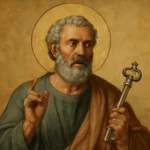
The papal tradition emphasizes Peter’s unique role as the “rock” on which the church is built and as the keeper of the keys of the kingdom. This has shaped the medieval and modern understanding of who was the first apostle in terms of authority and continuity of leadership from Peter to the bishops of Rome.
Honor given to Andrew in Eastern and other traditions
In various Eastern Christian traditions, Andrew is honored as the first-called disciple and as a missionary who carried the gospel to distant regions. The tradition emphasizes his role as an evangelist who “found” his brother and introduced him to Jesus, a motif that underscores the importance of testimony and invitation within the Christian mission.
Andrew’s martyrdom in Patras and his association with the saltire cross have become enduring symbols in Christian iconography and hagiography. While not the same as being the first apostle in the sense of organizational primacy, Andrew’s veneration suggests a foundational place in the narrative of Jesus’ followers, especially in the region around the Black Sea and in medieval Christian imagination.
Why the question remains nuanced: how to read “the first” in this context
Several factors contribute to the nuance around the question of the first disciple or first apostle:
Different starting points: If you start with the moment of Jesus’ call to a disciple, you may favor Andrew as the earliest named follower in John’s account, while if you start with the formal commission to mission, the Twelve take center stage, making Peter the first in the sense of leadership within that group.
Textual order versus functional leadership: The Gospel lists often place Peter first, but leadership “function” in the early church often centered on Peter’s authority rather than the chronological order in which he is named. This invites a distinction between the order of naming and the order of responsibility.
Historical tradition: Over centuries, church tradition has read the same passages in ways that emphasize different aspects—preeminence, mission, or evangelistic legacy. Different Christian communities have produced varying answers to the same question, all rooted in a shared foundation of the Gospel narratives.
The significance of the first disciple and the first apostle for readers today
For contemporary readers, the question “Who was the first disciple sent by Jesus?” is less about pinning down a single historical figure and more about understanding how the earliest followers engaged with Jesus’ mission and how their example can inform Christian identity today. Several themes emerge that are worth highlighting:
Calling and response: The stories of the first followers emphasize that discipleship begins with a response to Jesus’ call. Whether it’s Andrew responding to the call in John’s gospel or Peter leaving his fishing nets in the Synoptic accounts, the core idea is that following Jesus involves an act of trust and invitation to a new way of life.
Testimony and invitation: The early followers often become bearers of testimony—inviting others to meet Jesus, as Andrew does with his brother Simon. This pattern of invitation remains a model for Christian mission today.
Authority and service: The Twelve are entrusted with authority to preach and heal. Their mission underlines that leadership in the early church was inseparable from service and obedience to Jesus’ commissioning.
Primacy and unity: The emphasis on Peter’s leadership shows how early Christian communities wrestled with unity under pressure and how leadership can help preserve the apostolic mission while maintaining communal harmony.
A concise guide to the main sources and what they say
For readers who want to explore this topic further, the following highlights provide a compact map of the key passages and their implications. The aim is to show how the question of the first disciple or first apostle is answered differently depending on the lens you apply.
John 1:35–42 – The narrative where Andrew and another disciple encounter Jesus, and Andrew brings Simon to Jesus. This text is often cited in discussions of who is the first follower to respond to Jesus and who introduces others to him.
John 1:42 – Jesus renames Simon as Cephas (Peter), foreshadowing the special role Peter will play in the unfolding story of the Twelve and in later church leadership.
Matthew 4:18–22 and Mark 1:16–20 – Early call of the first two pairs of brothers (Peter and Andrew; James and John) near the Sea of Galilee, illustrating the immediacy of the invitation and the formation of the first circle of followers who would become the Twelve.
Matthew 10:1–4 and Mark 3:13–19 – The formal commissioning of the Twelve, with a named roster that highlights who is included and in what order they appear, underscoring the collective sending of Jesus’ core messengers.
Luke 6:12–16 – The account of choosing the Twelve after prayer, emphasizing divine guidance in the selection and the structures of leadership within the early church.
Luke 10:1–24 – The sending of the seventy-two, a broader mission that demonstrates how the gospel expands beyond the inner circle of the Twelve and how mission multiplies in the early Christian movement.
Acts 1:15–26 – The selection of Matthias as a replacement for Judas Iscariot, marking the ongoing evolution of the apostolic community in the immediate post-resurrection era and signaling the continuity of the apostolic witness beyond the original group.
Putting it all together: answering the question with nuance
If you ask, “Who was the first disciple sent by Jesus?” the best answer is that there are multiple valid ways to name a “first,” depending on how you define “first.” The possibilities include:
The first called or earliest follower in the gospel narratives, often discussed with Andrew in John’s account, who brings his brother to Jesus and becomes an emblem of evangelistic invitation.
The first named apostle in the sense of the initial leader within the Twelve, commonly identified as Peter due to his prominent role in the gospels and Acts, and because he is listed first in several gospel rosters.
The first to be sent on mission as part of a collective sending order, which is best understood as the commissioning of the Twelve (and, in Luke’s narrative, the expansion to the seventy-two), rather than a singular “first.”
The first missionary group sent out by Jesus, in which the Twelve function as the foundational core, and the broader circle of disciples grows into a wider ministry as the church expands after Pentecost.
In the end, the question reveals more about how readers and communities want to understand leadership, mission, and the origins of the church than about a single historical moment. The canonical texts invite readers to notice both the call of individuals and the shared mission of a community commissioned by Jesus to carry the message of the kingdom to all nations. The interplay between being a disciple and being an apostle remains a productive lens through which to study the Gospel narratives, early Christian practice, and the long arc of Christian tradition.
Key takeaways: quick references for study and reflection
Discipleship begins with a call: The earliest followers respond to Jesus’ invitation and begin a transformative journey.
Apostolic leadership is shared: The Twelve are commissioned to minister together, with leadership dynamics that develop over time.
Peter’s role is central in many traditions: The “rock” motif and first-named status in lists highlight his significance within the apostolic circle.
Andrew embodies invitation and testimony: His role in introducing Simon to Jesus underscores the missionary impulse in early Christian life.
Luke expands the mission: The sending of the seventy-two suggests a model of multiplying witnesses beyond the inner circle.
Further contemplation and diverse readings
Scholars, theologians, and faith communities continue to explore these questions with care. If you want to dive deeper, you might consider the following avenues:
Compare the gospel accounts of the calling of Peter, Andrew, James, and John to see how each gospel writer presents the moment of becoming a follower and/or an apostle.
Study the distinct uses of the term apostle in Acts and the epistles to understand how the early church understood apostleship after Jesus’ resurrection.
Explore patristic and medieval writings on the primacy of Peter and how different Christian traditions articulate the authority that accompanies apostolic leadership.
Look at non-canonical traditions and early Christian art or liturgy that highlight figures like Andrew and the other apostles to gain a broader cultural sense of their significance.
The question of who was the first disciple sent by Jesus yields a rich tapestry of answers depending on how one reads the biblical text and interprets church tradition. If you emphasize the moment of calling, Andrew often appears as the earliest documented follower who responds to Jesus and helps others meet him. If you emphasize leadership within the Twelve, Peter emerges as the central figure whose relationship to Jesus and to the early church shapes much of the narrative. If you emphasize the first mission, the Twelve together form the initial sending, with Luke adding a broader wave of outreach through the seventy-two. Each of these angles illuminates a different facet of Jesus’ message, the nature of discipleship, and the birth of the Christian movement that would grow into a global church. By engaging with these perspectives, readers can appreciate the depth and complexity of the earliest followers and the enduring questions they pose for believers today.
Further reflection prompts:
What does it mean for a modern community to view leadership as a shared mandate rather than a single anchor?
How can the example of the first followers inspire contemporary evangelism and testimony?
In what ways does the distinction between disciple and apostle illuminate Christian understandings of mission and authority?











Leave a Reply