In Christian tradition, the term Apostle denotes a special class of early believers commissioned to proclaim the
gospel and to shepherd the fledgling church. The word itself comes from the Greek apostolos, literally meaning “one who is sent.”
Over the centuries, readers have asked for a definitive roll of the apostle names, both to understand the
biblical witness and to trace how these key figures were identified in liturgy, art, and theology. This article gathers the
most widely accepted names, clarifies variations and aliases, and describes the role and significance of each figure within the
broader apostolic witness. While traditions differ in details, the core list offers a coherent picture of who is honored as an apostle in the New Testament and in subsequent Christian memory.
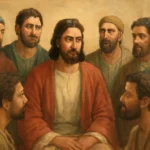
The best-known cohort in early Christian memory is the group called the Twelve Apostles. This term refers to
the original circle Jesus chose to accompany Him during His earthly ministry and to whom He entrusted a
distinctive mission after the Resurrection. In the canonical Gospels and Acts, these twelve individuals are named with variations in
some cases, and one of them, Judas Iscariot, is replaced after betrayal and death by Matthias, ensuring
that the number remains twelve. The following list presents each member of the Twelve, including common name variants and
identifying details.
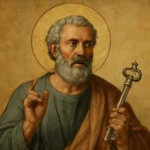
Simon Peter, also known as Peter and Cephas.
Variations: Peter, Simon Peter, Cephas.
Key notes: a principal leader among the apostles, often depicted as the spokesperson of the Twelve in Acts and the Gospels; traditionally
recognized as the first bishop of Rome in later church tradition, though the historical record is debated.
James, son of Zebedee.
Variations: sometimes rendered as James the Greater to distinguish him from James the son of Alphaeus.
Key notes: a brother of John; part of Jesus’ inner circle along with Peter and John; martyred early in Acts (Acts 12).
John, brother of James (the son of Zebedee).
Variations: John the Apostle, sometimes just John.
Key notes: traditionally considered the beloved disciple in the Gospel of John; author of the Johannine writings in the New Testament.
Andrew.
Variations: Andreas, sometimes simply Andrew the Apostle.
Key notes: a disciple who introduced Peter to Jesus; active in early preaching and missionary work; tradition places him in various regions.
Philip.
Variations: Philippos in Greek; Philip the Apostle.
Key notes: figures prominently in the Gospel of John; involved in a number of early evangelistic dialogues and miracles recorded in Acts.
Bartholomew, who is often identified with Nathanael in the Gospel of John.
Variations: Bartholomew, Nathanael.
Key notes: traditional associations link him with evangelistic activity in various parts of Asia Minor; little biographical detail is preserved in the canonical texts.
Thomas, also called Didymus.
Variations: Thomas, Didymus, “the Twin.”
Key notes: famous for the initial doubt about the Resurrection, followed by a confessional declaration of faith when he encounters the risen Christ.
Matthew, also known as Levi.
Variations: Matthew the Apostle, Levi the tax collector.
Key notes: traditionally credited as the author of the Gospel bearing his name; often associated with the early Christian community’s hospitality and outreach to Jewish audiences.
James, son of Alphaeus.
Variations: James the Less, Jacob in some traditions.
Key notes: distinct from James, son of Zebedee; identified as one of the Twelve who had a distinct role in the early church and in Acts’ narrative.
Thaddaeus, also called Judas the son of James, and Lebbaeus in some manuscripts.
Variations: Thaddeus, Judas, son of James, Lebbaeus.
Key notes: one of the lesser-attested members; in some traditions associated with the tribe of Judea and early mission activity.
Simon the Zealot.
Variations: Simon the Canaanite in some older manuscripts; sometimes called Simon the Cananaean.
Key notes: named for a political-religious posture in some circles of first-century Judaism; his signs of discipleship center on obedience to Christ and the spread of the gospel.
Judas Iscariot.
Variations: Judas Iscariot; his name is often paired with the epithet Iscariot to distinguish him from the other Judas; occasionally printed as Judas of Iscariot.
Key notes: the betrayer of Jesus, whose death leads to the replacement by Matthias; his departure is a pivotal moment in the canonical narrative of the Twelve.
After the events of the Betrayal and Resurrection narratives, the early church sought to maintain the number of the Twelve by
appointing a replacement for Judas Iscariot. The process, described in the opening chapters of the Book of Acts, yields Matthias as the serving apostle to take the place of
the fallen disciple. This keeps the symbolic and theological integrity of the Twelve who were sent to bear witness “to the ends of the earth.”
Matthias: The Apostle Who Replaced Judas
Matthias’ Selection and Significance
In Acts 1, the apostles gather after the Ascension and determine that a replacement for Judas must be chosen
from among those who had accompanied Jesus from the baptism to the Resurrection. The two candidates identified are Matthias and Joseph Called Barsabbas
(also known as Sabbathus). The community prays for guidance, casts lots, and Matthias is chosen. This event underscores
the apostolic commission as an ongoing and communal discernment—the church seeks God’s direction to maintain the apostolic witness.
Matthias is thus honored as the canonical replacement for Judas and is therefore counted among the Twelve even though he is rarely
mentioned elsewhere in the New Testament. In art, liturgy, and church history, he is typically listed with the original Twelve and
is occasionally identified by the epithet “the Apostle who replaced Judas”, which helps readers remember the historical
context of his inclusion.
The Apostle Paul: A Central Figure of Gentile Mission
Beyond the Twelve, the New Testament repeatedly speaks of another apostle whose influence is profound: Paul the Apostle,
sometimes called Saul of Tarsus. Although he did not travel with Jesus during Jesus’ earthly ministry, Paul is explicitly
commissioned as an apostle by a revelation of the risen Christ on the road to Damascus (as described in Acts). In his letters, he often uses the
term apostle to describe his own office and authority, as well as the authority conferred to his coworkers in ministry.
Paul stands apart in several ways:
He is not a member of the original Twelve, yet he is recognized as an apostle and a primary messenger to the Gentiles.
His apostolic authority arises from a divine commissioning rather than a direct call in Jesus’ earthly ministry.
His missionary journeys, prolific letters, and theological depth shaped Christian doctrine in decisive ways, particularly on topics such as justification by faith, grace, and the church as the body of Christ.
In many traditions, the figure of Paul the Apostle is central to understanding the spread of Christianity beyond Judea, and his work
is celebrated as the climax of the apostolic mission. He is often depicted not only as a preacher but also as a theologian who carefully
interprets Jesus’ life, death, and resurrection for diverse audiences. The phrase “the Apostle Paul” emphasizes both his apostolic office
and his extensive influence on early Christian thought.
Other Named Apostles in the New Testament and Related Traditions
In addition to the canonical listing of the Twelve and Paul, a handful of other early Christians are explicitly named as apostles in the New
Testament or in later patristic tradition. These figures illustrate how the term apostle can extend beyond the narrow circle of the Twelve
to include others who were sent with a mission to proclaim the gospel.
Andronicus and Junia (also written as Junias) — In Romans 16:7, Paul commends this pair as “outstanding among the apostles.”
Variations: Junia (female form in some manuscripts), Junias (masculine variant in some manuscripts).
Key notes: Their designation as “apostles” places them among the notable early Christian witnesses who labored alongside Paul in the gospel’s expansion.
James, the Lord’s brother, sometimes counted among the apostles in later lists or Christian memory, though his exact status is debated in scholarly circles.
Variations: James the Just, James, brother of Jesus.
Key notes: In some Christian traditions, he is honored as an apostle in a broad sense, while others reserve the title for the Twelve.
The general pattern here is that the New Testament distinguishes the Twelve from others who are called apostles in different contexts. The important takeaway is that the term captures two related ideas: a commissioning to
testify to Jesus and a recognizable leadership role in the early Christian mission—whether in the Twelve, in Paul, or in trusted collaborators
like Andronicus and Junia.
Name Variants and Linguistic Variations: A Glossary of Apostolic Names
One of the practical challenges in studying apostolic lists is tracking the many variants by which the names appear in Greek, Latin, and
later translations. In this section, we present a concise glossary of common variants and how they appear in primary texts.
Peter — also Simon Peter, Cephas (the Aramaic name for “rock”).
James — James, son of Zebedee, often distinguished as James the Greater.
John — sometimes called John the Apostle.
Andrew — sometimes linked with a broader group of early believers as Andrew the Apostle.
Philip — sometimes listed simply as Philip; in compact lists, he appears alongside other apostles.
Bartholomew — often identified with Nathanael in the Gospel of John.
Thomas — also Didymus (“the Twin”).
Matthew — listed as Matthew the Apostle, also known as Levi the tax collector.
James (son of Alphaeus) — also known as James the Less in some traditions.
Thaddaeus — Judas, son of James, sometimes Lebbaeus.
Simon (the Zealot) — also called Simon the Cananaean in some manuscripts.
Judas Iscariot — replaced by Matthias in Acts 1.
Matthias — the Apostle chosen to replace Judas, ensuring the continuity of the Twelve.
Paul — Paul the Apostle, Saul of Tarsus, a transformative figure in the spread of the gospel beyond Jewish communities.
Andronicus and Junia — named together as “apostles” in Romans 16:7 in some manuscripts.
James, the Lord’s brother — often discussed in relation to the apostolic circle in church tradition.
The main point is that the historical record presents these names with a variety of spellings and associations. For readers who
encounter different biblical translations or scholarly works, recognizing these variants helps prevent confusion and deepens
understanding of the apostolic landscape.
A Consolidated List: The Complete “Apostle Names” Inventory
For readers who want a concise, consolidated reference, here is a compact inventory of apostolic names that captures the most commonly cited set.
The Twelve Apostles: Peter, James (son of Zebedee), John, Andrew, Philip, Bartholomew, Thomas, Matthew, James (son of Alphaeus), Thaddaeus, Simon the Zealot, Judas Iscariot (replaced by Matthias).
Replacement Apostle: Matthias (chosen to replace Judas Iscariot).
Central Mission Figure: Paul the Apostle (Saul of Tarsus).
Other Named Apostles in Romans and Paul’s Circle: Andronicus, Junia (or Junias) — described as “apostles” in Romans 16:7.
Other Theologically Important Figure: James, the Lord’s brother (often spoken of in later traditions as an apostolic figure).
This consolidated list aims to reflect the breadth of traditional naming while acknowledging that
different Christian communities emphasize different figures in their apostolic canons. What remains constant is the central idea
that an apostle is one sent with a mission to testify to Jesus and to proclaim the gospel, sometimes in a specific geographic region,
sometimes in a more universal scope.
Beyond mere names, the apostolic roster invites readers to reflect on how the early church understood authority, commission, and
witness. A few guiding themes emerge:
Authority and Commission: The apostles are sent with a commission that authorizes their teaching and practice. This
makes corporate apostolic witness foundational for the early church’s life and its continuity through generations.
Geographic and Ethnic Reach: While the Twelve began in a Jewish milieu, Paul’s apostolic mission extends to Gentiles, broadening the
scope of the gospel’s reach in the ancient world. This expansion is a key factor in the eventual universality of Christian preaching.
Gender and Apostolic Language: The inclusion of Andronicus and Junia as apostolic figures in some early texts invites readers to consider
how the early church used the title and what it signified about leadership, reception, and ministry in the apostolic era.
Variations Across Traditions: Different Christian traditions emphasize different names or interpret the scope of apostle in distinct ways.
The modern church reflects these varied legacies in its creeds, lists, liturgies, and preaching.
For those studying the New Testament or teaching about the apostles, the following practical considerations may be helpful:
Read in Context: The title “apostle” can function in several ways. When the text refers to Paul as an apostle, it is often highlighting his
unique commissioning to the Gentiles. When it mentions the Twelve, it emphasizes a foundational group with intimate apostolic authority.
Note Variants: Keep an eye out for name variants such as Cephas, Didymus, Nathanael, or Lebbaeus. Variants may reflect different manuscripts or linguistic traditions but point to the same figures.
Contextual Timeframes: The term apostle is used across different periods in the New Testament—from the earthly ministry of Jesus to the post-Resurrection era and into the early church’s expansion.
Historical and Theological Implications: Understanding the apostolic roster helps illuminate early church governance, missionary strategy, and the interpretation of Christ’s life and work.
When readers ask for a “complete list” of biblical apostles, it is natural to want a single, definitive catalog. The reality is that the biblical
record and subsequent Christian tradition present a layered and sometimes divergent suite of names. The core of the list—the Twelve Apostles plus the replacement Matthias—is stable across most ancient sources.
Beyond that core, two anchors help to anchor a broader, nuanced view:
Paul the Apostle stands as the central figure who expands the apostolic mission beyond the original circle. His epistles
form a substantial portion of the New Testament and provide the theological framework for Christian living and church practice in a Gentile world.
Andronicus and Junia (noting their apostolic designation) remind readers that the apostolic witness in the early church included women
and men who labored in significant, labeled roles, even if not every tradition highlights them in the same way.
In sum, the apostle names presented here reflect a balance between canonical precision and the broader memory of the church. The list is not merely a roster of antiquity; it is a living map of how the early Christian movement understood
its mission, authority, and witness. Whether you approach these names as a student of history, a devotional reader, or a pastor preparing
a lesson, the key is to recognize that each name conveys a story of sending, trust, and the invitation to bear witness to Christ in a weary world.
The apostles form the bedrock of the church’s earliest self-understanding: they were called, sent, and sent again, entrusted with the gospel,
and empowered by the Spirit to witness to Jesus in word and deed. The various apostle names—Peter, James, John, Andrew, Philip, Bartholomew, Thomas, Matthew, James of
Alphaeus, Thaddaeus, Simon the Zealot, Judas Iscariot (replaced by Matthias), Matthias, Paul, Andronicus, Junia, James (the Lord’s brother)—together
illustrate the diversity and unity of the apostolic witness.
As you continue to explore the New Testament and later Christian writings, consider how each name carries a particular history and a shared
vocation: to be sent, to witness, to build up the church, and to proclaim the gospel to all nations. In that sense, the apostle names are not
just a list; they are a living invitation to participate in the ongoing story of Christian mission.