The Two Witnesses in Revelation: Who They Are, Symbolism, and End-Time Significance
The Two Witnesses in Revelation: Who They Are, Symbolism, and End-Time Significance
The topic of the two witnesses in the book of Revelation has fascinated readers for centuries. Positioned in Revelation 11, these prophetic figures stand at the crossroads of judgment, testimony, and divine power. This article explores who they are, the symbolism surrounding them, and the end-time significance attached to their mission. We will survey traditional identifications, alternative interpretations, and the broader theological themes these witnesses illuminate for readers today.
Who the Two Witnesses Are: Traditional Interpretations
Historically, biblical commentators have offered a range of identifications for the two witnesses. The text itself describes them in striking terms—two prophetic figures who prophesy in sackcloth, wield authority to perform miraculous signs, and whose testimony is crucial in a time of intense conflict. The interpretations fall into several broad categories, each with its own theological logic.
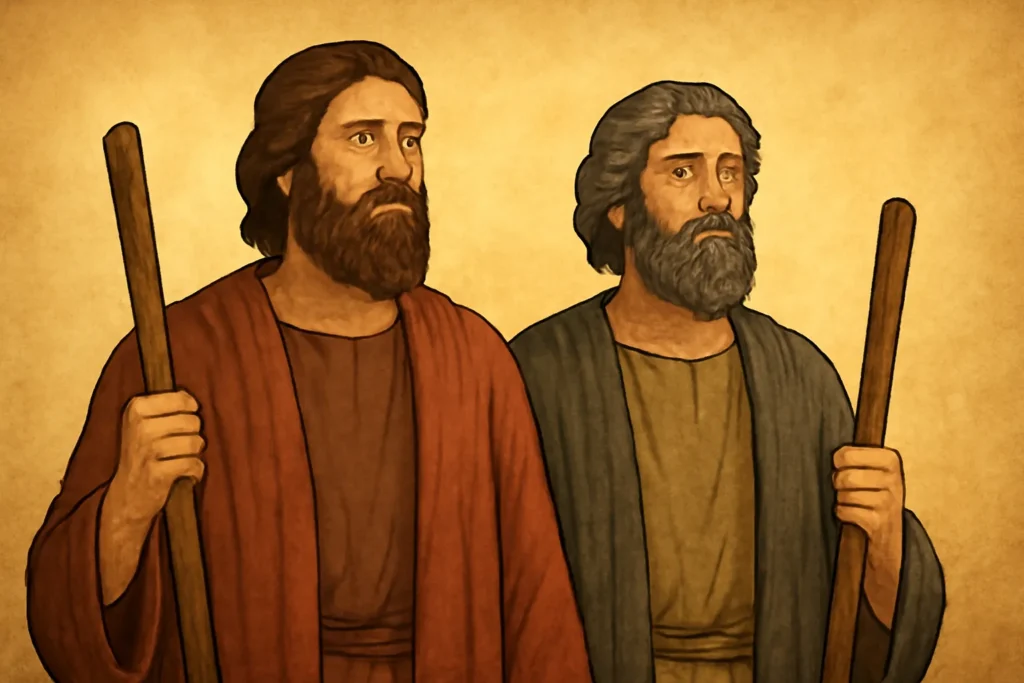
Literal pair: Moses and Elijah
One of the oldest and most persistent readings identifies the two witnesses as Moses and Elijah. This view rests on several textual cues:
Both figures are associated in the Old Testament with authority over nature and signs: Moses with turning water to blood and bringing plagues on Egypt, Elijah with rain withholding and miracles of fire (paralleling the powers attributed to the witnesses in Revelation 11:5-6).
Their presence as a pair mirrors the biblical pattern of pairing the Law and the Prophets—the two principal witnesses to God’s will in Israel’s scriptural framework.
Revelation 11:4 explicitly likens them to two olive trees and two lampstands, which some readers understand as a symbolic representation of enduring prophetic power rooted in divine anointing—an image that resonates with Moses and Elijah’s distinctive roles.
Supporters of this reading note that Moses and Elijah appear in a crucial moment of witness, echoing the intensity of prophetic activity that preceded and punctuated Israel’s history. They also observe that the death and subsequent resurrection of these witnesses in Revelation 11 reflect events that have symbolic echoes in the Old Testament narratives surrounding both figures. Critics, however, point to the difficulty of identifying two specific individuals in a passage that also invites highly symbolic interpretation, and they emphasize the broader symbolic dimensions of the text rather than a strict biographical reading.
Symbolic pair: Law and Prophets; faithful witness through eras
Another influential interpretation reads the two witnesses as symbolic representatives of the enduring witness of the Law and the Prophets or as a broader allegory for faithful testimony through the history of the church. In this view, the two witnesses personify the persistent, divine testimony that stands in opposition to oppressive powers and idolatry. Key ideas include:
Their authority to prophesy and to perform signs is not merely about individual persons but about the integrity and persistence of God’s message across generations.
Their role as two lampstands underscores the idea that they represent the church’s witness—whether understood as local congregations or the broader community of faithful believers—standing before the Lord of the earth.
The 1260-day period of their prophecy (see below) is read as a symbolic span rather than a literal calendar, highlighting a continuous season of witness within a larger eschatological drama.
Proponents of the symbolic reading often emphasize that Revelation’s apocalyptic genre invites layered meanings. In this light, the two witnesses may signify the church’s corporate witness—standing against corruption, revealing truth, and calling people to repentance—rather than a strictly biographical account of two historical figures.
Other candidates and considerations
Several other identifications or possibilities have been proposed in scholarship and tradition:
Enoch and Elijah: Since Moses’ death is described in Scripture and Elijah is taken up into heaven, some readers suggest a pairing of Enoch (taken up without dying) and Elijah as two figures representing the fullness of prophetic witness across human history.
A symbolic pair representing the “two witnesses” of Jewish and Gentile worlds, or of two prophetic voices within the early Christian movement.
Completely symbolic: Some interpreters insist that the text’s primary aim is not to name actual men but to present a paradigmatic figure of witness who embodies the Spirit’s power and divine authority in hostile environments.
Each of these readings seeks to account for the plain features of Revelation 11—their prophetic activity, the power over nature, the 1260-day timeframe, their deaths and resurrection, and the outcome of their testimony. The diversity of views highlights a central aim of the passage: to portray a powerful, public witness that stands under divine sovereignty and precedes tumultuous events in the eschatological timeline.
Symbolism of the Two Witnesses
Beyond questions of identity, the imagery surrounding the two witnesses is rich with symbolic meaning. The book of Revelation uses vivid symbols to convey spiritual truths about truth-telling, divine power, and cosmic conflict. Several key symbols recur in connection with these witnesses.
The olive trees and the lampstands
Revelation 11:4 describes the two witnesses as the two olive trees and the two lampstands standing before the Lord of the earth. This imagery carries several layers of meaning:
Olive trees supply oil, which in biblical symbolism is closely tied to the Spirit and divine empowerment. The continual supply of oil suggests that the witnesses’ power comes from God, not from self-generated authority.
Lampstands hold light; two lampstands signal a sustained witness that illuminates a surrounding darkness. The double motif emphasizes redundancy and reliability—two sources of divine light rather than one.
Together, the olive trees and lampstands link to Zechariah 4’s vision of the menorah and oil supply, suggesting a continuity of prophetic vocation from the Old Testament into the New Testament era.
This symbolism often leads readers to interpret the witnesses as God-empowered messengers whose mission is to testify publicly and powerfully while maintaining a divine dependence on the Spirit. The image also resonates with Christian liturgical and ecclesial imagery—where churches function as lampstands revealing truth in a spiritually dark world.
Authority over nature and signs
A central feature of the two witnesses is their unusual authority to perform spectacular signs. Revelation 11:5–6 notes that they have the power to shut the heavens so that it does not rain during the days of their prophesying, and to turn waters into blood and to smite the earth with plagues as often as they desire. This mirrors ancient narratives where prophets function as mediators of divine judgment or mercy through miraculous acts. The symbolism here emphasizes:
The accountability of political and spiritual authorities to God.
The prophetic prerogative to call for repentance or warn against apostasy through tangible, public signs.
The idea that true prophetic witness carries a visible, dramatic impact—often in resistance to hostile powers that impose idolatry or oppression.
In Revelation’s worldview, such signs are not merely sensational; they function to reveal truth, convict sin, and prepare the world for the climactic actions of the divine drama.
The 1260 days and 42 months
The period of the witnesses’ ministry is described in two complementary timeframes: 1260 days and 42 months. These numbers are symbolic in apocalyptic literature, often representing a complete, divinely ordained period rather than a precise modern calendar count. They evoke:
A sense of tested endurance—the witnesses prophesy through a long, challenging season marked by opposition.
A link to the apocalyptic pattern of biblical numbers, where 7 and 12 symbolize fullness and cosmic order, and 3.5 (half of seven) indicates a time of partial, but real, testing.
A preparedness for eschatological events that culminate in divine intervention and the ultimate victory of truth over tyranny.
Different interpretive communities read these numbers within their broader eschatological frameworks. Some see them as a literal future timeframe, others as a symbolic rhythm that expresses the intensity and duration of the witnesses’ ministry within the larger sequence of Revelation’s visions.
End-Time Significance and Interpretive Frameworks
The two witnesses occupy a pivotal space in end-time theology, and how one reads their identity and symbolism often reflects broader interpretive frameworks for Revelation as a whole. Here are the major scholarly and devotional approaches.
The futurist approach tends to treat the two witnesses as two literal individuals who will appear in a future time, specifically in connection with the events leading up to Christ’s return. Key features of this view include:
A focus on Jerusalem and a defined period of intense oppression during the Great Tribulation.
The expectation that the witnesses’ deaths, the world’s reaction, their resurrection, and ascent to heaven will occur in a public, global display.
The belief that their ministry occurs after the rapture or at some point in the eschatological timeline, depending on the particular sub-school of futurism (pre-trib, mid-trib, etc.).
In this framework, the two witnesses function as a decisive public testimony that maintains the integrity of God’s word against anti-God powers and serves as a prelude to end-time judgments culminating in the return of Jesus.
Preterist perspective
The preterist reading often interprets the passage as symbolic or as a reference to events already fulfilled in the first century. In this view, the two witnesses can be understood as:
A symbolic representation of the Old Covenant prophets (Moses and Elijah) or the continuity between the prophetic tradition and the early church.
A portrayal of the church’s endurance under persecution, with the “beast” representing imperial or political power that persecuted believers in the first century.
A literary device to convey the inevitability of divine judgment and the ultimate vindication of God’s witnesses, rather than a precise forecast of two future individuals.
The preterist reading emphasizes how Revelation 11 mirrors and reframes earlier biblical motifs, showing that the struggle between divine truth and earthly power has long been part of the people of God’s experience.
Historicist and idealist perspectives
The historicist and idealist approaches situate the two witnesses within a broader, ongoing interpretive arc:
Historicist readings often trace the witnesses through successive eras of church history, seeing them as a recurring prophetic motif that crops up wherever faithful testimony confronts corrupt authority.
Idealist readings view the witnesses as timeless archetypes of prophetic witness—the courage to speak truth to power under the Spirit’s empowerment, regardless of the particular historical moment.
Both approaches highlight Revelation’s capacity to communicate universal truths about witness, power, and divine sovereignty, rather than fixing the identity of the figures to a single historical pair.
Impact on Christian Thought and Culture
The figure of the two witnesses has left a rich imprint on theology, art, music, and literature. Several themes recur across centuries of Christian imagination.
Ethical and devotional implications
For many readers, the two witnesses symbolize the vocation of all Christians to be public, courageous witnesses to truth and justice. Their story invites reflection on questions such as:
What does it mean to bear witness in a hostile or confused cultural landscape?
How does one maintain fidelity to God’s message when faced with persecution or mockery?
Where does true power come from when confronting systemic evil—human authority or divine empowerment?
In this sense, the two witnesses function as a devotional reminder that true testimony is inseparably tied to the Spirit’s anointing and to steadfast endurance in the face of opposition.
The imagery of the two olive trees and two lampstands, along with the dramatic public ministry, has inspired artistic depictions and liturgical hymnody that appeal to the imagination and faith of believers. Visual art often foregrounds the themes of light and witness, while hymns and sermons highlight the call to faithful proclamation and the hope of divine vindication.
In literature, authors have used the two witnesses as a framework to explore themes of prophecy, justice, and the tension between spiritual authority and earthly power. Across genres, the witnesses invite readers to consider what it means to be a faithful messenger of God in every era.
Common Questions and Debates
As with many apocalyptic passages, readers frequently ask questions about the two witnesses. Here are some common inquiries and concise responses that reflect the range of scholarly and devotional perspectives:
Are they Moses and Elijah? Some hold this view, grounded in their Old Testament powers and the symbolic pairing with the Law and the Prophets. Others see them as symbolic figures representing prophetic witness in general or as two future individuals whose identities remain open to interpretation.
Why two witnesses? The number two emphasizes witness and corroboration. In ancient courts and biblical tradition, two witnesses establish credibility and provide a shared testimony that resists falsehood.
What is the significance of their death and resurrection? Their death by the Beast and subsequent resurrection signal the ultimate triumph of divine truth over hostile systems, while their ascent to heaven demonstrates the sovereignty of God and the reality of heavenly witness.
Does the passage imply a specific geographic location? Revelation 11 does situate the events in a context that some read as Jerusalem or a symbolic center of global influence. However, many interpreters stress that the imagery serves a theological purpose beyond a single locale.
How should this affect contemporary faith? For many believers, the passage reinforces the call to courageous prophecy, ethical witness, and dependence on God’s Spirit in the face of darkness and opposition.
Variants in Reading and Their Practical Implications
The diversity of readings is not only about scholarly preference; it also touches how communities imagine their own mission in a complex world. Depending on how one identifies the witnesses, there are nuanced implications for preaching, apologetics, and church life:
If understood as Moses and Elijah, churches may emphasize continuity with the Pentateuchal and prophetic streams, highlighting continuity with Israel’s narrative and Jesus’ fulfillment of the Law and the Prophets.
If read symbolically as Law and Prophets or as the church’s ongoing testimony, communities might stress the universal call to witness, reconciliation, and justice as essential components of Christian mission.
If seen as a futurist, literal, end-time event, eschatological expectation and readiness often become a central motif in preaching about perseverance and faithfulness in trials.
Across these readings, a common thread remains: witness under divine authority is a central motif. The witnesses do not operate in isolation from God’s plan; they are part of a larger narrative in which divine judgment, mercy, and ultimate justice unfold.
Practical Takeaways for Today
Readers who engage with the story of the two witnesses can draw several practical lessons for contemporary faith and life:
Bold testimony matters: The witnesses model a courage to declare truth honestly and publicly, even when opposed by powerful forces. In today’s world, faithful testimony may take many forms—advocating for justice, speaking truthful critique, or standing with the marginalized—always under the Spirit’s empowerment.
Authority comes from God, not from power: The signs the witnesses perform are a reminder that genuine prophetic authority flows from God, not from institutional status or sensational displays.
Perseverance in crisis: The 1260-day period underscores endurance. Believers are invited to remain steadfast, even when the surrounding culture mocks or persecutes faith.
Hope through restoration: The resurrection of the witnesses affirms that God’s purposes prevail over death and despair. This provides a theological anchor for hope during seasons of trial.
Symbolic literacy: Engaging with the imagery—olive trees, lampstands, rain, blood—helps readers appreciate Revelation’s symbolic language as a means to convey deep spiritual truths about light, life, and divine sovereignty.
The two witnesses in Revelation stand at the intersection of judgment and mercy, accusation and vindication, visible power and hidden reliance on God. Whether read as Moses and Elijah, as symbolic archetypes of prophetic testimony, or as a more complex combination of historical and symbolic elements, they illuminate a central biblical truth: God calls mouths to speak truth in a world resistant to the light. Their story invites readers to consider what it means to be a faithful witness in every era—not by human strength alone, but through the empowering presence of the Spirit, under God’s sovereignty, and within the unbreakable hope of divine redemption.
As you reflect on the two witnesses, you may find it helpful to remember two enduring ideas: first, that prophetic witness is deeply social and public—meant to confront injustice and call people to repentance; second, that the ultimate victory belongs to God. In that light, the imagery of the olive trees and lampstands serves not only as a historical or theological symbol but as a living invitation: to light up the world with truth, to endure with faith, and to trust that, even amid tribulation, God’s plan is moving toward its promised fulfillment.









Leave a Reply