The Sheep and the Goats Parable: Meaning, Lessons, and Biblical Context
The Sheep and the Goats Parable: Meaning, Lessons, and Biblical Context
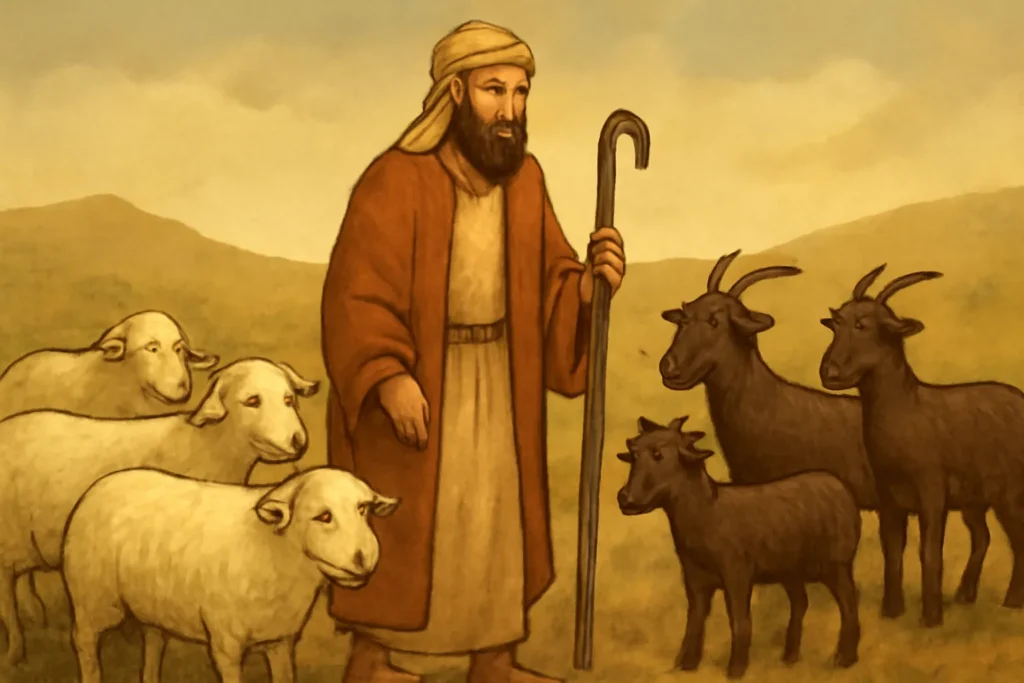
The Sheep and the Goats parable stands as one of the most vivid and debated narratives in the Christian Bible. In a compact scene, Jesus describes a future judgment in which people are sorted not by creeds alone but by the concrete acts of care they extended to those in need. The imagery centers on two groups—the sheep and the goats—set before a king who embodies justice and mercy. This article offers a thorough exploration of the parable’s meaning, its lessons for daily life, and its place within the broader biblical and theological context. It also considers variations of the tale, its reception across Christian traditions, and its relevance for contemporary ethics and ministry.
At its core, the parable proclaims that the ultimate criterion of judgment is practical compassion expressed through acts of mercy. The passage presents a stark exchange: the righteous are invited to inherit the kingdom because they fed the hungry, gave drink to the thirsty, welcomed strangers, clothed the naked, cared for the ill, and visited the imprisoned. The naked truth is that these actions are the visible fruits of a living faith. Conversely, those who ignored such needs are sent away into judgment. The parable does not deny belief or confession; it reframes belief as something that becomes visible in deeds of solidarity and mercy toward the vulnerable.
Several features of the scene sharpen the meaning. First, the king in the narrative speaks as the representative of the divine will, declaring that what was done (or not done) to the least of these ones was done to him. This personalizing of the marginalized as the measure of service upends conventional hierarchies and cautions against religiously smug or self-serving piety. Second, the dividing line is not geographic or ceremonial; it is ethical action in the ordinary, day-to-day circumstances of life. Third, the parable includes a dramatic reversal: those who were least obvious candidates for merit (the hungry, the thirsty, the stranger) become the primary evidence of righteousness. This reversal invites readers to reimagine what counts as true fidelity before God.
In many readings, the parable also foregrounds a deep link between justice and mercy. The measure of mercy isn’t abstract concern; it is tangible care that alleviates suffering. Some scholars describe this as a "theology of meals" or a practical ethics of hospitality. In this sense, the sheep and goats represent two responses to human need: one that aligns with a life of neighbor-love, and another that ignores neighbor-love even within the framework of religious life. The narrative thus challenges readers to examine the intimate relationship between faith and works—and to consider that genuine faith will manifest itself in concrete acts of compassion toward those who suffer.
Historical and Biblical Context
Origins in Jewish Agricultural and Social Imagery
To appreciate the parable, it helps to situate its imagery within its first-century Jewish milieu. The shepherd motif, the language of sheep and goats, and the ethic of hospitality all resonate with Jewish thought about righteous living and communal responsibility. In ancient Near Eastern societies, food, water, clothing, and shelter were not mere indicators of personal virtue; they were prerequisites for life and dignity. Thus, the acts enumerated in the parable—feeding, giving drink, welcoming strangers, clothing, visiting the sick and imprisoned—fit a long-standing scriptural and cultural expectation that the community bears responsibility for the vulnerable among them. The king’s judgments—on the basis of such acts—align with prophetic calls to justice and righteous living that appear throughout the Hebrew Bible.
Moreover, the shepherd/goat dichotomy carries a long history in biblical typology. Sheep are often associated with righteousness, fidelity, and followership, while goats may symbolize independence or stubbornness, or simply be used by patriarchal shepherds as mixed flocks. The choice of this pairing in Matthew is not merely a pastoral illustration; it is a cultural cue that invites hearers to consider how a community discerns who belongs and who is in need of care. The parable’s stark sorting, then, echoes prophetic warnings about injustice and neglect, even as it reframes judgment in the language of mercy and service.
New Testament Theological Echoes and Intertextual Threads
Within the broader New Testament, the parable harmonizes with themes found in James 2 (faith without works is dead), which emphasizes that genuine faith cannot be separated from acts of mercy and neighbor-love. While James and Jesus address slightly different audiences and concerns, both insist that faith expresses itself in concrete deeds. The moral logic of the parable also resonates with Luke’s emphasis on social reversal and the preferential option for the marginalized, though the exact scene of the sheep and goats is unique to Matthew.
Scholars often point to the parable’s eschatological orientation—the future judgment at the end of the age—as a way to anchor Christian ethics in a robust hope. The claim that “the Son of Man will come in his glory” situates moral action within a cosmic drama of accountability before the divine king. This eschatological frame is not merely about punishment; it is about the fulfillment of divine justice and the restoration of human dignity through mercy. In other words, the parable invites readers to live in a way that anticipates God’s coming kingdom, where care for the vulnerable becomes the standard by which all nations are measured.
Interpretive Traditions and Theological Reflections
Traditional Readings: Faith, Works, and Mercy
For many Christian traditions, the parable clarifies the relationship between faith and works. It presents a picture in which the evidence of true discipleship is not merely a right belief but a transformative life of mercy. The idea that “whatever you did for one of the least of these brothers and sisters of mine, you did for me” is read as a radical standard for ethical behavior. In this frame, acts of charity, hospitality, and care for the prisoner are not optional add-ons but essential indicators of belonging to the kingdom. The parable has often been cited in teaching about Christian social responsibility, charitable organizations, and the church’s mission to the poor and marginalized.
In confessional Christian traditions, the parable affirms that salvation remains by grace, but its fruits are visible in a life of love and service. The emphasis is not on earning favor through good works but on the natural outcome of a transformed heart. Good deeds are thus the sign that God’s mercy has not remained theoretical but has become practical and life-giving for real people in real circumstances.
Alternative and Critical Readings
Some interpreters push against a simplistic "works-based salvation" reading by noting the parable’s emphasis on corporate judgment and the social dimensions of obedience. They argue that the parable invites readers to consider justice in communal terms: who speaks for the hungry, who advocates for asylum seekers, who ensures the imprisoned receive humane treatment? In this sense, the parable challenges communities to envision a society where care for the vulnerable is a central governance principle, not merely a matter of private virtue. Others explore the possibility that the “sheep” and “goats” symbolize different responses within a single community—some members more inclined to mercy, others more self-protective—and that the judgment is about alignment with the king's will rather than a binary classification of saved and unsaved individuals.
Many contemporary theologians connect the parable with broader ethical concerns, such as economic justice, immigration and hospitality, and prison reform. They view the narrative as a compelling mandate for systemic care—ensuring that institutions, policies, and communities embody mercy in practice. The parable thus becomes a moral compass for lay and ordained life alike: it asks not only what individuals believe in their heads but what they do with their hands, especially toward those who are most vulnerable.
Key Themes and Practical Applications
Concrete care as evidence of discipleship: The parable links belief to action in a direct and memorable way.
Hospitality and welcome: Strangers are measured as neighbors, not as potential threats or strangers to be suspicious of.
Dignity of the vulnerable: Food, water, clothing, and visits are opportunities to affirm belonging and value.
Accountability and hope: The eschatological frame provides motivation for present ethical living while offering hopeful judgment that aligns with divine justice.
Community over individualism: The parable invites communal reflection on how a faith community cares for the needy among them.
In church life today, these themes translate into practical programs and cultures. Community outreach, food banks, shelter ministries, visitation teams for the sick or imprisoned, and advocacy for social policies that reduce deprivation can be seen as modern reflections of the sheep-and-goats ethic. The parable does not prescribe a single program; rather, it offers a lens through which to evaluate and design ministries so that mercy becomes a defining feature of the community’s life.
While the Sheep and the Goats is unique in Matthew, its core motif—final judgment based on how people treat the vulnerable—echoes throughout Scripture. Other parables and teachings emphasize discerning the genuine from the counterfeit, often through acts that reveal the heart. For instance, the parable of the Good Samaritan clarifies that neighbor-love transcends ethnic and religious boundaries, reinforcing a mercy that mirrors the merciful heart of God. The broad resonance between these narratives is the conviction that true righteousness manifests in humble, costly care for others.
Related Parables: Parabolic Channels and Ethical Clarifications
In contrast to the Sheep and the Goats, some parables emphasize internal transformation, such as the Prodigal Son or the Pharisee and the Tax Collector, which focus on humility and repentance. Yet the Sheep and the Goats binds internal change to outward behavior in a stark, universal framework. The parable of the Sheep and Goats might be seen as a bridge between interior conversion and public ethics: a converted life cannot help but express itself in service to others. In this sense, it shares kinship with other eschatological parables that urge readers to live with an eye toward God’s coming kingdom, where justice will prevail and mercy will be the hallmark of the people of God.
Historical Reception: From Early Church to Modern Ethics
Throughout church history, theologians and pastors have used the parable to discuss how Christians ought to respond to human need. In some eras, emphasis fell on personal salvation and piety; in others, the focus moved toward social action and reform. The classic tension—faith versus works—has often appeared in debates about mission, almsgiving, and the church’s role in society. Across these discussions, the Sheep and the Goats remains a touchstone: a reminder that authentic discipleship cannot be separated from care for the vulnerable, especially when such care runs counter to cultural expectations or personal convenience.
To translate the parable into daily life, consider how its principles might inform personal behavior, community life, and public action. Here are some reflective questions and practical steps that can help individuals and churches embody the sheep-and-goats ethic in contemporary settings:
Personal disciplines: Develop regular practices of generosity, hospitality, and presence with those who suffer. This could include volunteering, visiting the elderly, supporting refugee families, or mentoring someone in crisis.
Community care: Create or expand programs that address basic needs—food security, clothing drives, shelter partnerships, or prisoner re-entry support—so that mercy is embedded in the church’s rhythm.
Policy and advocacy: Engage in advocacy for policies that protect the vulnerable, such as affordable housing, healthcare access, humane treatment of prisoners, and fair employment opportunities.
Education and dialogue: Teach the parable in ways that connect scriptural ethics to social realities, encouraging critical reflection on systems of inequality and how faith communities can respond justly.
Hospitality as posture: Practice radical hospitality—welcoming immigrants, strangers, and the marginalized into spaces of fellowship, decision-making, and leadership.
Beyond programs, the parable invites a shift in heart: to view others as fully belong to God’s moral circle and to recognize that acts of mercy are both a duty and a gift. When communities embody this posture, mercy ceases to be a “nice thing to do” and becomes a central expression of what it means to live under God’s reign.
Questions and Reflections: Common Inquiries
Does this parable imply that people earn salvation by good deeds? Not typically. Most traditional readings maintain that salvation is by grace, but genuine faith will produce tangible acts of mercy. The parable emphasizes that one’s life will reveal what one truly loves and serves.
How should contemporary churches interpret the “imprisoned” and “ill” in today’s context? Many readers expand the categories to include prisoners, refugees, people experiencing poverty, the sick, and those facing social stigma. The core question remains: who is impoverished in our era, and how can we respond with mercy, dignity, and justice?
What is the relationship between personal salvation and social responsibility? The conversation is nuanced. The parable suggests that true discipleship cannot be reduced to private piety if it fails to address the material needs and injustices that affect real people. Yet it also affirms that faith is ultimately oriented toward God and God’s kingdom, not merely social reform.
Are there risks of misinterpretation that undermine grace? Yes. If the parable is read as a test that guarantees inclusion only to those who perform certain deeds, it risks turning mercy into a checklist. A balanced reading affirms grace while recognizing that grace naturally produces a compassionate life.
Biblical Citations and Suggested Readings
Matthew 25:31-46 – The primary text of the Sheep and the Goats, with the judgment scene and the acts of mercy.
Isaiah 58 – A prophetic call to justice and true fasting that aligns with acts of mercy toward the hungry and the oppressed.
Ezekiel 34 – A shepherd motif and God’s concern for the vulnerable, echoed in the shepherd imagery of the parable.
Proverbs 19:17 and Proverbs 21:13 – Wisdom literature that links generosity to righteousness.
James 2:14-26 – A New Testament articulation of faith and works, often read alongside Matthew’s parable for its emphasis on living faith.
Luke 10:25-37 – The Good Samaritan narrative, which is frequently considered a companion piece in ethical instruction about neighbor-love.
Luke 16:19-31 – The rich man and Lazarus, a narrative that also grapples with poverty, need, and accountability after death.
2 Corinthians 8-9 – Early Christian reflections on generosity and giving as expressions of grace and partnership with God’s work in the world.
For further study, many commentaries place Matthew 25 within the broader Gospel of Matthew’s mission themes, including the reversal of expectations for the marginalized and the call to faithful discipleship in a hostile world. The parable’s richness lies not only in its verdict about the future but in its invitation to live today as if God’s reign were already breaking into ordinary life through ordinary acts of mercy.
Art, Liturgy, and Cultural Echoes
Throughout history, the Sheep and the Goats has inspired art, music, poetry, and liturgical practice. In churches, the parable often anchors sermons and Bible studies on topics like charity, social justice, and the ethics of care. In art, shepherds separating sheep from goats has been depicted in landscapes and iconography that emphasize the stark moral choice presented by the parable. In modern culture, references to “the sheep and the goats” appear in political rhetoric, social discourse, and ethical debate, signaling ongoing relevance and contested interpretations.
For readers of screen literature or contemporary novels, the parable can illuminate fictional worlds where communities confront systemic neglect or embrace extraordinary mercy. In sermons and classrooms, it can serve as a practical framework for discussing tangible forms of mercy, such as addressing homelessness, supporting survivors of violence, or advocating for the dignity of workers and refugees. The enduring value is that mercy is not abstract sentiment but concrete action that shapes the common good.
Final reflections: The Living Significance of Mercy
The Sheep and the Goats parable remains one of the most provocative and hopeful stories in the biblical tradition because it anchors eternal significance in daily life. It asks not merely what one believes but how one lives. It asks not only for personal virtue but for communal integrity. It asks for a justice that welcomes the hungry, the stranger, the sick, and the imprisoned into a shared life, and it reminds communities that mercy, when enacted, reveals the presence of the king in our midst. In a world where suffering persists and disparities endure, the parable offers a compelling invitation: let the measure of our faith be the mercy we enact, and let that mercy be the surest sign that God’s kingdom is breaking in, one act of kindness at a time.











Leave a Reply