Overview: What the Mark of the Beast Is and Why It Has Long Captured Attention
The phrase “Mark of the Beast” appears in the New Testament book of Revelation and has resonated through centuries of
theology, art, and popular imagination. In broad terms, it refers to a symbolic sign placed on the forehead or right hand that signifies
allegiance to a corrupt worldly power, contrasted with faithfulness to God. The concept is often discussed together with the number 666, the
so-called “number of the beast”, and a sequence of prophetic visions that unfold in the book’s apocalyptic chapters. This article presents a
careful, balanced summary of the mark, its key points, and the range of meanings scholars and readers have attached to it across time and tradition.
The purpose of exploring a mark-of-the-beast summary is not to sensationalize but to illuminate how the idea has functioned historically,
the main interpretive frameworks that have developed around it, and what it might mean for readers today. Different traditions emphasize different aspects:
some stress the political or economic dimensions; others focus on spiritual loyalty, moral discernment, or the struggle between faith and pervasive cultural pressures.
Biblical Context and Core Passages
To grasp the summary of the mark of the beast, it helps to situate it in its primary scriptural context: the visions in the book of Revelation,
especially chapters 12–14 and chapter 13. Here, the flow of images presents a conflict between divine sovereignty and a coercive empire or system that demands worship.
Revelation 13: The Beast from the Sea and the Mark
The first beast is described as rising from the sea, possessing authority, blasphemous power, and markings of imperial control. Readers encounter
two crucial elements: the beast’s authority and the mark. The mark is repeated as a sign of participation in the beast’s economy and social order,
enabling the right to buy and sell. In many translations, this is phrased as no one being able to engage in ordinary commerce without bearing the mark.
Revelation 14:9–11 and the Warning Against Worship
A different strand in the same tapestry warns that those who worship the beast or receive its mark will face divine judgment. The juxtaposition is clear:
fidelity to God is portrayed as true life and blessing, whereas allegiance to the beast is depicted as a counterfeit life with severe consequences.
The Beast, the Mark, and the Number 666
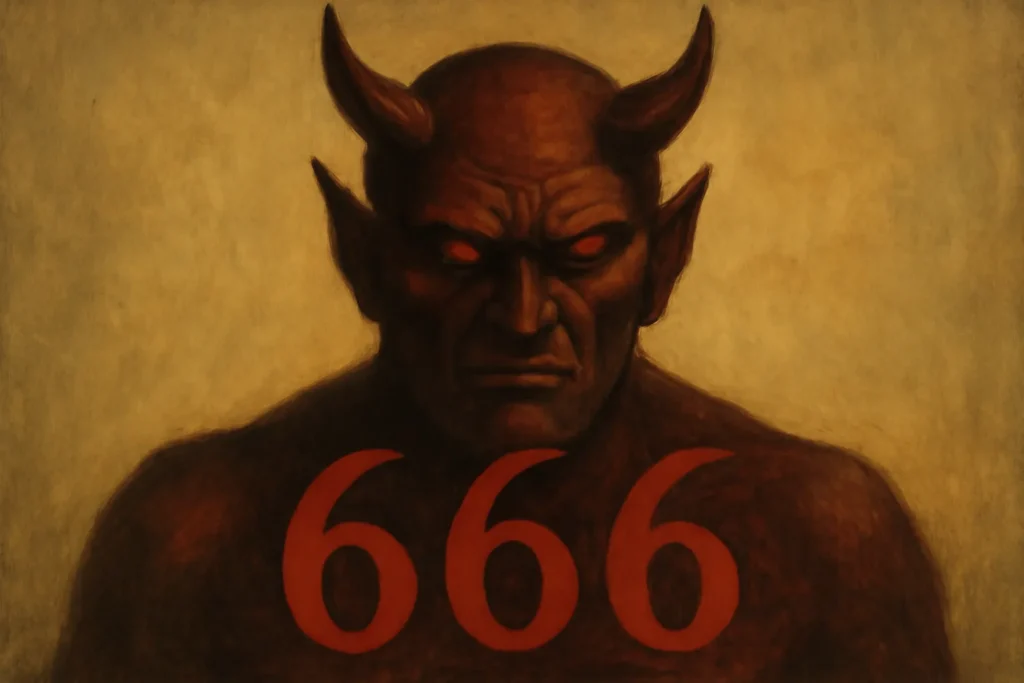
A central feature of the mark discussion is the number 666, described as “the number of the beast”. This numerical motif has generated a wealth
of interpretation, ranging from literal numerology to symbolic critique of oppressive power.
The number 666 has sparked debates about its origin and purpose. Some scholars emphasize gematria (a method of encoding words as numbers),
suggesting that the number points to a particular historical figure, often associated with Nero in the Roman Empire. Other readings argue that 666
functions as a literary device—a symbol of imperfection and rebellion against God, amplified and completed in a counterfeit divine sign.
In some early manuscripts, a variant number is given: 616. The difference between 666 and 616 has led to discussions about transmission history
and the possibility that the original name was rendered differently in various communities. Regardless of the exact number, the broader point remains: the beast’s
mark is associated with allegiance to a power structure that stands in opposition to divine authority.
What the Mark Represents Beyond a Literal Sign
For many readers, the mark is not primarily about a physical tattoo or chip, but about loyalty, worship, and participation in a social
order that opposes God’s kingdom. The sign operates as a visible token of complicity with systems that demand conformity, often by shaping
economic and social incentives. In this sense, the mark of the beast summary includes not just a symbol but a whole mode of life—what counts
as acceptable and what counts as forbidden in a given cultural moment.
Interpretive Frameworks: How Readers Understand the Mark
Across church history, scholars and Christian communities have approached the mark of the beast with different interpretive lenses. Each framework
offers a distinct lens for the mark-of-the-beast summary.
Preterist View: The Mark as a Past Reference
The preterist interpretation tends to locate the prophecy in the first-century Roman world. Proponents argue that the beast, the mark, and
the warring empires symbolize contemporary powers under which early Christians faced oppression. The mark’s significance, in this reading, is primarily
about loyalty to and participation in the established political order, which Christians must resist when it conflicts with divine commands.
Futurist View: A Future, End-Times System
The futurist perspective often expects a final, universal system of control connected to the end times. In this reading, the mark becomes a
future sign of allegiance to a global regime that enforces economic participation—thus the mandate to worship the beast becomes an explicit test for
believers. The mark, then, signals a climactic confrontation between faithfulness to God and participation in a malevolent global order.
Historicist View: The Mark as a Broad Range of Historical Powers
The historicist approach models Revelation as a continuous survey of Christian history. In this view, the mark and the beast symbolize recurring
patterns—the emergence of political and religious structures that demand exclusive loyalty and threaten God’s people across centuries.
Idealist or Symbolic View: The Mark as Spiritual Realities
The idealists emphasize spiritual warfare and symbolic language. They see the mark as a general symbol of choosing worldly security and power over
divine obedience, applicable in many eras and cultures. This reading highlights discernment, wisdom, and the ongoing struggle to remain faithful under pressure.
Key Points in the Mark of the Beast: A Practical Summary
Below is a concise synthesis of the most commonly cited points in discussions about the mark, crafted to be accessible for readers new to the topic as well as those seeking a recap.
Significance as allegiance: The mark is primarily about loyalty—visibly signaling who one serves: the powers of the earth or the God of heaven.
Economic dimension: In Revelation, the mark enables participation in commerce; without it, ordinary life becomes severely constrained.
Worship and idolatry: Receipt of the mark is tied to worship of the beast, a counter-worship that challenges divine sovereignty.
Two symbolic realms: The book contrasts the city of God—characterized by justice and mercy—with a corrupt empire that embodies oppression and blasphemy.
Numbers and language: The number 666 is a navigational sign in the text—rich with numerology, historical allusion, and prophetic complexity.
Voice of warning: The narrative repeatedly warns readers to discern the signs, resist coercion, and remain faithful to God’s commandments.
Not a single predictor: The mark functions as a broader archetype rather than a one-size-fits-all forecast, allowing multiple historical readings.
Ethical stakes: The call to righteousness remains central—believers are invited to trust God’s provision and sovereignty even under pressure.
Context matters: The symbolism relies on the surrounding visions—seals, trumpets, and bowls—that depict the cosmic drama of good versus evil.
Hopeful horizon: Despite darkness in the imagery, the Revelation narrative advances toward God’s ultimate sovereignty and the establishment of a renewed creation.
A core aim of exploring the mark-of-the-beast summary is to understand its relevance for modern readers without slipping into sensationalism. The following
points outline how many Christians interpret and apply the symbolism in contemporary life.
Discernment over fear: The mark symbol is a call to wisdom: to recognize pressure to conform to cultural norms that conflict with moral and faithful living.
Integrity in economic life: The economic dimension invites reflection on how personal and civic choices affect the vulnerable, the marginalized, and the common good.
Prioritizing fidelity to God: Faithfulness, worship, and obedience take precedence over social status or financial security when these come at odds with divine commands.
Resisting coercive power: The text invites believers to resist systems that demand exclusive loyalty at the expense of justice and mercy.
Hope through Revelation: The arc of Revelation emphasizes that ultimate victory belongs to God, even if the present moment feels fraught with pressure and danger.
Common Misconceptions and Clarifications
To avoid misinterpretations, it helps to distinguish several common but inaccurate ideas that have circulated about the mark of the beast.
Not a tattoo or microchip specification: The biblical text uses the language of a sign and symbol, not a modern manufacturing directive. The “mark” is primarily
a sign of allegiance rather than a technical specification.
Not simply about technology: While some readers draw contemporary parallels to digital IDs or monetary systems, the mark’s core concerns are about
worship, loyalty, and participation in a coercive order—issues that recur in many historical settings, not just modern tech.
Not a single global policy: The imagery invites multiple readings across histories and cultures; it is not a narrowly defined political program to be
identified in a specific era.
Not a guaranteed omen of doom: For many interpreters, the mark functions as a warning about moral compromise and spiritual vigilance rather than a
deterministic forecast of a particular future event.
The Mark and the Word: Language, Imagery, and Theological Meaning
The rhetoric surrounding the mark of the beast summary depends heavily on imagery: beasts, seals, numbers, and a looming decision point. The symbolic
language invites readers to consider what counts as true allegiance to God and what constitutes a counterfeit reliances on worldly power. Theologically, the mark
can be seen as a lens through which communities examine issues of justice, power, and the moral tests that accompany times of trial.
The Number 666: Historical and Theological Nuances
The number 666 sits at the intersection of textual interpretation, historical memory, and symbolic critique. In the ancient world, numbers often carried
symbolic weight, and the author of Revelation appears to leverage this device to convey a pointed critique of oppressive rulers. The debate about whether 666 points to a
specific individual or represents a broader pattern of imperfection and rebellion against God is central to many scholarly discussions.
Some readers highlight the contrast between the divine trinity and the evil triad imagery in Revelation, where the number of the beast stands in opposition
to the perfection and wholeness of God. Regardless of the precise decoding method, the number serves to emphasize a recognizable pattern: human systems
prone to hubris, coercion, and deception, contrasted with divine integrity and faithfulness.
The Mark and End-Times Narrative: How It Fits in Revelation
In the broader schema of Revelation, the mark interacts with other apocalyptic motifs—seals, trumpets, bowls, and the ultimate unveiling of God’s kingdom. The
sequence commonly presents a stark choice: align with God’s purposes or yield to a counterfeit system that advances coercive worship. The mark’s role, then, is not
merely to predict a future event but to stimulate a present-day reflection on loyalty, courage, and spiritual discernment.
Across centuries, the idea of the mark of the beast has influenced theology, literature, and art. It has also informed social and political commentary about
power, compliance, and resistance. In modern scholarship, the topic is studied with careful attention to historical context, literary genre, and the variety of
interpretive outcomes that emerge from different faith communities.
Cultural Reflections: Popular Culture and the Mark
The imagery of the beast and its mark has permeated popular culture, contributing to myths, films, and speculative fiction. Writers and filmmakers often use the
motif to explore themes of surveillance, loss of autonomy, or the tension between personal conscience and societal demands. While popular depictions can be dramatic,
a careful study of the biblical text emphasizes the need for balanced interpretation—one that avoids sensationalism while remaining faithful to its literary
and theological contours.
Distinguishing Literal, Historical, and Symbolic Readings
A meaningful mark-of-the-beast summary recognizes that the text blends literal imagery with symbolic meaning. The emphasis on sign, worship, and
economic constraint invites readers to engage with questions about power, identity, and moral testing. Distinguishing between literal expectations and symbolic
representations helps prevent overreliance on speculative predictions and encourages a more careful, informed understanding.
Practical Takeaways for Readers and Communities
For those studying the mark, the following practical takeaways can guide study, discussion, and personal reflection:
Study context: Read Revelation in its literary context, noting how apocalyptic language functions and why signs matter in this genre.
Discernment over sensationalism: Seek careful interpretation rather than sensational claims about present-day technologies or political movements.
Ethical engagement: Consider how power structures affect vulnerable populations and how communities can respond with justice and mercy.
Faithful resilience: The mark’s narrative invites believers to remain faithful to God’s purposes even when social pressures intensify.
Hopeful orientation: Remember the broader biblical arc toward restoration, renewal, and the triumph of divine justice.
FAQs: Quick Clarifications on the Mark of the Beast
Here are concise answers to common questions that often arise in discussions about the mark, designed to clarify terms and ideas without over-simplifying the topic.
Q: Is the mark a future invention only? A: Many interpreters see it as having future fulfillment, but the symbol also speaks to timeless issues of allegiance and power.
Q: Does the mark apply to individuals or institutions? A: The text emphasizes both individual and collective implications—how people relate to and participate in systems of power.
Q: Can the mark be identified with a single modern technology? A: The primary focus is not on one technology but on the broader dynamic of coercive control and moral choice.
Final Reflections: A Comprehensive Mark-of-the-Beast Summary
In sum, the mark of the beast summary centers on questions of allegiance, economic reality, and spiritual fidelity within a conflict between divine sovereignty and a counterfeit human order. The number 666, the imagery of the beast, and the sign on the forehead or the hand work together to convey a warning and a call to steadfastness. Readers are invited to
engage with the text thoughtfully, to examine how power operates in their own contexts, and to cultivate discernment, mercy, and hope as life under pressure unfolds.
Whether approached from a historical, futurist, idealist, or symbolic angle, the mark of the beast remains a potent symbol of the human struggle to navigate power,
loyalty, and faithfulness. A robust summary of the mark of the beast thus balances attention to textual detail with an awareness of broad historical patterns, always
grounding interpretation in the overarching message of judgment and redemption that runs through Revelation.









Leave a Reply