Origins of the Concept: The Biblical Mark and its Immediate Context
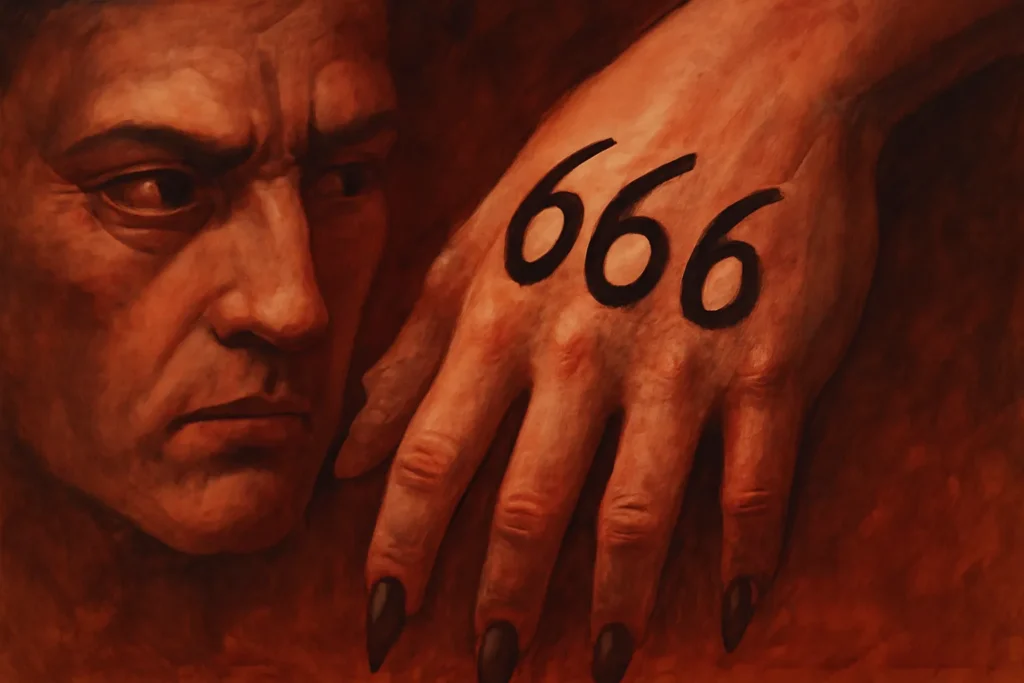
The central biblical source for the discussion of the mark of the beast is the Revelation of John, traditionally dated to the late first century CE. In Revelation 13:16–18, the beast compels “all people, small and great, rich and poor, free and slave” to receive a mark on their right hand or on their foreheads. Those who refuse to bear this insignia are denied the ability to participate in commerce within the realm of the beast’s authority. The text then introduces the famous phrase: “Here is wisdom. Let the one who has understanding calculate the number of the beast, for it is the number of a man, and his number is 666.” The language blends a concrete image (a mark on the body) with a cryptic mathematical clue, inviting readers to interpret both the symbol and its underlying allegiance.
The original Greek terms used in this passage carry nuanced meanings. The word commonly translated as mark is charagma, which can denote a stamp, imprint, or characteristic sign. Another term, sfragida, sometimes appears in parallel apocalyptic literature to denote a seal or sign of ownership. In Revelation, the mark functions as a visible token of fidelity to the beast, creating a boundary between those who serve the beast and those who remain loyal to God. The juxtaposition with the concept of a seal—often associated with divine protection—highlights a theological debate about allegiance, protection, and destiny.
The immediate historical milieu of early Christians under Roman rule shaped how readers understood the mark. Some interpreters saw the beast as a symbol for imperial power and its cultic demands—especially emperor worship and the social pressure to participate in state religion. In this reading, the mark represents a public act of allegiance rather than merely a private belief. The right hand and the forehead are practical markers: a person’s actions (what they do) and their thoughts or beliefs (what they profess) are visible to society. The implications are both ethical and political: economic participation, social status, and spiritual loyalty become linked in a perilous choice.
Early Christian writers, such as the Church Fathers, wrestled with whether this sign would be literal or symbolic. Some emphasized a literal interpretation, predicting a concrete, future mark that would be universally present. Others argued for a symbolic reading that captures the timeless tension between obedience to worldly powers and fidelity to the trans-empirical reign of God. The tension between external enforcement and internal devotion remains a durable lens through which readers engage with Revelation’s imagery.
Historical Interpretations Across Eras
Ancient and Early Church Views
In the first centuries, many readers associated the mark with imperial authority and the requirement to show loyalty to the Roman Emperor, sometimes through inscriptions, oaths, or participation in the imperial cult. For some, the mark represented a threshold between those who identified with the persecuting empire and those who identified with the persecuted community of believers. The interpretive emphasis varied: some saw the seal of God on the foreheads of the faithful as a counter-sign to the beast’s mark; others highlighted the danger of commerce-bound coercion that could force unaffiliated believers into difficult choices.
Medieval and Reformation Hypotheses
During the medieval period, commentators often linked the beast to political institutions centralized around the papacy or secular rulers who demanded allegiance beyond proper religious worship. The mark and the socioeconomic pressures described in Revelation were reimagined in light of contemporary power structures. The Reformation brought a new wave of speculative readings in which the mark symbolized a broader rejection of scriptural authority, with some reformers arguing that apostolic corruption or institutionalized indulgences could function as a modern equivalent to the beast’s coercive control.
In these eras, readers frequently asked: Could a future, global system require a single economic or identification mark? Could the technologies of control—printing, taxation, and standardized commerce—function as allegorical stand-ins for the mark? Across these debates, the Mark of the Beast was often used as a frame to critique abuses of power and to articulate concerns about conscience under coercive authority.
In contemporary scholarship, a spectrum of readings exists. Some scholars retain a primarily symbolic approach, arguing that Revelation uses vivid imagery to critique idolatry and the temptations of wealth and political power. Others propose historical-grammatical explanations that connect the text to first-century Roman institutions, especially the imperial cult and the economic networks that sustained it. A smaller group maintains a futurist perspective, predicting a literal, future mark that will emerge in a climactic series of end-time events. Still others pursue a preterist or idealist reading, positing that Revelation’s visions map onto past events or timeless spiritual truths rather than a single physical sign.
The phrase “the number of the beast” has also been a focus of numerological discussion. Some scholars use gematria, a practice of assigning numerical values to letters, to link the number 666 to the name of a particular historical figure or regime. A variant sometimes proposed is 616, based on different manuscript traditions. These numerical explorations emphasize how readers have long sought to decode hidden meanings embedded in the text, while acknowledging that the primary message concerns allegiance, loyalty, and witness in the face of coercive power.
Meanings, Significance, and Theological Implications
The mark of the beast is not a single, uniform idea but a cluster of interrelated themes that recur across Christian thought. Central to many interpretations is the question of allegiance—to whom do you give your ultimate loyalty? The mark functions as a test movie between two visions of life: submission to a coercive system that promises security and prosperity, or fidelity to a transcendent authority that commands a counter-cultural form of worship and righteousness.
Economic control: In Revelation’s world, buying and selling are instruments through which power is exercised. The ability to participate in commerce becomes a means to enforce conformity, and thus the mark is often discussed as a symbol of economic coercion.
Public identity: The mark is a visible sign of belonging. It signals to others that the bearer is aligned with the beast’s regime, foregrounding the social pressure that comes with stigma, reward, or punishment.
Spiritual allegiance: At its core, the mark raises questions about where people place their ultimate trust—material security, political power, or fidelity to God. The tension between worldly power and divine sovereignty is a recurring theme in Christian ethics and theology.
Ethical testing: Some readers view the mark as a test of integrity—whether a person will compromise personal conscience to gain advantage, or hold to a higher, divine standard even at great personal cost.
The discussion also highlights a persistent distinction in Christian thought: the seal of God versus the mark of the beast. The biblical narrative uses both terms to articulate a drama of destiny and loyalty. The seal represents divine protection and identity for those who remain faithful, while the mark signals submission to a counterfeit order. This contrast has shaped thousands of sermons, theological treatises, and lay interpretations across centuries.
Contemporary Theories and Debates
In modern discourse, the mark of the beast has ventured beyond strictly theological debate into popular culture and public imagination. Three broad lines of inquiry often appear in contemporary discussions:
Literal futurist readings: Proponents maintain that the beast, its mark, and the related events are future, universal, and materially real. They may discuss a global system of governance, universal identification, and economic controls that culminate in the appearance of the mark.
Symbolic and ethical interpretations: This strand emphasizes timeless spiritual principles—idolatry, power-metaphor, and the moral economy of obedience. The mark becomes a persistent symbol of the pressure to compromise one’s integrity in exchange for security or advancement.
Technological and sociopolitical speculation: Some readers connect the mark to modern technologies—biometric data, digital currencies, or ubiquitous identification systems. Cautions are commonly voiced to avoid conflating speculative technology with doctrinal prophecy, while still acknowledging how new systems can shape choices about loyalty and access.
It is important to approach these discussions with care. While it is tempting to equate Revelation’s imagery with contemporary devices, many scholars advocate a cautious approach that distinguishes prophetic symbolism from technological determinism. The history of interpretation shows a broad range of possibilities, each shaped by the social, political, and spiritual concerns of its own era.
End-Time Prophecies: The Eschatological Frame
The mark of the beast sits within a larger eschatological framework in Christian theology. The study of end-time prophecies typically involves several interrelated components: the rise of the beast, a climactic period of tribulation, a final act of divine judgment, the return of Christ, and the establishment of God’s reign. Within this frame, the mark often serves as a litmus test for allegiance during a tumultuous period that tests faithfulness under pressure.
Among Christians, two broad eschatological schemes address how events unfold after the time of Christ:
Premillennialism expects a visible, imminent return of Christ prior to (or at the start of) a literal thousand-year reign. In many premillennial interpretations, the rise of the beast and the enforcement of the mark occur in the final days, culminating in a dramatic, observable fulfillment of prophecy.
Amillennialism or postmillennialism interpret the same passages as symbolic representations of ongoing spiritual conflict and the ultimate victory of God over evil in an inaugurated, often nondynastic sense. Here, the mark’s significance is less about a precise calendar and more about fidelity under pressure across the course of history.
A wide spectrum also exists within preterist, futurist, and historicist readings, each with its own assumptions about time, symbolism, and the horizon of fulfillment. The diversity of these views reflects the broader theological principle that end-time interpretation is deeply connected to how communities understand God’s sovereignty, human freedom, and the meaning of obedience.
Symbolism, Ethics, and Cultural Impact
Beyond doctrinal discussions, the mark of the beast has left a substantial ethical and cultural footprint. Its symbol has been used to illuminate debates about security and freedom, state surveillance, and the moral responsibilities of individuals within a tightly regulated economy. Some readers of Revelation argue that the mark challenges people to consider what they are willing to exchange for safety, prosperity, and social acceptance. Others insist that the language should be understood primarily as a critique of idolatry—the worship of money, power, or human authority rather than the worship of the one true God.
Policy and ethics: The symbol invites questions about how societies balance public welfare with civil liberties, and about how economic systems can become instruments of coercion when used without regard for human dignity.
Interfaith and interreligious dialogue: The mark serves as a focal point for ecumenical and interfaith conversations about how communities interpret shared moral concerns—justice, oppression, and the vulnerability of the poor and marginalized under systems of power.
Cultural imagination: In literature, film, and art, the mark of the beast continues to be a potent metaphor for the moral hazards of totalizing power and the fragility of personal conscience under coercive regimes.
Theological Reflections and Practical Implications
The enduring interest in the mark and number of the beast is not primarily about predicting a timetable. It is about how communities understand human allegiance, temptation, and the call to witness in a world where power often wears a generous mask. The text invites readers to consider how faithfulness looks when external incentives push toward conformity, and how to cultivate a spiritual integrity that resists becoming merely a function of economic or political status.
Discernment: A persistent theme is the need for discernment—recognizing when power manipulates desires or claims to solve all problems, while remaining attentive to how genuine hope is grounded in truth and justice.
Compassion and solidarity: A faithful response to the pressures of coercive systems often emphasizes care for neighbors, ethical business practices, and resistance to idolatrous practices that elevate wealth or status above human dignity.
Hope and repentance: The end-time frame can be understood as a call to repentance, reminding communities that ultimate security rests not in the marks of worldly systems but in the steadfastness of divine grace.
Comparative Perspectives Across Traditions
Although the mark of the beast emerges from a distinctly Christian apocalyptic text, the broader humanism of apocalyptic and prophetic literature resonates in many religious traditions. Some Christian readers compare the beast’s program to patterns seen in various eras of persecution or coercion, while other faiths emphasize moral testing, accountability, and the pursuit of justice in the face of political power. Across traditions, the central resonance is not the precise symbol but the ethical call to fidelity, compassion, and communal responsibility under pressure.
Language and Variants: How People Speak About the Mark
In everyday language, people frequently refer to the beast’s mark in several synonymous ways to capture subtle nuances. These variations include:
The badge or sign of allegiance to a coercive empire or regime.
The imprint of subjection on the body and mind.
The emblem of consumer dependence and economic surveillance.
The number that reveals a coded identity, conventionally linked to 666, but occasionally discussed as 616 in manuscript evidence.
The contract between the bearer and a system that promises safety in exchange for loyalty.
These linguistic variants help readers grasp that the Mark of the Beast is a multifaceted symbol: it is not only a sign placed on the skin but also a sign imprinted on social and spiritual life.
Closing Reflections: Reading the Mark in a Modern Age
For readers today, the mark of the beast remains a provocative lens through which to examine power, technology, and faith. The historical arc—from early Christian communities under Roman rule to contemporary debates about identification technologies and economic systems—illustrates how apocalyptic literature can function as both critique and caution. Far from providing a single, deterministic forecast, the discussions surrounding the beast’s mark invite ongoing dialogue about justice, conscience, and the nature of true security.
A thoughtful engagement with this topic should balance respect for the ancient text with careful attention to how interpretations shape ethical action in the present. Whether one reads the mark as a literal future sign, a symbolic critique of idolatry, or a combination of both, the enduring questions are clear: What do we worship, what do we fear, and how do our choices reflect our deepest commitments? In exploring these questions, readers can appreciate the richness of the traditional exegesis while remaining mindful of contemporary concerns about freedom, dignity, and human flourishing.
In sum, the mark of the beast—often discussed as the Beast’s Mark, the sign of the beast, or the number of the beast—is a complex symbol whose meanings have evolved across centuries. It has functioned as a mirror for communities to examine their own complicities and resistances in the face of coercive power. Whether interpreted as a literal future event or a timeless allegory, it continues to provoke reflection on allegiance, ethics, and the fragile interface between security and freedom.









Leave a Reply