The Great Tribulation is a term widely used in Christian eschatology to describe a future epoch of unprecedented suffering, upheaval, and spiritual testing that is believed to occur before the return of Jesus Christ. It is also referred to as the tribulation period, the great distress, or the time of Jacob’s trouble in various traditions. This article surveys the meaning of this phrase, clarifies how it is understood in different schools of thought, and explains the commonly cited signs and timeline models associated with it.
To understand the question, “what is the Great Tribulation?” it helps to look at the biblical language and how it has been interpreted through history. In the Christian Bible, several passages describe a period of trouble and celestial disturbance that precedes Christ’s return. The term is not always used verbatim in all English Bible translations, but its concept appears in key prophecies and apocalyptic literature. The idea is not merely national or political turmoil; it is a concentrated, cosmic, and spiritual trial that tests faith, loyalty, and endurance.
Historical and theological context
Across Christian history, diverse strands of interpretation have shaped what scholars mean by the Great Tribulation. Some traditions emphasize a literal timeline that unfolds in a finite number of years, while others understand the events symbolically or as representative of ongoing spiritual conflict. The focus is often on preparing believers to remain faithful rather than predicting exact dates. The phrase great tribulation functions as a header for multiple strands of thought—each with its own emphasis on persecution, judgment, and divine deliverance.
Olive Discourse as a foundation
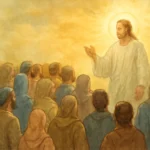
Several teachings about the Great Tribulation derive from Jesus’ discourse on the Mount of Olives, commonly called the Olivet Discourse. In passages found in Matthew 24, Mark 13, and Luke 21, Jesus speaks of signs that will precede his return, including wars, famines, earthquakes, persecution, false prophets, and a proclamation of the gospel to all nations. For many readers, these chapters anchor the idea that the end of the age will come after a tumultuous period of testing. Different interpreters emphasize different elements of the Olivet Discourse when describing the Great Tribulation.
Signs and events commonly associated with the Great Tribulation
While there is debate about exact timing and sequence, most scholars agree on a set of signs and events that are commonly linked to the Great Tribulation. These signs can be grouped into several overlapping categories:
Cosmic and natural upheaval — reports of unusual celestial phenomena, intensification of natural disasters, and disruptions in the natural order are often cited as markers that a climactic period has begun.
Global conflicts and political upheaval — widespread wars, regional wars, and rising international tension are viewed as indicative of the end-times era described in prophetic literature.
Religious deception and apostasy — a proliferation of counterfeit teachings, widespread social atheism or secularism, and the waning of genuine moral authority are typically noted as signs that spiritual discernment is needed.
Persecution of believers — intense pressure, discrimination, and even martyrdom of those who remain faithful to their beliefs are highlighted as hallmarks of the period.
The rise of a single global antagonist — many traditions speak of a pivotal figure who unites political or religious power and leads a large-scale, coordinated effort against those who oppose him or her.
Religious catastrophe and desecration — the idea of an “abomination of desolation” or a radical betrayal within a sacred space is a recurring motif in prophetic texts.
Prophetic word and gospel proclamation — for some interpreters, the gospel being proclaimed to all nations becomes a checkpoint that signals the nearing culmination of the age.
Conceptual timelines for the Great Tribulation vary widely among scholars and denominations. Here are the main families of models, each with its own set of milestones:
Futurist models view the tribulation as a future, literal, and distinct seven-year period that will occur after the present age. This framework often uses specific time markers like 7 years, 42 months (3.5 years), and 1260 days to describe sub-periods within the tribulation.
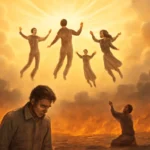
Pre-tribulation perspective holds that the church will be raptured or removed before the tribulation begins, followed by the seven-year period of testing and eventual Second Coming.
Mid-tribulation perspective posits that believers will endure the first portion of the tribulation, but a rescue or rapture occurs at or near the midpoint (often associated with the “abomination of desolation”).
Post-tribulation viewpoint argues that believers will endure the entire tribulation and be gathered at Christ’s return, without a separate post-tribulation rapture event.
Idealist and symbolic interpretations regard the tribulation not as a fixed historical window but as a symbolic representation of ongoing spiritual conflict between good and evil throughout the age.
Key biblical passages often cited
The discussion about the Great Tribulation centers on several central passages. Each text is read in light of tradition, hermeneutics, and theological emphasis. Some of the most influential verses include:
Daniel 9:27 — a pivotal verse in many futurist timelines, describing a seven-year covenant and an ensuing period of intensified conflict.
Daniel 12:1 — a crisis period described as a time of trouble such as never was, with emphasis on deliverance for those whose names are written in the book.
Matthew 24 (and parallel passages in Mark 13 and Luke 21) — Jesus’ Olivet Discourse, which outlines birth pains, persecution, and cosmic signs leading to the Son of Man’s coming.
Revelation 6–19 — the most explicit apocalyptic sequence in the Bible, detailing seals, trumpets, bowls, and the climactic battle between good and evil.
2 Thessalonians 2 — a letter addressing concerns about the coming of the lawless one and the restrainer, which some readers connect to end-times events.
1 Thessalonians 4 and related passages — important for discussions about the fate of believers and the concept of gathering to Christ, sometimes linked to the idea of a rapture in popular theology.
Interpretive approaches and debates
Scholars and theologians disagree about how to interpret the Great Tribulation, and the debates often hinge on how to read apocalyptic literature, whether prophecy is primarily future or historical, and how symbolic language should be understood. Here are four major interpretive families:
Futurist interpretation — most commonly associated with modern evangelicalism, this approach reads the majority of end-times prophecies as events that will unfold in a future, literal timeframe. The Great Tribulation is typically pictured as a distinct, seven-year period preceding Christ’s return.
Preterist interpretation — argues that most prophecies, including the Great Tribulation, were largely fulfilled in the first centuries after Christ, notably around the events of 70 CE and the fall of Jerusalem, with the current use of the term often understood as a symbol of ongoing spiritual struggle rather than a specific future event.
Historicist interpretation — sees end-time prophecies as unfolding progressively throughout church history, with various eras and figures corresponding to different parts of the prophetic calendar. The Great Tribulation, in this view, covers a broad span of time across history rather than a single block of years.
Idealist (or symbolic) interpretation — treats prophetic images as timeless archetypes illustrating the struggle between divine justice and evil, moral testing, and the ultimate triumph of good. The “Great Tribulation” becomes a universal pattern of spiritual warfare rather than a precise forecast.
Because the Great Tribulation is a contested topic, denominations and scholars often present distinct timelines. Here are some common patterns described by major streams of thought:
Premillennial and dispensational outlooks frequently present a future seven-year tribulation with the rapture occurring before or during the early part of the period. The sequence often includes an increase in deception, the rise of the Antichrist, a three-and-a-half-year period of intensified persecution, and Christ’s return to establish a millennial kingdom.
Postmillennial and amillennial viewpoints tend to emphasize the ongoing gospel work and the eventual fulfillment of prophetic expectations within history or in an allegorical sense. The apparatus of a single, literal seven-year crisis is not central to these frameworks.
Jerusalem-centered readings place particular emphasis on events surrounding Israel and the regathering of the Jewish people, linking the Great Tribulation to a climactic confrontation in the land of Israel and the eschatological vindication of God’s promises to Israel.
While not every model highlights the same individuals, several motifs recur in many explanations of the Great Tribulation:
The Antichrist — a figure who consolidates power, persecutes dissenters, and promotes a counterfeit form of worship or allegiance.
The beast and the mark — a symbol of coercive power that compels loyalty; the “mark of the beast” is a well-known motif in Revelation 13.
The abomination of desolation — an act of desecration that signals an intensification of persecution and the turning point in many timelines.
The testimony of the saints — faithful believers who endure suffering with steadfast commitment, often depicted as a moral counterbalance to the rampant deception and violence of the period.
What the tribulation means for believers today
Many readers approach the Great Tribulation not solely as a forecast to be decoded but as a call to moral and spiritual preparedness. The term end-times is sometimes used interchangeably with the Great Tribulation, but the emphasis can differ: some traditions see it as a warning of forthcoming judgment, while others stress the opportunity for faithful witness, courage, and perseverance under pressure. Across traditions, several common themes recur:
Faith under pressure — the period is seen as a proving ground in which genuine faith is distinguished from superficial allegiance.
Persecution and mercy — hardship is often tied to the testing of conscience and the opportunity for divine rescue or protection for those who remain faithful.
Judgment and deliverance — a tension between judgment on evil and deliverance for the faithful, culminating in the return of Christ.
Hope and exhortation — many readings stress that the tribulation serves as a catalyst for repentance, spiritual awakening, and renewed devotion to moral and communal life.
Historical perspectives and biblical literacy
Educators and theologians emphasize that understanding the Great Tribulation should be grounded in careful study of the biblical text, historical context, and literary genre. The apocalyptic sections of the Bible employ symbolic language, imagery, and highly structured numerology. Interpreting these components responsibly involves considering:
Context — the historical situation of the early Christian communities and the political pressures they faced.
Genre — apocalyptic literature uses vivid imagery to convey moral and theological truths rather than to provide a literal news report.
Hermeneutics — the interpretive methods used to derive meaning from texts, including how to balance literal expectations with symbolic intent.
Ethical application — how these ancient prophecies speak to present-day readers about justice, mercy, and personal integrity.
Practical takeaways for readers seeking clarity
Even if one does not adopt a specific eschatological timetable, there are practical takeaways that many readers find meaningful:
Spiritual vigilance — the concept encourages ongoing spiritual self-examination and faithfulness in daily life.
Hope in divine sovereignty — the overall message often emphasizes that God remains in control and that justice will prevail.
Compassionate action — in the face of suffering, many traditions stress care for the vulnerable and ethical behavior toward others.
Human resilience — the narrative urges communities to support one another through hardship and to cultivate courage and wisdom.
Historical context and the evolution of the idea
The concept of a climactic period of testing has roots in earlier Jewish and Christian writings. In Judaism, the term often intersects with the idea of a final judgment and the restoration of Israel. In Christian tradition, the Great Tribulation gathers motifs from prophetic books, letters, and visions into a single narrative arc that resonates with believers across generations. Over centuries, scholars have debated its nature, its timing, and its meaning for how people should live today. This debate reflects broader questions about how to read prophecy, how to anticipate future events, and how to understand suffering within the framework of faith.
Because the topic is widely discussed, several misconceptions persist. Here are a few clarifications that scholars and educators commonly offer:
Myth: The Great Tribulation is a single, isolated event in the near future. Reality: Many interpreters view it as a distinct period within a larger eschatological framework or as a symbolic representation of ongoing spiritual conflict, rather than a single, precise moment in time.
Myth: Only one generation will experience the Great Tribulation. Reality: Some traditions expect believers in different eras to face trials, while others anticipate a distinct generation that will witness the culminating signs.
Myth: The “rapture” occurs earlier than any suffering. Reality: In pre-tribulation models, a rapture occurs before the tribulation; in post- or mid-tribulation models, believers may experience parts of the tribulation before being delivered.
Myth: Prophecy is entirely predetermined in a literal sense. Reality: Many scholars emphasize that prophecy often combines historical memory, symbolism, and moral teaching rather than a strictly timetable-driven forecast.
Glossary of terms and concepts
Great Tribulation
A term referring to a future period of intense distress described in prophetic literature, often associated with the end of the age and the events surrounding the second coming of Christ.
Tribulation period
Another name for the same concept, used by many commentators to emphasize the prolonged, trying nature of the time.
Abomination of desolation
A biblical motif describing desecrating acts that provoke or accompany the peak of the crisis, frequently cited in Daniel and Matthew.
Antichrist
A figure who represents ultimate deception and defiance against divine authority, central to many futurist readings.
Rapture
A hoped-for event in which believers are caught up to meet Christ. Views on when this occurs relative to the tribulation vary across traditions.
End-times (eschatology)
The study and interpretation of events believed to culminate in the return of Christ and the establishment of God’s kingdom.
Olivet Discourse
The teachings of Jesus about end-times found in Matthew 24, Mark 13, and Luke 21.
1260 days / 42 months
Numerical timeframes used in apocalyptic literature to describe degrees of testing or ruling during the tribulation in some traditions.
Revelation
The last book of the New Testament, full of symbolic visions about cosmic conflict, judgment, and divine victory.
Further reading and study suggestions
Readers interested in exploring the topic further may consider:
Comparative studies of eschatological systems across denominations to understand how different communities read the same texts.
Commentaries on the Olivet Discourse and the book of Revelation to see how scholars handle symbolism, numerology, and historical context.
Historical surveys of how Christian eschatology has shifted across eras, including the impact of major events such as wars, plagues, and revolutions on end-times thinking.
Ethical reflections on prophecy: how belief in a future tribulation shapes present-day moral choices, social justice, and community life.
Conclusion: A nuanced view of the Great Tribulation
Although there is no single, unanimously accepted definition of the Great Tribulation, most Christians agree that this period is ultimately about conversion, faithfulness, and the triumph of divine justice. Whether read as a literal future sequence of events or as a symbolic portrayal of ongoing spiritual struggle, the idea of the Great Tribulation invites readers to consider how they live in the present moment, how they respond to suffering, and how they bear witness to hope in the face of adversity. The question what is the Great Tribulation? thus becomes not only a forecast but a call to discernment, perseverance, and ethical action in every generation.
Examples of how different timeframes influence emphasis
For readers who want a quick reference to how timeline debates shape interpretation, consider these contrasts:
In futurist readings, the emphasis is on a future, visible sequence with a clear start and end, often tied to a calendar-like prediction format.
In preterist readings, the emphasis shifts toward the first-century events and their execution in history, reducing the likelihood of a future-laden timetable.
In idealist readings, the emphasis is less on precise timing and more on the moral and spiritual significance of enduring hardship and remaining faithful.
Final reflection: engaging responsibly with end-times discourse
For educators, pastors, students, and curious readers, the topic of the Great Tribulation invites responsible engagement. Because end-times narratives are powerful and often emotionally charged, it is essential to approach sources with critical inquiry, respect for differing viewpoints, and a focus on constructive outcomes in the present world. By understanding the various ways people interpret the phrase the Great Tribulation, readers can participate in meaningful dialogue, examine their own beliefs, and consider how faith communities can respond to suffering with compassion, courage, and integrity.