First Holy Eucharist: A Complete Guide to Your First Communion
First Holy Eucharist, often called First Communion, is a milestone in the lives of many Catholic families. It marks the moment when a person, usually a child, first receives the Eucharist—the body and blood of Christ—within the liturgical context of the Mass. This article offers a thorough, readable exploration of what the sacrament is, why it matters, how to prepare, what to expect on the day, and how families can continue to grow in faith afterward. Whether you are a parent guiding a child toward the altar, a catechist or parish leader planning instruction, or a teenager or adult approaching this step for the first time, this guide is written to be practical, clear, and faithful to Catholic teaching.
What is the First Holy Eucharist and how does it relate to other sacraments?
The Eucharist is one of the seven sacraments of the Catholic Church. It has a profound place in Catholic theology and daily life. In the First Holy Eucharist, a person receives what Catholics understand as the real presence of Jesus Christ under the appearances of bread and wine. The practice is rooted in Jesus’ institution at the Last Supper, as described in the New Testament, and it is celebrated within the context of the Mass, the central act of worship in Catholic life.
Symbolically, the Eucharist is both a memorial of Christ’s passion, death, and resurrection and a sustenance that nourishes the Christian life. The term First Communion signals a new stage: the child or baptized person, who has already received baptism, is now able to participate in the sacrament of the Eucharist for the first time. In many cultures, this moment is celebrated with family gatherings, special outfits, and a procession into the church for the reception of the host.
Important distinctions to keep in mind include:
Baptism is the entry into the life of grace and the Church. It makes a person a member of the Body of Christ.
Confirmation strengthens that life and typically seals the recipient with the gifts of the Holy Spirit.
Eucharist is the ongoing reception of Christ’s real presence, feeding the faithful for their journey of faith.
First Holy Eucharist specifically refers to the first time a person receives the Eucharist after baptism, usually in childhood.
In Catholic practice, the Eucharist is distinct from other sacramental experiences. While reconciliation and anointing of the sick also convey grace, the Eucharist is unique because it is the sacrament through which Christ himself is given to the faithful as nourishment for the soul. Many people report a deep sense of encounter with Jesus in receiving the host. For catechesis and formation, this is a moment to emphasize reverence, grace, and participation in the liturgy.
There are several layers to why this sacrament is significant beyond personal devotion:
Spiritual nourishment: The Eucharist is considered food for the soul, sustaining Christians in daily life and during trials.
Unity with the Body of Christ: Receiving the Eucharist expresses and strengthens communion with Christ and with the Church.
Full participation in the liturgy: It enables the faithful to participate fully and actively in the Mass.
Formation in virtue: The practice invites ongoing formation in humility, gratitude, and reverence.
The decision to participate in the First Holy Eucharist is not only an event for a child; it is a turning point in a family’s spiritual life. It invites sustained catechesis, ongoing prayer, and regular participation in the sacraments as a path of lifelong faith formation.
Who can receive the First Holy Eucharist and at what age?
In the Roman Catholic tradition, the reception of the Eucharist is typically preceded by two essential prerequisites: the reception of baptism and the reception of confirmation or, in many places, the voluntary completion of age-appropriate catechesis tied to the parish’s schedule. The precise age for a child to make their first Communion can vary by diocese or parish.
Minimum age: Most parishes require a child to be at least seven years old, often corresponding with the age of reason (the point at which a child can understand right from wrong and begin to form a personal faith response).
First Confession or reconciliation beforehand: In many regions, children make their first reconciliation (confession) before their first Eucharist, so they can approach the sacrament with a clear conscience.
Preparation period: There is usually a period of catechesis lasting several months, sometimes a full school year, designed to teach the meaning of the Eucharist, how to participate in Mass, and the responsibilities of being a member of the Christian community.
There are also scenarios in which older children, teens, or adults who were baptized but did not receive the Eucharist at a younger age may prepare through a catechetical program tailored to their needs. In this guide, emphasis is placed on the typical path for a child with a family preparing for their First Holy Eucharist.
Preparation: catechesis and spiritual readiness
Preparation for the First Holy Eucharist is both instructional and spiritual. It involves learning the beliefs, the rituals, the prayers, and the reverence surrounding the Eucharist, as well as developing a personal relationship with Jesus Christ. Preparation is most effective when it engages parents and families as primary educators in the faith.
Structured catechesis
A well-designed catechetical program typically covers:
The meaning and significance of the Eucharist as the real presence of Christ under the appearances of bread and wine.
The liturgical framework of the Mass, including the Liturgy of the Word and the Liturgy of the Eucharist.
How to examine one’s conscience and prepare for the sacrament with a sincere and contrite heart.
Understanding transubstantiation, if taught in age-appropriate terms, and the difference between ordinary bread and wine and the real presence in the sacrament.
Tasks and prayers families can practice at home to reinforce learning and foster reverence.
Spiritual preparation
In addition to cognitive learning, formation emphasizes the inner life of the child. Practical steps include:
Developing a regular routine of prayer, such as morning or bedtime prayers, the Our Father, Hail Mary, and Grace before meals.
Participating in regular Sunday Mass with the family, encouraging active listening and participation in responses and singing.
Engaging in acts of service or charity as expressions of faith in action.
Reading children’s faith-friendly literature that explains the Eucharist in accessible terms.
Practical preparation steps for families
Families play a central role in preparing for the First Communion. Some practical steps include:
Establishing a home prayer corner with a small crucifix, a Bible, and candles or icons to create a sacred atmosphere for study and prayer.
Setting a realistic study schedule that respects schoolwork and family life while ensuring consistent catechesis.
Participating in parish activities that build community and reinforce the significance of the sacrament.
Identifying a sponsor or guide from the parish who can offer ongoing spiritual support and mentorship.
The liturgy and the day of First Communion
Understanding what happens during the Mass helps families feel prepared and at ease on the day of the First Holy Eucharist. The day is a liturgical celebration that may include a procession, a homily geared to children, and a special reception of the host for the first time.
The Mass structure you should know
Two primary parts define the Mass:
Liturgy of the Word: The readings from Scripture, the homily, and the prayers that prepare the faithful for the reception of the Eucharist.
Liturgy of the Eucharist: The consecration of bread and wine and the reception of Holy Communion.
In the First Communion context, the moment when the bread becomes the Body of Christ is central. The assembly’s participation is encouraged through responses, singing, and a shared sense of reverence.
Reception of the Eucharist for the first time
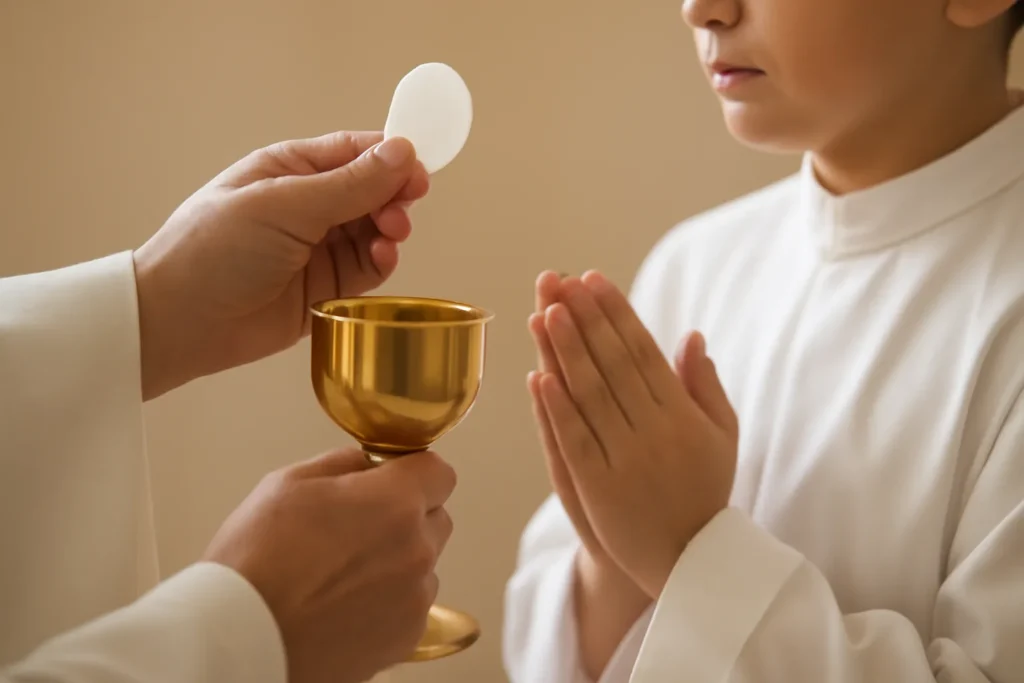
On the day of the ceremony, the child will typically approach the altar to receive the host. Depending on the diocese or parish tradition, several options may be offered:
Receiving the Host on the tongue by the priest or with one’s hands in the usual manner.
After the initial reception, some children may receive a blessing if they are not yet prepared to receive a second time or if they have special needs requiring adjustment.
Some parishes also allow the distribution of a second piece of the Host in a family-friendly format, though this is less common in many places.
The priest will typically offer a brief blessing after the First Communion, and the mass will continue with the final prayers and the recessional. Families often celebrate with a reception or a special gathering following the Mass.
Attire, etiquette, and practical considerations
Part of the experience of the First Holy Eucharist involves outward expression and inner reverence. Many families choose special attire to mark the occasion, and parishes often have guidelines to help everyone participate with dignity.
Attire and symbolism
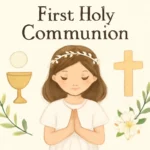
Girls frequently wear a white dress or a white dress with a veil, symbolizing purity and new life in Christ. A white dress is a common traditional choice.
boys commonly wear a suit or formal attire, sometimes with a tie or a bow tie and a jacket.
Some families incorporate modest jewelry and accessories that honor the sacred nature of the day.
Parishes may have modesty guidelines or dress codes, so it is wise to check in advance. The emphasis is on reverence, not fashion, and comfortable, fitting clothing is essential to help the child participate in the Mass with focus.
Etiquette inside the church
Arrive early to allow time for prayer and quiet reflection. Walking in with the community fosters a sense of belonging and reverence.
Respect for the Sacrament: Refrain from chewing gum, unnecessary talking, or running in the pews.
Observe positions of prayer: Standing, kneeling, and sitting at the appropriate times in the Mass.
Respect for the host: The Host is treated with reverence; children may be guided on how to approach the altar.
Parents, sponsors, and catechists model reverence in word and action, so that children learn to approach the Eucharist with a posture of faith and gratitude.
After the First Communion: ongoing formation and devotion
The journey after the First Holy Eucharist is about growing in grace and continuing to participate in the sacramental life of the Church. It’s common for families to develop routines that sustain faith formation, prayer, and service.
Continuing the practice of prayer and devotion
Maintain regular attendance at Sunday Mass and encourage a personal prayer routine at home.
Include time for thanksgiving after Communion: a simple moment of gratitude for the grace received.
Incorporate short, family-based devotions such as the Rosary, the Angelus, or devotion to the Divine Mercy, according to family tradition and Church teaching.
Nutrition for the soul: spiritual food and virtue
The Eucharist is the primary source of spiritual nourishment, but it is not the only one. Families can nurture virtue through acts of charity, forgiveness, and patience. Catholic education emphasizes the ongoing formation of habit, so that the sacrament becomes a living reality in daily life, not merely a one-time event.
Common questions and misconceptions about the First Holy Eucharist
Clear answers help dispel confusion and support proper formation. Here are common questions with concise explanations.
Q: Is the Eucharist a symbol or the real presence?
A: Catholic teaching holds that the Eucharist is the real presence of Christ under the appearances of bread and wine. This is the core belief of transubstantiation, explained in catechesis as God’s power transforming the elements in a way that the appearances remain, while the underlying substance becomes Christ’s body and blood.
Q: Why do children receive the Eucharist for the first time?
A: After Baptism and the development of catechetical understanding, children are prepared to participate in the Eucharist as part of their journey of faith. The first Communion emphasizes active participation in the Missa and fosters a sense of belonging to the Church community.
Q: What if a child is not ready for the First Communion yet?
A: Parishes understand that readiness varies. If a child is not prepared, catechesis may be extended, or a deferred reception may be planned. The goal is sincere faith formation, not coercion into a ceremony. Parents can work with catechists to tailor a path that respects the child’s development.
Q: How often can one receive the Eucharist?
A: In Catholic practice, the Eucharist is to be received regularly at Mass, typically every Sunday and on holy days of obligation when possible. In some circumstances, after a proper examination of conscience and pastoral guidance, a communicant may also receive it on weekdays, depending on the local rules of the diocese.
Q: What about those with special needs or a fear of receiving Communion?
A: The Church offers accommodations and pastoral guidance for individuals with special needs. The goal is full, active participation in the liturgy when possible. Parents and catechists can guide children with gentle explanations and appropriate alternatives when necessary.
Cultural traditions and variations: First Communion around the world
Across different cultures, the First Holy Eucharist is celebrated with a variety of customs that reflect local traditions while remaining faithful to the core sacramental meaning.
Colorful celebrations often accompany the Mass, with family gatherings after church and formal photographs.
In some regions, a procession with flowers or candles may be part of the ceremony, and children wear bright or traditional attire in addition to white garments.
Europe
In many European countries, the ceremony is scheduled on or near good weather, with communities gathering for meals and celebrations afterward.
Traditional garments may vary by country, but white dresses and formal suits remain common, symbolizing purity and solemnity.
Africa and Asia
Communities may incorporate cultural music, dances, or processions that reflect local Catholic rites and languages.
Families often celebrate with a feast, sharing cultural foods that link faith with family heritage.
Regardless of cultural variation, the essential meaning of the First Holy Eucharist remains the same: it is a personal encounter with Christ, a moment of grace, and a step in lifelong discipleship.
History and theology: a brief look at the Eucharist
The practice of the Eucharist has deep roots in Christian history. The early Church celebrated the Breaking of the Bread in imitation of Jesus’ Last Supper. Over centuries, theologians reflected on the mystery of the sacrament, culminating in official Church definitions like the concept of transubstantiation as articulated in ecumenical councils and liturgical documents.
From a theological perspective, the Eucharist is understood as a mystery—the visible signs of bread and wine convey the reality of Christ’s presence. Faithful reception of the Eucharist is associated with grace and empowerment to live Christian virtue, respond to God’s call, and participate in the life of the Church.
Historically, the rite evolved with local customs, liturgical languages, and pastoral practices. The core elements—confession of faith, the reading of Scripture, the consecration, and the distribution of communion—remain at the heart of Catholic worship. The First Holy Eucharist is a milestone that connects a child to this ancient and ongoing tradition.
Glossary of terms often used around the First Communion
To help readers follow conversations and catechesis, here are some key terms explained in brief form:
Eucharist: The sacrament in which the Body and Blood of Christ are received.
Communion: The act of receiving the Eucharist; also the unity of believers in Christ.
Transubstantiation: The doctrinal term describing the change of the substance of bread and wine into the Body and Blood of Christ during consecration.
Mass or Missa: The central liturgical celebration of the Catholic Church.
Baptism: The sacrament that welcomes a person into the life of Christ and the Church.
Confirmation: The sacrament that strengthens the gifts of the Holy Spirit within a believer.
Reconciliation: Also known as confession, the sacrament of forgiveness and healing.
Tips for families preparing for the day
To help families approach the First Holy Eucharist with clarity and reverence, consider the following practical tips:
Start with a family plan: set goals for catechesis, prayer, and Mass participation with the child in mind.
Coordinate with the parish: attend information sessions, confirm dates, dress codes, and any required documents.
Provide a quiet space for study at home: a small prayer corner, a Bible, a sacrament prayer book, and age-appropriate catechetical materials.
Include the child in planning: selecting a modest outfit, helping to practice the reception of Communion, and drafting a simple personal prayer of gratitude.
Reinforce reverence through daily practice: short prayers, grace before meals, and discussions about the meaning of the Eucharist.
What to do if you are a sponsor or godparent
Sponsors or godparents play an important role in the journey toward the First Communion. Their responsibilities include spiritual support, encouragement in religious education, and modeling a life of faith. Sponsors should be prepared to:
Pray for the candidate regularly and participate in parish events where possible.
Encourage the child to grow in virtue, charity, and a sense of God’s presence in daily life.
Be a source of guidance about the liturgy, prayer, and service to others.
Participate in pre-ceremony briefings or catechesis as requested by the parish to understand expectations.
Conclusion: embracing the ongoing journey of faith
The First Holy Eucharist is a foundational moment in Catholic life, but it is not an endpoint. It is a doorway into deeper life in Christ, ongoing formation, and continued participation in the sacramental life of the Church. By approaching this milestone with intention—through catechesis, prayer, reverence in the liturgy, and a supportive family environment—children can grow into adults who understand and live the Gospel. The path of faith offers ongoing opportunities for daily conversion, service to others, and a growing sense of belonging to the Body of Christ.
In the spirit of that journey, may every First Holy Eucharist be a source of grace, a spark for lifelong discipleship, and a vivid reminder that in the fullness of the Church, we are nourished, strengthened, and sent to love and serve the Lord.





Leave a Reply