Introduction: What these Passages Teach About Communion
Communion is a practiced and deeply meaningful act within the Christian life. It gathers worshipers around a shared meal that signifies more than physical sustenance: it points to spiritual nourishment, a covenantal relationship with Christ, and a community marked by unity. In Scripture, the acts of breaking bread and sharing the cup are filled with layers of meaning—remembrance, proclamation, gratitude, and anticipation. This article surveys key Bible verses and readings about communion, with careful attention to the language, context, and how different traditions read the same passages. The aim is to equip individuals, families, and churches with a broad and accurate sense of what these passages mean, how they function in worship, and how believers can engage with them in meaningful, life-giving ways.
The material below presents a curated collection of scriptural passages often cited in connection with the Lord's Supper, the Eucharist, or the breaking of bread. It includes verbatim quotations from the King James Version (KJV) for clarity and public-domain accessibility, followed by brief explanations, paraphrased variations, and practical reflections that foreground remembrance, the new covenant, the body and blood of Christ, and the hope of Christ's return.
Understanding the Language of Communion
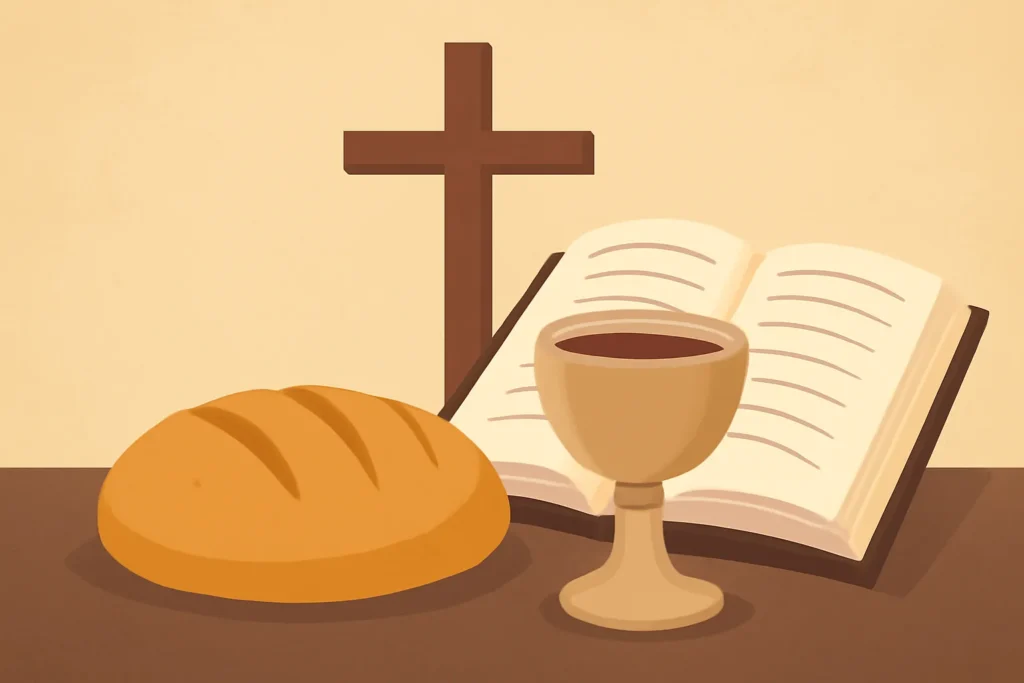
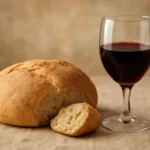
Across Christian traditions, bread and cup serve as tangible symbols. The bread represents Christ’s body, broken for believers, while the cup represents Christ’s blood shed for many. The terminology—“the communion,” “the Lord’s Supper,” “the breaking of bread”,
and the new covenant—reflects both a memorial function (remembering Christ’s saving work) and a communal function (participating together as one body). In Scripture, these elements point toward a dual focus: memory and anticipation.
This section will foreground themes that recur in communion readings:
Remembrance and proclamation of Jesus’ death
Participation in the Body of Christ
Covenant language: the new covenant in his blood
Future orientation: awaiting Christ’s return
In examining the passages, we will encounter both direct commands and theological reflections on what it means to share in this sacred meal. Different Christian communities prioritize aspects of these readings differently—some emphasize the remembrance aspect most, others highlight the communion and unity of the church, and still others focus on the spiritual nourishment and forgiveness implied by the covenantal imagery.
Key Passages on Communion
Below are central passages often read during communion or studied for devotional leading. Each subsection presents the biblical text, with a brief note about its significance, followed by a paraphrase or reflection to broaden semantic breadth while staying faithful to the intention of the original words.
1 Corinthians 11:23–26 (The Lord’s Supper as Remembering and Proclaiming)
For I have received of the Lord that which I also deliver unto you, that the Lord Jesus the same night in which he was betrayed took bread; And when he had given thanks, he break it, and said, Take, eat: this is my body, which is broken for you: this do in remembrance of me. After the same manner also he took the cup, when he had supped, saying, This cup is the new testament in my blood: this do ye, as oft as ye drink it, in remembrance of me. For as often as ye eat this bread, and drink this cup, ye do shew the Lord'sdeath till he comes.
This passage anchors the act of communion in the memorial words of Jesus and the apostolic transmission. The repetition of remembrance in this text emphasizes the church’s ongoing identity—remembering Christ’s atoning work is not a one-time event but a recurring practice that binds believers together in fellowship.
Luke 22:19–20 (The Institution and its Memorial Frame)
And he took bread, and gave thanks, and break it, and gave unto them, saying, This is my body which is given for you: this do in remembrance of me. Likewise also the cup after supper, saying, This cup is the new testament in my blood, which is shed for you.
Luke’s account highlights the institutional moment and adds the phrase “remembrance” as central to the practice. The cup’s symbolism is described as the new covenant in Christ’s blood, inviting readers to see this meal within the larger narrative of God’s redemptive plan.
Matthew 26:26–28 (The Body and Blood of the New Covenant)
And as they did eat, Jesus took bread, and blessed it, and brake it, and gave it to the disciples, and said, Take, eat: this is my body. And he took the cup, and gave thanks, and gave it to them, saying, Drink ye all of it; For this is my blood of the new testament, which is shed for many for the remission of sins.
Matthew’s version foregrounds the shared meal among the disciples and the explicit notion of a new covenant in Christ’s blood. The call to drink all of it emphasizes inclusive participation, a shared responsibility for the community’s faith.
Mark 14:22–24 (Action, Words, and Covenant Language)
And as they did eat, Jesus took bread, and blessed, and brake it, and gave to them, and said, Take, eat: this is my body. And he took the cup, and when he had given thanks, he gave it to them: and they all drank of it. And he said unto them, This is my blood of the new testament, which is shed for many.
Mark’s account complements Matthew’s, with emphasis on the actions that accompany the words—blessing, breaking, and sharing. The passage continues to speak of a new covenant signified by Christ’s blood and a wide invitation to participate.
1 Corinthians 10:16–17 (The Communion as a Shared Participation)
The cup of blessing which we bless, is it not the communion of the blood of Christ? The bread which we break, is it not the communion of the body of Christ? For we being many are one bread, and one body: for we are all partakers of that one bread.
This passage ties the ritual act to a powerful metaphor: a single loaf and a single cup make believers one body, sharing in the life of Christ together. It is a theology of unity and mutuality, reminding readers that communion extends beyond personal piety into communal life.
Acts 2:42; 20:7 (Early Church Practice and the Breaking of Bread)
Acts 2:42 — And they continued steadfastly in the apostles’ doctrine and fellowship, and in breaking of bread, and in prayers.
Acts 20:7 — And upon the first day of the week, when the disciples came together to break bread, Paul preached unto them, ready to depart on the morrow; and continued his speech until midnight.
Luke’s accounts help us see that the early church connected communion to a broader pattern of fellowship, teaching, prayers, and shared meals. The phrase breaking of bread becomes a shorthand for a practice that knit Christians together in mutual support and worship.
John 6:53–58 (Bread and Life: A Related Dimension)
Then Jesus said unto them, Verily, verily, I say unto you, Except ye eat the flesh of the Son of man, and drink his blood, ye have no life in you. Whoso eateth my flesh, and drinketh my blood, hath eternal life; and I will raise him up at the last day. For my flesh is meat indeed, and my blood is drink indeed. He that eateth my flesh, and drinketh my blood, dwelleth in me, and I in him.
John’s Gospel presents a strenuous, metaphor-rich discourse about Jesus as the source of life. While some Christian traditions read John 6 as primarily a spiritual, symbolic call to faith rather than an ordinary Lord’s Supper text, many also understand it as a deep affirmation of participation in Christ. The passage invites readers to consider the life-giving relationship that communion symbolizes, and it helps explain why the language of appetite, life, and dwelling is so central to the imagery of the Eucharist.
Remembrance, Proclamation, and Proclaiming the Lord’s Death
Across the major passages, a consistent theme is the proclamation of Christ’s death as the decisive act of salvation. The repeated phrase “this do in remembrance of me” or its equivalent invites believers to remember with intention, to tell others about what Christ has done, and to live in light of that revelation. A variety of readings can help a congregation keep this sense of mission alive:
Plain remembrance readings, focusing on Christ’s self-giving love.
Johannine reflections that tie the bread and cup to the Word made flesh and the life of the Spirit.
Christ-centered hymns or creeds that summarize the gospel narrative in relation to communion.
Covenant Language: The New Covenant in His Blood
The language of a new covenant in Jesus’ blood recurs in Luke and the synoptic gospels. The covenant motif frames communion not merely as a ritual act but as a relational agreement with God—one that binds the people to the living Christ and to one another. For deeper study, you might consider:
Exploring how covenant theology underlies the meal and shapes ethical commitments.
Comparing translations to see how terms like testament or covenant influence interpretation.
Body and Blood: The Unifying Symbol
The repeated pairing of body and blood invites readers to consider two intertwined realities: Jesus’ physical offering on the cross and the spiritual life conferred by his death and resurrection. Paraphrases of these ideas can help learners grasp the depth of this symbolism:
Paraphrase: The bread binds believers as a single body because they all share in Christ’s life.
Paraphrase: The cup seals the new relationship with God, established through Jesus’ sacrificial love.
Participation and Unity: One Bread, One Body
The apostolic teaching that we are one bread and one body underscores communal identity. It is not merely an individual devotional act; it is a corporate confession of faith. Ceremonial forms pause to remind the church that unity flows from the gospel itself, and that celebration of the meal is a tangible sign of that unity.
Liturgical and Practical Approaches to Reading These Passages
How Churches Read These Passages in Worship
Across different traditions, liturgical readings of communion vary. Some churches emphasize a fixed sequence: call to worship, confession, Word, communion, and dismissal. Others adopt a more spontaneous format that centers the word and response. Some common practices include:
Lectionary-based readings that pair a communion text with other Scripture for a given Sunday.
Responsive readings where a leader and congregation alternate lines, reinforcing communal participation.
Quiet reflection or a time of meditation between the reading of the passage and partaking of the elements.
Variations in the Practice of the Meal
The way bread and cup are distributed varies widely and reflects historical and doctrinal differences. Some churches:
Use one cup shared by all; others use individual cups.
Offer unleavened bread or leavened bread; some use symbolic wafers.
In some traditions, communion occurs as part of a larger meal or feast; in others, it is a solemn, isolated rite.
Reading Plans and Meditative Practices
For individuals and families seeking to engage with communion passages intentionally, here are practical reading plans and meditative practices:
Two-week mini plan: pick one passage per day, alternating between the gospels (Matthew, Mark, Luke) and Paul (1 Corinthians), followed by a brief personal reflection.
Seasonal plan: during Advent or Lent, focus on the covenant and the anticipation of Christ’s return; during Eastertide, emphasize remembrance and proclamation.
Family devotion plan: read a short verse from 1 Corinthians 11, discuss what it means to be a part of one body, and close with a simple prayer of gratitude.
Reading Plans: Sample Itineraries for Personal and Family Devotion
Plan A: Core Passages Read Twice Weekly
This plan helps a reader to internalize the central ideas of communion over a month, with two readings per week.
Week 1: 1 Corinthians 11:23–26 (remembrance) and Luke 22:19–20 (the institution).
Week 2: Matthew 26:26–28 (body and blood) and Mark 14:22–24 (the cup and the covenant).
Week 3: 1 Corinthians 10:16–17 (one body, one loaf) and Acts 2:42 (fellowship and breaking of bread).
Week 4: John 6:53–58 (bread of life) and a reflective reading from Psalms or the Gospels on gratitude and humility.
If the aim is to cultivate the social dimension of communion—fellowship, generosity, and humility—this plan emphasizes passages that point to community life.
This plan fosters awareness of how language shapes understanding. Readers alternate among translations (KJV, ESV, NRSV, and a modern paraphrase) to observe how terminology shifts meaning.
Week 1: 1 Corinthians 11:23–26 (KJV) and Luke 22:19–20 (ESV)
Week 2: Matthew 26:26–28 (NRSV) and Mark 14:22–24 (paraphrase)
Week 3: 1 Corinthians 10:16–17 (KJV) and Acts 2:42 (NRSV)
Week 4: John 6:53–58 (KJV or paraphrase) and a reflective psalm about gratitude
Reflection Questions and Prompts for Personal and Public Use
After reading each passage, consider the following prompts. They are designed to deepen understanding and to guide meaningful application in daily life.
What does this passage teach about who Jesus is and what he accomplished on the cross?
What does participation in the bread and cup require of me in terms of faith, humility, and service to others?
How does this reading shape my understanding of unity within the church, especially across differences in culture, tradition, and background?
In what ways can I practice remembrance in daily life beyond the church gathering?
What does the language of covenant invite me to consider about my commitments to God and to my neighbor?
Meditative Readings: Short Devotional Fragments
The following fragments are designed for quick, focused engagement with the ideas behind communion. They can be used as prefaces to a service, as personal devotionals, or as prompts for group reflection.
Fragment 1: The bread is a sign of fragile humanity redeemed, and the cup is the guarantee of eternal life in him who calls us to share in his life.
Fragment 2: We eat not to consume the life of Christ in a material sense, but to participate in the ongoing mystery of Christ’s presence among us.
Fragment 3: In this meal we acknowledge our need for grace, and we confess our dependence on the Risen One who invites us to the table.
Common Questions About Communion Passages
Is John 6 a direct instruction for the Lord’s Supper?
John 6 contains the language of eating and drinking but in a way that many scholars interpret as a broader invitation to participate in Christ through faith. While some traditions emphasize the Eucharistic meal as directly associated with John 6, others treat it as a symbolic or figurative discourse about belonging to Christ. When studying this passage, readers should note the context of Jesus’ teaching about bread from heaven and life in him, as well as how different communities interpret the language of consumption.
What is the significance of the word “remembrance” in these passages?
The term remembrance—often rendered as “in remembrance of me”—acts as a theological hinge. It calls believers to recall Jesus’ saving work in the past, to proclaim it to the present generation, and to shape their lives in light of that truth as they await his return. For many traditions, “remembrance” is not merely cognitive memory but a living participation in the drama of redemption through the Spirit.
How do different Christian traditions understand the “cup” and the “bread”?
Traditions differ on the mode and meaning of bread and cup. Some emphasize real presence, others symbolic remembrance, and others a memorial sign. What unites them is the shared acknowledgment that these elements signify Christ’s body and blood, and that believers participate together as one body.
Conclusion: Carrying the Meaning into Daily Life
The communion passages in Scripture carry a robust invitation: to remember Christ’s saving work, to participate in a living community, to live in a manner worthy of the covenant, and to look forward with hope to Christ’s return. The verses invite believers to lay hold of the deep mystery of the gospel as they gather around the bread and the cup, and to bring the transformative power of that mystery into every corner of life—family, work, church, and society.
As you move from reading to practice, you may find it helpful to adopt a consistent rhythm of study, prayer, and communal worship. Consider selecting a set of passages for a season, meditating on their meanings, and then translating that meaning into concrete acts of love and service within your church and community. In every context, the core message remains clear: through Jesus’ body given for us and his blood shed for many, God invites us into a new life—together, with gratitude, and with hopeful anticipation for the day when Christ returns.
May these passages enrich your understanding of communion and deepen your experience of fellowship, remembrance, and hope as you gather around the table with brothers and sisters in Christ.






Leave a Reply