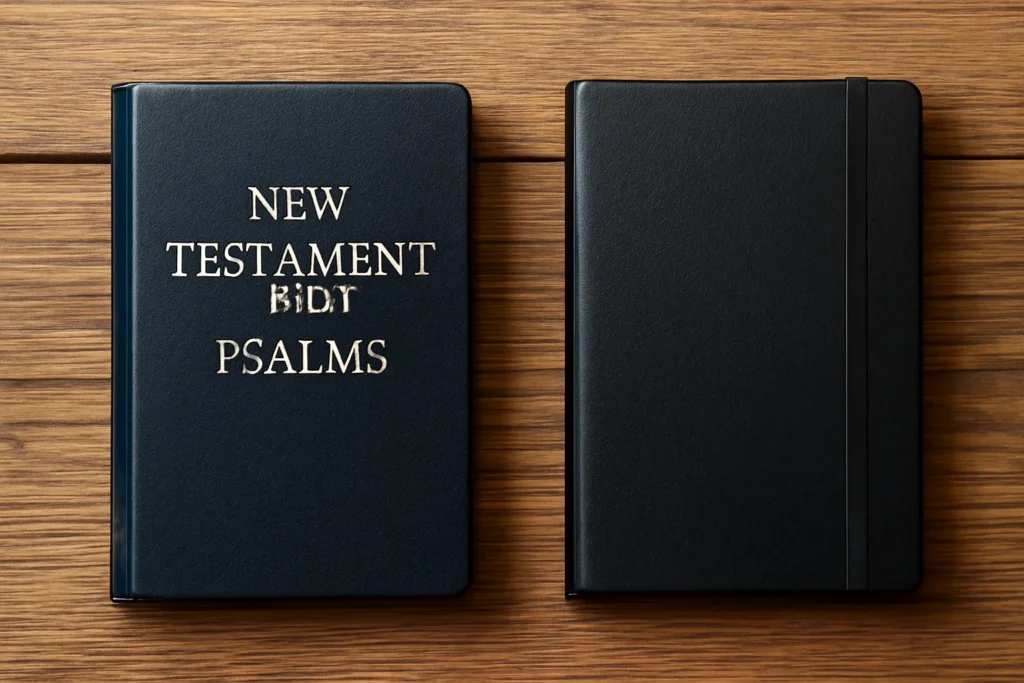
The relationship between the Psalms and the New Testament writings is a rich conversation that spans genres, history, and faith practice. The Psalms are a collection of ancient prayers, songs, and reflections born out of the life of Israel. They move with the rhythms of lament and praise, longing and trust, unity and conflict. The New Testament—the witness to Jesus Christ, his teachings, death, and resurrection, and the formation of the earliest Christian communities—continues this conversation by interpreting the Psalms in light of the revelation of Jesus.
This article will explore how these two parts of Scripture speak to one another, how the Messiah is heard in the Psalter and then seen in the Gospel narratives, and how the early church used the Psalms to shape worship, prayer, and understanding of Christ’s work. We will look at the common themes—covenant faithfulness, suffering and deliverance, worship and prayer, justice and mercy—and we will identify several key passages where the New Testament explicitly cites or implicitly follows the language of the Psalms.
The Psalms: Anatomy, Genres, and Enduring Voices
The Psalms are not one literary form but a tapestry woven from multiple voices and purposes. They are a prayer book for both personal devotion and liturgical assembly. Broadly, they fall into several genres that continue to shape Christian worship and devotional life:
Praises and hymns that celebrate God’s greatness and steadfast presence. Examples include songs that invite all creation to acclaim the Creator.
Laments that express fear, desperation, or grief, often turning to trust in God’s mercy and faithfulness.
Penitential psalms that acknowledge sin, plea for forgiveness, and celebrate restoring mercy.
Thanksgiving psalms that recount deliverance and goodness, inviting gratitude and remembrance.
Wisdom psalms that reflect on life, justice, and the way of wisdom under God’s sovereignty.
Within this spectrum, a few motifs stand out as especially resonant for readers of the New Testament:
Trust under pressure — Even when circumstances are bleak, the Psalms repeatedly encourage faithful trust in God’s care.
Righteousness and justice — The Psalms articulate the longing for divine justice for the oppressed and the vindication of the righteous.
Worship as response to God’s deeds — The Psalms invite a posture of praise that acknowledges God’s saving acts in history.
Priestly andkingly language — Some psalms speak about kingship and priesthood, language that the NT writers reinterpret in light of Jesus.
Reading the Psalms today invites us into a discipline of prayer that does not shy away from doubt, anger, or sorrow, but points toward fidelity, hope, and the possibility of renewed relationship with God.
The New Testament: A Fulfillment and Expansion of the Psalmist Voice
The New Testament builds upon the ancient prayers of the Psalms by presenting Jesus as the fulfillment of many prophetic and psalmic expectations. The Gospel writers frequently attend to psalmic language as they tell the story of Jesus’ life, death, and resurrection. The apostolic writings then carry forward a reading of the Psalter as interpreted through the lens of Christ’s redemptive work and the dawning of the kingdom of God.
In the Gospels, Jesus himself engages with psalmic words and motifs to teach, reveal his identity, and reveal the nature of the kingdom. In the Epistles, the early Christians interpret psalm-based statements to articulate the person of Christ, the nature of salvation, and the hope of the church. In this way, the New Testament permeates the language with a Christocentric reading that remains rooted in Israel’s time-tested tradition.
Some themes the New Testament expands or recasts include:
Jesus as the fulfillment of messianic expectation — The psalmic idea of the “anointed one” or Messiah is interpreted in the light of Jesus’ life and mission.
Resurrection and life beyond the grave — Psalmist expressions of deliverance become anchors for the risen Christ’s power and the church’s proclamation of life beyond death.
Worship as a defining practice for Jesus’ followers — The Psalms’ call to praise informs early Christian prayer and liturgy, shaping how the church worships the Father, Son, and Spirit.
Crossings That Shape Interpretation: Psalms Quoted and Reinterpreted in the NT
Psalm 22:1 and the Cry of the Cross
One of the most recognizable connections is the personal cry of Jesus, “My God, my God, why have you forsaken me?” quoted in the Gospels of Matthew and Mark as Jesus’ suffering on the cross. The Psalter voice here is not merely lament; it becomes a window through which readers see the sin-bearing, vicarious suffering of the Messiah. The psalm itself moves from deep pain to confidence in God’s deliverance, a movement echoed in the resurrection narrative of the New Testament. The cross-referencing of Psalm 22 with the crucifixion invites readers to hear the Psalm as prophecy fulfilled in Christ’s passion, while also acknowledging God’s steadfast mercy even amid apparent abandonment.
Psalm 110:1 and the King Priest Visited by God
The remarkable line, “The Lord says to my Lord” (Psalm 110:1), becomes a focal point in the New Testament to discuss the priestly and kingly authority of Jesus. When Jesus cites or alludes to this Psalm, he invites his listeners to reinterpret scriptural expectation about the Messiah’s identity. The Gospel of Matthew and the Gospel of Luke show Jesus dialoguing with his opponents about the Psalm’s line, while the Book of Hebrews develops a theology of Christ as the high priest who serves in the order of Melchizedek and as the supreme king who reigns over creation. This psalm becomes a bridge from ancient Psalmic royal language to the NT’s claim about Jesus’ lordship and divine authority.
Psalm 16:10 and the Revelation of Resurrection
Psalm 16:10 is frequently cited in the New Testament as an expression that points toward the reality of resurrection. In Acts 2, the apostle Peter interprets this verse to speak about God’s refusal to let the Messiah undergo decay, thereby supporting the claim that Jesus was raised from the dead. This psalm’s confident trust in God’s preservation of life undergirds the early Christian proclamation of the victory over death and the hope that God does not abandon the righteous to the grave. The usage of Psalm 16 in the Acts narrative shows how the early church read the Psalms as christological prophecy fulfilled in Jesus.
Psalm 118:22 and the Cornerstone
The line “the stone the builders rejected has become the cornerstone” from Psalm 118 becomes a powerful motif in the New Testament as leaders and writers reflect on Jesus’ rejection by his contemporaries and his pivotal role in salvation history. In the Gospel of Matthew, this verse appears in the context of Jesus’ parabolic contrasts with religious authorities and his authority in teaching. The same motif appears in the Acts and the Peter epistles, where Jesus is depicted as the one who, though rejected, becomes the foundation of the church. This interpretive path demonstrates how the PSALTER’s imagery is re-envisioned in light of Jesus’ life, death, and resurrection.
Psalm 2: A World in Subjection to the Anointed
Psalm 2 presents the image of the anointed king who receives divine authorization to rule. In the New Testament, this psalm is employed to articulate the authority and rule of Jesus as the Messiah. The NT writers quote or allude to Psalm 2 in order to emphasize the parabolic or the cosmic scope of Jesus’ kingship, particularly in passages that explore the invertive nature of divine rule—where suffering, humility, and service culminate in glory. This Psalm’s language becomes a lens for understanding the early church’s proclamation about the kingdom and the universal scope of Jesus’ lordship.
Lament, Suffering, and Hope: A Continuous Voice Across Testaments
The experience of pain, persecution, and longing for God’s intervention is universal in the biblical story. The Psalms give voice to lament and the struggle to trust God in difficult situations. The New Testament picks up these voices and interprets them through the experience of Jesus and the life of the church. In this cross- testamentary dialogue, lament becomes a framework for prayer, not merely a private feeling but a communal posture that seeks God’s intervention and ultimately proclaims hope in the resurrection.
A Shared Language of Lament
The Psalms offer a language for believers to name fear, abandonment, injustice, and danger. The New Testament writers recognize this language as the medium through which Jesus enacts redemption. The cross and empty tomb transform lament into a confidence grounded in God’s faithfulness. For readers today, this is a reminder that faith journeys often move through persecution or dry spiritual seasons toward renewed trust.
Trust as a Theological Core
Across the biblical witness, trust remains a central virtue. Psalm 37 and Psalm 46, for example, describe trust in God as a fountain of strength amid danger. In the Gospels and Epistles, trust becomes the posture that enables discernment, perseverance, and love for neighbors. The NT authors interpret Psalms as invitations to trust the divine drama of salvation, even when the immediate circumstance is troubling.
Worship, Prayer, and Community: Psalms in the Early Church
The early Christian community inherited a liturgical and prayerful sensibility from the Psalms, and it incorporated Psalmody into the fabric of worship and daily life. While the New Testament itself is not a psalter, it shows how psalm-like language and patterns infused early Christian prayer, song, and preaching.
Psalms as a Template for Christian Worship
The pattern of calling upon God, praising God for acts in creation or salvation, making petitions, and giving thanks recurs as a template for Christian liturgy. The New Testament communities would recite or sing psalm-like songs, integrate scriptural readings with prayers, and place the Psalter at the center of their communal life. This is evident in descriptions of the early church’s devotion to prayer and fellowship that included praising God, a practice echoing the Psalter’s rhythmic praise.
Hymnic Fragments and Christological Reflection
Some of the most striking NT writing in this area appears as hymn-like material that, while not direct quotes from the Psalms, resonates with psalmic language and motifs about glory, justice, and the reign of God. The most famous of these is the Christ hymn in Philippians 2:6-11, which, though not a quotation from the Psalms, reverberates with psalm-like lines about humility, obedience, and exaltation. The church later read such passages as a living extension of the Psalter’s voice, now filtered through the wind of the Spirit and the mission of Jesus.
Lived Prayer and Scriptural Memory
The New Testament suggests that the psalms weren’t just ancient poetry but living prayers that formed the memory and language of the church. Early Christians would have been steeped in psalmic language for instruction, comfort, and corporate identity. The practice of teaching from Scripture, praying with psalms, and singing together would have shaped community life just as it does in various Christian traditions today.
Literary Techniques and Theological Themes: A Convergence
Reading the Psalms alongside the New Testament highlights several enduring theological themes that recur in different voices and contexts:
Advent-like expectation — The Psalms cultivate a longing for God’s intervention and the coming of divine mercy, a mood that the NT expands into anticipation of the fulfillment in Christ.
Divine justice and mercy — The Psalms frequently pair the demand for justice with mercy, a motif that the NT intensifies as grace most fully manifest in Jesus’ life and sacrificial death.
Worship as identity — The Psalms teach that worship is a core posture of life, a truth that the NT develops into a corporate and mission-centered worship that includes the Gentiles and all creation.
Voice and prophecy — The Psalter’s prophetic and exilic voices become interpretive keys for understanding Jesus’ mission and the church’s future hope.
The Hermeneutical Approach: Reading with the Eye of Faith
When approaching the Psalms in light of the New Testament, readers are invited to engage in a Christ-centered hermeneutic. This means recognizing that psalmic voices can be redirected toward Jesus—without erasing their original context in the life of Israel. It also means honoring the way the early church heard the Psalms in light of the resurrection and Pentecost, letting the Spirit guide interpretation that honors both testaments.
Practical Takeaways: How to Read the Psalms with the New Testament in View
For contemporary readers, there are several practical paths to exploring the shared messages of the two testaments:
Read psalms in clusters—from lament, to petition, to thanksgiving—then notice how the NT portrays Jesus or the church in light of each step of the psalm’s journey.
Pay attention to messianic expectations — Look for psalms that speak of kingship, royal justice, and the righteous sufferer, and observe how the NT reinterprets these ideas around Christ.
Track prayer as a discipline — The Psalms model how to address God in praise and in need; the NT shows how early Christians turned those prayers into living worship and proclamation.
Attend to justice and mercy — The psalmic longing for justice is reframed in the NT as the gospel’s proclamation that God’s justice is realized through Jesus’ life, death, and resurrection.
Use psalmody to guide worship — In church life today, psalms can shape liturgy, song, and personal devotion as a bridge between the old covenant and the new, between Israel’s faith and the church’s mission.
Here are practical ways readers can integrate the shared messages:
In personal devotion, begin with a psalm of lament and move toward a declaration of trust, then reflect on how Jesus embodies ultimate deliverance.
In Bible study groups, compare a psalm’s trajectory with a NT passage that reinterprets the same ideas through Christ’s work.
In teaching or preaching, use psalmic images (suffering, vindication, praise) as entry points into Christ-centered explanations of salvation and the church’s mission.
Conclusion: A Living Conversation Across the Testaments
The relationship between the Psalms and the New Testament is a living conversation rather than a closed dialogue. The ancient prayers and songs provide language for human longing, while the NT provides interpretation and fulfillment that invites readers into the story of Jesus. In this balanced engagement, the Psalms remain a resource for prayer and worship, and the New Testament offers a Christ-centered lens through which to read those eternal words. Together, they teach that faith is not a static monument to the past but a dynamic conversation that continues to form believers into a people who trust God, lament when necessary, praise with joy, and look forward to the consummation of God’s kingdom.
By recognizing the shared messages of the Psalms and the New Testament, readers gain a richer understanding of the biblical narrative: a long arc of God’s faithfulness, a call to justice and mercy, and a response of worship that centers on the person and work of Jesus. This enduring synergy invites both contemplation and action—prayer that is honest before God, and mission that proclaims the good news to all nations.









Leave a Reply