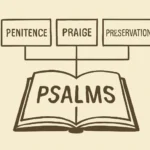
The Book of Psalms is a treasury of poetry that speaks to the human heart in a
chorus of voices: worship, pain, gratitude, doubt, mercy, and hope. A thematic approach helps readers, preachers, and students see how
the Psalter gathers many genres under shared themes, so that a single
psalm can illuminate a moment in someone’s life just as easily as a larger
spiritual arc. The psalms are not only a collection of individual prayers; they
form a composite liturgy that moves from adoration to confession, from
complaint to trust, from remembrance to praise. This guide surveys major themes
and connects representative psalms that illustrate how writers in ancient Israel
expressed faith in different situations, yet with a common rhythm and trust in
God.
When you study the psalms by theme, you encounter recurring images— God as shepherd, deliverer, fortress, creator; the
world as witness; the soul as penitent seeker; the assembly as
worshiping community. You also notice the literary devices that
underscore each theme: parallelism, repetition for emphasis, literacy devices like
acrostics in certain psalms, and, in some cases, celebratory or lament-filled
refrains that recur across different psalms. The result is a flexible menu:
readers can focus on what they need today—confession before God, or gratitude for
a fresh mercy, or trust in crisis—while engaging with a larger, ancient prayer book.
Psalms of Praise: Magnifying God
Psalms of praise lift the heart toward God for who God is and
what God has done. They are not merely cheerful songs; they are declarations of
God’s glory, sovereignty, and goodness. These psalms cultivate
reverence, joy, and awe, inviting faith communities to join in public worship as
a response to divine mercy.
Public worship and liturgical praise
Psalms for congregational singing such as Psalm 95, Psalm 96, Psalm 98, and Psalm 100. These psalms invite the assembly to declare God’s kingship, righteousness, and steadfast love.
Doxological endings that bless the name of the Lord, as seen in sections of Psalm 136 and the climactic chorus of Psalm 150.
Private devotion and personal praise
Short, intimate hymns that celebrate God’s creative power and his care for creation, as in Psalm 8 and Psalm 19.
Worship that narrates God’s acts in history and invites personal response, such as Psalm 33 and Psalm 145.
Beyond the surface: breadth within praise
Praise can be exuberant and celebratory, or measured and contemplative. The same theme appears in multiple registers—utter exultation, simple gratitude, and testimony about God’s faithfulness across generations.
Several psalms combine praise with a call to remember God’s mighty deeds, linking present praise with historical memory, which strengthens faith for future trials.
For an at-a-glance view, consider these representative entries:
Psalm 100—a joyful exhortation to serve and bless the Lord with thanksgiving.
Psalm 23—not a typical praise psalm, but its serene trust under God’s shepherding presence is foundational for praise in crisis.
Psalm 33—a call to praise God for creation’s order and God’s saving acts in history.
Psalm 150—the canonical doxology, calling everything that has breath to praise the Lord with a full spectrum of instruments and voices.
Psalms of Lament: Crying Out to God in Distress
Laments make space for honest emotion: pain, fear, rejection, longing, and the sense
that God seems distant. The laments model a dynamic relationship with God
that does not shrink from anger or sorrow but moves toward confident trust. They are
not only complaints; they are prayers that acknowledge God’s character even while the
circumstances feel overwhelming.
Individual lament
Psalm 3—a crisis prayer, turning to God as protector in the face of enemies.
Psalm 6—a plea for mercy and healing, expressing personal distress and trust in God’s mercy.
Psalm 22—begins in distress but ends in deliverance and praise, showing the arc of trust through suffering.
Psalm 31—a cry for rescue from trouble and a statement of steadfast faith.
Psalms 42–43—longing for God in spiritual drought, a paired lament that models persistent petition and memory as sustenance.
Communal lament
Psalm 74—a community’s memory of destruction and plea for God’s intervention in national crisis.
Psalm 79—a communal lament recalling the ruin of the people and calling on God for justice and restoration.
Psalm 85—a cry for God to turn from his wrath to mercy and peace for the people.
The laments often move from distress to confession of communal sin or a call to remember God’s
steadfast love. They frequently pivot on a reaffirmation of God’s character—God as
healer, defender, and righteous judge—before returning to trust and hope.
Psalms of Thanksgiving: Recognizing Divine Blessings
Thanksgiving psalms celebrate God’s mercies, grateful memory of divine acts,
and the joy that follows gratitude. They are often forward-looking—anticipating future
mercy—and they reinforce a posture of thankfulness as a discipline.
Personal gratitude
Psalm 30—praise in response to deliverance from illness and a turn from despair to joy.
Psalm 42–43 (in part) express hope and gratitude in the presence of God despite hardship.
Corporate thanksgiving and memory
Psalm 100—a call to joyful service instrumental to a gratitude-centered life together.
Psalm 107—a long reflection on God’s steadfast love in many circumstances, with refrain that “let them give thanks to the Lord for his unfailing love.”
Thanksgiving psalms often reiterate God’s covenant faithfulness, invite memory of
historical mercies, and culminate in confident expressions of hope for continued mercy.
Psalms of Trust and Confidence: Anchoring the Soul
When circumstances are opaque or frightening, the Psalms offer a reservoir of trust.
They model a faithful stance: to speak honestly about fear, to plead for help, and to declare
that God remains a secure refuge. These psalms cultivate a cultivated confidence that transcends
immediate circumstance.
God as refuge and fortress
Psalm 46—God is a refuge in times of trouble, a source of deep peace even when
environments seem unstable.
Psalm 91—a psalm of protection for the one who dwells in the shelter of the Most High.
Confident trust and steadfast love
Psalm 23—the shepherd imagery frames trust in God’s guidance, comfort, and provision.
Psalm 27—a bold statement of seeking God’s face as the source of courage in danger.
Psalm 125—security in the Lord’s protection, like the mountains surrounding Jerusalem.
The trust language in these psalms often centers on covenantal allegiance: God is the
faithful protector, and the faithful respond with steadfast worship.
Psalms of Wisdom and Teaching: The Practical Theology of Life
The wisdom psalms differ from the pure lyrical forms by weaving moral instruction with divine
perspective. They show how life with God is integrated with right living, sincere worship, and
a measured view of prosperity and suffering. These poems invite readers to consider how one’s
choices align with God’s order.
Blessing and the two ways of life
Psalm 1—a short but pointed contrast between the way of the righteous and the way of the
wicked; the blessed life is rooted in delighting in God’s law.
Psalm 37—a meditation on patience, trust in God, and the reordering of life around
divine justice rather than human schemes.
Laws, delight, and the heart of wisdom
Psalm 19—a two-part meditation on God’s revelation in creation and in the Law; the
psalmist desires wisdom and fear of the Lord.
Psalm 119—the longest psalm, a grand acrostic that celebrates the beauty and value of
God’s laws, urging earnest study and devotion.
Wisdom psalms connect moral imagination with spiritual formation. They teach readers how to find
righteous paths in daily decision-making, how to relate to authority with humility, and how to
pursue a life that reflects divine order in ordinary, practical matters.
Psalms of Creation, Nature, and Cosmic Perspective
Nature in the Psalms often becomes a teacher about God’s character and sovereignty. The created
order is a continuous argument for the wisdom and care of God. These psalms invite readers to
pause, observe, and wonder at God’s creative activity and sustaining power.
Nature as a witness to God’s majesty
Psalm 8—a meditation on humanity’s place within God’s vast creative design and God’s
attentiveness to human life.
Psalm 104—a richly detailed meditation on God’s creation, providence, and the cycles of nature.
Providence and dependence
Psalm 104 (continued) and Psalm 147 highlight God’s care for the earth, its
creatures, and the order that sustains life.
These psalms remind readers that the cosmos itself is a form of worship—when we notice the
rhythms of day and night, seasons, and the life teeming in creation, we are reminded of the
Creator’s wisdom and generosity.
A notable thread through several psalms is the affirmation of God’s sovereignty and
the expected reign of the Messiah. These kingship psalms speak about the
Lord’s authority, the coming king, and the hope of righteous rule that transcends human
kingdoms. They provide language for worshiping God as the true king and as the one who
fulfills promises made to Israel.
Royal authority and divine decree
Psalm 2—an announcement of God’s anointed king, a call for nations to submit to divine
rule, and a warning about human rebellion.
Psalm 45—a royal psalm that celebrates a king and his bride, with layers of
covenant imagery pointing to righteous leadership under God’s authority.
Psalm 22—though written in a particular historical moment, is often read as a prophetic
voice pointing toward the suffering servant who bears sin and becomes a source of salvation.
Psalm 110—a cornerstone text for the coming king and priestly authority, frequently cited
in Christian interpretation as anticipating the Messiah’s work.
The theme of divine kingship is not merely political; it frames God as sovereign over all
creation and history. In biblical worship, these psalms invite believers to align their
allegiance with God’s righteous rule, to trust in the king who rules justly, and to find
hope in the promise of an enduring kingdom.
Psalms for Liturgy, Prayer, and Community Practice
The Psalter has been used as a functional toolkit for prayer and worship across
generations. The structure of the psalms supports both long liturgical settings and
brief personal prayers. Liturgy often weaves together psalms from different themes to
create a balanced rhythm—praise, confession, intercession, gratitude, and doxology.
Reads that alternate between lament and praise, keeping the heart honest before God while
acknowledging God’s faithfulness.
Prayers of confession that move toward a renewed sense of forgiveness and restoration, often
set within a communal framework.
The Psalms’ liturgical potential is enhanced by the way they are distributed across the five
books in the Psalter, which some scholars view as a deliberate compositional shape to guide
worship through different seasons of life: lament, trust, thanksgiving, wisdom, and praise.
How to Read Themed Psalms: Practical Approaches
Reading the Psalms by theme is less about isolating isolated lines and more about tracing
a continuity of experience across the collection. Here are practical strategies that can
help you engage with thematic psalms in depth.
Identify the dominant emotion or situation
Look for the emotional orientation: is the psalm a cry of lament, a model of trust, or an act of praise?
Note the audience: is the voice addressing God in private prayer, or calling a community to worship?
Notice the literary devices that support the theme
Parallels and progressions that build an argument or emotional arc, especially in laments and
confessions.
Acrostic patterns in Psalm 119 as a stylistic device that mirrors a thorough, methodical approach to God’s law.
Contextualize with history and liturgy
Consider historical settings—what crisis or thanksgiving is reflected in the psalm?
Think about how a worshipping community would have used the psalm—during a festival, a day of fasting, or a moment of intercession.
Cross-reference with other parts of Scripture
Many themes recur across the Bible; for example, trust in God’s protection is echoed in the prophets and
in the life of Jesus, who quotes and heals through psalm-inspired language.
Use thematic clusters to deepen understanding; a study on God as shepherd can be paired with Psalm 23, Psalm 22, and later references in the prophets.
For study and personal devotion, you can seed your reading with a thematic plan:
Week 1: Psalms of praise and confidence (e.g., Psalm 100, Psalm 46, Psalm 23).
Week 3: Thanksgiving and memory of mercy (e.g., Psalm 30, Psalm 107, Psalm 65).
Week 4: Wisdom and law in praise (e.g., Psalm 1, Psalm 19, Psalm 119).
A practical exercise is to read a theme from multiple authors, noting differences in tone and
purpose while recognizing a shared theological structure—a God who is sovereign, merciful, and
present in every season of life.
The Five Books of the Psalter: A Thematic Framework
The Psalms are not random selections. Many scholars identify five books within the Psalter,
often understood as a deliberate structure mirroring the Pentateuch and guiding readers through
a journey of worship from lament and petition to praise and instruction. Themes recur across these
books, but each book tends to foreground a particular mood or spiritual task.
Book I emphasizes lament, confession, and early trust in God, with strong calls to seek God’s help.
Book II continues with a blend of lament and thanksgiving, introducing deeper reflection on God’s
righteousness and deliverance.
Book III engages with national memory, justice, and the hope of restoration, moving toward more
confident trust.
Book IV expands on wisdom, pilgrimage, and the disciplined life of worship, and it often
centers on the law and righteous living.
Book V culminates in praise and a broad, global vision of praise for God’s kingdom and mercy
that endures forever.
Understanding this structure helps readers see how a single theme can shift across books—lament gives
way to trust, trust expands into communal praise, and praise circles back to wisdom and liturgical
practice. The Psalter, thus, is less a catalog of isolated prayers and more a holistic prayer book for
every dimension of life.
Using Thematic Psalms in Worship, Study, and Personal Growth
The power of the Psalms lies in their ability to meet us in the ordinary moments of life—work,
struggle, celebration, and quiet reflection—while pointing toward God’s enduring faithfulness.
Each theme is a doorway into a larger conversation about who God is and how God acts in the world.
Worship planning: choose a mix of praise, lament, and thanksgiving to reflect the full arc of a service or a personal
worship session.
Pastoral care: use laments to sit with those who grieve, offering a scriptural language for their pain.
Preaching and teaching: draw on psalms of wisdom to illustrate moral imagination, or on royal psalms to discuss God’s
sovereignty and messianic expectation.
Personal spiritual formation: develop a habit of daily reading through a thematic sequence, letting the
psalms shape your posture before God in every season.
In addition to their liturgical value, the psalms invite readers to cultivate discipleship habits such as confession, gratitude, trust in God’s timing, and a
reverent awe before God’s majesty. The language of the psalms—often personal, vivid, and intimate—
resonates across cultures and generations, offering a shared vocabulary for prayer.
Selected Thematic Sampler: Quick Reference by Theme
The following sampler offers a concise guide to representative psalms by theme. This list is not
exhaustive, but it provides anchors for further study or devotional use.
and protection: Psalm 23, Psalm 27, Psalm 46, Psalm 91
: Psalm 1, Psalm 19, Psalm 119
: Psalm 8, Psalm 104
: Psalm 2, Psalm 22, Psalm 110
When you work with these themes, you can weave together broad patterns of human experience with
the enduring character of God. The Psalms become not only prayers you recite but a map for
interpreting life through a faithful, hopeful lens.






Leave a Reply