Introduction: Why a Bible stand matters in every space
The Bible and the stand are a simple pairing with a surprisingly wide range of practical and aesthetic benefits. A well-chosen Bible stand supports comfort during long study sessions, helps protect sacred texts, and enhances the overall atmosphere of a room—whether in a quiet personal library, a busy church sanctuary, a classroom, or a small group setting. When we discuss the Bible stand, we are really talking about a tool that blends function, durability, and design. It should accommodate the form of the Scripture you use most, fit the space available, and invite you to engage with the text more deeply.
In this guide, you’ll find a comprehensive overview of the many types of bible stands, the materials they are built from, the features that make them versatile, and practical tips for choosing the right model for any space. Whether you prefer a humble tabletop Bible stand on a coffee table, a sturdy floor-standing lectern for a pulpit, or a slim, portable scripture stand for travel, this article will help you compare options with confidence.
Understanding the purpose of a Bible stand
A Bible stand is more than a passive holder. It is a thoughtful tool that influences how you interact with the text during study, devotion, teaching, or public reading. By adjusting the angle, height, and stability, you can reduce neck and eye strain, make corners of your pages easier to reach, and keep your Holy Book open to the exact passage you’re studying. The right stand also protects the binding from damage caused by moisture, oils from hands, or accidental spills.
Consider the environments in which you will use the stand. A quiet personal study nook may benefit from a compact, adjustable tabletop model. A church or classroom will often require something larger, more robust, and capable of withstanding frequent movement. A portable option is ideal for travel, outreach events, or temporary study groups. The core idea is to choose a solution that serves the activity, the audience, and the space with clarity and durability.
Types of Bible stands: finding the right fit for your space
Traditional reading stands
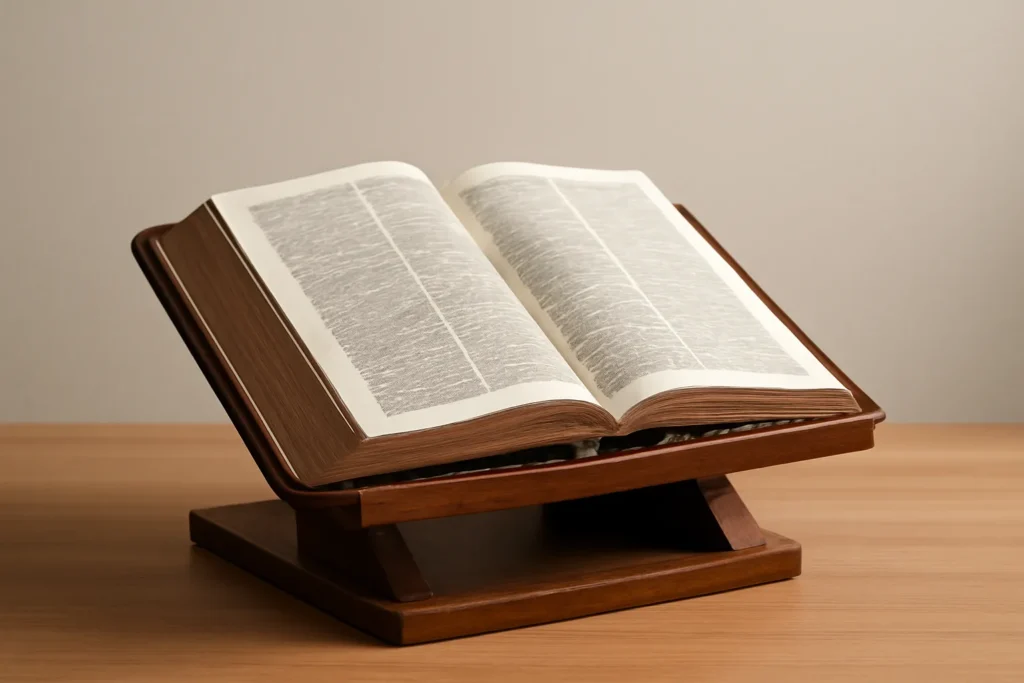
Traditional reading stands are purpose-built to cradle a Bible or comparable sacred text at a readable angle. They often feature a lip or small ledge to prevent pages from slipping and may include a back support to keep the pages from curling.
Simple, sturdy frames with adjustable tilt
Compact form factors ideal for desks or nightstands
Timeless designs in wood or metal that can blend with many decors
Adjustable standing lecterns
If you expect to use the Scripture text in front of an audience or in a teaching context, an adjustable standing lectern provides height and angle flexibility for speakers of different statures.
Height range to accommodate seated or standing presenters
Integrated trays for notes, markers, and highlighters
Sturdier construction for long sessions and frequent use
Tabletop stands and desk-mounted options
For home study or a small group setting, tabletop stands and desk-mounted versions offer practical immobility with minimal footprint.
Low-profile options that sit on a desk, shelf, or coffee table
Simple angle adjustment to reduce glare and improve readability
Lightweight materials that make storage and transport easy
Portable stands and carry-friendly models
If you travel or move between rooms often, a portable Bible stand is worth considering. These are designed to fold, collapse, or detach quickly, so you can carry them in a bag or case without strain.
Collapsible legs and foldable panels
Lightweight metals, composites, or wood composites
Glide or hinge mechanisms that stay smooth with repeated use
Floor-standing versus wall-mounted options
Floor-standing bible stands offer a commanding presence and strong stability for lecturing or worship settings. Wall-mounted variants free up floor space and can be a stylish choice for libraries, classrooms, or home offices.
Floor stands: best for movable use and audience-facing reading
Wall mounts: space-efficient, often with tilt adjustments
Hybrid designs that combine wall-mounted backrests with freestanding baselines
Materials and build quality: durability meets design
The material of a Bible stand affects not only aesthetics but also longevity and weight. Popular options include wood, metal, acrylic, and bamboo. Each has trade-offs:
Wood: classic warmth; can be very durable; finishes range from stained to painted; prone to moisture if not treated
Metal: modern or industrial look; highly durable; often heavier but very stable
Acrylic: lightweight and transparent; great for minimalist spaces; may scratch more easily
Robust tilt and height adjustment mechanisms with locking capabilities
Page lips or clamps that hold pages without causing damage
The beauty of a well-made bible stand lies in the balance between form and function. A model might be aesthetically pleasing, but if it cannot support your bible securely or adjust to your eye level, it loses value. Conversely, a highly functional stand with a rough finish can distract from your study or worship experience. The ideal choice blends materials, build quality, and usability in a way that matches your space and practice.
Size, capacity, and compatibility: matching the stand to your Bible
A critical part of the selection process is ensuring the space-smart fit between the stand and the Bible you own. Bibles come in a range of sizes—from pocket editions to large-print family Bibles—and stacks of pages can be heavy or unwieldy if unsupported.
Ability to accommodate large-print or study editions with wider margins
Weight and stability
Heavier Bibles require stands with a solid base and, ideally, a broad footprint. Lighter stands may be suitable for pocket or carry-edit scripture text but can tip if bumped or placed in high-traffic areas.
Height and angle considerations
The goal is to position the Scripture at a readable eye level with the spine aligned for comfortable reading. Adjustable stands that offer a range of heights and angles improve posture and reduce neck strain during long devotional sessions.
Accessibility and accessibility-friendly design
For caregivers, students with mobility needs, or presenters of all ages, choose stands that offer smooth operation, clear labeling on adjustment knobs, and easy access to pages without removing the Bible from the stand.
Key features to look for: a buyer’s checklist
Adjustable tilt to minimize glare and suit reading posture
Height range that accommodates standing or sitting positions
Page-retention features such as lips, clamps, or bakelite clips
Stability with a wide base or weighted bottom
Durability and robust construction for frequent use
Portability if you travel or rotate spaces
Ease of assembly and simple maintenance
Aesthetic compatibility with your decor or worship space
Depending on your needs, you may also value features such as built-in storage for markers, a drawer for notepads, or a small shelf to keep reading glasses and a Bible highlighter close at hand.
Common design variants and what they offer
If you prioritize lightweight portability, consider a foldable or collapsible design. For a library-like appearance, a wooden lectern with a polished finish can be both functional and decorative. If you want a minimalist aesthetic, a slim metal frame with a transparent panel may be ideal. The right combination of features supports both practical usage and a sense of reverence for the text.
Aesthetics and space integration: making the stand fit your room
Beyond function, a Bible stand communicates intention. The finish, color, and form should harmonize with the room’s lighting, furniture, and style. For example:
Wooden stands in walnut, cherry, or oak pairs well with traditional libraries and reading rooms.
Black or brushed metal stands convey a modern, understated look suitable for contemporary spaces or classrooms.
Natural bamboo offers an eco-friendly option that still reads formal in many settings.
If you want a stand that disappears visually, opt for sleek, transparent or low-profile designs that do not compete with the room’s focal points. If you want a statement piece in a chapel or study, a richly finished wood model with a classic shape can serve as a centerpiece while supporting your devotional routines.
Space-specific guidance: choosing for different environments
Home study corner
In a personal study, space is often limited but needs to be comfortable and accessible. A compact tabletop Bible stand with adjustable tilt is usually ideal. Look for models that nestle beside a chair or under a reading lamp, with non-slip feet to protect furniture.
Living room or family library
A family library or living room may benefit from a slightly larger floor-standing stand that can be easily moved. A model with a weighted base reduces tipping if children or pets are nearby, and a finish that complements the family’s furniture makes the stand a natural addition rather than a distraction.
Church sanctuary or classroom
In congregational settings, durability and visibility are essential. A tall, durable lectern with a broad, stable base, an adjustable reading angle, and space for notes makes it practical for sermons and public readings. You may also prefer a wall-mounted or podium-integrated stand for podiums or lecterns, freeing floor space for movement.
Small classroom or study group
For collaborative sessions, look for stands that accommodate multiple books or allow quick page turning. A shared base and simple locking mechanisms help participants adjust as a group, while keeping the Bible or scriptural texts accessible without heavy lifting.
Travel, outreach, or temporary venues
When mobility is essential, prioritize lightweight, foldable designs and quick assembly. A carry case or strap can protect the stand during transit, while a compact footprint ensures it fits in transit vehicles or storage spaces with limited room.
Budgeting and value: how to get the best Bible stand for your money
Financial considerations should balance cost with durability and intended use. You don’t have to buy the most expensive model to get good value, but investing in a well-made stand often pays off in longevity and reliability.
Budget tier considerations
Entry-level stands offer basic tilt and height adjustments but may use lighter materials. Ideal for personal use or light travel.
Mid-range stands provide better stability, more finish options, and improved adjustments, suitable for home study rooms and regular use.
Premium stands emphasize heavy-duty construction, premium finishes, enhanced ergonomics, and long-term warranties; well-suited for churches, schools, and professional settings.
Second-hand and refurbished options
If budget is a constraint, consider high-quality used stands from reputable sellers. Inspect for structural integrity, check adjustment mechanisms, and ensure there are no cracks or excessive wear on joints.
Brand considerations and warranty
Reputable brands often offer warranties, replacement parts, and customer support that add value. Read reviews to understand real-world durability, and check for parts availability if you anticipate needing replacements in the future.
Maintenance and care: keeping your Bible stand in good condition
A well-maintained stand will serve you for years. Here are practical tips to extend its life:
Wipe down surfaces with a soft cloth to remove dust and oils after use
Use a mild wood cleaner or furniture polish on wooden stands, following the manufacturer’s care guidelines
Check screws, hinges, and tilt locks regularly; tighten as needed to prevent wobble
Avoid exposing stands to excessive moisture or direct sunlight to preserve finish
Protect surfaces with felt pads or rubber feet to reduce friction and scratching
How to set up and use a Bible stand effectively
Proper setup enhances usability and preserves the health of your reading posture. Use the following steps as a general guide, adapting to your specific model.
Place the stand on a stable surface. If using a floor stand, ensure the base is flat and the legs are fully locked.
Position your Bible on the lip or in the cradle. If your stand has page-clip features, ensure they are gently engaged to avoid binding pages.
Adjust the tilt to a comfortable angle. A common setup is a slight backward tilt that keeps the spine vertical and the pages easy to read without tilting your head forward.
Set the height so that your eyes align with the upper third of the page. This helps maintain an ergonomic neck position.
Test for stability by lightly nudging the stand. If it wobbles, recheck the base or adjust leg angles.
Keep frequently read passages within easy reach. If you routinely refer to a certain page, consider a secondary marker or a small bookmark to speed retrieval.
Remember to adapt your arrangement to the room’s lighting. Position the stand to avoid glare from windows or overhead lights, which can cause eye strain during longer reading sessions.
Case studies: practical examples of choosing a Bible stand
Scenario A: A quiet home library with limited space
A compact tabletop stand with adjustable tilt and a small footprint works best. Choose a model with a natural wood finish to complement warm-toned shelves and a lamp positioned to illuminate the page without glare.
Scenario B: A mid-sized church classroom
A robust floor-standing lectern with adjustable height, a built-in shelf for notes, and a durable surface for writing materials delivers reliability for frequent use in teaching and worship.
Scenario C: A traveling study group
A light, portable foldable stand with a carrying bag makes quick setup possible in different spaces. A model with anti-slip feet helps maintain stability on carpeted floors or smooth surfaces.
Scenario D: A library display featuring rare editions
A wall-mounted, tilt-adjustable stand offers an elegant way to present special Bibles while preserving shelf space and ensuring that visitors have a comfortable viewing angle.
Conclusion: choosing the perfect Bible stand for any space
The right bible stand balances design, durability, and ergonomics to support your engagement with the Bible or any sacred text. By considering the space you inhabit, the size and weight of your Scripture, and the needs of readers who will use it, you can select a model that quietly elevates your study or worship experience. Whether you prefer a classical wooden Bible stand, a modern metal: lectern, or a portable table model, the goal remains the same: create a dedicated space where the Word can be read clearly, taught effectively, and treated with reverence.
In summary, when you shop for a bible stand, ask yourself:
What space will it occupy, and how will it integrate with existing furniture?
What Bible size and weight must it accommodate?
Which features will improve comfort and usability for readers and presenters?
What is my budget, and how does durability factor into long-term value?
With thoughtful consideration of these questions, you’ll find the perfect Bible stand for any space, turning reading, study, and teaching into a more comfortable and meaningful experience.








Leave a Reply