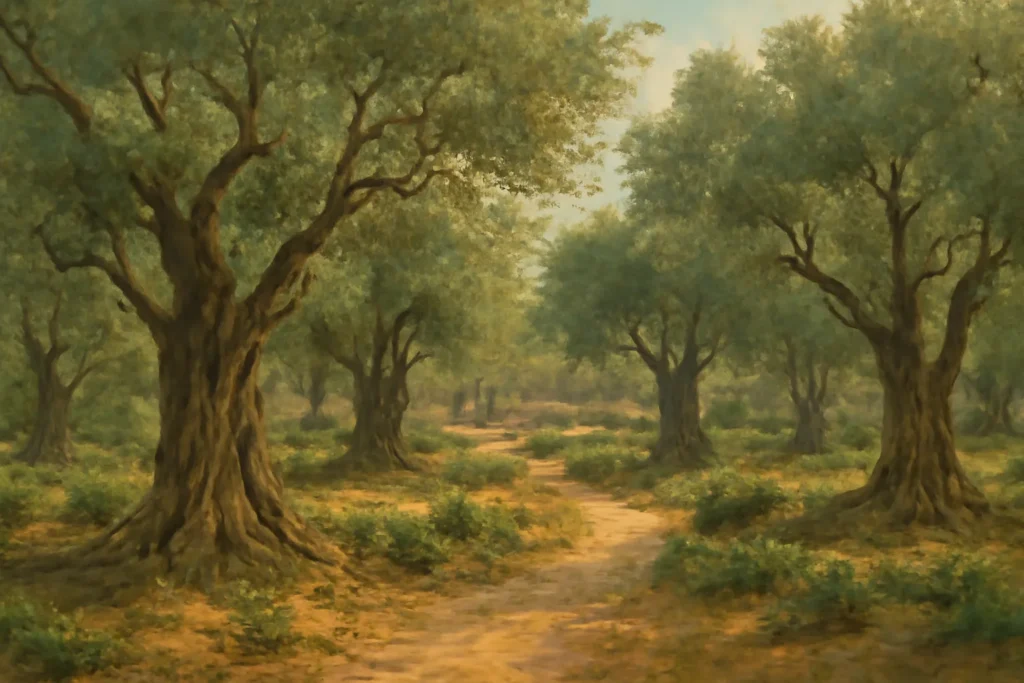
The Garden of Gethsemane, also known as the Gethsemane garden or the olive grove near the Mount of Olives, is a location of profound religious significance in the Christian tradition. It is described in the canonical Gospels as the place where Jesus prayed on the night of his arrest before the crucifixion, a moment often understood as the culmination of his earthly agony and a display of perfect submission to the will of God. The name itself carries an ancient and meaningful etymology: Gethsemane derives from a term in Aramaic or Hebrew related to oil press, suggesting a landscape once associated with olive presses and the pressing of oil. This linguistic thread helps readers imagine a grove of trees, quiet and shadowed, where the weight of impending events pressed upon Jesus as he prayed with earnest intensity.
In historical and geographical terms, the Garden of Gethsemane is described as a grove located at the foot of the Mount of Olives, just outside the walls of ancient Jerusalem. It is often pictured in art and literature as a tranquil yet momentous space, a place where the ordinary rhythm of life yields to a pivotal spiritual moment. For readers and worshippers alike, understanding what this garden represents involves more than a physical description; it invites reflection on the themes of temptation, fidelity, and sacrifice that echo through the narrative of Holy Week. This is not merely a geographic label but a symbol of a turning point in the narrative of Jesus’ mission and his demonstration of obedience under pressure.
Meaning and Significance
When we ask about the significance of the Garden of Gethsemane, we encounter a layered set of meanings that operate on theological, devotional, and ethical levels. At its core, the scene is a drama about human vulnerability confronted by divine purpose. Jesus’ words and actions in the garden reveal the tension between a natural human fear of suffering and a willing submission to a greater plan. The moment is often described as the point where Jesus faces the “cup”—a metaphor for the suffering, sorrow, and separation that he is about to undergo. The language of the cup appears in the parallel Gospel accounts and is central to Christian understandings of atonement and self-offering.
Several themes stand out as central to the meaning of this event:
Obedience to the divine will: The garden scene dramatizes Jesus’ decision to align with God’s purpose, even when the path is painful and uncertain.
Solitude and solidarity: While Jesus prays alone in profound grief, he is also accompanied by his closest companions, who fail to keep vigil. This juxtaposition highlights the reality of human loneliness and the need for steadfast spiritual companionship.
Prayer as struggle: The intensity of Jesus’ prayer—often described as a fervent plea for relief followed by submission—offers a model of how deep prayer can express both distress and trust.
Foretaste of the cross: The agony in the garden serves as a prelude to the crucifixion, linking intimate spiritual trial with public sacrifice.
Divine solidarity with suffering humanity: The scene is a powerful reminder that faith communities take seriously the reality of suffering and the belief that God meets people in their most vulnerable places.
Theological and Spiritual Significance
Beyond its narrative function, the Garden of Gethsemane has been a rich source for theological reflection. The event invites contemplation of how divine love engages with human fear, and how trust can endure even when outcomes are uncertain. Many Christian thinkers have interpreted the garden as a model of humble submission—not passive resignation, but an active alignment with God’s will in the midst of active distress. In some traditions, the moment is understood as a demonstration of the incarnational depth of Christ: fully divine, yet fully human, sharing the full range of human emotion so that salvation can be truly universal.
Discussion about the "cup" in this scene touches on several theological ideas. The cup is often read as a symbol of suffering, death, and divine judgment, but also of theological purpose—that God’s plan for humanity required a costly act of love. The garden narrative invites believers to consider: How can one face fear and pain with courage, without denying the very reality of that fear? How does one hold fast to faith when the future seems uncertain? These questions make the Garden of Gethsemane a lasting source of moral imagination for people who are navigating their own trials.
Biblical Context: The Garden in the Gospels
To understand what this place represents, it helps to place the Garden of Gethsemane within the broader biblical narrative. The night in the garden is a hinge moment between Jesus’ ministry and his passion. The four canonical Gospels offer complementary perspectives, with some emphasis on certain details depending on the author. By surveying the accounts, readers gain a more nuanced picture of how early Christians understood this event and why it mattered for their faith communities.
Matthew and Mark: The Urgency and the Vigil
In Matthew 26:36-46 and Mark 14:32-42, the narrative stresses Jesus’ emotional distress and his call to the disciples to watch and pray so that they will not fall into temptation. Both accounts place emphasis on Jesus’ sorrow, saying that his soul is “overwhelmed to the point of death.” The disciples, however, repeatedly fail to stay awake, highlighting a contrast between Jesus’ alertness to his Father’s will and the disciples’ human frailty. The disciples’ failure to remain vigilant is sometimes read as a commentary on how communities fail to sustain spiritual discipline in difficult times, a theme that has implications for church leadership and personal devotion alike.
Luke: The Prayer of Sweating Blood
Luke 22:39-46 provides perhaps the most detailed portrait of Jesus’ inner struggle, noting that he knelt down to pray and that his sweat was like “great drops of blood falling to the ground” (a description that has inspired centuries of devotional thought and artistic representation). Luke’s account emphasizes acute distress, intercession for others, and the ultimate resolve to submit to God’s will. The Lukean emphasis on Jesus’ prayerful solidarity with humanity often resonates with readers who seek a model of perseverance under pressure, especially in times of moral crisis or communal decision-making.
John: The Placement and Purpose
John 18:1-2 situates Jesus and his disciples at a place called Gethsemane and then proceeds to the events of arrest and trial. John’s portrayal is more focused on the steps that follow—namely, Jesus’ arrest and the unfolding portrait of his path to crucifixion—while still confirming that Jesus knew what lay ahead and proceeded with deliberate intent. The Johannine perspective helps readers see how the garden episode connects to Jesus’ broader mission and the rejection he would soon experience from certain quarters, thus framing the arrest as a deliberate turning point rather than an accidental moment.
Across these accounts, the garden is not merely a backdrop; it is a dynamic space where intention, emotion, community, and divine plan intersect. Readers are invited to compare how each Gospel writer uses the setting to illuminate different aspects of Jesus’ identity and the meaning of his suffering. The combined witness of these texts enriches our understanding of the biblical context of the garden scene.
Historical and Geographical Context
To appreciate the Garden of Gethsemane fully, a brief look at its historical geography helps. The olive grove was situated on the slope of the Mount of Olives, within easy reach of Jerusalem’s ancient city walls. This proximity to the city means the garden was not isolated from the political and religious turmoil of the era; rather, it stood at a crossroads of Jewish life and the broader Roman imperial world. The olive trees themselves—likely centuries old in the era of Jesus—would have provided shade, a place for quiet reflection, and a practical setting for the care and maintenance of olives used for food, lamp oil, and materials in daily life. The image of an olive grove thus carries associations with everyday labor, ritual purity (as oil has ceremonial uses), and a landscape that was intimately connected to the rhythms of life in first-century Judea.
Location, Topography, and Landscape
Geographers and historians describe the area as a terraced hillside with groves that offered a peaceful contrast to the bustling, crowded streets of the city. The slope of the Mount of Olives provided a vantage point that offered a sense of separation from Jerusalem while still remaining within sight of the city’s walls. This juxtaposition—distance and proximity—mirrors the emotional distance Jesus experiences in prayer and the impending closeness of the events that follow.
Historical Significance in a First-Century Context
In the first century, gardens and groves near sacred spaces carried a dual significance: they were places of practical agriculture and places of ritual or contemplative activity. The Gethsemane garden, in particular, took on theological weight because it became the scene where the Messiah’s obedience under extreme duress was publicly demonstrated. The location’s proximity to the temple precincts and to the political center of the era augmented the sense that what happened there was not merely private sorrow but a moment with public implications for the identity of Israel’s Messiah and for the meaning of the Messiah’s mission for the world.
Significance in Christian Practice and Theology
Over the centuries, the Garden of Gethsemane has influenced Christian practice, devotion, and theological reflection in diverse ways. It serves as a focal point for meditations on suffering, prayer, fidelity, and the cost of discipleship. In liturgical settings, sermons, and spiritual writings, the garden scene is used to invite believers to examine their own prayers under pressure, their willingness to live out their convictions in difficult situations, and their trust in God’s purposes even when those purposes are not immediately clear.
The garden is often cited as a model for persistent prayer in the face of fear or fatigue. It highlights the importance of spiritual vigilance and the need for a disciplined practice that can sustain a believer through moments of trial. Churches and Christian communities sometimes use reflections on the garden to encourage members to adopt regular nocturnal or quiet-time prayers, to cultivate silence before God, and to recognize that honest, heartfelt prayer can coexist with imperfect companionship—since the disciples do not fully stand with Jesus in their vigil, but Jesus remains faithful.
Theological Emphasis on Atonement and Sacrifice
In many doctrinal traditions, the garden scene is inseparable from understandings of atonement and sacrifice. The phrase about drinking the cup and the anticipation of the cross anchor discussions about why Jesus would endure suffering and how this act serves to reconcile humanity with God. The garden becomes a prelude to Golgotha, a place where divine love is made manifest in costly mercy. For students of theology, the garden offers a compact case study in the inner life of Jesus, exposing both his humanity and his unwavering dedication to the divine plan.
Across Christian traditions, the same garden scene is interpreted through different lenses, each offering unique insights while preserving core elements of the narrative. Some streams emphasize the literal historical occurrence and its factual witness, while others focus on the symbolic or allegorical meanings that the garden holds for contemporary faith practice. The following points illustrate how different communities might foreground distinct aspects:
Liturgical and devotional emphasis: In many churches, the garden is recalled during Holy Week services, especially on Maundy Thursday or in meditative services that center on prayer and the anticipation of the cross.
Christological focus: Some traditions highlight Jesus’ human experience of distress to affirm his full humanity as well as his divinity, underscoring the reality that God enters into human fear and grief.
Ethical and practical applications: Others draw lessons about fraternal support, urging believers to stay awake with others in times of trouble and to pray for one another as a form of mutual accountability.
Ecumenical and interfaith interest: In broader theological dialogues, the garden scene is sometimes used to discuss universal themes such as suffering, faith under pressure, and moral courage across religious traditions.
The Garden in Art, Music, and Culture
Beyond theological treatises, the Garden of Gethsemane has inspired artists, composers, and writers for centuries. Visual artists have depicted the moment of isolation and prayer with dramatic lighting and gestural intensity, inviting viewers to pause and reflect on the human condition in the face of fear. In classical and contemporary music, motifs of longing, surrender, and resolve echo the emotional dynamic of the scene. In literature and film, the garden often functions as a narrative fulcrum—where characters confront their own “cup,” make decisive choices, or experience the weight of a larger cosmic drama. The enduring cultural resonance of this place testifies to its power to articulate questions about obedience, love, and the vulnerability that accompanies moral responsibility.
As with many biblical scenes, several popular ideas about the Garden of Gethsemane deserve careful clarification. Here are a few common misperceptions and the corresponding clarifications that scholars and theologians offer:
Misunderstanding: The garden was merely a solitary place with no human witnesses. Clarification: While Jesus prays in solitude in the garden, the Gospel narratives emphasize the role of the apostles who fail to stay awake, highlighting a contrast between individual prayer and communal support.
Misunderstanding: Jesus was terrified of death and prayed to avoid the crucifixion. Clarification: The predominant interpretation is not simply about fear of death but about obedience to the will of the Father, even if escape from suffering seems possible in human terms.
Misunderstanding: The “cup” is only symbolic and not about real suffering. Clarification: Most traditions understand the cup as a real symbolic representation of suffering, which Jesus embraces as part of salvific purpose rather than rejecting it outright.
For modern readers and worshippers, the Garden of Gethsemane remains a powerful invitation to prayerful reflection. By thinking about the weight of Jesus’ decision, believers are encouraged to consider their own commitments: What is my own “cup” today? How do I respond when I am pressed by difficult circumstances, by temptation, or by the calls to serve others at personal cost? The garden helps translate ancient narrative into practical spirituality, urging readers to cultivate vigilance, cultivate perseverance, and cultivate a trust that can sustain faith communities through trials.
If you are studying the Garden of Gethsemane for personal growth, here are guided prompts and activities that can deepen understanding and reflection:
Read and compare the Gospel accounts (Matthew, Mark, Luke, and John) to observe how each author frames the garden scene and what emphasis each author places on prayer, distress, or the disciples’ responses.
Reflect on prayer as a practice: consider keeping a journal of moments when you feel overwhelmed and notice how you approach God in those moments—whether with lament, petition, or surrender.
Discuss in community a small group or study circle about the themes of obedience, fear, and resilience—how might these themes translate into contemporary ethical decisions, both personally and as a community?
Study the etymology of the name Gethsemane and explore how the image of an oil press can illuminate your understanding of pressure, transformation, and renewal.
Scholars and translators sometimes debate nuances in the wording of the garden passages, and those small differences can shape interpretation. For example, the phrase describing Jesus' sorrow can appear in slightly different forms across translations, contributing to nuanced discussions about the intensity of Jesus’ emotional experience. Such variations remind readers that biblical texts are living documents in the sense that language, culture, and faith communities interpret them anew across generations. The essential message, however, remains consistent: a revered figure contends with an excruciating moment and chooses fidelity over ease, modeling a path for others to follow in times of hardship.
The Garden of Gethsemane is often invoked as a template for moments of moral testing—situations where a person must decide whether to proceed in alignment with their deepest convictions, even when that decision comes at personal cost. This makes the garden a useful ethical frame in sermons, catechesis, and personal meditations. The story’s resonance lies in its human realism: fear and fatigue are present, but so too is resolve and faithfulness. In this sense, the Garden of Gethsemane offers more than a biblical anecdote; it provides a pattern by which individuals can examine their own relationships with fear, risk, obedience, and trust.
For pilgrims and visitors, the Garden of Gethsemane remains a tangible link to the events of Holy Week. Standing among the olive trees, many people report a sense of reverence and a conduit to contemplation that transcends mere historical curiosity. The physical place—whether experienced in Jerusalem today or studied through historical maps and archaeological findings—helps readers connect the narrative with a real landscape and a real human experience. While modern explorers may not know every exact tree that Jesus prayed beneath, the enduring memory of the garden invites present-day readers to place themselves within the story: to listen, to wrestle, and to choose courage in the face of fear.
What is the Garden of Gethsemane, if not a vivid chapter in a larger story about faith, obedience, and the cost of love? Although the term itself refers to a physical place, its meaning reverberates across centuries of Christian thought and practice. It serves as a reminder that genuine courage often arises not from indifference to suffering but from a disciplined and intimate engagement with it within a community that prays together and supports one another. The Garden of Gethsemane, in its many forms—whether called the Gethsemane garden, the olive grove of Gethsemane, or the place near the Mount of Olives—remains a beacon for those who seek to understand how faith can be maintained under pressure and how hope can be sustained when the path ahead is unclear.











Leave a Reply