Jesus Prayer in Gethsemane: A Biblical Analysis of the Moment, Meaning, and Significance
Jesus Prayer in Gethsemane: A Biblical Analysis of the Moment, Meaning, and Significance
The night in which Jesus’ prayer in Gethsemane unfolds is one of the most intensely studied moments in the Gospels. It sits at the hinge between Jesus’ public ministry and the events of Passion Week, a scene that scholars, theologians, preachers, and lay readers return to again and again. In this article we explore the biblical analysis of that moment, its meaning, and its significance for faith, prayer, and Christian life. By tracing the setting, the content of the petitions, the human and divine dimensions, and the broader implications, we can gain a richer grasp of what the prayer in Gethsemane invites us to learn about God, about suffering, and about obedience.
Setting the Scene: Gethsemane and the Night of Trials
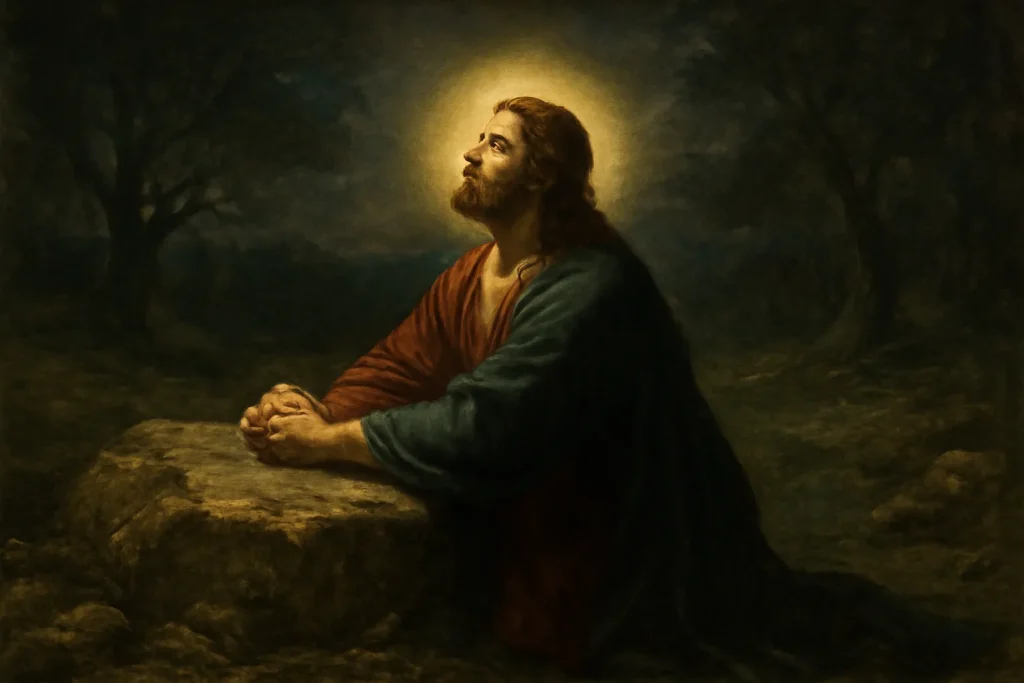
To understand the weight of the Gethsemane prayer, one must first situate it in its environment. Located on the slope of the Mount of Olives, the garden—often identified with Gethsemane itself—was a place where Jesus and his disciples frequently withdrew for reflection, solitude, and prayer. The night was heavy with anticipation: the shadow of betrayal loomed near, Roman authorities would soon encircle the city, and Jesus faced the most consequential human decision of his earthly life. The olive garden setting is more than a backdrop; it frames the drama of the moment. The disciples, exhausted by a day of teaching and travel, drift into a physical sleep that inadvertently mirrors the spiritual fatigue of the hour. In this environment, the one who is both fully God and fully man enters a posture of vulnerably honest communication before the Father, modeling a form of prayer that is raw, intimate, and transformative.
The Moment: What the Text Describes
The canonical presentations of the prayer in Gethsemane record a sequence that scholars often describe as a triadic pattern. Jesus prays, the disciples sleep, Jesus returns, and the cycle repeats, each component echoing a different facet of the human encounter with divine will. The threefold petition—expressed in various gospel accounts—centers on a plea for relief followed by a submission to the Father’s purpose. In the most cited formulation, Jesus addresses the Father with the request that if it is willing to be the case, the cup of suffering might pass from him, yet he immediately anchors the moment in obedience: “not my will, but yours be done.” This explicit surrender is not a passive resignation; it is a deliberate, conscious alignment of human longing with divine intention. The imagery of the cup functions as a potent symbol of the suffering and the willingness to bear what lies ahead for the sake of others and for the fulfillment of God’s redemptive plan.
The Gospel accounts offer subtle and strikingly complementary angles on this moment. In Matthew 26:36–46 and Mark 14:32–42, the narrative preserves the three prayers and the repeated watching and waiting, emphasizing the disciples’ inability to stay awake as a contrast to Jesus’ unwavering resolve. In Luke 22:39–46, the emphasis shifts slightly toward the emotional state and the physical symptoms of distress, including Jesus’ solemn agony and the angel’s strengthening presence. In John 18:1, the scene occurs within a broader Johannine framework and lacks the explicit extended prayer passage, yet still foregrounds the solidarity of Jesus with the Father and the obedience that accompanies his arrest and cruciform journey. Taken together, the synoptic gospels present a unified picture of a moment of deep human distress, sustained by a resolute divine purpose, with the recurring motif of prayer serving as the conduit for intimacy with God and fidelity to the divine plan.
These textual variations are not inconsistencies to be resolved but invites to a richer interpretation of how different voices in the early Christian community remembered and highlighted different elements of the same event. Some readers focus on the emotional intensity and the physical manifestations of Jesus’ distress—“great drops of blood” in Luke’s account—while others highlight the theological significance of surrender and obedience, which become paradigmatic for late antique and medieval devotional life as well as modern pastoral practice. The language used in each Gospel helps readers hear the prayer in Gethsemane from multiple angles: the cry of a son who asks for relief, the submission of one who trusts in the Father’s plan, and the calm decision of one who remains steadfast in the face of impending trial.
Several interlocking themes emerge when we examine the Gethsemane prayer through a theological lens. These topics have shaped Christian thought about prayer, suffering, and vocation for two millennia. The following themes help organize a robust theological reading that respects the scriptural witness while inviting personal application.
Obedience and submission to the Father’s will as the highest aim of Jesus’ mission. The phrase “not my will, but yours be done” is more than a formula; it is the ethical center of a life oriented toward God’s purposes, even when those purposes involve great personal cost.
Human vulnerability and emotional honesty. The Gethsemane narrative foregrounds Jesus’ humanity—his distress, fear, and yearning for relief—which validates authentic prayer as a dialogical space where one can honestly address pain while remaining faithful.
Prayer as companionship with God during trial. Jesus models how prayer sustains vigilance and perseverance when circumstances tempt withdrawal or despair. The practice of watching and praying becomes a spiritual discipline that deepens trust.
Interpretation of the “cup”. The cup imagery signifies bearing suffering and participating in the salvific plan. Though the precise content of the cup is debated, the affective meaning—accepting what God allows—remains central to Christian devotion.
The relationship between humanity and divinity. The prayer engages both Jesus’ human longing and his divine sovereignty, illustrating the paradox at the center of the Christian confession: Jesus is both fully God and fully human, participating in human limitation while fulfilling divine purpose.
Solitude and companionship in prayer. Jesus prays in solitude even as his closest friends are present but unavailable in the moment of great risk. This tension invites readers to cultivate intimate, vulnerable prayer even when communal support falters.
Anticipation of the cross. The prayer is a proximate moment to the crucifixion; it helps readers understand that the cross was not a sudden decision but a deliberate path chosen in obedience and love.
These themes are not just abstract ideas; they illuminate how the Gethsemane prayer can shape modern spiritual practice, affecting how believers approach prayer in times of distress, how churches teach about obedience, and how individuals construct a personal relationship with God that is honest about fear yet anchored in faith.
Textual and Literary Dimensions
Beyond its theological content, the Gethsemane prayer is a remarkable piece of ancient literature. Its structure, language, and imagery contribute to a narrative that resonates across centuries. The following considerations highlight how the text works both as Scripture and as a piece of literary craft.
Language, Imagery, and Symbolism
The cup, the hour, and the watchful company of the disciples establish a layered set of symbols. The cup imagery connects Jesus’ suffering to the larger biblical pattern of suffering poured out for others. The repeated instruction to “watch and pray” evokes a vigilant posture that contrasts with the disciples’ weariness, emphasizing that prayer is an active engagement with reality rather than a passive moment of emotion. The garden setting, with its sensory details—darkness, stillness, and the weight of the air—creates a mood that readers often describe as palpable in their own experiential memory of fear or longing. The style alternates between intimate, first-person address to the Father and a broader narrative of events that will soon unfold, thus bridging private piety with public salvation history.
In terms of form, the triadic pattern of prayer, followed by sleep, then a return to prayer, functions as a dramatic cadence. It offers a rhythm that invites readers to consider their own habits of perseverance: in times of trouble, one may lift the heart in prayer, then experience fatigue, then return to prayer with renewed intention. The narrative thus models a discipline that is not merely technical but relational: prayer is the ongoing conversation that sustains trust in the midst of uncertainty.
Practical and Historical Significance
The events narrated in the Gospels around the Gethsemane prayer have had a profound influence on Christian thought and practice throughout history. The moment has been cited in preaching, devotional writing, liturgy, and personal reflection as a paradigm for how a follower of Jesus should respond when the path ahead seems perilous or unclear. The historical significance can be traced in several interrelated strands:
Devotional practice: The image of Jesus praying with intense emotion and then returning to his disciples has informed countless prayers and meditations about obedience, surrender, and courage in prayer life. The narrative invites believers to bring their own fear and desire to God while remaining anchored in trust.
Christological reflection: The prayer sharpens debates about the humanity and divinity of Christ. If Jesus prays with distress, yet remains in perfect harmony with the Father, readers see a model for how the incarnate Word can experience genuine human pain within a divine plan.
Pastoral applications: In times of collective sorrow or moral crisis, communities have drawn on the Gethsemane account to address questions about suffering, divine sovereignty, and the possibility of faithful courage in the face of looming hardship.
Liturgical and artistic renditions: The moment has inspired hymns, paintings, poems, and sermons across cultures, offering a shared language for naming fear, submission, and trust in God’s overarching purposes.
Historically, commentators have recognized that the prayer in Gethsemane does not resolve fear by banishing it; rather, it reframes fear within a larger horizon of obedience and hope. This reframing has given many readers permission to acknowledge real distress while continuing to walk in faith, an interplay of struggle and trust that remains central to Christian spirituality.
Closing Reflections on the Gethsemane Prayer
In examining the Jesus prayer in Gethsemane, readers encounter a moment that is at once intensely personal and universally applicable. The prayer demonstrates that authentic communication with God can include struggle, doubt, and longing for relief, yet it can culminate in steadfast commitment to God’s will. The threefold pattern of petition, suffering, and submission offers a model for how believers might approach God in their own moments of crisis: bring the fear, wrestle with the cost, and then align the heart with God’s purposes. The event does not merely tell us what Jesus did; it invites us into a form of prayer that can sustain faith when paths are uncertain and the road ahead is shaped by sorrow and sacrifice.
For modern readers, the Gethsemane prayer remains a powerful invitation to cultivate honesty before God, to practice vigilant prayer as a daily discipline, and to embrace obedience as a transformative path that God uses to accomplish a larger, redemptive plan. It challenges believers to ask difficult questions about fear, about submission, and about the meaning of strength in weakness. It also offers a hopeful reminder: even in the most daunting moments, prayer can be a space where humanity and divinity meet in trust and love, shaping lives that bear witness to the justice and mercy of God.
Illustrative Practices: How to Reflect on the Gethsemane Moment
To translate the insights of this biblical analysis into daily life, consider the following practical exercises that echo the cadence of the Gethsemane prayer.
Begin with honest prayer. Name your fears, desires, and questions before God, just as Jesus did in the garden, without pretense about your feelings at the moment.
Practice watchfulness. Set aside time for silent reflection, paying attention to your interior weather—the places of anxiety, longing, or grief—and invite God to meet you there.
Offer a focused petition that centers on alignment with God’s will. Invite a closing line similar to Jesus’ liturgical confession: “not my will, but yours be done.”
Embrace the rhythm of struggle and rest. Accept that you may wrestle with outcomes while choosing faithfulness in the present moment, repeating a pattern of prayer, pause, and recommitment.
Share in the broader community’s prayers. The garden scene invites a sense of solidarity: believers stand with Jesus in his trial, and, in turn, offer mutual encouragement in perseverance and hope.
Historical and Cross-Christian Perspectives
Across Christian traditions, the Gethsemane prayer has been interpreted through many lenses. In patristic writings, the moment is a touchstone for discussions of the kenosis—the idea that the Son empties himself to fulfill the Father’s will. In medieval devotion, the passage was a key text in contemplative practice, guiding monks and nuns to face fear with disciplined prayer and to cultivate a steady heart before God. In Protestant reformational thought, the emphasis on Christ’s obedience in the garden has served as a corrective to ideas of salvation that lean only on human effort; it anchors salvation in divine initiative and the Son’s faithful surrender. Modern theologians continue to wrestle with questions about the interplay of divine sovereignty and human freedom, often returning to the prayer in Gethsemane as a case study in how the two dimensions are held together in the person of Jesus.
What does it mean to pray “not my will, but yours be done” in circumstances that feel unjust or painful?
How does the image of the “cup” illuminate our understanding of sacrifice, mercy, and communal responsibility?
In what ways does the humility of Jesus challenge or encourage our approach to power, control, and fear?
What can we learn about spiritual friendship from the disciples’ sleep and Jesus’ insistence on prayer?
How might contemporary worship, preaching, or devotional writing reflect the balance between lament and trust demonstrated in this scene?
Variations in Translation and Interpretation
Scholars and translators note that while the essential content of the Gethsemane prayer remains constant, the wording differs across Greek manuscripts and translations. These variations can highlight different emphases—whether the focus is on the fear of what is to come, the obedience that follows, or the personal relationship between Jesus and the Father. For readers, these textual nuances offer a richer palette for devotional use and for theological reflection. Regardless of the translation, the core message persists: genuine prayer in moments of crisis seeks to align human longing with divine purpose, even when the path is through suffering.
Concluding Thoughts: The Enduring Significance of the Gethsemane Moment
The prayer in Gethsemane is not only a historical episode from early Christian narratives; it remains a living invitation. It calls believers to a form of prayer that is honest about pain, courageous in the face of fear, and steadfast in submission to God’s will. It reminds us that obedience can involve profound emotional struggle, and that trust in God can coexist with profound human longing. In reading and reflecting on this moment, readers are invited to see prayer as a dynamic practice—one that moves from lament to hope, from uncertainty to trust, and from self-centered desire to gospel-centered submission. The Gethsemane narrative thus serves as a compass for personal discipleship and a touchstone for communal faith, guiding Christians toward a deeper, more resilient way of praying, living, and bearing witness to the grace of God in the world.









Leave a Reply