Historical overview: slavery in the ancient world and the biblical landscape
The topic of slavery in the Bible cannot be reduced to a single modern label. It spans a range of practices that intersect with household economics, debt, war, foreign policy, and family networks in the ancient Near East. In broad terms, the biblical material reflects a world in which labor obligations, debtor servitude, and ownership of persons were not unusual among neighboring cultures. Yet the biblical authors also built frameworks that sometimes limited, transformed, or redirected those practices. Reading these texts requires attention to the linguistic choices (ebed, doulos, and related terms), the legal codes that regulate behavior, and the moral voices that critique oppression. This section surveys the landscape, emphasizing that slavery in biblical contexts is diverse, historically situated, and deeply contested within its own tradition.
Key terms and semantic breadth
ebed (Hebrew for “servant” or “bondservant”) appears in various social strata, from household workers to debtors, and its nuance can shift with context.
doulos (Greek for “slave” or “bondservant”) appears in the New Testament and conveys allegiance, duty, and status within a community of faith.
abd or abad (related Hebrew roots) signal labor or service and can carry both voluntary and compelled connotations depending on the passage.
Translations often render mixed realities as “slavery” or “servitude,” but the social reality could be indentured servitude, debt bondage, household slavery, or foreign slavery.
Forms of servitude in the Hebrew Bible: types, terms, and boundaries
Debt bondage and indentured servitude
A prominent form of servitude in biblical law is the debt-bondage model. When a person could not pay a debt, they might enter a period of service to repay what was owed. The Exodus and Deuteronomy texts establish a six-year limit for many such arrangements, with release on the seventh year (the Year of Release). In Exodus 21:2, the instruction reads that a Hebrew servant shall serve six years and go out free in the seventh. This provision functioned as a social safety valve, preventing permanent bondage among the Israelite community and providing a predictable rhythm to labor obligations.
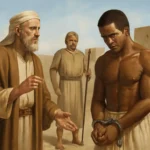
If a servant chose to remain with a master after the period of release—perhaps because of attachment to family, land, or the master’s protection—the master was required to mark the servant as permanently devoted. Exodus 21:5–6 describes an ear being bored through with an awl as a public sign of lifelong servitude. This practice, often cited in discussions of biblical slavery, demonstrates how the text distinguishes between temporary debt servitude and long-term bondservice, tied to personal bonds or economic arrangements rather than abstract ownership alone.
Domestic and household servitude
The biblical corpus also speaks of household servants who may be hired workers, dependents, or employees within a family’s sphere. The household economy in ancient Israel and surrounding cultures often rested on a network of dependents who performed duties ranging from agriculture to caregiving. This category includes both free hired workers and those described as servants within a family. The line between “free employee” and “slaves” is not always rigid in the texts, leading scholars to emphasize the social function of these relationships rather than a single label.
Slaves from foreign nations and the broader social order
The law also contemplates the acquisition of foreign slaves or captives from outside Israel. Leviticus 25:44–46 allows the purchase and ownership of slaves from among the nations around Israel; these individuals could be acquired as property and passed on to descendants. However, the same legislation includes a notable constraint: Israelites were not to rule over foreigners with severity (Leviticus 25:43). This nuance points to a complex ethic: while foreigners could be owned as property, there were moral and regulatory guardrails intended to prevent brutal domination. The presence of such guardrails invites readers to ask how these norms functioned in practice within households and communities.
Female slaves, concubinage, and family formation
The biblical texts include provisions about female slaves who could become wives or concubines in certain circumstances (for example, Exodus 21:7–11). These passages reveal a social system in which women’s status and rights within marriage and family were regulated by parental and patriarchal authority. Such laws have been the subject of ongoing ethical reflection: some readers highlight the vulnerability these laws imply, while others emphasize the attempt to regulate practices to minimize harm within a patriarchal framework. It remains important to understand these passages in their ancient setting while evaluating them through modern ethical lenses.
Legal provisions, protection, and boundaries in biblical law
Six-year terms, release, and provisions for the released
The six-year limit for many Hebrew slaves was not merely a bookkeeping device; it structured social obligations and communal memory. When a Hebrew slave left free in the seventh year, the person was to be released with provisions for a fair start—an example of economic social policy embedded in religious law. These provisions often included support for a person to re-enter independent life, such as help with earnings, guidance, or resources to reestablish one’s household.
Regulations aimed at humane treatment
Biblical law does include directives intended to curb cruelty and provide a measure of protection. For example, there are admonitions against exploiting vulnerable workers and calls for fair treatment in certain labor relationships. These laws are often framed within the larger ethical aim of maintaining Israelite identity and communal justice. Readers frequently note that the text’s emphasis on humane treatment and provisions for the vulnerable signals a concern that goes beyond simple ownership.
Year of Jubilee and resets in land and people
The Year of Jubilee (every fifty years) interrupts patterns of generational debt and landholding. Leviticus 25:10 announces the proclamation of liberty throughout the land, allowing for the restoration of ancestral lands to their original families and the release of those who had become bound by debt or servitude. This sweeping reset underscores a biblical vision in which economic and social structures are periodically rebalanced, challenging permanent hierarchies and offering a chance to recover intergenerational stability.
Prophetic critique and the moral voice against oppression
Prophetic demands for justice and dignity
The prophetic tradition frequently speaks against oppression and calls for justice for the vulnerable. Prophets critique social systems that perpetuate harm or inequality, urging ethical conduct that transcends narrowly legalistic interpretations. Across books such as Amos, Jeremiah, and Isaiah, the rhetoric emphasizes mercy, righteousness, and the humane treatment of the marginalized. While not a single pronouncement abolishing slavery, the prophetic voice contributes to a trajectory toward greater concern for human dignity and social transformation.
Scriptural tensions and interpretive debates
The Bible presents a tapestry of voices, some of which appear to tolerate slavery within a given cultural framework, others that challenge or reinterpret those norms. The tension invites readers to consider two questions: What did the text command or permit in its historical setting? and What do these passages imply for contemporary ethics and human rights? The presence of regulation, critique, and reform within the canon has led many interpreters to view biblical slavery as a complex institution that is not monolithic in its moral valence.
New Testament perspectives: a shift in language and social practice
From doulos to community ethics
In the New Testament, the term doulos frames slaves or bondservants as members of Christian households and churches alike. The apostolic letters address slaves and masters in ways intended to shape Christian behavior and social relations. Passages such as Ephesians 6:5–9 and Colossians 3:22–4:1 exhort slaves to obedience and masters to fairness, tying ethical conduct to Christian allegiance rather than to a purely secular code.
Abolitionist readings and radical equality in Christ
The Gospel of freedom emerges in passages like Galatians 3:28 (“There is neither slave nor free, for you are all one in Christ Jesus”) and in the overarching call to love and mutual respect within the faith community. Some readers highlight these verses as a radical critique of social hierarchies, arguing that Christian identity redefines status before God, even if it stops short of prescribing an immediate abolition of slavery in the first-century social order.
Onesimus, Philemon, and practical reconciliation
The letter to Philemon centers a specific situation involving Onesimus, a slave who had become a Christian. Paul’s appeal to Philemon to receive Onesimus “not as a slave but as a beloved brother” has been read as a nuanced move toward reconciliation and transformation of social relationships within the church. In the early Christian imagination, the church’s moral horizon included the possibility of elevating relationships that formerly existed on strict ownership into bonds of spiritual fellowship.
Interpretive approaches: how scholars read slavery in biblical texts
Historical-critical and social-historical readings
Many scholars emphasize the historical context of biblical passages, noting that slavery was a common institution in the ancient world. These readings seek to distinguish between what the text permitted within its era and what it ultimately reveals about justice, mercy, and the dignity of human beings. The aim is to understand how biblical authors grappled with real social constraints while layering normative principles—such as protection for the vulnerable, release from debt, and care for the afflicted—onto those constraints.
Ethical and hermeneutical approaches
Other scholars foreground ethical reflection and hermeneutics—the methods by which readers interpret Scripture across time. These approaches ask how readers today should apply biblical material to issues of modern human rights, gender, and equality. They often stress the continuity of core values (dignity, justice, mercy) while acknowledging historical particularity in how different communities organized labor and kinship.
Postcolonial and liberation-theology perspectives examine how biblical texts have been used to justify or resist power structures. They scrutinize how language about slaves, servants, and foreigners has been deployed in diverse historical moments—sometimes to defend oppression, other times to critique it, and sometimes to propose emancipating visions that align with the biblical call to justice and mercy.
Modern implications and legacy: from biblical ethics to contemporary conversation
The study of slavery in the Bible continues to shape modern discussions about human rights, economic justice, and religious ethics. The biblical record is not a single, simple endorsement or condemnation; rather, it presents a spectrum of norms, practices, and prophetic voices that argue for humane treatment, protection of the vulnerable, and opportunities for release and renewal.
Historical influence and the trajectory toward abolition
In historical contexts such as the late medieval and modern periods, readers repeatedly invoked biblical material to argue both for and against slavery. Prominent Christian reformers and abolitionists drew on biblical themes of liberty, equality before God, and the moral call to love one’s neighbor to challenge slaveholding systems. While not all abolitionist arguments were biblically uniform, the cumulative impact of biblical interpretation contributed to shifts in social ethics and public law that eventually led to abolition in many societies.
Contemporary ethical reflection
Today, scholars and theologians approach biblical slavery with careful attention to both textual nuance and historical distance. Modern readers ask: How should ancient laws inform contemporary questions about labor rights, economic exploitation, trafficking, and consent? How can communities faithfully honor the biblical values of justice, hospitality to the stranger, and protection of the vulnerable while rejecting practices that undermine human dignity? These questions keep the conversation about slavery in the Bible living and relevant.
Key takeaways: how to read and teach this topic responsibly
Recognize the diversity of forms under the umbrella term “slavery” in biblical texts, including debt bondage, indentured servitude, household service, and foreign ownership.
Appreciate the regulatory frameworks that sought to limit harm, provide release, and protect vulnerable individuals within the social world of the ancient Israelites and early Christians.
Acknowledge the ethical tensions present in the canon, where some passages seem aligned with ranking authority structures while others advocate for mercy, justice, and liberation in different ways.
Engage with historical context to interpret passages faithfully rather than importing modern categories anachronistically.
Explore the implications for contemporary ethics, including human rights, economic justice, and the ongoing work of reform in communities shaped by biblical witness.
In teaching or writing about slavery in the Bible, it is essential to maintain a balance: acknowledge the historical forms of servitude, respect the dignity of persons who lived under those conditions, and highlight the ethical discernment that emerges from prophetic and apostolic voices. The biblical story about slavery is not reducible to a single verdict; it is a conversation across centuries about power, justice, and the possibility of renewal through faith, community, and reform.









Leave a Reply