What Is Philemon About in the Bible? A Clear Overview of Its Purpose, Context, and Key Themes
What Is Philemon About in the Bible? A Clear Overview of Its Purpose, Context, and Key Themes
Philemon is one of the shortest letters in the New Testament, yet it carries a weighty and enduring message about forgiveness, reconciliation, and the way the gospel reshapes social relationships within the church. At its core, the letter is a personal appeal from the Apostle Paul to a Christian leader named Philemon concerning a formerly enslaved man named Onesimus, who had become a believer under Paul’s ministry. The document invites its readers to consider how a Christian community should respond when personal and civil bonds collide with a gospel of brotherhood in Christ. The result is not merely a private plea but a compact, theologically rich case study on living out the ethics of the gospel in everyday power dynamics.
What Is Philemon About in the Bible? A Clear Overview of Its Purpose, Context, and Key Themes
The letter addresses a concrete situation that exposes a perennial question for Christian communities: how should followers of Christ relate to one another across social hierarchies? While the setting is specific—the relationship between a master and his runaway slave—the implications reach far beyond that one household. The author, Paul, writes to Philemon and to others who share in the Christian household church, and he frames his appeal within a mature theology of identity in Christ, a shared mission, and a transformed ethic of love and responsibility.
In addressing the question of what Philemon is about, it is helpful to keep several strands in view: (1) the historical setting, (2) the theological aims of the letter, (3) the rhetorical strategy Paul employs, and (4) the ethical consequences the text invites for Christian communities today. The result is a compact but profoundly consequential exhortation about how the gospel alters the way people treat each other when old social rules come into contact with a new spiritual kinship.
Throughout this article, you will see recurring phrases that illuminate its purpose: reconciliation, forgiveness, brotherhood, in Christ, and the gospel’s transformative power. These terms do not merely ornament the text; they are the hinges on which Philemon turns from a personal letter into a theological statement about Christian living.
Author, Audience, and Context
The author of Philemon is the Apostle Paul, writing in the form of a personal letter from prison, which places it among the Pauline Prison Epistles along with Ephesians, Philippians, and Colossians. The opening line identifies Paul as a prisoner of Christ Jesus, signaling both his humble circumstances and his unwavering commitment to the gospel message.
The intended recipient is Philemon, a Christian homeowner who evidently had a household church that met in his house. The letter also mentions Apphia, maybe Philemon’s wife, and Archippus, a church leader who is described as a fellow soldier. The greeting extends to “the church in your house,” indicating that Philemon’s household functioned as a local church community where both social and spiritual life intersected in daily practice.
The addressee backdrop is the Greco-Roman world in which slavery was a standard social institution. Slaves could be treated with harshness, but they could also be regarded as valuable to the household’s economy and reputation. The Letter to Philemon thus sits at a cultural crossroad: a Christian vision of equal worth in Christ encountering a social structure built on difference of status and dependency.
The Story Behind the Letter: Onesimus, Philemon, and Paul
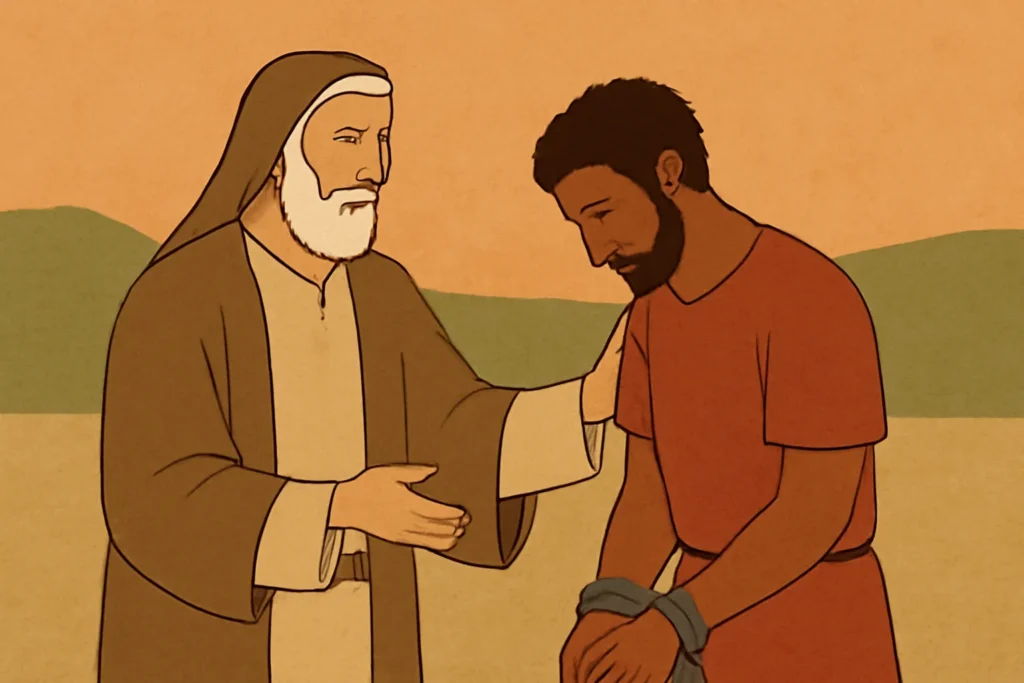
The narrative frame of Philemon is remarkably simple to describe, yet its implications are far-reaching. Onesimus was a slave who, for reasons that are not fully detailed in the text, left his master, Philemon. In an unexpected turn of events, Onesimus encountered Paul during the Apostle’s imprisonment in Rome. There, under Paul’s influence, Onesimus became a Christian and developed a new identity in Christ.
With Onesimus now a believer, Paul faced a delicate situation: the slave was returning to his master as a Christian brother in the faith, yet the social law of the day still recognized him as a slave. Paul’s response is the heart of the letter. Rather than simply instruct Philemon to forgive or to release Onesimus, Paul makes a strategic, theologically framed appeal that hinges on the radical claim of kinship in Christ.
The letter begins with a personal appeal, greeting Philemon as a beloved brother in the Lord and situating the message within the shared Christian household.
Onesimus’ transformation is foregrounded, emphasizing that a slave’s conversion alters his standing in the Christian community and, crucially, in the eyes of God.
Paul offers to make amends, even promising to repay any debt Onesimus owes Philemon, thereby taking on a mediator role that crosses social boundaries.
The hinge from master-slave to family-in-Christ is declared in the famous phrase that Onesimus should be received “no longer as a slave but as a beloved brother.”
The substance of the story is compact, but the implications are expansive: a Christian leader uses relational authority to reframe a social relation, inviting the local church to practice forgiveness and hospitality in ways that prefigure a more inclusive community.
Core Purpose and Theological Intent
The primary purpose of Philemon is not to legislate slavery reform in a civil sense, but to catalyze a shift in how believers relate within the church by emphasizing love, reconciliation, and mutual respect in the body of Christ. Paul’s approach is deliberately pastoral and persuasive, seeking to blend personal affection with theological argument.
Several interlocking aims emerge when Philemon is read with attention:
Reconciliation between former master and slave through a Gospel-centered framework that redefines relationships in light of Christ’s lordship.
Affirmation of Onesimus’ new identity in Christ, which means more than his status as a slave—he is a fellow believer and brother in the faith.
Exemplification of spiritual authority exercised with restraint, since Paul explicitly states that he could command Philemon to comply but chooses to appeal on the basis of love.
Encouragement toward practical generosity, including Paul’s offer to bear Onesimus’ debt and to facilitate a gracious reception.
The theological thread running through Philemon is the assertion that the gospel creates a new humanity in which traditional social divisions are reinterpreted under the rule of Christ. This is not a call to abolish slavery in a political sense, but a demonstration that the Christian community should embody a radical brotherhood that transcends status and class.
Key Themes in Philemon
Reconciliation and Forgiveness
The most immediate and striking theme is the call for forgiveness and reconciliation within a single household turned church. Paul does not minimize the harm that was done or the social realities of slavery; instead, he invites Philemon to respond with grace and to see Onesimus through the lens of God-given kinship.
Unity in Christ
The letter repeatedly uses language that emphasizes unity in the body of Christ. The phrase “in Christ” functions as a unifying principle that transcends human distinctions. Paul’s appeal to Philemon rests on the conviction that shared faith creates common bonds stronger than any social label.
Philemon presents a provocative example of how gospel ethics reshape social bonds—not by erasing all distinctions, but by recasting them in light of love, mutual respect, and responsibility to fellow believers. The letter invites readers to consider how a master and a slave can practice hospitality and embrace brotherhood within a Christian household.
The Role of the Believer as a Mediator
Paul positions himself as a mediator who stands between Philemon and Onesimus, not to exert coercion but to foster trust and reconciliation. This mediation is a model for church leadership, where spiritual authority is exercised with humility, care, and deference to conscience.
Gospel, Liberty, and Kinship
The gospel’s freedom is not a political program but a radical redefinition of human relationships. In Christ, the barriers that separate people—whether by status, class, or role—are confronted by a new kinship that values each person as beloved and equal in dignity. This theme challenges readers to consider how freedom in Christ should color everyday interactions, even within households and workplaces.
Literary Form and Rhetorical Techniques
Philemon stands out for its personal tone and its deliberate rhetorical balance. Paul’s argument is structured as a compassionate request that politely but firmly challenges Philemon to realign his actions with gospel values.
Appeal to friendship and partnership: Paul begins by addressing Philemon as a beloved fellow worker, establishing shared identity and trust. This frame disarms Philemon and opens space for persuasion grounded in affection.
Strategic affection language: The repeated use of kinship terms—brother, beloved—reinforces the idea that the relationship has spiritual weight beyond social contract.
Soft coercion with generous consent: Paul acknowledges his authority as an apostle but chooses persuasion over coercion, trusting Philemon’s conscience and the power of a transformed heart.
Humble offering and accountability: Paul offers to repay any debt and asks Philemon to receive Onesimus back in a way that reflects Christian charity and accountability to God.
The letter’s rhetoric intentionally models the very transformation it envisions: it invites a Christian leader to align social action with gospel logic, demonstrating how words can become deeds in the life of a church.
Historical Context and Slavery in the Greco-Roman World
To understand Philemon fully, readers should attend to the historical backdrop: in the Roman Empire, slavery was deeply entrenched in economic, legal, and social structures. Slaves had limited legal rights, and masters could exercise wide latitude over their lives, including punishment or sale. Yet even within that framework, Christian communities sometimes offered a countercultural vision: a spiritual equality grounded in baptism and a shared faith in Christ.
The letter does not erase painful realities or present an easy political fix. Instead, it offers a narrative where a Christian teacher gently nudges a master toward a more humane and loving response to Onesimus, and where the church must demonstrate that grace can reshape personal ethics and household practice. The text thus becomes a historical touchstone for later Christian reflections on freedom, justice, and welcome within the church.
In the course of Christian history, Philemon has been interpreted in several ways, reflecting different priorities: as an example of interpersonal reconciliation, as a document that prompts reflection on the ethics of slavery, or as a text about church discipline and pastoral care. While it does not offer a political manifesto, the letter has frequently been cited in discussions about how Christians should treat others who are under their authority and how Christian communities should respond when the gospel disrupts social orders.
For modern readers, Philemon remains compelling for several reasons:
Ethical imagination: It asks, in concrete terms, how forgiveness and welcome should be exercised within families, churches, and communities.
Pastoral prudence: It models how leaders should use their authority with restraint, seeking to persuade rather than coerce, and to respect individual conscience while offering a high vision of unity in Christ.
Gospel anthropology: By stressing that Onesimus is now a beloved brother, it foregrounds a Christian anthropology that dignifies every person as made in God’s image and value-for-Christ’s sake.
Hermeneutical caution: The text invites careful reading about the extent to which it endorses social change. It also raises questions about how early Christian communities negotiated justice within existing social frameworks without denying gospel loyalties.
Contemporary readers might apply Philemon by thinking about forgiveness in family disputes, restorative justice in communities, and the ways churches can demonstrate hospitality and equality in Christ in daily life. The letter serves as a reminder that a Christian approach to difficult social questions often begins with personal conversion and a deliberate choice to extend grace in practical ways.
Did Paul simply command Philemon to free Onesimus? Not exactly. Paul emphasizes that he could command Philemon as an apostle, but he chooses to appeal to Philemon’s heart and Christian loyalty. The text presents a framework where consent and willingness rooted in gospel love become the path toward reconciliation.
What does Philemon teach about forgiveness? It teaches that forgiveness in the church is best understood as a process of restoration that respects the dignity of the transformed person and seeks the good of the community. It models how reconciliation can be pursued with humility and courage.
Is Philemon condemning slavery or endorsing it? Philemon does not provide a civil policy, but it critiques the dehumanizing aspects of enslaving a fellow believer by urging a treatment that recognizes Onesimus as a beloved brother. The ethical thrust is gospel-centered kinship, not social destabilization by decree alone.
How should modern readers interpret Philemon today? Modern readers can see in Philemon a model for graceful restoration and for leading communities to embody justice and mercy within complex social structures. It invites faithful readers to translate gospel principles into contemporary practices of reconciliation, hospitality, and mutual care.
What is the relationship between Philemon and the broader New Testament message? Philemon complements broader gospel themes—redemption, new humanity in Christ, and the church as a family—and it intersects with passages that speak to Christian ethics and social order, illustrating how early Christians worked out their faith in concrete, delicate situations.
In sum, Philemon is about much more than a single house, a single master, and a single slave. It is a compact theological document that asks how a community rooted in the message of Jesus should live with grace when social power is on the line. It invites readers to imagine what it would look like for a household to embody the gospel’s radical equality and to welcome someone back not simply as a servant but as a co-heir in Christ. The letter’s enduring contribution lies in its insistence that real reconciliation begins in the church and that the gospel’s liberating power begins to reshape even the most entrenched human relations.
For anyone seeking to understand what Philemon is about in the Bible, the key can be summarized in a few phrases: personal appeal, Christ-centered identity, reconciliation over revenge, and a church that models grace. This short letter demonstrates that the gospel has texture and depth enough to address real-life questions about power, status, debt, and belonging. The outcome it envisions—receiving Onesimus as a beloved brother—continues to challenge readers to consider how their own communities can reflect the transformative power of Christ in everyday decisions, even when those decisions involve difficult relationships and long-standing cultural norms.










Leave a Reply