Bible Slavery: Context, Debates, and Biblical Teachings
Bible Slavery: Context, Debates, and Biblical Teachings
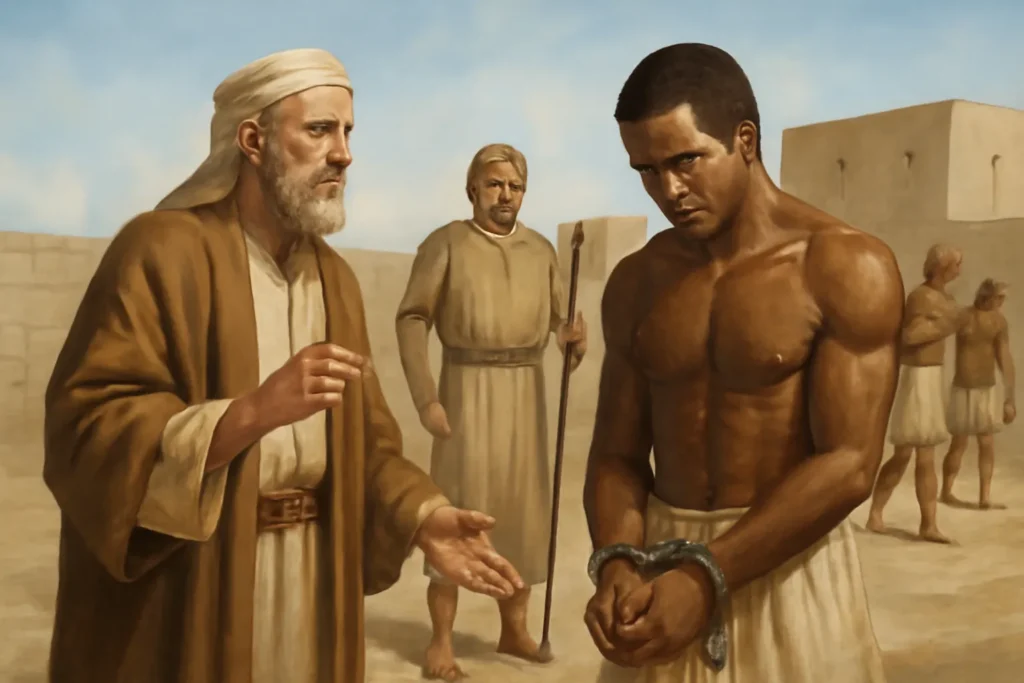
This article explores bible slavery from a broad perspective, using the phrase slavery in the Bible as a gateway to understand ancient practices, interpretive debates, and the ethical teachings embedded in sacred texts. By examining the historical context, the varied legal frameworks, and the way different biblical books treat servitude and freedom, we can better appreciate how readers today engage with these passages. The topic often appears under several names—biblical slavery, slavery in the Hebrew Bible, ancient Near Eastern servitude, and household servitude in Scripture—each highlighting a different facet of a complex historical reality. This article favors clarity and nuance, recognizing both the historical specifics and the ongoing questions about interpretation and application.
To understand bible slavery, readers must first situate it in the broader world of the ancient Near East. Slavery existed in many forms across Mesopotamia, Egypt, Canaan, and neighboring cultures, and biblical authors both reflected and reframed those customs within their own religious and social horizons. The Bible does not present a single, uniform portrait of servitude. Instead, it comprises diverse genres—law codes, narrative stories, poems, prophetic oracles, and New Testament letters—that together illuminate how slavery and servitude were experienced and regulated.
Ancient Near Eastern Slavery: Common Features and Distinctions
In the broader ancient world, slaves could be war captives, debtors, or individuals sold into bondage due to economic pressures. Slavery varied in terms of
Legal status and rights in law codes,
Duration and terms of service (permanent vs. fixed term),
Racial or ethnic dimensions, or the absence of such classifications in some contexts,
Social mobility and potential for emancipation or freedom,
Household integration and economic functions within households.
The biblical corpus often mirrors these patterns but also imposes distinct religious and ethical layers. For example, the concept of a sabbath year (the Year of Jubilee and related practices) introduces a cyclical rhythm of rest and release that is not universally present in neighboring cultures. In addition, the biblical tradition sometimes frames bondservants and slaves in relation to land, identity, and covenant fidelity, thereby shaping how readers interpret servitude within the life of a community (the people of Israel or the Christian church later on).
Hebrew Servitude vs. Other Forms of Slavery in Scripture
The Hebrew Bible makes a notable distinction between Hebrew slaves (often called servants) and non-Israelite slaves acquired from nations beyond Israel. This distinction matters for how texts regulate treatment, duration of service, and the possibilities for release. In some passages, the status of a Hebrew slave is framed as a temporary condition, while other passages treat enslaved status as a more enduring arrangement. Critics and scholars frequently explore how these different categories interact with ideas of fairness, covenant obligation, and the overarching call to love neighbor.
Economic Dimensions and Social Order
Slavery and servitude in the biblical world cannot be separated from economic necessity and social hierarchy. Servants and slaves supplied labor for agriculture, household management, and specialized crafts. Master-servant relationships often reflect broader household economies, where the owner’s household depended on the work of individuals who did not have full personal autonomy. Yet the biblical authors also repeatedly emphasize duties of humane treatment, protection for vulnerable people, and a framework of justice that seeks to limit abuse and exploitation within those structures.
Language and Translation: How Terms Shape Understanding
The English translators often use terms like slave, servant, bondservant, or slave woman/man to render Hebrew and Greek words. These shifts in terminology can influence readers’ perception of the power dynamics involved. A careful reading distinguishes between bondservancy tied to land and covenant and more coercive forms of ownership that modern readers rightly critique. In academic discussion, scholars highlight how terms such as eved (Hebrew for servant) or doulos (Greek for slave) carry connotations that require careful contextualization in translation and interpretation.
Key Passages and How They Describe Slavery
Old Testament Laws: Regulation, Protection, and Release
The Law codes in the Pentateuch offer a structured, sometimes nuanced, approach to bible slavery. They regulate several dimensions of servitude, including duration, rights, and the ethical treatment of those in servitude.
Duration of servitude: Some Hebrew servants were bound for a set term, often six years, with release in the seventh year (the sabbatical cycle). This framework creates a recurring expectation of freedom and resets the social order periodically.
Protection for the vulnerable: The injunctions emphasize protecting household members who might be at risk of abuse, especially Israelites who could be exploited by creditors or coercive masters.
Freedom and return: The Year of Jubilee (every fifty years in some traditions) expands the idea of emancipation beyond individual terms, signaling a broader redress against entrenched bondage within the covenant community.
In addition, these laws differentiate Hebrew slaves from foreign slaves, allowing for certain distinctions in treatment, obligations, and rights. Critics note that these distinctions reflect a society negotiating power, property, and moral expectations, rather than a straightforward endorsement of slavery as an ideal social order.
The Household and Domestic Servants
The biblical world often describes household servants or bondservants within the context of family life and landholding. Within this frame, servitude could function similarly to other forms of labor specialization, with duties revolving around caregiving, agriculture, and craft production. Some passages emphasize the humane treatment of such workers and require fair labor practices, including fair wages and protection from harsh punishment.
Prophetic and Narrative Perspectives on Slavery
The prophets and narrative books frequently challenge abuses of power and call for justice that extends to slaves and servants. In prophetic literature, the vulnerability of the marginalized is foregrounded, and the vision of justice is often tied to righteousness and fidelity to the covenant. Narrative episodes—such as stories about households, migrations, or conflicts—offer real-world contexts in which slaves and masters navigate power dynamics, often highlighting acts of mercy, restraint, and the possibility of transformation.
New Testament Passages: Slavery in Early Christian Circles
The New Testament speaks to the reality of slavery in the Greco-Roman world and situates Christian ethics within that social landscape. While the apostolic letters do not purport to overthrow slavery, they address the conduct of both slaves and masters within Christian communities.
Philemon—A personal letter dealing with Onesimus, a slave, and the request to reconcile him with his master Philemon, while also invoking a broader call to consider transformation within the gospel’s social fabric.
Ephesians 6:5-9 and Colossians 3:22-4:1—Household codes that urge slaves to obey their earthly masters and masters to treat slaves with justice and fairness, recognizing a shared spiritual standing before God.
1 Timothy 6:1-2—Instructions about respect and mutual obligation within the household, with attention to the possibility of Christian leaders and bondservants overlapping roles.
Critics and interpreters often discuss how these New Testament passages can be read in ways that either normalize slavery, encourage humane treatment, or point toward a trajectory of emancipation and social reform. Some readers highlight the inclusivity of Christian identity in Galatians 3:28, which emphasizes that there is neither Jew nor Greek, slave nor free, in Christ, as a seedbed for discussions about equality and dignity within the community of faith.
Key Interpretive Angles for the Textual Record
The way readers interpret bible slavery hinges on hermeneutical frames and ethical commitments. Major interpretive angles include:
Liberal or abolitionist readings that see biblical ethics as progressively aligned with human rights and freedom, emphasizing the Bible’s critique of oppression and its call toward justice.
Conservative or traditional readings that view the biblical law in its historical-cultural setting while seeking to preserve the integrity of the text’s moral teachings within its own time.
Critical or historical readings that explore the texts as evolving voices within evolving social practices, acknowledging both limitations and capacities for moral critique.
Debates Among Scholars and Theologians
Moral and Ethical Critiques
Contemporary readers often raise questions about whether bible slavery endorses oppression or merely reflects a historical reality to be regulated and improved upon. Debates typically address:
Whether biblical regulations protected the vulnerable or allowed abuses to persist under the cover of law,
The degree to which emancipation concepts are present in Scripture, and how they relate to the practice of freeing slaves or allowing humane treatment,
Whether the Bible’s moral vision points toward equality, dignity, and justice that trump the inherited social order of slavery.
Hermeneutical Approaches
Scholars dissect how to interpret the biblical material concerning servitude. Some distinguishing approaches include:
Historical-critical methods that seek to reconstruct the ancient world and understand how laws functioned in their original setting.
Therapeutic or pastoral readings that emphasize how communities might apply biblical principles to contemporary issues of justice and social ethics.
Canonical-theological approaches that consider how the Bible’s overarching message of love, justice, and grace informs moral judgments about slavery.
Abolitionist Readings vs. Traditional Readings
Throughout history, readers have used the biblical corpus to argue for emancipation and abolition as well as to defend existing social orders. In the abolitionist tradition, verses about freedom, equality in Christ, and the ethical treatment of persons have been marshaled to advocate for abolition and social reform. In more traditional readings, the focus is on how to live faithfully within the framework of Scripture, even when that framework includes social practices now regarded as unjust. These debates are not purely academic; they have shaped ethical byproducts in law, education, and public policy.
A common theological approach holds that Scripture, viewed as a narrative of progressive revelation, reveals moral growth over time. Proponents argue that later Christian ethics, informed by the life and teachings of Jesus, often pushes readers toward greater justice than earlier formulations might imply. This perspective is frequently invoked to articulate a trajectory from accepting slavery as a historical condition to endorsing human dignity and freedom as universal goods, culminating in ethical arguments against contemporary forms of oppression.
Biblical Teachings on Slavery and Human Dignity
God’s Justice and the Protection of the Vulnerable
Across the biblical corpus, the ethical core often centers on the value of every person before God. Even within the structures of ancient servitude, the text repeatedly frames God as a defender of the vulnerable—widows, orphans, foreigners, and workers—suggesting that any system must be exercised with mercy and justice. In this sense, bible slavery is not a timeless endorsement of domination but a setting within which divine expectations press toward fair treatment and protection.
Love of Neighbor and Ethical Conduct
The imperative to love one’s neighbor creates a moral obligation to treat slaves and servants with dignity, fairness, and restraint. The instruction to honor the humanity of the other, regardless of social status, resonates with the broader biblical command to emulate God’s compassion. This ethic does not erase the reality of servitude, but it does impose a standard by which masters and households are asked to order their lives.
Humane Treatment, Emancipation, and Release Language
Several passages impose obligations that can be read as constraints on abusive power. The law codes include demands for humane handling, oversight by the community, and regular opportunities for release. The concept of periodic release, especially for Hebrew slaves, reveals a normative norm for social renewal that interrupts permanent domination and allows for recalibration of relationships within the community.
Equality, Identity, and the Christian Community
In the Christian era, some verses emphasize that identity in Christ transcends social categories such as slave or free. The theological claim that “in Christ there is neither slave nor free” is cited in discussions about how early Christian communities navigated social differences. While this text does not abolish slavery in a direct, legislated sense, it contributes to a theological climate in which equality and mutual respect are foregrounded within the community of faith.
Ethical Implications for Modern Readers
Modern readers can draw from biblical teachings a robust framework for human dignity, justice, and compassion. The fact that bible slavery exists in an ancient context invites readers to differentiate between historical form and moral principle. The ethical takeaway is not to ignore the past, but to reinterpret it through the lens of universal human rights, informed conscience, and the transformative vision of the Gospel.
New Testament Perspectives on Slavery and Freedom
Slave-Master Relationships in the Early Church
In the first-century Christian communities, slavery persisted within the broader cultural milieu. New Testament writers address these relationships in ways that both acknowledge social reality and push for ethical transformation. The letters do not provide a single legislative solution to slavery but rather outline how believers should behave toward one another within a fragile social order.
Philemon: Personal Reconciliation and Spiritual Principles
The letter to Philemon presents a nuanced case where Onesimus, a fugitive slave, is urged to return to his master and to experience a transformation in the household’s dynamic. The text is often read as a call toward reconciliation, mutual respect, and a subtext of possible reform within the master-slave relationship. It is used in discussions about how the gospel era can seed deeper social change, even if individuals within a system still live under its constraints.
Household Codes in Ephesians and Colossians
The household codes in these letters exhort slaves to obey their masters and instruct masters to treat slaves with justice. While some readers argue these codes preserve the social order, others see them as strategic pastoral guidance that reveals a path toward humane treatment and, eventually, social equality within the community of faith.
Additional New Testament Voices
Other passages, including those referencing mutual obligations in Christian households and the call to love one’s neighbor, contribute to a broader Christian ethical vision that transcends immediate social hierarchies. The New Testament’s insistence on mercy, restraint, and moral responsibility provides a framework that readers have applied in debates about slavery, emancipation, and social reform in various historical moments.
The Bible presents a tension between acknowledging persistent social structures (like servitude) and advocating for justice, mercy, and human dignity. In some passages, the ethical trajectory encourages reform and release; in others, it operates within the constraints of a given era. Interpreters often emphasize that the presence of slavery in biblical texts should not be taken as a blanket endorsement, but rather as evidence of a dynamic moral conversation that challenges readers to pursue righteousness and freedom.
Ethical Principles for Modern Readers
Several enduring principles emerge from biblical teaching that can guide modern readers:
Recognize the intrinsic value of every person as made in the image of God,
Advocate for humane treatment, justice, and protection for the vulnerable,
Critically assess historical text in light of the overarching gospel message and the call to love and justice,
Apply the spirit of biblical ethics to contemporary issues of power, autonomy, and human rights without ignoring historical context.
Historical Impact and Legacy
Debates about bible slavery have shaped moral, legal, and educational discourses in many societies. The Bible’s complex treatment of servitude has informed abolitionist movements, civil rights struggles, and ongoing conversations about how sacred texts should influence social ethics today. Understanding this legacy helps readers appreciate why scholars and theologians continue to wrestle with a tradition that includes both troubling elements and transformative moral insights.
Modern Debates: How to Read the Bible on Slavery Today
Approaches in Contemporary Scholarship
In modern scholarship, there is broad agreement on the need to contextualize slavery within its historical environment while carefully discerning the ethical implications for today. Several prevailing approaches include:
Historically grounded readings that describe how ancient societies functioned and how biblical texts interact with those structures,
Ethical-interpretive readings that draw out universal principles about justice, mercy, and equality,
Reader-response approaches that consider how faith communities today interpret passages in light of contemporary norms and moral commitments,
Political-theology perspectives that examine how scriptural authority intersects with social reform and human rights advocacy.
Practical Implications for Faith Communities
For churches and other faith communities, the biblical record on servitude invites careful pastoral discernment. Practically, this means:
Teaching that emphasizes human dignity and the ethical obligations of leaders toward those who are vulnerable,
Encouraging social justice commitments that align with biblical calls for mercy and justice,
Promoting historical literacy so congregants understand the difference between ancient forms of servitude and modern systems of labor and consent,
Engaging in constructive dialogue about how scripture informs contemporary debates about work, freedom, and human rights.
Glossary and Quick Reference
To aid readers, here are some terms frequently used in discussions about bible slavery:
Eved (Hebrew): often translated as “servant” or “slave,” depending on context.
Doulos (Greek): a term used in the New Testament for a person bound to service; its connotations can range from humble servitude to deep commitment.
Bondservant: a common English rendering that emphasizes personal bond and contractual service.
Year of Jubilee: a prophetic-social instrument intended to reset land tenure and release certain kinds of bondage after a cycle of years.
Conclusion: Reading Bible Slavery with Care and Courage
The topic of bible slavery invites careful, nuanced engagement. The biblical record shows a reality that was pragmatic and bound by its historical context, yet it also contains a persistent ethical call toward dignity, justice, and mercy. Readers today can approach these texts with humility, recognizing that the Bible’s moral vision often points beyond its own time toward a more expansive ethical horizon. Slavery in Scripture is not a single verdict but a dialogue—between ancient law, prophetic critique, apostolic instruction, and timeless commitments to love, freedom, and human worth. By exploring the varied strands—context, debate, and teaching—this article has sought to outline how modern readers can understand and apply these ancient texts in ways that honor both historical truth and contemporary ethical obligations.
Whether one speaks of biblical servitude, bonded labor, household slavery, or ancient slavery in Israel, the discussion ultimately returns to a central concern: how a community lives out justice, respects the image of God in every person, and pursues freedom in the light of faith. The conversation continues in seminar rooms, lecture halls, pulpits, and public discourse, where scholars, theologians, and lay readers alike wrestle with hard questions and strive to translate biblical wisdom into ethical action that blesses the vulnerable and honors God.











Leave a Reply