Bible Verses on Serving God: Scriptures for a Life of Faith
Bible Verses on Serving God: Scriptures for a Life of Faith
In a time when many voices compete for devotion, the Bible offers a clear and timeless call: serve God. The idea of service is not a mere duty but a lifestyle shaped by faith, grace, and the redemptive work of Jesus Christ. The following collection of scriptures and reflections aims to help readers understand what it means to serve God, why it matters, and how to translate biblical principles into daily action. This article surveys verses from both the Old and New Testaments, showing how they connect and how they can guide us toward a vibrant life of faith.
To serve God is to align one’s desires, choices, and actions with the revealed will of God. It is not primarily about outward rituals but about inner devotion that expresses itself in love, obedience, and practical generosity. The Bible frames service as worship that extends beyond Sunday to every corner of life—home, workplace, community, and world. In this sense, serving God is the heartbeat of discipleship, a daily response to God’s mercy, and a concrete way to live out one’s trust in Christ.
Heart posture: service begins with reverence for God and a surrendered will (Deuteronomy 10:12; Joshua 24:15).
Worship in action: service translates faith into deeds that bless others and advance God’s purposes (Romans 12:1-2; James 2:14-17).
Gifts and grace: every believer receives gifts for the common good, to build up the body of Christ (1 Corinthians 12:4-11; 1 Peter 4:10-11).
Daily availability: serving God involves daily decisions to follow Jesus, even when it’s costly (Luke 9:23; 2 Timothy 1:9).
Old Testament Foundations for Serving God
Examples of Covenant Faithfulness
The Old Testament introduces service to God as a covenantal obligation and a joyful response to God’s saving acts. The faithful are characterized by a wholehearted devotion and a willingness to obey God in the midst of challenges.
Joshua 24:15: “As for me and my house, we will serve the LORD.” This declaration models choosing allegiance publicly and personally.
1 Samuel 12:24: “Only fear the LORD and serve him in truth with all your heart, for consider what great things he has done for you.” Here service is tethered to truth, heart, and gratitude.
1 Chronicles 28:9: “Serve him with a loyal heart and with a willing mind.” The emphasis is on integrity and readiness to respond to God’s invitation.
Exodus 23:25 (paraphrased): “Worship the LORD your God, and his blessing will be on your bread and water.” The promise of blessing accompanies faithful service.
Psalm 100:2: “Serve the LORD with gladness; come before him with joyful singing.” Servant-leaders worship with joy and gladheartedness.
Serving in Covenant Living
Service in the Old Testament also involves care for the marginalized, obedience in daily life, and fidelity to God’s commandments as transformative acts of worship. This foundational sense of service shapes the expectations later echoed in the prophets and in the life of Jesus.
Deuteronomy 13:4: “You shall walk after the LORD your God and fear him, and keep his commandments.” Service is a pathway of obedience that guards the heart.
Micah 6:8 (contextual cross-reference): “To do justice, and to love kindness, and to walk humbly with your God.” A life of service includes ethical action and humility before God.
Isaiah 6:8: “Here am I; send me.” The prophetic call reveals service as a willing, responsive vocation.
New Testament Teachings on Serving God
Living as a Living Sacrifice
The New Testament reframes service through the lens of Christ’s gospel, calling believers to present themselves as living sacrifices and to offer every aspect of life to God’s redemptive purposes.
Romans 12:1-2: “Present your bodies as a living sacrifice, holy and acceptable to God, which is your reasonable service.” Transformation begins with how we offer ourselves to God.
Romans 12:11-13 (summary): Serve with zeal, be fervent in spirit, and contribute to the needs of the saints with hospitality.
Colossians 3:23-24: “Whatever you do, work heartily, as for the Lord and not for men, knowing that from the Lord you will receive the inheritance as your reward.” Work as service to God.
Ephesians 6:7-8: “Serve with goodwill, as to the Lord and not to man.” The motive is divine reward, not human applause.
1 Peter 4:10-11: “As each has received a gift, use it to serve one another, as good stewards of God’s varied grace.” Service is stewardship of spiritual gifts.
Gifts, Gifts, Gifts: Serving by the Spirit
One of the central themes of the New Testament is that God equips every believer with gifts for service. The Spirit’s distribution of gifts creates a diverse, interdependent body that honors Christ as the head.
1 Corinthians 12:4-11: A variety of gifts, but the same Spirit; God distributes wisdom, knowledge, faith, healing, miracles, prophecy, discernment, tongues, and interpretation, all for common good.
Romans 12:6-8: If prophecy, then prophesy in proportion to faith; if service in serving, giving in generosity, leading with diligence, showing mercy with cheerfulness.
1 Corinthians 12:27-31 (summary): Members of the body are joined and equipped for mutual upbuilding; no gift is marginal when exercised in love.
Ephesians 4:11-12: Christ gave apostles, prophets, evangelists, pastors, and teachers to equip the saints for the work of ministry, for building up the body of Christ.
Christ as Our Example: Servanthood in Action
Jesus is the supreme example of service in truth. His life demonstrates that true leadership is expressed through humble, sacrificial acts of service to others.
Mark 10:45: “The Son of Man came not to be served, but to serve, and to give his life as a ransom for many.” Jesus redefines greatness as service.
John 13:12-15: Jesus washes his disciples’ feet and says, “If I, then, your Lord and Teacher, have washed your feet, you also ought to wash one another’s feet.” Model of humble service.
Philippians 2:5-8: Christ’s humility—taking the form of a servant and becoming obedient to death—shows that service is the pattern for believers’ minds and lives.
Matthew 25:40 (summary): In serving others, we are serving Christ Himself; compassionate deeds to the least are deeds done to Him.
Serving Through Daily Faithfulness: Practical Implications
Servant Leadership and Everyday Work
Serving God is not limited to formal ministry. It permeates ordinary work, family life, and community involvement. The New Testament calls believers to embody a Christlike posture in every sphere of life.
Colossians 3:23-24 (already cited): Work heartily as for the Lord, not for people, knowing you will receive an inheritance from the Lord as your reward.
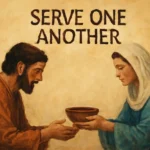
Galatians 5:13: “Through love serve one another.” Freedom in Christ is to be exercised in service, not self-indulgence.
1 Thessalonians 4:11-12: Lead a quiet life, mind your own affairs, and work with your hands, so that you may walk properly before outsiders and be dependent on no one.
1 Peter 2:16: “Live as people who are free, not using your freedom as a cover-up for evil, but living as servants of God.”
Serving with a Right Motive
The Bible warns against serving for show, status, or personal gain. True service flows from love for God and neighbor, grounded in gratitude for Christ’s work on our behalf.
Matthew 6:1: “Beware of practicing your righteousness before other people in order to be seen by them.” Motives matter—service should proceed from a grateful heart.
James 2:14-17: Faith without works is dead; genuine service accompanies living faith and compassionate action.
2 Corinthians 5:14-15: Christ’s love compels us not to live for ourselves but for Him who died for us.
1 Timothy 6:18-19 (summary): Instructed to be rich in good works, to be generous, and ready to share; storing up treasure in a lasting way through good deeds.
Scriptures for a Life of Faith: Thematic Readings on Serving God
To encourage steady growth, here is a thematic sampler of verses that emphasize service, obedience, and gospel-driven living. Each mini-reading highlights a facet of serving God that believers can meditate on, memorize, and apply.
Proclaiming God in All We Do — “Whether, then, you eat or drink, or whatever you do, do all to the glory of God” (1 Corinthians 10:31).
Serving with Joy — “Serve the LORD with gladness; come into his presence with singing” (Psalm 100:2).
Holistic Worship — “Present your bodies as a living sacrifice, holy, acceptable to God, which is your spiritual service of worship” (Romans 12:1).
Stewardship of Gifts — “As each has received a gift, use it to serve one another, as good stewards of God’s varied grace” (1 Peter 4:10).
Serving Like Christ — “Let this mind be in you, which was also in Christ Jesus: who took the form of a servant” (Philippians 2:5-7).
Practical Pathways: How to Live a Life of Service
Teaching without practice can become hollow. The following practical pathways translate scriptural vision into daily routines and decisions, helping individuals and churches cultivate a robust culture of service.
Join or Start a Ministry in your local church or community—adult education, care ministries, hospitality teams, or outreach projects.
Serve with Personal Sacrifice by prioritizing others’ needs without counting the cost, modeled after Christ’s sacrifice (John 15:13).
Volunteer in Your Community—soup kitchens, shelters, tutoring programs, and neighborhood ministries extend the reach of God’s love.
Serve Through Your Vocational Calling—“whatever you do, work heartily, as for the Lord” (Colossians 3:23), including your job, education, and talents.
Mentor and Disciple—invest in others’ growth, helping them discover and use their gifts for service (2 Timothy 2:2).
Pray for Opportunities and Guidance—ask God to open doors for service and to shape your heart for others (Colossians 4:2-4).
Addressing Common Questions About Serving God
What does it mean to serve God daily?
Daily service means letting scripture inform choices from morning routines to evening reflections. It includes obeying God’s commands, loving neighbors, using gifts for others’ good, and maintaining a posture of dependency on the Holy Spirit. It also means recognizing that small, faithful acts—done in love—add up to a meaningful life of faith (Galatians 6:9; Luke 16:10).
How can I know I’m serving God and not myself?
Scripture invites self-examination: are motives aligned with love, humility, and obedience to Christ? Are you serving in a way that blesses others and advances God’s kingdom, rather than seeking personal recognition? Regular prayer, accountability within community, and alignment with Christ-like fruit (love, joy, peace, patience, kindness, goodness, faithfulness, gentleness, self-control) help maintain a servant-hearted posture (Galatians 5:22-23).
Spiritual gifts are tools for serving the body of Christ and for extending God’s mercy to the world. Each believer contributes uniquely to the whole, and the Spirit distributes gifts as he wills. The goal is unity, maturity, and love-driven service that builds up the church (1 Corinthians 12:4-7; Romans 12:6-8).
How do I balance serving God with other responsibilities?
Balance comes by prioritizing God’s kingdom, then stewarding time, energy, and resources wisely. Regular Sabbath rhythms, clear boundaries, and shared leadership help prevent burnout. Jesus’ teaching on God and Mammon reminds believers that service to God must outrank worldly anxieties and competitive agendas (Matthew 6:24).
Conclusion: A Call to Faithful Service
Across Scripture, serving God is presented as a joyful, transformative, and mission-shaped way of life. It begins with a heart yielded to God, grows through the gifts of the Spirit, and flows outward in acts of love and righteousness. By studying verses from both the Old and New Testaments, believers gain a holistic picture of what it means to live “for the Lord” rather than for self, wealth, or status. Whether you are a longtime believer or exploring the faith, the Bible invites you to a generous, consistent, and enduring life of service.
As you reflect on these scriptures, consider a simple, practical next step: identify one area where you can serve this week—whether in ministry, your workplace, or your neighborhood—and commit to showing Christ’s love through that service. Let the gospel shape your motives, and let the Holy Spirit empower your efforts. In serving God, you engage a narrative larger than yourself: a story of redemption, hope, and the renewal of all things through Jesus Christ.











Leave a Reply