Structure of the Psalms: A Comprehensive Guide to Form, Division, and Themes
Structure of the Psalms: A Comprehensive Guide to Form, Division, and Themes
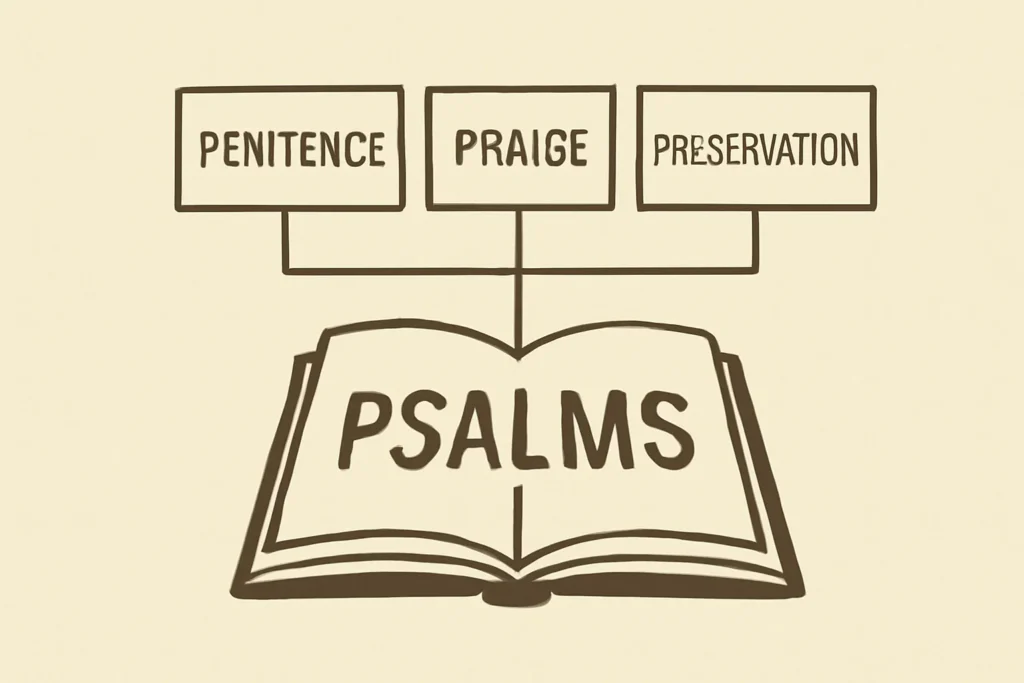
Structure of the Psalms: A Comprehensive Guide to Form, Division, and Themes examines how this ancient collection is built, how its parts relate to one another, and why readers should pay attention to the formal features as well as the spiritual purposes. Rather than a random anthology of prayers, the Psalter presents a carefully designed sequence of voices, genres, and motifs that together tell a story of faith, lament, worship, and hope. The following guide surveys form, division, and themes, with attention to literary technique, liturgical function, and historical context.
Foundations: what the Psalms are and how they work
At its core, the Psalter is a collection of poetry and prayers that function as both personal utterance and corporate worship. Although many psalms bear traditional attributions such as a Psalm of David or the sons of Korah, the collection also includes Maskil (a term indicating contemplation or instruction), Miktam (a form of inscription), and other labelings that signal liturgical or literary purposes. The Psalms are oriented to sound and memory as much as to argument. They are meant to be heard as much as read, sung as much as spoken, and used in the life of communal worship as well as in private devotion. This dual audience—individual and community—produces a texture that blends intimate confession with shared faith.
Forms and genres: the major shapes within the Psalter
Within the Psalter, several broad genres recur, each with characteristic elements. Recognizing these forms helps readers identify the psalm’s aim, whether it is to lament, to praise, to petition, or to declare a divine truth. The main forms include:
Laments: petitions to God in distress
Laments typically unfold in a predictable arc: address to God, a statement of trouble or complaint, a plea for help, a declaration of trust or a vow, and finally a note of praise or assurance. The opening line often sets the problem in stark terms, while the concluding lines reaffirm faith in God’s faithfulness. Examples range from personal cries for mercy to national pleas for deliverance. These psalms model honest emotion while teaching trust, and they frequently incorporate a shift from complaint to confidence.
Praise and thanksgiving: songs of exaltation
Praise psalms celebrate God’s character, mighty deeds, and provision. They often begin with an explicit invocation of praise and move outward to reflect on God’s sovereignty, benevolence, and the created order. The refrain is to bless or to bless the Lord, and the tone is expansive, sometimes cosmic, sometimes intimate. Thanksgiving psalms explicitly thank God for specific mercies while situating gratitude within a larger narrative of God’s steadfast love.
Royal and enthronement psalms: kingship and divine rule
Royal or enthronement psalms center on God as the sovereign ruler who governs the world and establishes justice. They can frame human kingship within a broader divine plan, or they can celebrate the king’s role as God’s agent. In the Hebrew Bible, these psalms often link the king’s reign to temple worship and covenant faithfulness. They are frequently tied to liturgical settings in which unity, order, and divine blessing are foregrounded.
Wisdom psalms: law and the way of life
Wisdom psalms emphasize righteous living, moral instruction, and the longing for understanding. They often draw on parallels with proverbial literature, presenting two ways—the way of the righteous and the way of the wicked—and urging adherence to God’s commands as the path to blessing. The voice in wisdom psalms is pragmatic, ethical, and sometimes didactic, offering instruction that supports moral formation and trust in God’s governance.
Imprecatory psalms: requests for divine justice
Imprecatory psalms call for judgment or punishment upon enemies or wicked powers. They are among the most challenging in both Jewish and Christian readings, provoking questions about justice, mercy, and the proper scope of divine vengeance. These psalms often express a longing for vindication while insisting that ultimate judgment belongs to God. They can be controversial but are a longstanding element of the Psalter’s emotional and theological range.
Enthronement and Zion psalms: temple and pilgrimage
Enthronement and Zion psalms center on God’s presence in the temple and on the holiness of Zion as the place where God’s name dwells. They articulate a theology in which worship, pilgrimage, and the geography of sacred space become signs of divine sovereignty. The pilgrimage psalms (often called Songs of Ascent) function as liturgical pieces for travelers on their way to Jerusalem, reinforcing communal identity and reverence for divine presence.
Historical and memorial psalms: remembering God’s deeds
Historical psalms recount moments in Israel’s past—deliverances, covenants, and acts of steadfast love—and interpret present circumstances in light of those memories. They ground faith in the continuity of God’s actions across generations, inviting trust based on known patterns of God’s faithfulness.
Key literary devices that organize meaning in the Psalms
The effectiveness of the Psalms rests not only in their content but in their artistry. Several formal devices recur with striking regularity, shaping how meaning unfolds across a psalm and how it is heard in liturgy.
Parallelism is the most characteristic feature of Hebrew verse in the Psalms. It links ideas by symmetry, contrast, or progression. Three main types shape most psalms:
Synonymous parallelism: the second line repeats or slightly reframes the first, reinforcing the same idea in different words.
Antithetic parallelism: the second line presents a contrast, sharpening the point by opposition.
Synthetic parallelism: the second line adds new information that completes or enlarges the first line, building a thought incrementally.
Readers can detect a psalm’s logic by tracing how the lines relate. When a psalm cycles through echoes, contrasts, or cumulative additions, it often moves from complaint to confidence or from chaos to order.
Acrostics and other structural puzzles
Some psalms employ acrostic devices in Hebrew, where each line or stanza begins with successive letters of the alphabet. The most famous long examples include Psalm 119, an alphabetic meditation on the law, but several others use shorter acrostics or partial alphabets. Acrostics contribute a sense of completeness and memorability, turning reading into a poetic tour through the alphabet of faith. Even when a full acrostic is not present, readers may notice deliberate alphabetical or symmetrical play that signals intentional design.
Inclusion (inclusio), chiastic structures, and refrains
Inclusions bracket a unit by starting and ending with the same idea or phrase, signaling a deliberate frame. Chiastic structures center on a mirrored arrangement (A-B-C-B'-A') that reveals a central pivot or turning point. Refrains, repeated lines or phrases such as “the Lord is my light” or “holy is the Lord,” anchor a psalm’s mood and assist with liturgical repetition. Observing inclusio, chiasm, and refrains helps readers trace the psalm’s movement and grasp its theological emphasis.
Refrains, invocation, and Selah
Many psalms include refrains or repeated invocations (for example, “Bless the Lord, O my soul” or “Let everything that has breath praise the Lord”). The word Selah appears multiple times and is generally taken as a liturgical pause, cueing the reader or singer to reflect or to transition between sections. These features shape the rhythm of reading and the experience of worship, turning text into an occasion for communal response.
Titles, superscriptions, and musical directions
In the Psalter, the opening titles or superscriptions are more than simple attributions. They often provide:
the author or tribe responsible for the psalm (e.g., A Psalm of David, the sons of Korah, Asaph, Ethan the Ezrahite);
a note about the musical mode or instrument (for example, A Song of Praise, Mizmor meaning a melody or tune, Shigayon or Al-Tashheth—variously interpreted musical terms);
a historical or liturgical context (for example, “for the consecration of the temple” or “for the day of distress”).
These labels invite readers into a living tradition of song, as well as into the rhetorical posture of the psalm’s speaker. They also remind modern readers that the Psalter was used in real worship settings, where melodies, instruments, and congregational response were integral to the text’s meaning.
The five-book division of the Psalter: a purposeful architecture
One of the most striking structural features of the Psalms is its division into five books, a scheme that scholars often connect to the Torah’s five books and to an overarching movement from personal lament to communal praise and covenant faithfulness. Here is a compact guide to how these five books function within the whole.
Book I: Psalms 1–41
This opening book introduces central concerns—the righteous who trust in God, the contrast with the wicked, and the longing for divine mercy. It foregrounds a personal, intimate address to God and frequently frames the psalmist’s experience within a single petition or confession. The introductory Psalm 1 offers a pairing of two paths—the way of the righteous and the way of the wicked—and it sets the tone for the rest of Book I: closeness to God through law, prayer, and integrity in daily life.
Book II: Psalms 42–72
Book II broadens from private devotion to communal longing and the nation’s life under divine rule. It contains a cluster of lament-praise movements, many connected to the longing for God’s presence in the temple and the exilic or post-exilic context in which the faithful seek renewal. Royal psalms become more prominent here, tying human kingship to divine sovereignty and the dream that justice and order will emerge under God’s governance.
Book III: Psalms 73–89
Book III engages with the fragility of the covenant people in the face of oppression, persecution, and perceived divine distance. It asks hard questions about suffering and divine justice, while maintaining trust in God’s steadfast love. The mood can be somber, yet a thread of hope persists as the psalms move toward renewal and a reimagined trust in God’s fidelity to Zion and the assembly of God’s people.
Book IV expands the horizon to a cosmic and universal frame while still centering on Israel’s experience and worship. It begins with Psalm 90, attributed to Moses, which meditates on the brevity of human life and the enduring sovereignty of God. The collection emphasizes God’s kingship, creation, and steadfast love, culminating in songs that celebrate God’s saving work in a world that sometimes feels out of control.
Book V: Psalms 107–150
The final book gathers a powerful surge of worship and doxology. It brings together prayers for rescue, reminiscences of God’s faithfulness, and a crescendo of praise that culminates in the most expansive doxology of the Psalter. Some scholars view Book V as the psalter’s climactic response to the questions raised earlier—how to bless, praise, and trust the God who saves and judges with righteousness.
Traveling themes: the arc from personal crisis to cosmic praise
When read as a whole, the Psalter presents a trajectory that moves from the intimate to the universal. Several thematic arcs run through the five books, helping to weave together personal faith with public worship and divine sovereignty.
From lament to trust: Many psalms begin with distress but close with unwavering confidence in God’s fidelity. This arc models a disciplined faith that does not erase pain but places it within a framework of hope.
From isolation to covenant community: Early psalms focus on the individual soul; later psalms expand that concern to the people, the city, and the temple, underscoring that worship is a communal act grounded in shared memory and covenant faithfulness.
From flight to pilgrimage: The Songs of Ascent and other pilgrimage poems chart a movement toward Zion, turning physical travel into a spiritual journey toward God’s presence.
From knowledge of God to worshipful response: The psalms repeatedly move from knowing about God to praising and blessing God, translating belief into liturgical action.
From fear of enemies to confidence in divine justice: Across political and personal threats, the psalms sustain a conviction that God is just, faithful, and present in the struggle.
Canonical arrangement and liturgical function
The Psalms were not merely a poetic library; they were a practical toolkit for worship. Their arrangement into five books aligns with ancient Israelite conceptions of worship, law, and memory. In worship settings, they served several functions:
A shared repertoire: Assembling voices around familiar lines and refrains created a sense of unity and common faith, especially during festivals, processions, and temple rites.
A portable prayer book: Because many psalms bear superscriptions with musical or liturgical directions, they could be adapted for use in different contexts, from private prayer closets to public liturgies.
A catechetical resource: The range of forms—lament, praise, wisdom, royal, and messianic—offers a theological education in the rhythms of trust and courage under God.
A framework for memory and meditation: The orderly progression from one book to another encourages readers to reflect on a journey—from distress toward exultation, from desertion to dwelling in God’s presence.
Understanding psalmic structure in analysis: a practical toolkit
For students, clergy, and curious readers, a careful analysis of a psalm can reveal how its form supports its message. Here is a practical, step-by-step approach you can use to study any psalm.
Identify the form: Is the psalm a lament, a praise, a wisdom piece, or a royal hymn? Note the expected trajectory (problem → plea → trust → praise).
Check the superscription: Look for authorship, occasion, or musical instructions. These details are informative, though not all psalms have them.
Look for parallelism: Determine whether lines echo, contrast, or advance one another. Map the relationship between clauses to understand the argument.
Notice inclusio and chiastic patterns: See if the psalm begins and ends with related ideas or if ideas mirror around a central pivot. This can reveal the psalm’s structure and emphasis.
Mark refrains and Selah moments: Note repeated phrases and pauses that shape the psalm’s rhythm and liturgical use.
Identify imagery and theology: Pay attention to mountains, rivers, light, darkness, salvation, judgment, and God’s sovereignty. How do images convey trust or admonition?
Consider historical and canonical context: How does the psalm relate to other books or psalms? If it is a royal or temple-oriented piece, how does it fit into the broader theology of kingship and worship?
Read reflectively in community contexts: In corporate worship, how does the psalm call for response? What type of liturgical act does it invite?
Forms in practice: representative psalms and what they demonstrate
To ground the theory in actual practice, here are representative examples and the structural features they showcase:
Psalm 3 (a lament): a personal address to God in distress, a plea for deliverance, followed by a confident assertion of God’s protection.
Psalm 22 (lament with echoes of praise): begins with the cry of abandonment but moves toward praise and vindication, illustrating a motion from distress to trust within a single composition.
Psalm 40 (praise and testimony): a testimony of deliverance that transitions into a vow and a call for God’s faithfulness to be proclaimed publicly.
Psalm 91 (royal/enthronement tone with personal trust): emphasizes God’s protection and sovereignty, using vivid imagery of refuge and safety under divine wings.
Psalm 119 (wisdom and acrostic): a long meditation on the law marked by an alphabetic structure and dense exploration of God’s decrees, commands, and virtue of steadfastness.
Psalm 110 (royal-messianic emphasis): speaks of the king’s mission as God’s priestly and kingly agent, with implications for a broader messianic expectation in later tradition.
Psalm 137 (imprecatory in a historical context): a stark lament set against the backdrop of exile, illustrating how historical suffering is transposed into a cry for justice—read within its own moral and spiritual complexities.
Songs of ascent (Psalms 120–134): a suite of psalms for pilgrims entering Jerusalem, reflecting a communal journey toward worship and a shared sense of belonging in God’s city.
Understanding the Psalter’s narrative through its diverse forms
The Psalter is, in a sense, a library of human response to God. Its diversity of form means that it can model multiple ways of encountering the divine: with trembling honesty, with ardent praise, with measured wisdom, and with hopeful anticipation. This diversity also provides a robust framework for teaching and prayer across generations, allowing readers to find a psalm that speaks to a particular moment of life and faith.
Beyond form: thematic clusters and their interconnections
In addition to the formal variety, several thematic clusters connect psalms across the books, forming an interconnected tapestry that reveals a coherent theology. Three prominent clusters deserve emphasis:
Divine kingship and the temple: A persistent conviction that God reigns above all, governs history, and dwells with the people in worship. This theme is reinforced in royal, enthronement, and temple-centered psalms, often culminating in invitations to praise God's holy name.
Blessing through obedience and trust: The path of blessing is linked to fidelity to God’s law and trust in God’s timing. Wisdom psalms contribute to this cluster by anchoring ethical living in trust rather than mere ritual performance.
Memory as faith formation: Historical psalms remind readers of God’s past faithfulness as a basis for present hope. Memory functions as a spiritual resource that sustains the faithful in times of trial and uncertainty.
Interpreting the Psalms across traditions
The Psalms have been read in many ways across Jewish and Christian communities, with each tradition bringing distinct hermeneutical weight to the text. Two broad perspectives help readers explore meanings while recognizing their own context:
Jewish liturgical and ethical reading: In Jewish tradition, the Psalter serves as a central resource for prayer, liturgy, and worship. Many psalms are recited or sung on specific days, festivals, or life passages, highlighting a continuity between earlier temple worship and later synagogue practice.
Christian messianic and devotional reading: Christian readers often interpret certain psalms as foreshadowing the Messiah or as prayers fulfilled in Jesus. This reading emphasizes the Psalter’s sense of longing for salvation, justice, and divine mercy. At the same time, readers from other faith traditions—and secular readers—may approach the Psalms for their literary artistry, historical context, and ethical reflections.
Textual features and how they affect interpretation
Several textual features influence how translators and readers approach the Psalms:
Superscriptions provide context but are not always historically precise. They invite readers to imagine a historical occasion while recognizing that the Psalter was performed in diverse settings over time.
Verse numbering and segmentation vary between manuscripts and translations. While verse divisions aid study, they can sometimes disrupt the psalm’s natural rhythm, so readers should pay attention to the poetic units rather than relying solely on numbers.
Liturgical cues such as Selah offer a clue about performance pace. Paying attention to these cues helps reproduce or imagine the psalm’s musical cadence.
Acrostics and musical terms signal intentional design. Recognizing these features can enhance appreciation for the psalm as a crafted song rather than a casual composition.
Reading the psalms as a living practice
For readers today, the Psalter can function as a living practice guide. Here are some practical approaches to reading and using the psalms in daily life or teaching settings:
Rotate through forms: Use a weekly plan that includes lament, praise, wisdom, and royal or messianic psalms to experience the full spectrum of prayer and worship.
Attend to the musical and liturgical texture: If possible, listen to or sing psalms to experience their sound, rhythm, and communal power. Reading aloud can reveal emphasis and emotion that silent reading might miss.
Apply the structure to study: When analyzing a psalm for class or sermon preparation, map the form, identify the parallelisms, point out the inclusio, and note the central pivot that the chiastic arrangement may reveal.
Consider historical context: Recognize that many psalms respond to experiences of exile, deliverance, or national crisis. Contextual awareness deepens empathy for the psalmist’s struggle and thanksgiving.
Pray the psalms with intention: Use specific psalms to frame prayer in times of fear, gratitude, or moral decision-making. The Psalter’s breadth offers language for almost any spiritual situation.
Common questions and clarifications about structure
As readers explore form and division, several questions frequently arise. Here are concise clarifications that may help:
Are all psalms attributed to David? Not all. While many are described as A Psalm of David, a significant number are attributed to Asaph, the sons of Korah, Ethan, and others, with some labeled without a known author. Authorship in the Psalter often reflects a tradition rather than a precise historical record.
What is the function of the Songs of Ascents? Psalms 120–134 are associated with pilgrimage to Jerusalem and play a key role in liturgical and festival worship, reinforcing a sense of communal movement toward God’s dwelling place.
What about the doxologies at the end of Psalms? A number of psalms end with a doxology—an explicit praise to God. In the Psalter as a whole, these doxologies help frame worship as a response to God’s saving acts and faithfulness.
How should one interpret imprecatory psalms today? These psalms reflect authors’ strong feelings about injustice and the desire for God’s justice. Reading them responsibly involves honoring the text’s honesty while recognizing broader ethical commitments to justice, mercy, and the value of life under God’s governance.
A compact guide to structures within individual psalms
Even within a single psalm, the architecture can be intricate. Here is a compact checklist you can use when studying a specific psalm to discern its inner architecture:
Identify the core request or focus (what the psalmist asks or proclaims at the outset).
Detect the movement (how distress, supplication, and trust progress toward conclusion).
Note pivotal shifts (where the speaker moves from complaint to confidence, or from fear to praise).
Trace imagery and theological claims (what images reveal about God’s character, justice, mercy, and sovereignty).
Observe structural devices (parallelism, refrains, inclusio, or chiasm) that shape how the message unfolds.
Ask about liturgical function (how the psalm would function in worship settings: as a call to gather, a personal confession, or a communal blessing).
Variations on the theme: how the Psalter expands its own genre
While the five-book arrangement is a hallmark, the Psalter’s internal diversity allows for variations that enrich reading and interpretation. Some notable variations include:
Hybrid forms: Many psalms blend lament and praise, or wisdom and thankfulness, producing a dynamic tension that reflects a complex faith life.
Nested laments: A single psalm might begin with a personal plea and expand to address communal concerns, weaving the speaker’s voice with the nation’s voice.
Corporate prayers with individual accents: Some psalms move from a solitary speaker to a chorus or larger audience, capturing the move from private to public prayer.
Temple and exile language: The Psalter contains both temple-centered confidence and voices lamenting exile, highlighting the tension between presence and absence of God’s temple and city.
Why the structure matters for teaching and preaching
For educators, pastors, and scholars, awareness of structure enhances both interpretation and communication. The structure informs how a passage should be read aloud, how its message should be framed in a sermon, and how to teach it in a way that respects its genre and historical background. A well-structured approach to the Psalms helps students:
Recognize how form shapes meaning and how shifts from lament to praise reflect a spiritual discipline rather than a mere emotional fluctuation.
Appreciate the canonical arc and how Book V’s climactic praise relates to the earlier books’ struggles and discoveries.
Guide readers in a self-consciously liturgical practice—prayer, worship, and memory—through the psalms’ songs and prayers.
Although the Psalter is ancient in origin, its structural design remains remarkably relevant for contemporary readers. Its rich diversity of form, its careful division into five books, and its interplay of laments, hymns, wisdom, and royal imagery offer a multidimensional resource for understanding how people approach God in a wide range of life situations. Reading the Psalms with attention to their form, their divisions, and their themes can deepen both knowledge and devotion, inviting readers to listen for the sounds of ancient worship while discovering new ways to speak to God today.
Further learning: suggested paths for study and practice
To broaden your understanding and practice, consider these paths:
Compare two psalms of the same form (for example, two laments) to observe how similar structures carry different emotional contents.
Trace a theme (like fidelity or the fear of the Lord) across multiple psalms to see how the authors speak about it in different contexts.
Study a single acrostic psalm to observe how the alphabetic organization shapes the reading experience.
Explore the Songs of Ascent as a unit for understanding pilgrimage, worship, and community formation in ancient Israel.
Experiment with a short reading plan that cycles through Book I to Book V, noting how the progression affects interpretation and prayer.
Ultimately, the Psalter is not only a library of prayers but a living manual for speech before God. Its structure is a map guiding readers through personal sorrow, communal worship, moral reflection, and triumphant praise. By paying attention to form, division, and themes, readers can engage with the Psalms in a way that honors the artistry of the text and enriches the practice of faith in daily life.






Leave a Reply