Church Advent Candles: A Complete Guide to Types and Colors
Advent candles are a cornerstone of the liturgical season in many Christian traditions. Whether you
attend a small parish or participate in a grand cathedral service, the practice of lighting candles
during Advent carries a message of expectation, hope, and preparation. In this comprehensive guide, you
will learn about the varieties of church advent candles, the meanings behind their
colors, how different denominations deploy them in worship, and practical guidance for using and
caring for Advent candle sets in a church or at home. The intention is to equip readers with a clear
sense of purpose and a practical toolkit for engaging with this enduring symbol of the Advent season.
Origins and Historical Context
The modern custom of using a circular Advent wreath with candles grew out of 19th-century
European Christian practice, though the idea of marking the weeks of Advent with lighting has earlier roots.
The contemporary church advent candles tradition is widely associated with Johann Hinrich Wichern, a German Protestant minister who introduced the Advent wreath in the
1830s as an educational aid for children. He used a wheel-like arrangement with 24 smaller candles,
representing the days leading up to Christmas, and a larger central candle for Christmas Day. Over time,
the practice evolved into a wreath containing four larger candles, one for each Sunday of Advent, and a
possible sixth white Christ candle lit on Christmas Eve or Christmas Day.
Although the general concept is shared by many denominations, the types of advent candles
and the color schemes employed have diverged in different regions and worshiping communities.
Some Catholic parishes emphasize the regal and penitential tones of purple, while many Protestant churches
emphasize purple and pink to mark penitence and joy. Eastern Christian communities, while they may honor
Advent as a season, often use different devotional practices and candle traditions that reflect their own
liturgical calendars.
What Are Advent Candles, and How Are They Used?
In its broadest sense, Advent candles are candles used during the season of Advent to mark the
four Sundays leading up to Christmas. They are typically arranged on a circular or oval Advent wreath,
although some churches use a stand, a cross-shaped arrangement, or a tabletop display. Each Sunday
contributes to a cumulative message of anticipation and preparation for the coming of Christ.
There are several common configurations:
Four-candle wreath with four candles around the ring and often a Christ candle in the center or nearby.
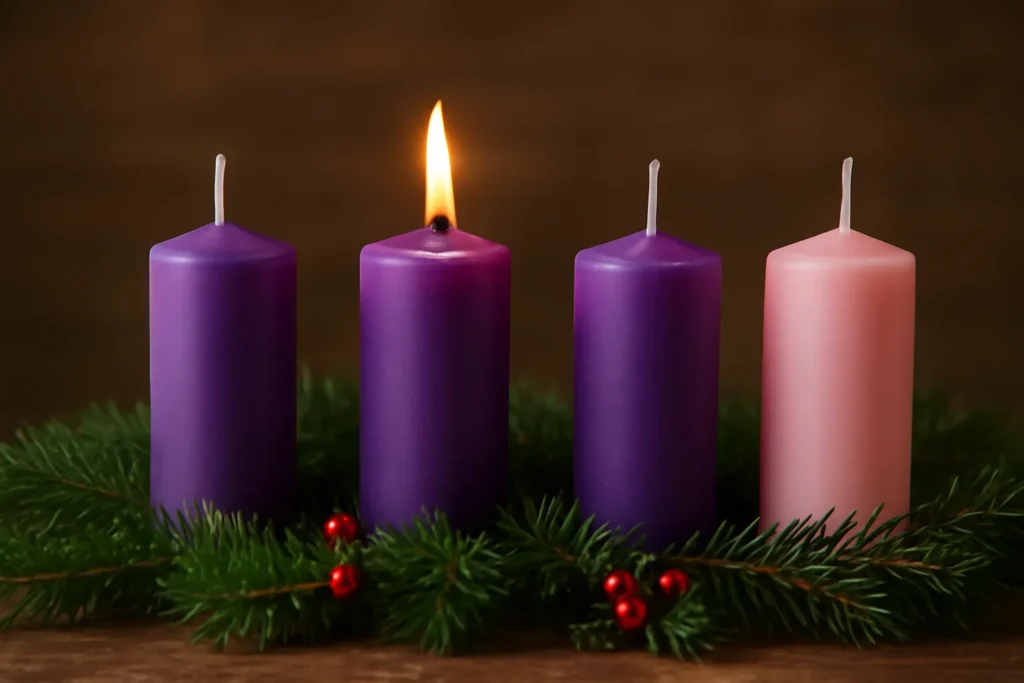
Three purple and one pink candle arrangement, lit in sequence on the four Advent Sundays, with a white Christ candle lit at Christmas.
Five-candle arrangements in some traditions, adding a separate purple or pink candle to emphasize a special Sunday or feast.
Alternate color wreaths that replace purple with blue or use other color combinations to reflect regional or denominational preferences.
Regardless of the exact layout, the practice typically includes a liturgy or reading and a short prayer or hymn
for each candle lighting. The candles themselves are often scented or unscented; many churches prefer unscented
candles to avoid overpowering other worship elements. The lighting sequence is a meaningful ritual that helps
congregants internalize the themes of hope, peace, joy, and love as Christmas approaches.
Color Symbolism in Advent Candles
Color carries significant symbolic weight in the Advent season. While the most familiar palette for
many Western churches is purple (violet) and pink (rose), there are regional and
denominational variations. Understanding these meanings can deepen the congregational experience and
clarify why a given church selects specific colors for its Advent candles.
The Classical Palette: Purple and Pink
In many traditions, the Advent wreath uses:
Purple (violet): A color associated with penitence, reflection, and longing for the coming of Christ. It signals the expectant mood of Advent.
Pink (rose): A color of joy and celebration, traditionally lit on the third Sunday of Advent, often called Gaudete Sunday, which means “rejoice.”
Other Color Variants and Their Meanings
Some communities use color variations beyond purple and pink. The following interpretations are commonly found:
Blue: In certain denominations and cultures, blue stands in for the penitential mood of Advent, emphasizing hope and expectation in a winter-lit season.
White: While white is not typically used as a Sunday candle color during Advent, it frequently appears as the central Christ candle lit on Christmas Eve or Christmas Day to celebrate the Incarnation.
Gold or Yellow: In some churches, a gold or bright yellow central candle or accents symbolize the radiant light of Christ and the joy of the season.
Liturgical Year and Color Correspondences
The choice of candle colors is closely connected to the broader liturgical color system used in a given tradition.
For instance:
In Roman Catholic and many Anglican churches, purple and rose align with Advent and the broader season of penitence and preparation.
In some Protestant settings, purple and blue might be adopted to reflect the particular tone of Advent in that community.
In Orthodox-influenced settings, you may encounter different embellishments or additional candles tied to the Sundays of Advent rather than a strict color liturgy.
Variations by Denomination and Tradition
The church advent candles are not a universal standard; their form, colors, and liturgical function vary by
tradition. Below is a look at how several major groups approach Advent candle practices.
Catholic Practice
In many Catholic parishes, the Advent wreath is central to Sunday Mass and parish devotion. The
four candles are commonly arranged with three purple and one pink, with a white Christ candle either
central or adjacent to the ring. The lighting sequence follows the Sundays of Advent, often accompanied
by readings from the liturgical year that highlight prophecy, the road to Bethlehem, the shepherds, and
the angels.
Week 1: Prophecy candle (often purple) speaks of the hope promised by the prophets.
Week 2: Bethlehem candle (purple) anchors the longing for the Messiah's birth.
Week 3: Shepherds candle (pink) marks joy as the season grows closer to Christmas.
Week 4: Angel candle (purple) points to the proclamation of good news and the approaching Incarnation.
Christ candle: lit on Christmas Eve or Christmas Day to celebrate the Incarnation.
Protestant Traditions
Many Protestant churches use Advent candles to emphasize prophetic fulfillment and the arrival of Christ.
The sequence may mirror Catholic practice but sometimes differs in the exact denomination-based themes for
each candle. Some congregations place emphasis on the joyful dimension by reserving the pink
candle for the third Sunday, as in Gaudete Sunday.
Four candles on a wreath or stand, typically purple and pink.
Optional fifth candle for Christmas Day or a separate Christ candle.
In some congregations, blue is used instead of purple to reflect local liturgical tradition.
Lutheran, Anglican, and Other Mainline Traditions
Lutherans and Anglicans have a long history with Advent wreaths. In many Anglican parishes, the Advent
wreath is placed on the communion table or in the chancel area, and the candles are lit as part of a
weekly Advent service. The themes of repentance, expectation, and hope remain central, but the exact
wording of prayers and the musical settings may reflect the particular liturgical heritage of the parish.
Some Eastern Christian communities emphasize Advent through fasting, prayers, and processions rather than
a candle-based ritual. When Advent candles are used in these contexts, they typically form part of a
devotional rhythm that complements the broader fast and liturgical timetable rather than a strict Sunday-by-Sunday sequence.
Lighting Order and Practical Devotion
The lighting order for Advent candles is more than a mere arrangement of flames; it is a ritual that helps
worshipers anticipate the coming of Christ and reflect on the themes of the season. A typical pattern offers a
progressive arc: expectancy, fulfillment anticipated, celebration of wonder, and the culmination in the Nativity.
Week 1: Light the first purple candle. Readings may emphasize prophecy and promise, inviting
the congregation to prepare their hearts for the Messiah.
Week 2: Light the second purple candle. The focus often shifts to the journey toward Bethlehem,
with themes of expectation and travel, reminding believers that God is drawing near.
Week 3: Light the pink candle. A Sunday of Gaudete joy, acknowledging that the season
is moving toward fulfillment even as it remains a season of waiting.
Week 4: Light the fourth purple candle. This Sunday underscores the imminent nearness of Christ’s
birth and invites renewed repentance, prayer, and hopeful anticipation.
Christ Candle (central or nearby): On Christmas Eve or Christmas Day, light the white Christ candle,
symbolizing the Incarnation and the light entering into the world.
Many congregations also include a brief devotional cycle for each candle:
Short readings from Scripture that align with the candle’s theme
Hymns or songs that reflect penitence, hope, joy, and the coming of the Savior
Prayers of intercession, gratitude, and petition for the church and the world
For home worship, the same rhythm can be followed with a simple liturgy, a brief reading, a
reflection, and a short prayer. Families often find that the candles create a predictable, comforting
rhythm that helps children participate meaningfully in the season.
Types of Advent Candles and Candle Materials
Advent candles come in a range of materials and form factors. The choice can affect cost, burn time, scent,
and environmental considerations. Here is a practical overview to help churches and families select the
most appropriate options for their context.
Paraffin: The most common, affordable option. Generally clean-burning but may produce more soot in long runtimes.
Beeswax: A natural option with a pleasant, subtle fragrance and a longer burn time. Often chosen for its natural symbolism of purity and the earth.
Soy wax: A renewable option with good burn characteristics and low soot. Popular for home altars and smaller churches.
Palm wax: A renewable option that can be blended with other waxes; often used for decorative candles.
Sizes, Shapes, and Burn Timing
Standard taper candles: Traditional vertical candles used in many wreaths; sized to fit typical wreath holders.
Pillar candles: Heavier, wider base that can provide a steady, longer burn in larger church spaces.
Tea-light candles: Sometimes used for supplemental lighting or for smaller tabletop Advent displays.
LED alternatives: For safety and long-term use, many communities now employ LED candle substitutes that mimic the glow without flame.
Fragrance and Sensory Considerations
Some congregations prefer unscented candles to avoid competing with worship music and incense. Others
appreciate a subtle fragrance—especially beeswax candles can add a natural aroma that enhances the
contemplative atmosphere. When choosing candles for a church or a large home altar, consider:
Allergies and sensitivities in the congregation
Ventilation in the worship space
Compatibility with existing altar linens and decor
Decorative and Thematic Variants
Advent candles are sometimes paired with other decorative elements:
Evergreen garlands, pinecones, and holly for a natural Advent aesthetic
Colored ribbons, bells, and symbols that reflect the church’s outreach or mission focus
Mini lanterns or votive holders that adapt well to small or portable displays
Design and Setup: Crafting a Reverent Advent Candle Display
The physical arrangement of Advent candles is an expression of liturgical intention. A well-designed Advent
display supports worship and teaching, while also accommodating the practical realities of a church service
or family devotion at home.
Choosing a Wreath or Stand
The Advent wreath is the traditional centerpiece. When selecting a wreath or stand, consider:
Stability: A secure base is essential to prevent tipping in busy worship spaces or family homes.
Materials: Real evergreen offers a classic scent and texture, while artificial greens provide durability and reuse.
Size: Ensure the wreath fits the space and accommodates the number of candles without crowding.
Placement and Lighting Arrangement
In a church, the wreath is often placed on the lectern, altar, or a dedicated side table where it can be
seen by the entire congregation. For home displays, a sturdy table or a dedicated stand makes the candles
accessible for lighting during evening prayers.
Place the candles so that their flames face outward toward the congregation or audience.
Ensure there is adequate clearance from drapes, fabrics, and other flammable materials.
Keep a match or long lighter handy to minimize proximity to the flame while lighting.
Lighting Protocols for the Season
Many congregations adopt a brief, consistent liturgy for lighting the candles. A suggested protocol:
Begin with a brief invocation orCollect that acknowledges Advent’s hope and longing.
Light the first purple candle on the first Sunday and offer a short meditation or hymn.
Each subsequent Sunday, light the next candle and read a related Scripture passage or prayer.
On Christmas Eve or Christmas Day, light the white Christ candle and celebrate the Incarnation.
Maintenance During the Season
Advent candles require some basic care to ensure a clean burn and neat appearance throughout the weeks:
Trim the wicks to about 1/4 inch before each lighting if needed to prevent excessive flame height.
Keep melted wax from running down onto the wreath or table by using drip shields or proper candle holders.
Reuse or rotate candles for future Advent seasons if they are in good condition; replace damaged candles promptly.
Care, Safety, and Sustainability
As with any candle-based display, safety is a priority. This section provides practical guidance to ensure safe
use of church advent candles in worship spaces and at home. It also addresses environmental
considerations and best practices for reuse and disposal.
Safety Guidelines for Worship Spaces
Never leave burning candles unattended.
Place candles in a sturdy, non-flammable base or holder with a clear space around them.
Maintain a safe distance from church furnishings, textiles, and decorative elements.
Use flame-retardant decorations and ensure there is adequate ventilation in the space.
Home Safety and Family Use
Always supervise candle lighting in homes with children and pets.
Keep lighters and matches out of reach and use long-reach lighters to minimize risk.
Extinguish candles before bedtime and store unused candles in a cool, dry place.
Environmental Considerations
If sustainability is a priority, consider candles made from beeswax or soy wax.
These options typically have lower environmental footprints than traditional paraffin while providing the
same symbolic weight. Institutional leaders might also explore LED candles as a safe and reusable alternative
for education spaces, without diminishing the liturgical significance.
DIY and Educational Opportunities
Building and decorating an Advent candle display can be a meaningful educational activity for
church groups, youth groups, or families. DIY projects nurture a sense of shared purpose and enable learners
to connect with the themes of the season in a hands-on way.
DIY Advent Wreaths
If you are crafting an Advent wreath for a church or home, consider the following steps:
Choose a sturdy base (wire ring, foam, or a wooden platform) and secure a backing for stability.
Attach evergreen greens to create a lush wreath, ensuring even coverage.
Place four candle holders evenly around the wreath, with space for a central Christ candle if desired.
Arrange candles by color and insert them securely into the holders.
Decorate with ribbons, pinecones, and other seasonal accents that reflect your church’s mission or culture.
Educational Themes for Each Week
Use the four Sundays of Advent to guide a short teaching module for each candle:
Prophecy and Preparation: Explore Old Testament prophecies about the coming Messiah and how anticipation shaped faith.
Journey to Bethlehem: Reflect on journeys of faith and the adjustments needed to receive Christ’s arrival.
Joy and Expectation: Celebrate the rising anticipation and gladness expressed in the Gospel narratives.
Nearness of God: Emphasize God’s presence in the world and the mystery of the Incarnation.
Hands-on Activities for Children and Youth
Integrate crafts, storytelling, and music to deepen understanding:
Leaf rubbings and scripture bookmarks illustrating Advent themes
Short dramatic readings or shadow puppet displays depicting the Christmas narrative
Music selections that highlight anticipation, wonder, and joy
The Practicalities of Adapting Advent Candles in Different Settings
Churches vary in architecture, space, and resources, which means that the practical setup for Advent candles can differ
widely. This section offers guidance for adapting Advent candle displays to diverse environments.
Small Rural or Rural-Urban Churches
In smaller congregations, an Advent wreath on a portable stand or a simple tabletop display may be most
appropriate. The goal is clarity and reverence rather than grandeur.
Use compact candle holders to prevent tipping on crowded hymn-wind or during processions.
Keep the liturgy short but meaningful, with a focus on Scripture and prayer.
In larger spaces, the Advent candle display may be a prominent focal point in the chancel or nave. Consider a
larger wreath display with dedicated stands, or a procession-style structure that can be presented
to the congregation.
Use lighting cues to guide attention toward the candles during service times.
Coordinate with the church calendar and hymns to reinforce the Advent message.
Homes and Small Groups
For families and small groups, an Advent candle set on a table or in a corner of the room creates
a welcoming devotional space. Simple, stable holders and safe placement are essential for daily reflection.
Incorporate a short family devotional each Sunday.
Rotate leadership to involve different members of the household or group.
Common Mistakes and How to Avoid Them
Even well-intentioned churches and households sometimes stumble in implementing Advent candles. Here are common
missteps and practical fixes to improve the experience.
Overloading with scent: If candles are scented, ensure fragrance is subtle to avoid overpowering worship or
causing discomfort for sensitive congregants.
Inconsistent lighting: Maintain a regular schedule for lighting candles to preserve the rhythm of Advent.
Inadequate safety measures: Always place candles on nonflammable bases and supervise candle use around youth and families.
Ignoring accessibility: Ensure that lighting and reading materials are accessible to all worshippers, including those with visual or mobility challenges.
Conclusion: The Enduring Significance of Advent Candles
Across cultures and denominations, church advent candles stand as a tangible reminder that the season of
Advent is not merely a countdown to Christmas but a period of spiritual preparation. The candles symbolize
the interplay of waiting and fulfillment: the solemnity of penance and the piercing light of the coming
Christ. By understanding the types and colors, the historical roots, and the liturgical
intentions behind Advent candle displays, communities can deepen their worship, illuminate their prayers,
and invite congregants into a shared journey of hope.
Whether you are part of a grand cathedral or a humble parish, or you are nurturing a family tradition at home,
the practice of lighting the Advent candles remains a powerful and approachable way to center the season on
anticipation, joy, and the promise of Christmas. The details—shape, color, arrangement, and liturgy—are all
means to a single end: to remember Christ’s first coming, to prepare for his return, and to shine with his
light in a world that longs for hope.









Leave a Reply