Introduction to Advent Candles: Light, Ritual, and Reflection
The practice of Christmas Advent candles is one of the most enduring and comforting
traditions that mark the approach of the holiday season. Across homes, churches, and classrooms,
the soft glow of these candles signals a countdown with purpose: a time for preparation, hope, and
spiritual reflection in the weeks leading up to Christmas Day. While many households think of Advent candles as a visual cue on a wreath or in an Advent calendar, the deeper
meaning lies in the rhythm they provide—an orderly sequence that invites patience, anticipation,
and shared observance.
In this guide, you will discover the history behind Advent candles, understand the different types and configurations that exist in modern practice, explore the color symbolism and practical considerations for choosing and burning them safely, and,
finally, explore top picks for different needs—whether you are decorating a
family home, a parish church, or a small classroom. The language of light is universal, but the
ways people use Advent candles vary by tradition, region, and personal devotion. This article
aims to illuminate those variations while offering a practical framework for selecting, using, and
valuing Advent candles in a thoughtful and meaningful way.
History of Christmas Advent Candles
Origins in Germany and the work of Johann Hinrich Wichern
The modern Advent wreath and its associated candles trace back to the 19th century
in Germany. The figure most often credited with shaping the contemporary practice is Johann Hinrich Wichern, a Protestant educator who founded institutions for street
children. In 1839 he created what we now recognize as the Advent wreath to help
impoverished youth count down the days to Christmas. His original device was a large circular ring
furnished with 24 small white candles, representing each day of December before Christmas.
This early practice transformed over time. On the four Sundays before Christmas, larger candles were
added to symbolize the passing weeks of Advent. The color scheme and number of candles in household
versions gradually settled into a more standardized arrangement: typically four candles on the wreath
for the Sundays of Advent, often arranged with three purple (or violet) candles and one pink
(or rose) candle. In some contexts a central white candle—often referred to as the Christ candle—
is placed in the middle and lit on Christmas Day or Christmas Eve as a capstone to the season.
The diffusion of this practice from its German Protestant beginnings to Catholic and other Christian
traditions occurred gradually through the late 19th and early 20th centuries. As Advent
observance traveled across Europe and beyond, regional variations emerged. In some places, the
wreath materialized with moss or evergreen boughs, in others with stones or metal rings, but the idea
remained the same: a visual countdown that centers devotion, family prayer, and community
gathering around the season’s themes of expectation, repentance, joy, and, ultimately, the birth of
Christ.
Adoption, regional variations, and the calendar connection
The Advent candle tradition spread across Christian denominations with adaptations that
reflect local liturgies and devotional customs. In many Catholic homes and parishes, the wreath
remains the dominant physical symbol, but the color scheme can differ—violet or purple is commonly
used for penance and preparation, while pink (rose) is reserved for Gaudete Sunday, a mid-Advent
moment of joy. In Orthodox and some Anglican circles, additional candles or different
coloration may appear, but the shared intention remains a dedicated period of waiting and
spiritual preparation.
Advent calendars, which accompany the candles in some households, further broaden the practice. A
calendar might pair numbered doors with small candles or miniature bundles of wax
that accompany daily readings or prayers. The combination of calendar and candle ritual creates a
layered experience: each day’s light marks progress toward Christmas, while the countdown fosters
a sense of expectancy that children and adults alike can participate in.
From public devotion to private practice: the cultural diffusion
Though the Advent wreath began in a specific historical moment and place, its appeal lies in its
adaptability. Today, you can find Advent candles used in a variety of settings—from
a quiet kitchen table to a bustling sanctuary. Some households emphasize the home’s centerpiece with
a large wreath on the dining room table, while others place a smaller ring on a coffee table or
mantel. The advent of scented, colored, and pre-waxed options has broadened accessibility, making
it easier for families to incorporate this tradition into busy modern lives while preserving the
sense of ritual that has always defined Advent lighting.
Types and Configurations of Advent Candles
Traditional four-candle Advent wreath candles
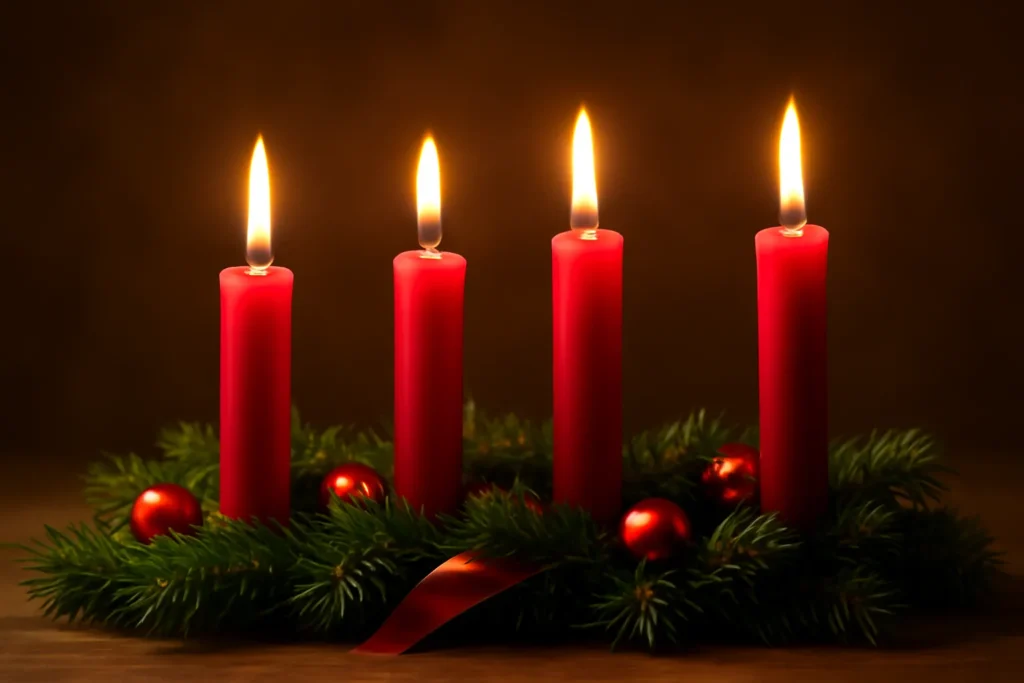
The classic configuration features four long, pillar-style candles placed around a
circular ring of evergreen or decorative elements. The colors most often used are three purple
candles and one pink candle. This arrangement corresponds to the four Sundays of Advent and the
liturgical color symbolism that accompanies the season.
In many homes, the order and color carry meaning. The first candle represents hope
and is often purple. The second candle is for peace, the third candle
for joy, and the fourth candle for love and anticipation as Christmas nears. When a
white Christ candle sits at the center, it is often lit on Christmas Eve or Christmas Day to mark
the culmination of Advent and the beginning of the Nativity celebration.
Advent calendar candles and candle-based calendars
Advent calendars come in several forms, but one popular variant is the candle-advent calendar.
Instead of doors that reveal a small treat or verse, this format offers a sequence of tiny candles or
wax segments aligned with days of December. In some designs, you light a fresh tiny candle
or burn a small segment of a candle for each day. For families that enjoy a tactile ritual, a calendar
with tiny flames can be a captivating way to engage children while teaching them to count down to the
holiday in a measured pace.
There are also "calendar-style" wreaths and stand-alone votive arrangements that mimic the calendar
concept at a smaller scale. The central idea remains the same: a daily or weekly milestone that
invites reflection and conversation about the themes of Advent—expectation, preparation, repentance,
and celebration.
Mini and tea-light Advent sets
For apartments, dorm rooms, or rooms with limited surface area, smaller Advent candle sets
can be ideal. These sets may include tea-light candles arranged in a decorative tray,
or a compact ring with evenly spaced, short votives. While the burn time is shorter than that of
traditional pillar candles, these options preserve the cadence of lighting and the visual cue of
the Advent season without occupying a lot of space.
Beeswax, soy, and paraffin: materials and environmental considerations
The material your Advent candles are made from influences burn time, aroma, and
environmental impact. Common choices include:
Beeswax candles: Natural, clean-burning, and often longer-lasting. They have a subtle
natural aroma and a warm glow that many find particularly pleasing for contemplative lighting.
Soy wax candles: Popular for household candles; typically vegan and (depending on the
manufacturer) renewable. They tend to burn cleanly and hold fragrance well when used with essential
oils.
Paraffin candles: Widely available and usually affordable. They burn evenly but are
more likely to produce soot if not properly wick-trimmed or burned in a draft-free space.
Wicks vary: cotton wicks are common, while some premium candles use wooden wicks
for a gentle crackle that resembles a small fireplace flame.
When choosing Advent candles, consider your priorities: odor-free candles are often best
for households with sensitive noses or shared spaces; unscented options reduce the risk of
conflicting fragrances in the room; and beeswax or soy choices appeal to
eco-conscious shoppers seeking a cleaner burn and a more natural origin.
Color symbolism and how it informs selection
The palette used for Advent candles—especially in the wreath configuration—has practical symbolism: violet or purple candles traditionally signify penance and preparation; the pink
candle on Gaudete Sunday stands for rejoicing and hope; the white Christ candle in the
center emphasizes the birth of Jesus. While not every family adheres strictly to liturgical color
rules, many people choose colors that reflect their devotional focus for the year: a calm violet to
cultivate reflection, a brighter pink to invite joy, or a crisp white to celebrate the Nativity.
Colors, Symbols, and Meanings
Liturgical colors and what they signify
The Advent color system helps readers and worshippers attune to the season's mood. The
standard colors are:
Pink / Rose — joy, mid-Advent celebration (Gaudete Sunday).
White — purity, light, and the celebration of Christ at Christmas (often the central
Christ candle).
Some traditions also use blue in place of violet, especially in communities where blue is
associated with Advent rather than Lent.
The exact colors you choose for your Advent candles may reflect your tradition or personal preference.
What matters most is the rhythm they create: a measurable cadence of lighting that mirrors the
spiritual journey of Advent.
Beyond color, individual candles and the act of lighting carry symbolic meanings that enrich
devotion:
Hope is often linked with the first candle—a reminder that God’s promises endure.
Peace follows, inviting households to cultivate calm and reconciliation during a busy season.
Joy comes with the pink candle, signaling a growing sense of gladness as Christmas nears.
Love is anchored in the final Sunday and the Christ candle, pointing to the gift of the Incarnation.
You may also encounter themes tied to family, community service, and spiritual discipline. The structure
of Advent candles is flexible enough to accommodate personal devotion—some families add extra candles
for special intentions, while others include candles or symbols for global or local charitable focus.
Materials, Safety, and Burn Times
Burn times and practical usage
Burn time is a practical consideration when selecting Advent candles. Traditional pillar candles can burn
for several hours per lighting, often lasting days or weeks in a wreath arrangement, depending on the
size and composition of the candle. Smaller Advent calendar candles burn much more quickly, sometimes
within an hour or two, so they are best suited to shorter rituals or extended ceremonies with careful
attendance.
A reliable practice is to burn candles on a stable, heat-resistant surface, away from flammable
materials, and to trim wicks to about 1/4 inch (6 mm) before lighting. Keeping the area well
ventilated and away from drafts reduces uneven burning and soot buildup. Never leave lit candles
unattended, and extinguish them completely when the ritual ends.
Materials and environmental considerations
Advent candles come in a range of materials, each with trade-offs:
Beeswax candles are natural and tend to burn cleanly, often producing a warm glow and
a faint natural aroma. They can be a bit more expensive but are valued for their long-lasting burn and
environmental friendliness.
Soy wax candles are common in contemporary households. They burn evenly and are often
sourced from renewable crops. Soy candles commonly offer excellent scent throw when paired with proper
fragrance oils.
Paraffin candles are widely available and budget-friendly. They burn well but may emit
more soot if wicks and vessels aren’t well matched or if the burn is extended in a drafty room.
Wicks can be cotton or wooden. Wooden wicks provide a soft crackling sound
reminiscent of a small fireplace—a sensory bonus for some households.
Preserving color and fragrance
For those who want a pristine color presentation of their Advent candles, selecting color-stable wax
and high-quality dyes matters. If you are sensitive to fragrances or simply prefer a neutral atmosphere,
opt for unscented versions. If fragrance is appealing, use essential-oil-based or
phthalate-free scent additives to maintain a comfortable aroma without overwhelming the space.
Using Advent Candles at Home and in Community Settings
Guidelines for home use
In the home, Advent candles offer a focal point for family devotion, but practical considerations are
equally important. Place the wreath or calendar on a stable surface away from curtains and paper. If
you have curious children or pets, consider a protective tray or a low-profile guard to keep
flames safely contained. Establish a routine—perhaps lighting a candle at a fixed time each evening
or after dinner—to cultivate a steady rhythm throughout the season.
Church and community use
In churches and community centers, Advent candles can serve as a shared liturgical marker. A church
may feature a larger Advent wreath with four prominent candles and a central Christ candle, often
lit during important moments in the service. Parishioners may take turns lighting the candles in
anticipation of Christmas, or the candles may be lit during a weekly Advent service with readings
and carols. In such settings, the candles are not merely decorative but constitute an expressive
element of worship, catechesis, and communal prayer.
Choosing the Right Advent Candles for Your Space
Key questions to guide your purchase
What is the primary setting—home, classroom, church, or office? The space determines size and color design.
Do you prefer traditional color pairings (purple and pink) or a customized palette that reflects your decor?
Is eco-friendliness or a clean burn a priority? Beeswax and soy wax options offer different benefits.
What is your burn time requirement? If you want a long-lasting wreath, larger pillar candles are often preferable.
Are you seeking unscented candles to avoid overpowering fragrances in shared spaces, or would you enjoy a light aroma that enhances the atmosphere?
Practical tips for setup and display
Choose a stable base for wreaths and calendars to prevent tipping.
Use candles with lead-free wicks and check the manufacturer’s safety certifications.
Consider a backup plan such as battery-operated LED candles for spaces where real flames are not feasible.
Pair the candles with a simple devotional card or scripture reading to enrich the liturgical ambiance.
Keep a fire extinguisher or water source nearby in case of emergency, as a precaution in busy households.
Budgeting and sourcing
Advent candles span a broad price range, from economical, mass-produced options to premium, hand-poured
beeswax creations. Your budget will influence choices about size, color, and scent. If you are
shopping for a family or classroom setting, consider purchasing a multi-pack so you can create a
cohesive display across multiple tables or walls. For churches and parish centers, a larger wreath with
refill candles can be a cost-effective long-term solution.
Top picks for traditional, four-candle Advent wreaths
For households that want to maintain a classic look with clear symbolism, these options excel at
delivering an authentic, ceremonial feel:
Classic four-candle wreath kit: A traditional arrangement with three purple candles and one pink candle,
designed to pair with a green wreath. Ideal for readers seeking a faithful representation of the
Advent sequence and Gaudete Sunday.
Center Christ-candle configuration: A wreath that includes a white central candle to be lit on Christmas
Eve or Christmas Day. This version emphasizes the culmination of Advent and the Nativity.
Premium long-burn candles: Pillar-style candles engineered for extended burn times, reducing the need to
replace candles midpoint in Advent.
Top picks for eco-friendly and clean-burning options
If environmental impact and clean burning matter, consider these categories:
Beeswax Advent candles: Natural, durable, and with a pleasant, subtle glow that many find ideal for meditation and prayer.
Soy-based Advent sets: Often vegan and renewable, with a smooth, even burn and good scent compatibility when used with essential oils.
Beeswax with braided or cotton wicks: A combination that enhances burn stability while maintaining a low ecological footprint.
Top picks for unscented and scent-sensitive spaces
For homes with fragrance sensitivities or shared rooms, unscented candles simplify the atmosphere:
Unscented pillar Advent candles: Solid color presentation, minimal sensory impact, ideal for bedrooms and small living areas.
Unfragranced Advent calendar candles: Small, colorful options that light without introducing scent into the room.
Low-smoke formulations: Candles designed to minimize smoke emission for indoor air quality-conscious households.
Top picks for Advent calendar-style arrangements and small spaces
When space is limited or you want a playful approach to the countdown, these options are practical and
flexible:
Compact Advent calendar candle sets: Small, decorative, and easy to rotate with daily activities.
Tea-light Advent sets: Ideal for tabletops or windowsills, creating a gentle, intimate glow.
Votive-based calendars: A modular option that lets you adjust the sequence to suit your daily routine.
Top picks for church and large-wreath settings
In communal worship spaces, durability and visibility become critical. Consider these categories:
Large pillar candles for wreaths: Visible from a distance, with colored options that hold well in public spaces.
Overflow-friendly Christ candles: Central candles designed to be lit during Christmas Eve and Christmas Day services.
Low-scent, high-clarity candles: Reducing scent saturation in large gatherings while maintaining a dignified atmosphere.
Practical buying guide for top picks
When selecting Advent candles, consider the following practical tips to ensure your picks meet your needs:
Assess burn time expectations relative to your ritual schedule.
Match size and form to your display (wreath, calendar, or table centerpiece).
Prioritize wick quality and flame stability for consistent burning.
Evaluate color accuracy and whether the chosen dyes fade or bleed during long burns.
Consider the ease of maintenance (drip catchers, stabilizers, or dripless options).
Closing Thoughts: Embracing the Light of Advent
The tradition of Christmas Advent candles offers more than decorative illumination. It is a ritual
that invites families and communities into a shared cadence of anticipation, reflection, and grace. Whether
you opt for a classic four-candle wreath or a modern, compact calendar with tiny votives, the act of
lighting becomes a quiet, intentional moment each day or each Sunday. The varieties of Advent candles
you choose—be they beeswax, soy, or paraffin—shape not only the
ambiance but also the pace and texture of your observance. In a season that is often described as busy yet hopeful,
the gentle glow of Advent candles can serve as a steady anchor amid the hustle.
If you are starting a new family tradition or enriching a longstanding practice, consider pairing your candles
with simple devotional readings, carols, or a weekly activity that helps participants focus on the themes of
Advent: hope, peace, joy, and love. The light we kindle in December can become a shared memory that
lasts well beyond Christmas morning—an invitation to carry the season’s spirit into the year ahead.









Leave a Reply