Christian Head Coverings: Meaning, History, and Practice
Christian Head Coverings: Meaning, History, and Practice
The practice of head coverings in Christianity has deep roots in scripture, tradition, and lived religious experience. Across centuries and cultures, communities have interpreted, adapted, or reinterpreted the idea of covering the head as a sign of modesty, order in worship, and an expression of gendered symbolism. This article offers a broad, informative survey of Christian head coverings—often called veil(s), head coverings, or simply the covering—and traces their meaning, historical development, and diverse practices in contemporary churches. It is intended for readers seeking a careful, nuanced overview that is sensitive to theological differences and cultural contexts.
When Christians speak of a head covering, they refer to a range of worn items—from simple scarves to elaborate mantillas or hats—that cover the hair, sometimes the neck or shoulders, and in some traditions encompass the entire head. The basic question often centers on why such coverings were prescribed or practiced: is it a biblical command, a symbolic gesture rooted in culture, a disciplinary measure in certain communities, or a combination of these? The answer depends on theological emphasis, denominational history, and local church practice.
Common terms used in discussions of this topic include:
Head coverings (generic term for any item worn on the head during worship or daily life).
Veils (a specific type of covering that drapes over the head or face).
Mantilla (a lace or sheer veil popular in some Catholic and Orthodox contexts).
Scarf or headscarf (a plain or patterned fabric worn around the head).
Bonnet (a traditional cap worn by some historical Protestant communities).
Hat (a more secular or casual option in some modern settings, used in place of a traditional veil).
Hair covering (a broader, neutral term used in scholarly and devotional writings).
Two of the most cited biblical passages are often central to the discussion. In Paul’s first letter to the Corinthians, the apostle discusses a custom in worship and offers reasons for women to cover their heads, tying the practice to the angels, the Lord, and the created order. In other parts of the New Testament, however, there is emphasis on freedom in Christ and a focus on internal virtue rather than external observance. This combination of scriptural nuance and historical interpretation has meant that Christians have understood and applied the provision about head coverings in varied ways across time and place.
Historical overview: from the Bible to modern diversity
History shows a broad spectrum of practice. Some early Christians may have continued Jewish norms that included hair and head coverings in certain settings, while others emphasized a cultural sign of respectability or modesty. Over the centuries, head coverings became a liturgical and social signal with regional flavors. The following sections sketch key moments and movements that shaped how Christians have understood and worn coverings.
Ancient and patristic foundations
In the patristic (early Christian) era, leaders and theologians debated how closely New Testament instructions should be observed. In some communities, the veil or head covering functioned as a marker of appropriate gendered conduct during church services, while others emphasized charismatic gifts and interior virtue over mere externals. In many parts of the ancient world, cultural norms regarding modesty and public appearance also influenced expectation around hair and head coverings. The upshot is that early Christians did not uniformly impose a single universal style; rather, they developed a tapestry of practices that reflected both biblical interpretation and cultural adaptation.
Medieval and medieval-to-early-modern periods
In medieval Europe, head coverings for women—whether veils, wimples, or mantillas—were common both inside and outside church buildings. In many Christian societies, the veil became a visible sign of femininity and worship decorum. Monastic settings, lay worship, and rural parishes all contributed distinct styles. The broader medieval worldview was shaped by a sense that the sacred space of worship deserved a unique, modest expression of dress, which often included the practice of women wearing coverings during liturgy and in church sanctuaries.
Reformation, Counter-Reformation, and subsequent developments
The Protestant Reformation brought a reexamination of many practices tied to church order, including head coverings. Reformers varied in their emphasis. Some Protestants retained the practice as part of public worship, arguing that it reflected orderly conduct and scriptural fidelity. Others questioned or minimized the practice, interpreting the relevant texts as culturally conditioned and not binding for all times and places. The Catholic Counter-Reformation and later Catholic reforms continued to develop and defend traditional forms of head coverings, such as the mantilla in certain regions, seeing them as part of liturgical beauty and reverence for the sacred. Across Europe and North America, the 17th–19th centuries saw a wide spectrum—from stern, codified expectations to more relaxed, culturally embedded customs.
Industrialization, modernization, and the 19th–20th centuries
As societies industrialized and urbanized, religious communities encountered new social norms. Some evangelical groups stressed biblical gender roles with conservative expressions of modesty, including coverings that could be worn during worship. Other groups embraced more egalitarian ideals, viewing head coverings as optional or symbolic rather than obligatory. In the Catholic and Orthodox worlds, traditional forms persisted in many places, while in some Protestant circles, the practice diminished or became a matter of personal choice rather than communal enforcement. This era also saw the rise of distinctive regional styles—such as the lace mantilla of Mediterranean Catholic culture and the plain headscarves worn by rural Protestants in parts of Northern Europe and North America.
Denominational and regional variations: how practice differs today
Today, Christian communities reflect a wide range of convictions about head coverings. Some churches teach a continued, explicit practice for women in worship; others teach a cultural or optional approach; still others interpret the passage as historical context and do not require any covering. The diversity can be categorized roughly by tradition, while recognizing that many local churches negotiate practice based on leadership stance, community expectations, and cultural sensitivity.
In many Catholic and Orthodox contexts, a sense of liturgical beauty and continuity with historic practice sustains the use of head coverings in certain settings. notable examples include:
Mantilla and veil in traditional Catholic worship, particularly in Spain, Latin America, and some parts of Europe.
Head coverings for women during worship or particularly solemn liturgies in some Orthodox parishes, occasionally including scarves or veils, though practices vary widely by jurisdiction and local custom.
In Catholic culture, married and unmarried women may wear coverings during Mass or in churches as a sign of reverence, while many parishes encourage modest dress in general rather than mandating a veil.
In Orthodox settings, head coverings (usually for women) can be a normative expectation in some national churches, reflecting the long-standing link between worship and ceremonial attire.
It is important to note that within Catholic and Orthodox communities, the practice is often contextual: urban parishes in modern Western countries may not require coverings, whereas traditional parishes in other regions may maintain the custom with regularity.
Protestant and evangelical perspectives
The Protestant spectrum includes communities with a spectrum of convictions:
Mennonite and Amish traditions typically emphasize modest dress and may retain forms of head covering for women as a sign of consecration, modesty, and submission to communal norms, often with distinctive regional styles—such as prayer veils or head coverings worn during worship and special occasions.
Some Baptist, Congregational, and other evangelical groups historically encouraged or required head coverings in worship, but many have shifted toward voluntary or symbolic practice, stressing inner virtue and church order rather than external mandates.
In various Anabaptist and reform-minded communities, the practice remains a meaningful symbol of humility before God and a visible marker of church discipline and tradition.
In contemporary Pentecostal and Charismatic churches, head coverings may be practiced by some women during prayer or prophetic sessions, often framed as a matter of spiritual sensitivity and recognition of gendered calling rather than universal command.
Conservative, traditional, and urban contexts
Across the modern world, conservative churches—whether in rural communities or in immigrant congregations—often maintain a form of practice that includes a head covering for women in worship or public prayer. At the same time, many urban congregations and interdenominational communities emphasize personal conscience and cultural adaptation, allowing members to decide whether to wear a headscarf, veil, or bonnet. The trend in many places is toward a flexible approach that respects tradition while acknowledging individual spiritual formation and social context.
Theological interpretations: why these coverings exist in Christian thought
The theological conversations surrounding head coverings fall along a spectrum from strict, text-centered mandates to more interpretive, symbolism-focused understandings. Two broad theological orientations dominate contemporary discussion: complementarian and egalitarian perspectives. While these terms primarily address broader questions about gender roles in church leadership and family life, they also influence how adherents view external signs such as coverings.
Complementarian perspectives
Complementarianism asserts that men and women have distinct, complementary roles within family life and church leadership. In contexts where a literal reading of 1 Corinthians 11 is taken seriously, believers may see the head covering as a sign of female submission to male spiritual authority within the worship setting. Proponents often emphasize order, reverence, and a culturally anchored sign that communicates feminine modesty and accountability before God. In such communities, the practice can be a non-negotiable element of public worship, conducted with pastoral oversight and teaching that situates the habit within a wider theological framework of order and divine design.
Egalitarian or pastoral interpretations
Egalitarianism emphasizes equality of men and women in all areas of church life, including leadership. In egalitarian-influenced communities, the same biblical text that mentions head coverings is often read as descriptive of cultural context, not as a timeless command. For these readers, head coverings may be valued as a historical sign of modesty or ritual decorum, but they are not required or universally mandated for women in worship. Some churches in this tradition adopt a personal conscience approach: women may choose to wear a head covering as a matter of personal devotion, family tradition, or aesthetic preference, while not obligating others to do so.
Other interpretive approaches
Beyond strict complementarian or egalitarian readings, other theological positions include:
Symbolic interpretations: coverings symbolize submission to divine order, humility, or a sign of reverence in church life.
Cultural hermeneutics: the practice is understood as a culturally conditioned instruction that serves as a bridge between first-century norms and contemporary contexts.
Liturgy-focused explanations: for some, the head covering is part of the beauty and dignity of the liturgy, aligning with the sense that worship should reflect heavenly order and sacred tradition.
Forms and materials: what coverings look like in practice
In real-world settings, Christians use a spectrum of styles to achieve the goals associated with head coverings. The choice often reflects theology, climate, culture, and personal devotion. Here are some common forms and their typical contexts.
Veils and mantillas
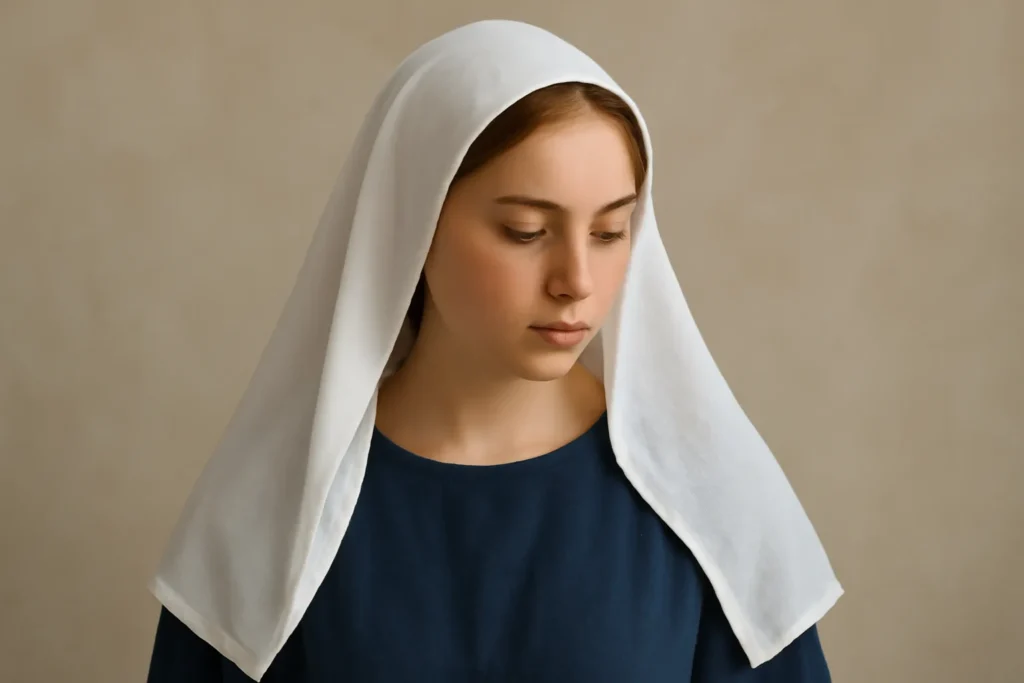
The veil is a long rectangular or square piece of fabric that can drape over the head and shoulders. The mantilla is a lace or sheer veil popular in parts of Catholic and Latin American Catholic practice. In some Orthodox communities, similar garments are worn with variations in color, length, and whether the veil is removable or fixed. Veils and mantillas are commonly chosen for solemn liturgical occasions or dedicated devotional times, and they often carry aesthetic significance as well as symbolic meaning.
Scarves and headscarves
A widely adopted form across many Protestant and evangelical communities is the plain or patterned scarf or headscarf. Materials range from cotton to silk, with patterns that can reflect cultural heritage or personal taste. In contemporary practice, headscarves may be used in church services, in prayer meetings, or during times of contemplation. The scarf is typically tied or wrapped in a manner that keeps hair contained while allowing for comfort and mobility during worship.
Hats and bonnets
In various Christian traditions, especially among Anglophone groups with historical roots in the 17th–19th centuries, women wore bonnets or hats during church or public prayers. While less common in many urban congregations today, dress-specific head coverings like bonnets remain a visible sign in certain communities, particularly during special services or in rural areas where tradition remains strong.
Hair coverings in daily life
Some Christians extend the practice beyond corporate worship to daily life, choosing to wear a hair covering during prayer, study, or worship at home. This broader practice reflects an orientation to modesty and spiritual discipline that believers may carry into everyday moments. Even when not required in Sunday services, the home-use covering can function as a personal reminder of devotion and submission to God.
Contemporary fashion and adaptation
Today, many Christians navigate a tension between tradition and modern fashion. Some churches encourage practical, comfortable coverings that harmonize with everyday clothing, while others emphasize more formal or ceremonial styles. The result is a diverse ecosystem of coverings that can be worn as liturgical attire, devotional symbols, or simple elements of personal devotion. In some urban, cross-cultural church communities, stylized head coverings may incorporate contemporary textiles, streams of color, or secular fashion influences, always within the boundaries of the community’s norms around modesty and reverence.
Practical aspects: care, etiquette, and liturgical use
Beyond symbolism, the practical side of head covering involves how they are worn, cared for, and integrated into worship life. Churches often provide guidance through worship manuals, pastoral counsel, and etiquette expectations at services. Here are common practical considerations.
How to wear a head covering in worship
Ensure the covering stays in place during movement, singing, and gestures common in worship.
Choose a size and fabric that respect comfort, climate, and the formality of the service.
Align color and style with the day’s liturgical mood or the church’s decoruum guidelines.
Respect local tradition: some congregations emphasize a fixed arrangement, while others permit flexible positioning or removal during certain prayers.
Materials, care, and durability
Common fabrics include cotton, linen, silk, lace, and blends designed to balance appearance, durability, and comfort.
Washing and care vary by fabric type; delicate lace mantillas may require hand wash or gentle cycles, while scarves and cotton veils can be machine-washed on gentle settings.
Storage matters: hanging or folding to prevent creasing helps maintain neat presentation for formal services.
Etiquette in mixed settings
In ecumenical or inter-church gatherings, the approach to head coverings can differ. Some participants choose to wear coverings to demonstrate solidarity with a particular tradition; others respect broader church norms and participate without a covering. In such contexts, clear communication and pastoral sensitivity help ensure that personal choice does not become a source of discomfort or division.
Contemporary debates: culture, command, and church unity
As with many expressions of ecclesial practice, the topic of head coverings invites lively debate in contemporary Christian life. Several themes surface in contemporary discourse:
Textual authority: how central is the New Testament passage about hair and coverings? Some communities treat it as timeless, others as culturally conditioned.
Gender and authority: discussions often intersect with broader questions about gender roles in church leadership, family life, and public worship.
Cultural sensitivity: in multicultural churches, how should a practice rooted in one culture be understood in another? The emphasis often shifts toward hospitality, respect, and humility in encounter with diverse expressions of faith.
Pastoral flexibility: many pastors and church boards prefer a nuanced approach that prioritizes spiritual formation, worship reverence, and the well-being of members over rigid enforcement of a single external sign.
Identity and belonging: for some adherents, head coverings are a marker of belonging to a faithful community; for others, they may feel burdensome or outdated, influencing decisions about church membership or participation.
The practice of head coverings in Christianity has taken on distinctive manifestations in different parts of the world. Local customs, climate, and social norms shape how coverings are worn and understood, while theological commitments provide the interpretive frame for those practices.
Western Europe and North America
In Western contexts, head coverings often appear in two broad forms: heritage-style practices rooted in historic churches, and personal devotional practices adopted by individuals or families. In many urban congregations, the covering remains a voluntary gesture rather than a mandatory requirement. Yet in several conservative Protestant communities, including some Mennonite and old-order groups, the practice persists with a degree of solemnity and continuity with ancestral worship.
Africa, Asia, and the Global South
In Africa and parts of Asia, Christian communities frequently integrate local textile traditions into head coverings, creating vibrant, culturally meaningful expressions. Mantillas and lace may be less common, while colorful scarves, embroidered fabrics, and regional head wraps carry symbolic resonance within worship. In many missionary and diaspora contexts, the practice serves as a bridge between traditional Christian faith and indigenous identities, allowing believers to express continuity with the gospel while affirming their own cultural heritages.
Indigenous and diasporic practices
Among indigenous Christians and diaspora communities, coverings can reflect a synthesis of Christian faith with local identities. They may be worn during communal prayers, baptismal rites, or festive celebrations, highlighting the universal reach of the Christian message while honoring communal memory. In such settings, the practice is often less about a universal command and more about a shared symbol of reverence, blessing, and communal life.
Practical guidance for churches and individuals today
For communities seeking to navigate the question of head coverings in a thoughtful, inclusive way, several practical guidelines can help foster clarity, unity, and spiritual growth.
Develop clear, theologically informed policies
Root guidance in a well-articulated theological rationale that explains how the practice fits within the church’s broader understanding of Scripture, worship, and gender relations.
Offer a clear explanation of whether coverings are required, encouraged, or optional in different settings (worship services, weddings, funerals, daily prayer groups).
Encourage pastoral dialogue so individuals can ask questions and express concerns without fear of judgment.
Promote hospitality and unity
Acknowledge that some members come from traditions where coverings are central, while others come from contexts where they are less emphasized. Strive for an approach that respects conscience and cultural differences.
Provide spaces or times during services for people who may feel uncomfortable with a shift in practice, ensuring that worship remains inclusive and prayerful for all participants.
Encourage education and dialogue
Offer study resources about the biblical text and historical development of the practice, including perspectives from various denominations.
Host reflective discussions that consider how modesty, gender, and worship are lived in the current cultural moment, avoiding sensationalism or partisan rhetoric.
Consider liturgical aesthetics
For churches that maintain a traditional style, it can be helpful to align coverings with the overall liturgical aesthetics, ensuring that fashion and symbolism enhance, rather than distract from, worship. This might involve coordinated guidance on color palettes, fabric choices, and appropriate occasions for wearing certain types of coverings.
Common misconceptions and clarifying questions
As with any historical religious practice, misconceptions can arise. Here are some common questions and concise clarifications to help readers approach this topic with nuance.
Is head covering a universal command for all Christians? No. The New Testament passages addressing head coverings are interpreted differently among denominations. Some see it as a timeless command; others view it as a cultural instruction that may not apply universally today.
Does wearing a head covering determine one’s spirituality? No. External forms such as coverings can signal reverence and order, but true spirituality resides in the heart's devotion and obedience to God, not merely in outward signs.
Can a church be faithful if it does not require coverings? Yes. Many faithful communities practice modesty, reverence, and orderly worship without mandating coverings, focusing on the underlying principles rather than the external sign alone.
Is head covering connected to ethnicity or culture? In many contexts, the practice intersects with cultural norms. Churches often aim to honor local culture while maintaining theological commitments, balancing respect for tradition with cultural sensitivity.
How should younger generations engage with this topic? They can participate in thoughtful dialogue, examine biblical texts, and discern how practice serves spiritual growth, community life, and witness to the broader world.
Conclusion: meaning, continuity, and invitation
Across Christian history, head coverings have served as a visible sign of reverence, modesty, and order in worship for many communities. They have also become a site where theology, culture, gender, and tradition intersect in meaningful ways. Whether interpreted as a timeless command or a culturally conditioned symbol, the practice invites believers to reflect on how worship ought to express devotion to God, communicate with the heavenly realm, and foster a shared sense of identity within a faith community. For some, the covering remains a cherished discipline that deepens prayer and communal life; for others, it is one option among many for expressing piety, or simply a tradition that has faded into history. What matters most across these diverse expressions is the conviction that Christian worship should be shaped by love for God and neighbor, guided by Scripture, and tempered by humility, hospitality, and a longing for unity in the body of Christ.
In exploring Christian head coverings, readers gain not only an overview of a vestige of church history but also a window into how Christians have wrestled with modesty, authority, beauty, and faithfulness in different eras and cultures. The conversation continues today in classrooms, church meetings, and living rooms around the world, where individuals seek to understand what it means to honor God in an ever-changing world while remaining rooted in the ancient and enduring contours of Christian worship.











Leave a Reply