What the Body of Christ Means: A Foundational Idea in Scripture
The phrase “Body of Christ” carries rich theological and practical significance. In biblical language, it points to more than a metaphor; it signals a divine design for how believers relate to one another, how they relate to Christ, and how they function within the life of God’s people. The meaning of the Body of Christ has been explored from multiple angles—spiritual unity, relational interdependence, and the visible expression of faith in the world. This article delves into the breadth of that meaning, tracing its biblical roots, its development in church history, and its implications for everyday discipleship.
Foundations in Scripture: how the Body of Christ is described
The biblical concept of the Body of Christ is rooted in both direct metaphors and descriptive imagery. In the New Testament, the apostle Paul repeatedly uses the image of a body to describe the church and the relationship of believers to Christ.
Two core senses of the language
A symbolic and spiritual unity among believers, gathered into a single corporate organism whose life is Christ’s life flowing through it.
A visible, social reality—the local assembly of Christians who share life, worship, service, and mutual care as one coherent community.
The phrase also extends to the understanding that Christ himself is the head of this body, and Christians are members with distinct gifts and roles. In this sense, the meaning of the Body of Christ encompasses both its divine origin and its human expression. The imagery invites readers to consider how unity, interdependence, and mission shape the life of the people who bear Christ’s name.
Biblical foundations: the Body of Christ in Pauline theology
Paul’s essential image: unity through diversity
In 1 Corinthians 12, Paul offers an extended meditation on the Body of Christ’s functioning as a single organism made up of many members. He emphasizes that:
Every believer has a vital role; no member is superfluous.
Gifts and members are interdependent, so the health of the whole depends on each part working together.
Divine power works through weakness and ordinary things—like a hand or a foot—to fulfill God’s purposes.
This passage helps explain the meaning of the Body of Christ in terms of mutual service, accountability, and shared mission. Paul writes that the eye cannot say to the hand, “I have no need of you,” and that there is a harmony in which suffering and joy are shared through the Spirit.
The head who gives direction
The apostle also introduces a crucial aspect of the body metaphor by naming Christ as the head. Colossians 1:18 and Ephesians 1:22-23 describe Christ as the One who rules the body, nourishes it, and ensures that all its parts are united in their purpose. This leadership is not a mere hierarchy; it is a feeding, guiding, and unifying function that keeps the Church oriented toward Christ and his redemptive work.
Other epistolary strands
Beyond 1 Corinthians, other letters reinforce the same principle in slightly different tones. In Ephesians 4:4-16, the unity of the Spirit is grounded in one body, one Spirit, one hope, and one Lord, with varied gifts designed to equip all believers for maturity. In Romans 12 and 1 Peter 2, believers are urged to present themselves as living sacrifices and to serve as living stones built into a spiritual house. Taken together, these strands contribute to a robust picture of the Body of Christ meaning that integrates doctrine, ethics, and community life.
The Body of Christ and ecclesiology: how the Church embodies this mystery
Ecclesial unity and diversity
The concept of the Body of Christ informs a distinctive ecclesiology—the theology of the church’s structure and life. Unity remains essential, but it is not a unity of sameness; it is a unity of purpose where diverse members with different gifts contribute to the common good. This understanding helps Christians navigate differences of culture, vocation, and tradition while maintaining a shared allegiance to Christ.
The imagery also translates into how local churches function. A local church is a microcosm of the universal Body of Christ, where believers exercise hospitality, discipline, worship, teaching, and service. In such communities, the visible expression of unity becomes a practical testimony to the world of God’s reconciling work in Christ.
Different tradition perspectives
Across Christian traditions, the meaning of the Body of Christ is clarified through distinct emphases:
Catholic and Orthodox perspectives often emphasize the sacramental and hierarchical aspects: the church as the sacrament of Christ in the world, with the Eucharist as a primary sign of the Body’s unity.
Protestant and evangelical perspectives frequently highlight the priesthood of all believers, the gifts of the Spirit, and the living, functional unity of the church as the Body through spiritual gifts and mutual edification.
Anglican and some Protestant traditions may stress an inclusive approach that honors liturgical rhythm, the authority of Scripture, and the Spirit’s work in empowering diverse members for ministry.
Historical development: how early Christians understood the Body of Christ
From apostolic teaching to patristic reflection
In the early centuries, the church’s leaders wrestled with how to articulate the mystery of the Church as the Body of Christ in a world of competing ideologies. Fathers like Augustine, Chrysostom, and Origen often spoke of the Church as a spiritual body with Christ as the living head. The imagery was powerful for explaining communal responsibility, spiritual growth, and the ethical demands of discipleship.
Liturgical and sacramental developments
As Christian worship became more formalized in the medieval and early modern periods, the symbolism of the Body of Christ took on a sacramental weight. The Eucharist was regarded as a primary visible sign of the Body’s unity—the moment when believers “share in” Christ, not merely symbolically but by participating in the living life of the crucified and risen Lord. In many traditions, baptism and the Eucharist became two primary expressions of membership in the Body.
Experiencing the Body of Christ today: sacrament, worship, and life together
Eucharist and the ongoing presence of Christ in the Body
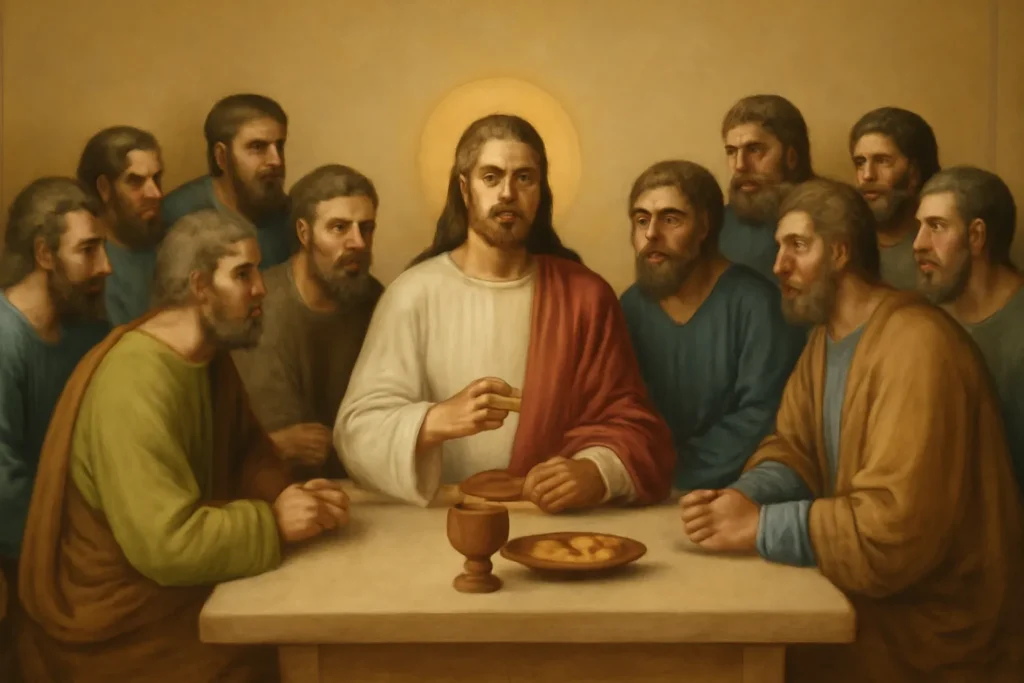
For many believers, the Body of Christ meaning is mediated through the practice of the Eucharist or Holy Communion. In this sacrament, participants remember Christ’s death and resurrection and affirm their union with him and with one another. The act is both symbolic and spiritual: it points to the one loaf and the one cup that symbolize unity, breaking down barriers between people and creating a shared life in Christ.
Baptism: initiation into the Body
Baptism is often understood as the entry point into the Body of Christ. It marks the believer’s identification with Christ’s death and resurrection and signals inclusion in the community of faith. In many traditions, baptism also signifies entry into the priesthood of all believers, who are called to serve and to use their gifts for the good of the whole body.
Gifts and service: building up the body
A central aspect of the meaning of the Body of Christ is that every member contributes. The diverse gifts—teaching, healing, preaching, mercy, administration, hospitality, and more—are not for individual achievement but for the nourishment and building up of the entire community. This functional diversity mirrors the body’s natural order, where each part has a role that strengthens the whole.
Practical implications: living as one Body in a divided world
Unity without uniformity
The Body of Christ](strong> calls Christians to pursue unity even in the presence of differences. Believers are urged to maintain the bond of peace and to strive for harmony, recognizing that Christ has reconciled diverse peoples into one family. This means engaging respectfully across cultures, traditions, and perspectives while remaining faithful to the gospel.
Mutual care and accountability
Because the Body functions through interdependence, Christians should practice mutual care. This includes encouraging one another, bearing one another’s burdens, and correcting one another in love when necessary. The Body of Christ meaning is directly tied to the ethic of solidarity—the poor, the marginalized, and the vulnerable are all included in the body’s life and mission.
The unity of the Body is not self-absorbed; it is outward-looking. The Body of Christ exists for the sake of witness—proclaiming the gospel, demonstrating justice and mercy, and inviting others into the life that the Spirit creates within the community. The church’s mission is a natural outgrowth of being part of Christ’s Body.
Common questions and clarifications about the Body of Christ
Is the Body of Christ primarily a spiritual reality or a visible organization? The answer is nuanced: it is both a spiritual reality—the union of believers with Christ and with one another—and a visible assembly—the gathered people of God who live out that unity in the world.
What does it mean to be a member of the Body? Membership involves participation in worship, community life, service, and the use of spiritual gifts for others. It is not merely a personal belief but a shared life in Christ.
How does diversity fit into the Body’s unity? Diversity is a strength. By embracing varied gifts, backgrounds, and expressions, the Body more fully reflects Christ’s fullness and fulfills its mission.
What role do sacraments play in the Body of Christ? Sacraments such as baptism and the Eucharist symbolize, seal, and nourish the membership of the Body, strengthening the believer’s connection to Christ and to the community.
Variations in language: other ways to phrase the meaning
To understand the breadth of the topic, it helps to use variations of the core phrase. Here are several alternatives that carry nuanced emphasis while staying within the same theological orbit:
Christ’s body as a metaphor for corporate life and interdependence.
Body of believers as a description of the community’s living unity.
Ecclesial body highlighting the church’s structural and communal aspects.
Spiritual organism emphasizing growth, health, and nourishment in the Spirit.
The church as Christ’s body underscoring the union between Christ and his people.
Body imagery in Christian theology used to explain formation, discipline, and mission.
Key theological themes tied to the Body of Christ
Headship and authority
A central theme is the idea that Christ is the head of the Body. This reflects both a spiritual leadership and a call for disciples to align under his lordship. Proper understanding of Headship protects against authoritarianism while preserving a humble, service-oriented leadership that mirrors Christ’s self-giving love.
Inclusion and unity across boundaries
The Body imagery challenges believers to overcome barriers—whether cultural, ethnic, socio-economic, or doctrinal—to reflect the new humanity God is forming in Christ. The Body of Christ meaning includes the radical call to welcome, reconcile, and participate with people who differ from us.
Gifts as a shared resource
Spiritual gifts are not awards but tools for building the community. Recognizing and valuing diverse gifts helps the Body of Christ thrive and fulfill its mission. When members use their gifts in service to others, the body grows into maturity.
Ethical and pastoral implications: living the concept well
Pastoral care and communal health
Pastors and lay leaders are called to cultivate healthy bodies—where accountability, grace, and truth are practiced. Healthy rhythms of worship, teaching, prayer, and service support spiritual growth and deepen the sense of belonging.
The Body of Christ should be known not only for doctrinal clarity but also for visible acts of mercy, justice, and peacemaking. The body’s love becomes a powerful testimony to the world when it addresses real needs, challenges injustices, and offers hope.
Discipleship and formation
Growing into a mature Body involves ongoing discipleship—teaching believers to love what is good, to pursue holiness, and to imitate Christ in daily life. Formation happens through worship, study, confession, and service that reinforce the unity of the body.
Practical examples of the Body of Christ in everyday life
Neighborhood ministries that bring diverse neighbors together to serve a common good.
Youth and young adult communities fostering mentorship, accountability, and shared mission.
Mission partnerships that cross cultural lines, demonstrating the Body’s cross-border unity.
Church planting and multiplication as a method of expanding the Body’s reach while maintaining relational depth.
Common misunderstandings clarified
Misunderstanding: The Body of Christ is merely a metaphor with no real effect on how we live. Reality: The doctrine shapes worship, ethics, and community life, guiding how believers relate to Christ and one another.
Misunderstanding: Unity means uniformity. Reality: True unity respects diversity and uses it to express the richness of Christ’s body.
Misunderstanding: The Body is complete in a single local church. Reality: The Body spans many local expressions, a single global communion that shares a common faith in Christ.
The meaning of the Body of Christ not only informs soteriology and ecclesiology but also shapes how Christians approach worship, prayer, and liturgy. In worship, the body gathers to honor the head, Christ, and to offer collective praise for the redemption he accomplished. In doctrine, the Body is a living organism whose life is sustained by the Spirit, whose evidence is love for one another, and whose mission extends to the ends of the earth.
A holistic view of the Body of Christ meaning integrates four dimensions:
Doctrine: the theological claim that Christ unites believers to himself and to one another.
Worship: the communal recognition of Christ’s lordship in word, sacrament, and song.
Community: the ethical life of mutual care, accountability, and service.
Mission: the outward reach of the church to proclaim the gospel and demonstrate God’s love.
When these dimensions are balanced, the Body of Christ becomes a powerful agent of transformation—within communities and in the broader world.
Guided study suggestions
Study 1 Corinthians 12 and Ephesians 4:4-16 to see how the Body’s unity and diversity are described in Scripture.
Explore Colossians 1:18 in relation to the head-body relationship, considering how leadership and nourishment work together.
Reflect on baptism and the Lord’s Supper as entry points and sustenance for participation in the Body.
Ways to apply the concept in church life
Encourage cross-generational and cross-cultural fellowship to model the Body’s unity.
Develop leadership models that emphasize service, accountability, and shared responsibility.
Design ministries that use diverse spiritual gifts for the common good, not for personal recognition.
In sum, the meaning of the Body of Christ encompasses a dynamic, divine-human reality. It is a living organism—Christ’s life flowing through his people, who are gathered, gifted, and sent into a world that needs the healing and invitation of God. Whether you frame it as the Body of Christ meaning in terms of ecclesial unity, sacramental life, or missional presence, the core invitation remains the same: to belong to Christ, to belong to one another, and to participate in the mission of God as members of his Body.
This comprehensive guide has offered a broad panorama of the term Body of Christ meaning, with attention to biblical roots, historical development, diverse theological perspectives, and practical implications for daily faith. The concept continues to be a living, evolving conversation within the church, inviting ongoing reflection on how a people united in Christ can bear witness to the transformative power of the gospel in every corner of the world.








Leave a Reply