Why Do People Wear Hijab? A Comprehensive Guide to Religious, Cultural, and Personal Reasons
Why Do People Wear Hijab? A Comprehensive Guide to Religious, Cultural, and Personal Reasons
Across many countries and cultures, the practice of wearing a hijab sits at the intersection of faith, tradition, personal choice, and social life. It is not a single, uniform practice, but a diverse set of meanings and expressions that can vary by religion, culture, era, and individual circumstances. Why do people wear hijab? is a question with many valid answers, and exploring it helps illuminate how people understand faith, identity, and community in a globalized world. This article unpacks the topic from multiple angles—religious foundations, cultural variations, personal motivations, and social dynamics—to provide a comprehensive guide to the subject while acknowledging the inclusive reality that there is no one-size-fits-all explanation.
To understand why hijab exists, it helps to situate it in a longer historical arc. In many societies, garments that cover the head, hair, or body have been involved in signaling modesty, piety, or social roles long before modern nations formed. When Islam emerged in the Arabian Peninsula in the 7th century, modesty in dress and behavior was among the many cultural norms that shaped early Muslim communities. The term hijab itself is Arabic for a partition or barrier, and in contemporary usage it often refers to a headscarf or a broader dress code covering the hair and neck, though not all Muslims or scholars use the same terminology to describe the practice.
Within the religious text and tradition, several layers of meaning contribute to why individuals choose to wear a hijab. In Islamic thought, modesty is a core value that encompasses conduct, speech, and presentation, not only clothing. Some Muslims interpret this as a personal calling to dress modestly as an outward sign of inner faith and discipline. Others frame hijab as a cultural expression that aligns with family or community norms. Still others emphasize personal choice and agency, arguing that wearing a hijab can be a deliberate decision to articulate one’s religious identity in public life.
There are key scriptural anchors that people cite when discussing the practice, though translations and interpretations differ. In various passages, the Qur’anic verses emphasize modesty and decorum for believers, particularly for women, with phrases that describe how one’s adornment should be presented and what should be concealed. For example, some translations reference drawing veils over the bosoms or lowering the gaze. Additionally, instructions given to the Prophet’s wives about modest dress have historically influenced broader dress norms in many communities. Because primary texts are interpreted through centuries of scholarship and cultural context, you will find a range of views on whether hijab is a universal obligation, a recommended practice, or a valued tradition that should be understood in its local context.
Importantly, the historical and religious landscape is not monolithic. Across different Muslim-majority societies and among Muslim communities worldwide, interpretive diversity exists about the scope and meaning of hijab. Some communities view it as a mandatory religious duty; others see it as a recommended practice or a cultural norm that varies by residence, era, and personal conviction. This plurality matters because it underlines a central truth: there is not a single, definitive rule about hijab that can be universally applied to all Muslims or all contexts.
Religious obligations and interpretations
At the core of many discussions about hijab is the question of religious obligation versus cultural habit. The spectrum of interpretations ranges from viewing hijab as an essential precept to considering it a meaningful tradition that some adherents choose to observe for spiritual reasons. The way scholars, jurists, and communities weigh the evidence influences how people approach the practice today.
Different Islamic perspectives
Obligatory interpretation: In some schools of thought, hijab is presented as a binding obligation for believing women, grounded in Qur’anic passages and prophetic traditions.
Recommended or commendable: Other scholars describe hijab as a strongly encouraged practice that reflects modesty and piety, while allowing for a diversity of modest coverings depending on context.
Cultural or voluntary practice: A further view treats hijab as a cultural expression linked to tradition, family upbringing, or personal devotion, without asserting it as a universal law for every Muslim woman.
What this means in practice is that individual choices about hijab are often shaped by personal beliefs, family heritage, and local religious authority. People may start wearing or adjusting their covering at different life stages—during adolescence, after marriage, or when moving to a new country—and they may change how they wear it as their understanding of faith evolves. This dynamic is a natural part of religious life for many adherents who seek to hold a meaningful connection to their beliefs while navigating changing social environments.
Hijab is one piece of a broader conversation about modesty in dress. For some Muslims, modest attire includes specific garments beyond the headscarf—such as loose-fitting clothes, sleeves that cover the arms, and fabrics that do not cling to the body. Some communities also distinguish between head coverings and face coverings (like niqab) or full-body coverings (like burqa). The decisions about which elements to wear are often personal and contextual, influenced by local norms, weather, profession, and social expectations. Acknowledging this helps to resist simplifying hijab to a single image and opens space for nuanced discussion about individual experience.
Cultural diversity and regional variations
Hijab appears in a multitude of styles and expressions around the world. The way people wear a headscarf, how much of the body is covered, and what colors or fabrics are chosen can reflect a rich blend of traditions, climates, and aesthetic preferences. This regional variation is one of hijab’s most conspicuous features and a reminder that the practice travels with people and adapts to new environments.
Common styles and coverings
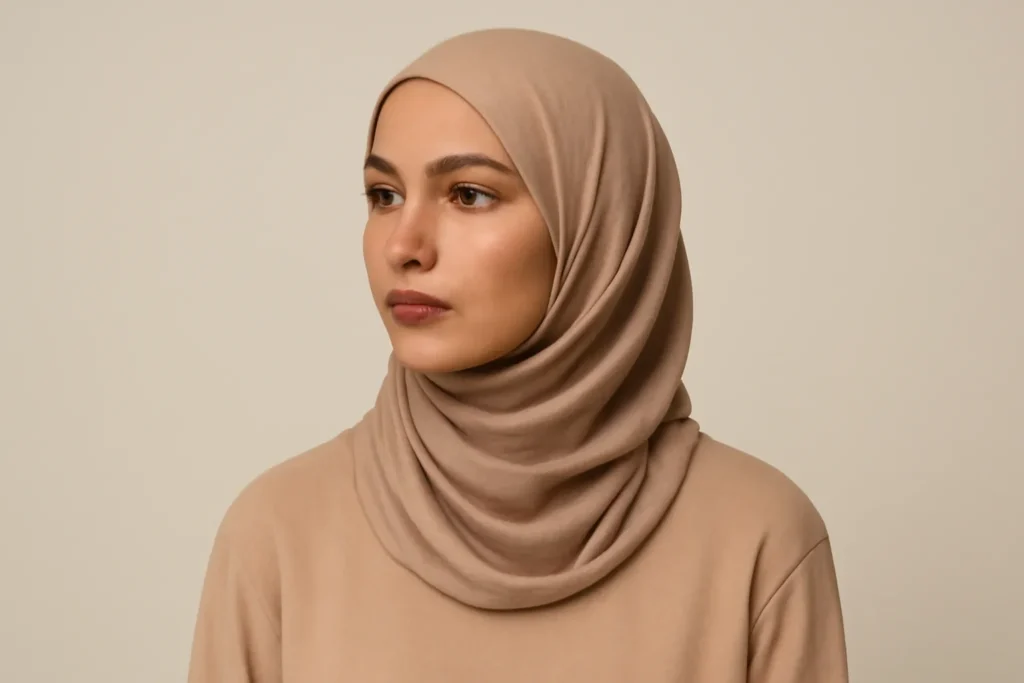
Headscarf (hijab): A square or rectangular scarf wrapped around the head and neck, often leaving the face visible.
Khimar: A longer cape-like garment that drapes over the head and shoulders, sometimes covering the chest.
Niqab: A face veil that leaves the eyes clear, paired with a headscarf or cloak in many contexts.
Burqa: A full-body cover with a mesh screen over the eyes, worn in some regions and communities.
Chador: A full-body cloak that is worn over a dress and usually held closed with the hands or by other garments.
Dupatta or scarf with regional variations: In South Asia and parts of Southeast Asia, women may wear a long scarf (dupatta) draped over the head and chest as part of traditional dress.
These terms reflect a spectrum of practice rather than a single standard. In some places, women combine pieces (for example, a hijab with modest, loose-fitting outerwear) to achieve the level of coverage that aligns with their beliefs or social norms. In others, a simple headscarf is the preferred or required mode of dress. Climate and practicality also shape choices—lighter fabrics in hot climates or layered coverings in cooler regions help people balance modesty with comfort.
Regional contexts and examples
In North Africa and the Middle East, you’ll often see styles that emphasize the head and neck covering, while still leaving the face visible in many daily settings. In parts of South Asia and Southeast Asia, complicated combinations of scarves, shawls, and tunics reflect both religious sensibilities and long-standing cultural dress codes. In Sub-Saharan Africa, diverse practices exist—from modest head coverings worn for religious reasons to those that are part of ceremonial attire. Each region has its own history of how modest dress intersects with language, kinship networks, and social expectation.
Personal identity, modesty, and agency
Beyond religious or cultural frameworks, many people articulate deeply personal reasons for wearing a hijab. The act can be a way to express personal identity, to assert agency over one’s body, or to navigate social spaces with a sense of safety, dignity, and belonging. Individuals often describe hijab as a form of self-definition—a statement about who they are and what matters to them in terms of faith, family, and community.
Motivations that people commonly cite
Spiritual devotion: For some, covering aligns with a sincere striving to please God and pursue spiritual growth.
Sense of modesty: Wearing a hijab can help some people feel more comfortable in public by reducing attention to physical appearance.
Family tradition: Many grow up in households where hijab is a norm, and continuing the practice is a way of honoring family values.
Personal safety and autonomy: Some women report that modest dress feels protective or that it helps them control how they are perceived in public spaces.
Identity and belonging: Wearing hijab can be a visible marker of belonging to a faith community or a cultural group, fostering community ties and mutual support.
Crucially, many people emphasize freedom of choice as a central aspect of their decision to wear or not wear hijab. They often reject the notion that hijab is a tool of oppression; instead, they describe it as a personal or religiously meaningful practice that under certain contexts is chosen deliberately rather than imposed. This distinction—between coercion and autonomy—is central to respectful discussions about hijab across different audiences.
Social and political dimensions
Hijab is not merely an individual matter; it intersects with social norms, public policy, and political debates in many places. The presence or absence of hijab in public life can become a flashpoint for conversations about freedom of religion, gender equality, secularism, and national identity. These debates often reflect broader tensions between tradition and modernity, local custom and global influence, as well as between minority and majority group dynamics.
Legal protections: In many countries, freedom to wear religious symbols, including hijab, is protected as a matter of religious liberty and personal autonomy.
Restrictions and bans: Some states have imposed restrictions or bans on head coverings in schools, government buildings, or public life, citing security, secularism, or uniform civic norms. These policies frequently spark legal challenges and active public debate about rights and responsibilities.
Work and education: Workplace dress codes and school policies may accommodate or limit certain coverings, balancing safety, uniformity, and religious rights. The practical reality for many families involves navigating these policies while seeking to maintain religious and cultural practices.
In many places, the hijab has become a symbol in broader political conversations about identity, belonging, and human rights. For some communities, wearing hijab is a quiet form of cultural assertion; for others, it becomes a contentious marker in the battles over what is visible in public life. Understanding this dimension helps explain why discussions about hijab can be deeply emotional and highly contextual.
Common myths and misconceptions
Because hijab intersects with faith, culture, politics, and gender, several myths persist. Clarifying these can reduce misunderstanding and help foster respectful dialogue.
Myth: Hijab means oppression. Fact: Many women who wear hijab describe it as a voluntary and empowering choice, linked to faith, autonomy, and dignity. It is not inherently a symbol of coercion; coercion is a separate, real issue faced in some contexts, but it is not universal.
Myth: All Muslims must wear hijab. Fact: There is a spectrum of belief and practice. Some Muslim women choose to wear hijab, others wear different modest coverings, and some do not wear head coverings at all. Variations reflect personal conviction and local norms.
Myth: Hijab is only about appearance. Fact: For many, hijab carries moral, spiritual, and social dimensions that go beyond outward appearance, touching on identity, self-restraint, and community belonging.
Myth: Wearing hijab is incompatible with modern life. Fact: People wear hijab in a wide range of settings—schools, workplaces, sports, and public life—demonstrating that modest dress can coexist with participation in modern economies and cultures.
Practical considerations and everyday life
People who wear hijab often think through practical aspects that affect daily life, including comfort, safety, and social interaction. The choice of fabrics, colors, and layering is guided by weather, activity, and personal preference. For example, lighter fabrics such as cotton or jersey may be comfortable in hot climates, while heavier materials and layering may be preferred in cooler weather. The style chosen can also reflect functional considerations—from ease of movement during work or study to the level of coverage required by school or workplace policies.
In education, work, and public life
Education: Many students wear hijab while attending classes, with accommodations for activities such as physical education. Some institutions provide private spaces or allow adjustments during student life to support modest dress.
Workplaces: Employers may adopt dress codes that respect religious attire while maintaining safety and professional standards. In many cases, hijab is compatible with a wide range of jobs across sectors.
Public spaces: In markets, transit systems, or community events, wearing hijab can be a visible expression of faith and culture, while not impeding participation or access to services.
Sports, travel, and climate
Sports: Athletes may wear sports hijabs or other modest active wear designed to stay in place during movement and to wick away moisture, enabling participation without sacrificing modesty.
Travel: Packing decisions may include multiple coverings to suit different climates and cultural expectations in various destinations.
Climate: Breathable fabrics and practical layering help address temperature fluctuations and comfort during day-to-day activities.
Ultimately, the everyday realities of hijab reflect both personal choices and the larger social landscape. People adapt their dress to fit their life stage, environment, and responsibilities, while maintaining their religious or cultural commitments to the extent that they find meaningful and practical.
How to talk about hijab with empathy and understanding
Conversations about hijab can be sensitive. Here are some principles that foster respectful and constructive dialogue:
Listen first: Start from the person’s own explanation of why they wear or do not wear hijab, acknowledging that experiences vary widely.
Avoid blanket generalizations: Refrain from assuming that all Muslims or all women who wear hijab share the same beliefs or motivations.
Respect autonomy: Emphasize that for many, hijab is a voluntary choice tied to faith, culture, or personal preference—and not a sign of coercion.
Be mindful of contexts: Recognize that laws, policies, and social norms in different countries shape how hijab is worn and discussed.
Learn with accuracy: When discussing religious or cultural practices, rely on reputable sources and, whenever possible, directly listen to the voices of the people who practice hijab.
Questions people frequently ask about hijab
To help readers navigate this topic further, here are some common questions and concise explanations that reflect a broad spectrum of views and experiences.
Is hijab always required by Islam? No. There is a range of interpretations about whether hijab is obligatory, recommended, or a cultural tradition. Individual belief and local religious authority shape the stance.
Why do some women wear hijab while others do not? Choices are influenced by faith, family expectations, personal interpretation, legal context, and life experiences. For many, it is a meaningful practice; for others, not part of their religious expression.
Does wearing hijab affect participation in society? In many places, hijab is fully compatible with education, employment, and civic life. In others, it intersects with policies or social debates, which can create challenges or opportunities for dialogue and accommodation.
Can hijab be a feminist issue? It can be understood in multiple ways: as a matter of personal agency, as a sign of solidarity and identity, or as a political symbol in broader debates about gender rights. Interpretations vary widely among scholars and activists.
Hijab’s evolving role in contemporary life
As societies change and globalization accelerates, the meaning and prevalence of hijab continue to evolve. Migration, education, and media exposure contribute to new understandings and expressions of modest dress. Younger generations may reinterpret traditional expectations in light of modern professional and social environments, while elders may emphasize continuity with ancestral practice. Across this evolution, many people insist that hijab should remain a choice, surrounded by respect for individual conscience and religious freedom.
Putting together a nuanced picture
When we ask why do people wear hijab, the answer is rarely simple. It is a composite of theological interpretation, cultural heritage, personal conviction, and social circumstance. Some see hijab as a sacred duty; others view it as a cultural custom; still others consider it an expression of personal identity and autonomy. By recognizing the diversity of experiences—and by listening to the voices of women and families who wear hijab—we can approach the topic with greater nuance and respect.
A note on language and representation
The words we use to describe hijab matter. Precision helps prevent stereotypes and supports a fuller understanding of the range of experiences. Terms like modesty, covering, headscarf, veil, and garments each carry distinct meanings in different communities. A thoughtful discussion acknowledges that what one person calls hijab might be a headscarf, a niqab, or a broader modest dress, and that people may use different terms in different contexts. The overarching goal is to listen, learn, and respect the variety of legitimate choices people make in their own lives.
In summary, why do people wear hijab spans multiple layers: religious belief, faith-based interpretations, cultural heritage, personal identity, and social or political contexts. It is a practice that, for many, embodies dignity, devotion, and agency, while for others it may reflect tradition, social expectation, or circumstantial necessity. Understanding this multifaceted reality requires listening to diverse voices, acknowledging variation, and resisting simplistic judgments. The hijab, in its many forms, remains a living testament to how people navigate faith, community, and life in a rapidly changing world.











Leave a Reply