Understanding the Meaning of Being a New Creation in Christ
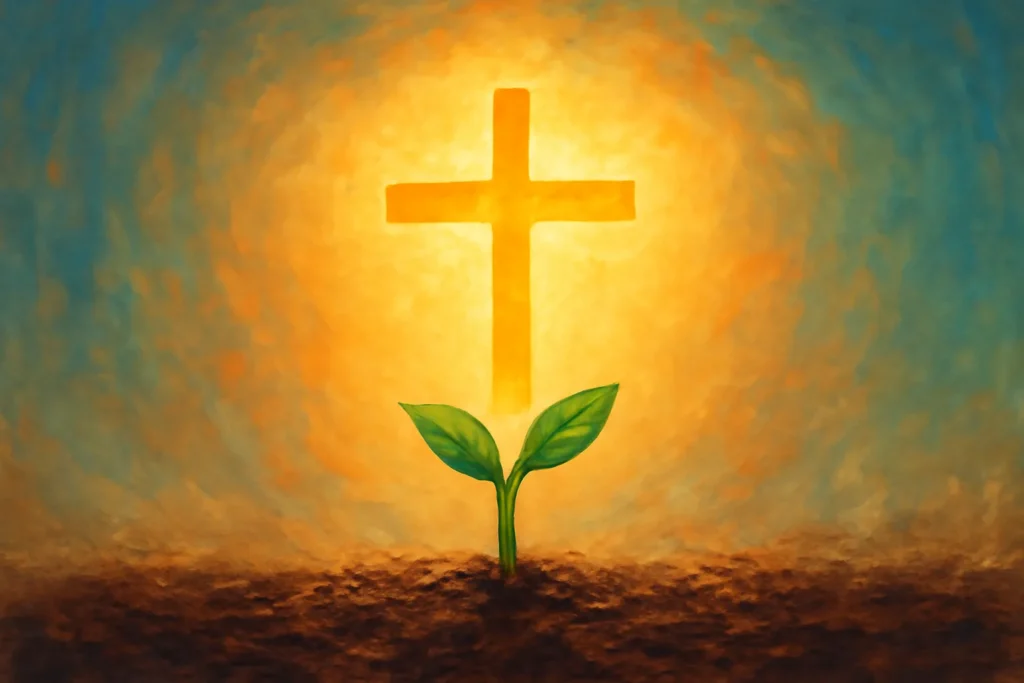
In Christian theology, the phrase new creation or new creation in Christ signals a radical shift that begins at the moment of salvation and extends into every area of life. When the Apostle Paul writes that we are in Christ, he is describing more than a moral upgrade; he is describing a transformative status. The old life, defined by sin and separation from God, gives way to a life infused by grace, purpose, and belonging. This web of ideas—new creation, transformation, and identity in Christ—forms the centerpiece of what it means for believers to inhabit a reality that God began to unfold in them at conversion and continues to develop through sanctification.
The language of new creation is rich and nuanced. It implies not merely a fresh start, but a comprehensive reorientation of a person’s whole life—mind, heart, will, relationships, and calling. For many readers, the phrase new creation in Christ meaning carries multiple layers: a spiritual renewal, a new relationship with God, and a new posture toward the world. This article explores those layers, tracing biblical foundations, weaving in theological insight, and offering practical guidance for living out this profound reality day by day.
The concept of a new creation in Christ carries several interconnected strands. While it is ultimately rooted in the work of God—often described as regeneration or new birth—it also translates into a lived experience of freedom, purpose, and community. The following sections identify core facets of the new creation in Christ meaning and show how they manifest for believers.
Identity redefined: from old self to new creation
Central to the meaning of new creation is a redefined identity. The believer is no longer defined primarily by past sins, failures, or social roles but by belonging to Christ. The phrase in Christ recurs in Scripture to describe this insider status: a person’s life is now bound to the risen Jesus, shaping values, priorities, and day-to-day decisions. In practical terms, this means:
Adopted identity as a child of God and co-heir with Christ.
Righteous standing before God, attributed by grace through faith.
New cognitive posture toward truth, grace, and mercy, replacing old patterns of fear, shame, and self-reliance.
Reconciliation and relationship: with God and with others
A new creation in Christ meaning extends beyond the individual into relationships. The reconciling work of Christ restores broken vertical and horizontal relationships. Believers are called to live as peacemakers, ambassadors of reconciliation, and instruments of love in community. Key aspects include:
Reconciliation with God through the forgiveness offered in Jesus.
Fellowship with believers as members of one body.
Love in action that reflects the heart of the gospel to neighbors and enemies alike.
Foundations in Scripture: where the idea originates
The New Testament anchors the concept of a new creation in the work of Christ and the ministry of the Holy Spirit. Two verses frequently cited to convey this message are the following: Paul’s declaration that anyone in Christ is a new creation, and the promise that believers are being transformed into the image of Christ from one degree of glory to another. The language is vivid and participatory: God initiates the change, and believers participate by faith, repentance, and daily obedience.
Key biblical anchors
2 Corinthians 5:17: “Therefore, if anyone is in Christ, he is a new creation.” The verse emphasizes that the moment of faith in Christ inaugurates a new kind of life—one defined by belonging to Jesus and marked by transformation.
Galatians 6:15: “For neither circumcision nor uncircumcision means anything; what counts is the new creation.” Here, Paul clarifies that external markers are secondary to the ongoing work of God in a person’s life.
1 Peter 1:3 and 2 Peter 1:4 describe God’s mercy and the invitation to share in the divine nature, underscoring the participatory aspect of being made new in Christ.
Understanding the new creation in Christ meaning has practical consequences for how a believer lives. It affects motivations, choices, and relationships. The transformation is not merely inward; it becomes visible in outward conduct—what people do, why they do it, and how they treat others.
The transformation associated with the new creation is comprehensive. It touches the inner life (desires, thoughts, emotions), the outer life (behavior, habits, routines), and the social life (family, work, community). Some of the most observable outcomes include:
Renewed desires toward holiness, goodness, and justice.
Holistic sanctification that integrates heart, mind, and actions.
Empowered service in love, generosity, and mission.
Freedom from the tyranny of sin
A foundational aspect of the new creation in Christ meaning is freedom from the dominion of sin. Although believers may still struggle with temptation, they are no longer under the same ruling power. The Spirit works to empower obedience and to cultivate a life marked by integrity and mercy. The shift from oppression to freedom is a hallmark of living as a new creation.
Being a new creation also reframes a believer’s identity within the church and broader society. In Christ means belonging to a new community with a shared mission. This identity is not primarily cultural or political; it is spiritual and relational. It means that your primary allegiance is to the Lord, and your primary purposes are shaped by the gospel.
Participation in the body of Christ
The new creation in Christ meaning includes a call to participate in the life of the church. The church is the community where the Spirit shapes, equips, and sends saints for ministry. Members are equipped for service, encouraged to grow in grace, and sent to bear witness to the world. Practical expressions include worship, baptism, the Lord’s Supper, teaching, and mutual accountability.
Knowing the truth about being a new creation in Christ should translate into measurable changes in daily living. The following practical pathways help believers inhabit this reality with clarity and hope.
Faith that engages the mind and heart
True transformation begins in the mind and heart. Believers are invited to renew their minds by engaging with Scripture, praying for discernment, and cultivating a trustworthy posture toward God. Some actionable steps include:
Regular worship and confession that center the heart on God’s grace.
Studying the Bible to know the Father’s character and Jesus’ work more deeply.
Practicing spiritual disciplines that foster dependence on the Spirit’s leading.
Ethics and character shaped by grace
The new creation meaning has a clear ethical dimension. Believers are called to reflect the holiness of God in how they speak, act, and relate to others. Changes may include:
Honesty and integrity in speech and conduct.
Compassion and hospitality toward the vulnerable.
Peacemaking and forgiveness as default responses to conflict.
Hope and perseverance in a broken world
The concept of being a new creation carries hopeful momentum. It looks forward to God’s promised restoration and shapes resilience in the face of suffering. Believers learn to endure by anchoring their hope in Christ and in the knowledge that God is at work within them, both to will and to do for his good pleasure.
The transformation described by the new creation is not a human project alone; it is the work of the Holy Spirit in concert with human trust and obedience. Spiritual formation includes growth in virtue, wisdom, and character as God fashions believers to be more like Christ.
Regeneration and sanctification: how these ideas relate
Two theological terms frequently used in tandem with new creation are regeneration and sanctification. Regeneration is often described as the moment the Holy Spirit gives new life—making a person spiritually alive. Sanctification is the ongoing process of becoming more holy in character and behavior. The interplay of these concepts shows that the new creation in Christ meaning spans both an instant and a lifelong journey.
As with any profound biblical idea, readers frequently ask for clarity on certain aspects of the new creation in Christ meaning. Here are some common questions and concise answers.
Is becoming a new creation a one-time event or a process?
It begins as a one-time event—the moment of faith in Christ—often described as regeneration. However, its effects are experienced continually as the Spirit works to sanctify the believer. So, it is both a decisive moment and an ongoing process.
Does a new creation mean perfection here and now?
No. Being a new creation does not imply flawless performance. It does mean that the trajectory of life is redirected toward God’s purposes, and growth is expected to accelerate as the Spirit matures the believer. The presence of ongoing struggle does not negate the reality of new life; it clarifies the need for grace and perseverance.
How does this affect my daily choices at work, home, and school?
The new creation framework gives a consistent metric for decision-making: what aligns with God’s character, what promotes love, and what advances the gospel. It changes motives (seeking God’s glory rather than personal gain), methods (gentleness, service, truth-telling), and outcomes (peace, reconciliation, justice).
Churches and Christian communities benefit greatly when they preach and embody the new creation in Christ meaning. Encouragement, accountability, and shared disciplines help believers stay rooted in the gospel while growing into the fullness of what God intends.
Regular biblical instruction that foregrounds grace and transformation.
Mutual accountability structures that nurture faithfulness and repentance.
Acts of service that demonstrate the gospel to a watching world.
Throughout church history, theologians have described the concept of a new creation in Christ with a consistent emphasis on union with Christ, the role of the Spirit, and the transformation of identity. Early church writers highlighted the radical change that accompanies salvation, while reformers reinforced the sufficiency of grace and the ongoing call to repentance. Contemporary Christian thinkers continue to emphasize that this transformation is both personal and social—affecting families, neighborhoods, and systems of injustice. The broad consensus is that the new creation is as much about who God makes us to be as it is about what God calls us to do.
In a world filled with competing narratives, the identity offered by the new creation in Christ meaning provides ballast for the believer’s hope. Staying rooted involves daily trust in God’s promises, regular engagement with Scripture and prayer, and active participation in a community that models grace.
Mediate on grace—recall that your standing before God is a gift, not a performance.
Practice forgiveness—let reconciliation flow as a witness to the gospel.
Live missionally—let your daily routines point toward God’s purposes in the world.
In sum, the message of a new creation in Christ meaning affirms that God, through Jesus, makes all things new. This renewal is not a temporary patch but a reordering of reality—shaping how a person loves, serves, and hopes. It is a truth that invites believers to embrace a life of transformed devotion, empowered by the Spirit, grounded in the gospel, and lived out within the church and in the public square.
For anyone seeking to understand what it means to be a new creation in Christ, the journey begins with faith in Jesus, continues with ongoing growth toward Christlikeness, and culminates in a life that bears witness to the liberating, reconciling, and beautifying work of God. The invitation stands: step into the reality of being in Christ, and let the old life pass away while the new creation unfolds in every area of your existence.








Leave a Reply