Why Do Jewish People Celebrate Passover? Meaning and Traditions
Why Do Jewish People Celebrate Passover? Meaning and Traditions
Passover, or Pesach in Hebrew, is one of the most deeply observed holidays in the Jewish calendar. It blends ancient history with living ritual, turning memory into practice and practice into community. For many Jews, Passover is not only a retelling of liberation from Egyptian bondage, but also a renewal of commitments to family, justice, and learning. The festival invites participants to reflect on what it means to be free, to remember those who suffered, and to pass along those lessons to children and neighbors. Whether observed in grand ceremonial settings or intimate family meals, the core question people ask about this season is often expressed in different ways: why do Jewish people celebrate Passover? What makes the holiday meaningful across generations and across cultures? And how do the ancient stories translate into daily life today?
At its heart, Passover is a celebration of liberation. The name Pesach comes from the idea of passing over the doors of the Israelites during the tenth plague, when the firstborn of Egypt were affected while the Israelite households were spared. Across millennia, the observance expanded from a single night of sacred memory into a week-long or, in many communities, eight-day cycle of prayer, storytelling, and shared meals. The holiday is sometimes described as a bridge between remembered past and living present: a tangible link that connects ancient ancestors to contemporary families.
Why is Passover celebrated? The meaning in Jewish life
A thoughtful answer to why do Jews celebrate Passover must acknowledge several intertwined dimensions. First is historical: the Exodus from Egypt stands as a foundational moment in Jewish history, establishing a people and a covenant. Second is theological: the narrative reinforces a monotheistic awareness and a sense that God acts in history to liberate the oppressed. Third is ethical and social: the memory of slavery becomes a call to justice, encouraging mercy toward the vulnerable and a renewed commitment to freedom for all. Finally, Passover is familial and educational: it is designed to transmit memory across generations, allowing children to ask questions and adults to provide meaningful answers.
Across communities, people describe the purpose of Passover with slightly different emphases, which is why you will encounter phrases like what does Passover mean for Jewish identity, the significance of Pesach, or the purpose of the Seder in contemporary life. Some emphasize the historical narrative as a moral tale about human oppression and the possibility of redemption. Others highlight the ritual structure as a method for creating memory that persists in shifting social circumstances. Still others stress the social responsibilities that arise from liberation: justice, hospitality, and care for the stranger. All of these perspectives share a common commitment to remembering and rebuilding a more humane world.
Origins and narrative: the Exodus story in sacred text
The story that underpins the holiday is rooted in the Torah and later rabbinic interpretation. It begins with a people enslaved in Egypt and ends with a journey toward the land of Israel and a new national identity. For many, the most essential elements of the Exodus narrative include:
Oppression under Pharaoh, which sets the stage for a dramatic intervention by God and Moses.
Divine action through a series of plagues that culminate in deliverance.
Release from slavery and the journey toward freedom, often described as a pilgrimage from bondage to possibility.
Formation of a covenant between God and the people, with laws and ethical obligations that shape communal life.
Some households also emphasize the moral complexity within the narrative: liberation is a powerful good, but it also carries responsibilities, such as caring for others who remain in need and confronting social injustice in one’s own time. This breadth is part of why Passover resonates today, as communities interpret the ancient story in ways that speak to present-day concerns.
The Seder: structure, ritual, and the art of retelling
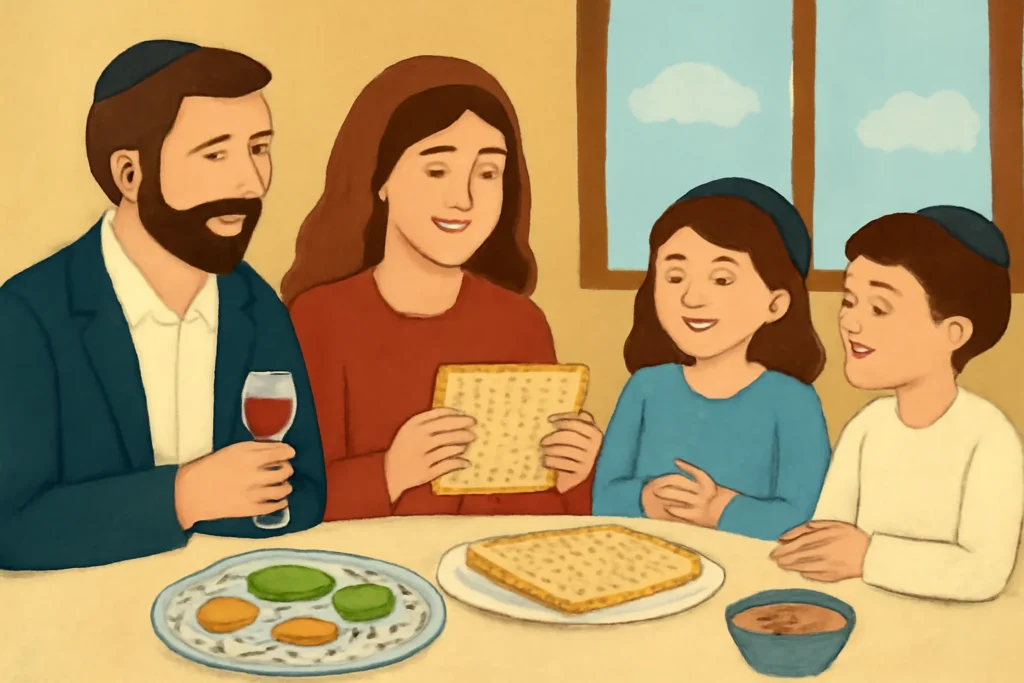
The Seder is the centerpiece of Passover observance for many families. A Seder is more than a meal; it is a guided, participatory retelling of the Passover story, designed to engage all ages and stimulate questions. The order is traditional and teaches through activity, sound, taste, and symbol. In many homes, the Seder is the annual event that brings relatives near and far into one shared moment of memory and meaning.
The 15 steps of the Seder
The traditional Seder follows a sequence known as the Maggid or Seder steps. While different communities emphasize variations, the standard framework includes:
Kadesh —sanctification of the holiday with a blessing over wine.
Urchatz —ritual washing of hands, without a blessing.
Karpas —dipping a vegetable (usually parsley or celery) in saltwater to recall tears and the springtime symbol of renewal.
Yachatz —breaking the middle matzah, with the larger piece kept for the meal and the smaller piece later used as the afikomen.
Maggid —the storytelling portion, including the Four Questions and the retelling of the Exodus.
Rachtzah —second washing of hands with a blessing, in preparation for eating matzah.
Motzi Matzah —blessings over bread and the command to eat matzah.
Matzah —eating unleavened bread as a reminder of the haste with which the Israelites left Egypt and the absence of time for bread to rise.
Maror —eating bitter herbs to symbolize suffering and oppression.
Korech —the Hillel sandwich, a combination of matzah and maror wrapped together with charoset for taste and memory.
Shulchan Orech —the festive meal, a central moment of communal bonding.
Tzafun —consuming the afikomen, the hidden piece of matzah that is found and eaten as dessert.
Barech —blessing of gratitude after the meal, including the blessing over bread and the Grace After Meals (Birkat Hamazon) adapted for Passover.
Hallel —psalms of praise, recited or sung during the meal or afterwards.
Nirtzah —closing prayers and invitation for future celebrations to be meaningful and inclusive.
In addition to the textual sequence, the Seder involves direct participation by guests and family members. Children are encouraged to ask questions, and elders answer, ensuring the memory is not static but a living exchange. The Haggadah, the guiding text for the Seder, provides the script and the interpretive scaffolding. It is common to see variations of the Haggadah across denominations and communities, each adding readings, songs, or poetry that reflect local culture while preserving core themes such as freedom, responsibility, and gratitude.
The Seder plate: symbols of memory
The Seder plate collects the central symbols of the holiday, each with a distinct meaning. The plate typically includes:
Beitzah — a roasted egg, symbolizing both the cycle of life and the sacrifices offered at the Temple in ancient times.
Zeroa — a roasted bone (often a shank bone) representing the Passover sacrifice brought at the Temple and the broader theme of offerings and gratitude.
Karpas — a vegetable (often parsley or celery) that is dipped in saltwater to recall tears and renewal.
Maror — bitter herbs (usually horseradish), standing for the bitterness of oppression.
Charoset — a sweet mixture of apples, nuts, wine, and spices, symbolizing the mortar used by the Israelite enslaved community in Egypt and, paradoxically, the sweetness of eventual liberation.
Chazeret — a second bitter herb, sometimes included as an additional reminder of bitterness and resilience.
Core traditions and ritual foods: how the senses bring meaning
Passover traditions engage multiple senses and emphasize communal participation. The foods, the prayers, and the rituals work together to create a sensory memory that learners can carry beyond the Seder table. The question how is Passover celebrated often expands into practical practices that families weave into their home life for the entire week, and sometimes beyond it.
Key dietary observances during Passover
Matzah — eating unleavened bread is the defining dietary custom, symbolizing both the haste of the Exodus and a call to simplicity and humility in eating.
Chametz avoidance — removing leavened products from the home before Passover begins and refraining from consuming anything made with leaven. This practice extends to prohibiting owning or benefiting from chametz during the festival.
Charoset and bitter herbs — the balance of sweet and bitter flavors reflects the complexity of liberation: suffering and sweetness intertwined.
Families also engage in the cleaning and removal of chametz in advance of the holiday. The process, known as biur chametz, is both practical and symbolic: it invites people to clear away arrogance, excess, and lingering pride in order to make space for clarity and renewal.
From symbolism to daily life: themes that endure
The symbolism of Passover remains relevant across generations. The themes of freedom, memory, and justice translate into a broad range of contemporary concerns, from human rights to social responsibility. For many, the festival offers a framework for discussing oppression and for imagining what it takes to create a more just society. The idea of liberty is not only about personal relief but about the possibility of a healthier and more humane world. In this sense, Passover meaning goes beyond a historical event to become a living ethical project.
Different strands of practice: diversity within Jewish life
Across the Jewish world, the way Passover is celebrated varies according to tradition, geography, and denominational practice. Orthodox families may adhere to strict rules about ritual purity and the order of the service, while Reform and Conservative communities often embrace inclusive readings and creative additions to the Haggadah. Some communities emphasize deep study with commentaries from rabbinic authorities; others prioritize family storytelling and accessible education for children. The core ideas of memory, liberation, and responsibility weave through these differences, providing continuity even as styles and customs shift.
Passover in the diaspora and in Israel: shared rituals, different rhythms
In Israel, the holiday typically lasts seven days, while many diaspora communities observe eight days. This difference in duration reflects historical calendars and religious practices that have evolved in various contexts. Nonetheless, both settings feature a Seder that gathers people around table and story, a removal of chametz, and a shared sense of renewal. The diaspora communities, in particular, often emphasize intergenerational learning, with grandparents guiding grandchildren through the questions and answers that are the heart of the Seder. In Jewish communities around the world, technology and travel have enabled families to connect across distances, making the Seder a moment of virtual as well as physical proximity.
Lessons for today: ethical dimensions of a liberation narrative
The story of the Exodus invites reflection on the conditions that produce bondage and the structures that prevent oppression. Contemporary readings of Passover often focus on:
Solidarity with refugees, migrants, and those who are displaced, recognizing a shared human longing for safety and dignity.
Hospitality toward guests and strangers, echoing the biblical injunction to welcome and protect others in times of vulnerability.
Social justice as a spiritual imperative—translating memory into action to improve communities and systems.
Education about history and ethics—for both children and adults—as a lifelong project, not a one-time event.
For many families, these lessons become visible in charitable giving, acts of hospitality, or community service during the weeks surrounding Passover. The festival thus serves not only as a memory of the past but as a catalyst for concrete action in the present.
The timing of Passover is linked to the Hebrew lunar calendar. It begins on the 15th day of the month of Nissan and lasts seven days in Israel and some traditional communities, and eight days in many Diaspora communities. The first night is typically marked by the Seder, and the final days emphasize communal prayer and study, sometimes concluding with special services. Because the lunar calendar shifts with respect to the solar year, the dates of Passover drift by approximately one day each year in the civil calendar. The preparation often begins weeks in advance, with the removal of chametz and the purchase of festive foods, ensuring a smooth transition into the Seder and the days of the festival.
A central aim of Passover education is to teach memory as a living practice. The Seder encourages questions, debate, and curiosity, allowing children to participate actively in the storytelling. The guiding text, the Haggadah, functions as a pedagogical tool that introduces key concepts, invites commentary, and accommodates a range of voices. Families may insert modern readings, songs, or personal stories, helping the tradition remain vibrant while staying anchored in its core messages. Through this pedagogy, the question why do Jewish people celebrate Passover becomes a gateway to broader conversations about freedom, identity, and responsibility in the modern world.
The symbols of the festival—wooden matzah, fragrant herbs, bitter greens, and a plate crowded with meaning—do more than remind participants of the past. They offer a vocabulary for resilience in the present. The ritual acts are compact, memorable, and teachable, making Passover symbolism accessible to people of all ages and backgrounds. The repetition year after year strengthens communal ties and provides a shared language for discussing oppression, courage, and deliverance. In many communities, the experience becomes a cooperative enterprise—parents, grandparents, teachers, and clergy all contribute to a shared sense of purpose.
As societies grapple with new forms of injustice, the message of Passover remains urgent. The narrative of a people who were once enslaved and who gained freedom through faith, leadership, and collective effort invites readers and listeners to imagine better futures. The festival’s call to remember those who are still in bondage—whether through poverty, discrimination, or political oppression—calls for action. The connection between memory and responsibility—between remembering oppression and working for justice—is perhaps the most enduring element of the Passover message.
For many people, the most striking feature of Passover is not the ritual itself but the way it invites inquiry. The Four Questions, traditionally recited by the youngest participant, embody a pedagogical ethos: curiosity is valued, and every answer naturally leads to deeper questions. This cycle of inquiry and explanation helps preserve a dynamic dialogue across generations. It also emphasizes that knowledge is communal, not private, and that learning flourishes when voices from different ages and backgrounds are welcome at the table.
Music and liturgical poetry contribute to the atmosphere of the Seder and to the lasting impact of the festival. Many homes sing traditional songs that summarize the themes of the night, while others incorporate contemporary or improvised verses that reflect current events, gratitude, or personal stories. The melodies elevate the experience and make the memory more vivid, helping the lessons of Passover to endure beyond the table and into daily life.
The social dimension of Passover is central to its meaning. The Seder is often a family affair, but it is also a communal event that welcomes guests, strengthens bonds, and creates shared memories. The intention is to make the holiday accessible to all participants, including children, guests who are new to Jewish practice, and people from diverse backgrounds. The sense of inclusion reinforces a broader ethical mission: hospitality toward strangers and the creation of spaces where people can learn, question, and grow together.
In many communities, the lead-up to Passover also includes charitable initiatives, community meals, and educational programs that explore the themes of freedom and responsibility. By integrating acts of generosity and service with ritual observance, communities demonstrate that Passover is not only a memory of what happened long ago but a living call to action in the present.
Across time and place, the way Passover is celebrated continues to adapt while preserving its essential message. Some modern families incorporate interactive elements, such as filmed readings, digital Haggadot, or family interviews that capture personal experiences of freedom and struggle. Others emphasize environmental or social themes in their readings, highlighting contemporary forms of oppression, or exploring questions of immigration and human dignity. The result is a vibrant, evolving tradition that honors the past while remaining deeply relevant to today’s world.
The festival’s adaptability is, in part, what ensures its longevity. When communities retell the story of the Israelites' escape from bondage, they weave it into a broader tapestry of human rights and shared responsibility. The repeated practice of telling the story—through food, prayer, song, and discussion—creates a durable moral framework that individuals can carry into their personal lives, their workplaces, and their civic commitments.
The question why do Jewish people celebrate Passover is ultimately a doorway into a larger inquiry about memory, liberty, faith, and community. Passover invites people to remember not only the hardships of the past but the possibility of turning memory into constructive action in the present. It asks each generation to consider how freedom is defined, who is included in that freedom, and what responsibilities accompany the gift of liberty. Through the rituals, stories, and shared meals, the festival offers a holistic approach to living with purpose: honor the past, learn in the present, and act for a more just future.
In summary, Passover is a multi-dimensional festival whose meanings touch history, theology, ethics, education, and daily practice. Its enduring appeal lies in its ability to bring people together to remember, question, learn, and act. Whether viewed as a historical commemoration, a family celebration, or a collective vow to improve the world, the holiday remains a powerful reminder of what it means to be free, to be responsible, and to care for one another.






Leave a Reply