What Does Baptism Mean in the Bible? A Biblical Explanation
Baptism in the Bible is not a single, simple act; it is a layered practice that operates on personal, communal, and cosmic levels. In Scripture, the word often rendered baptism or baptize comes from the Greek term baptiZO (baptizo), which literally means to dip, plunge, or immerse. This act is not merely about water; it is a symbolic and covenantal gesture that signals a change of identity, allegiance, and destiny. Throughout the biblical story, baptism functions as a spiritual doorway—an invitation to participate in God’s promises, a sign of repentance and faith, and a doorway into the life of the church and the Spirit. In this article we explore the biblical meanings, the key passages, the historical development, and the practical implications of baptism for Christians today.
Foundational Meanings and Biblical Terminology
To understand what baptism means in the Bible, it helps to start with the core semantic field. The primary sense of baptism is immersion or washing, but in the New Testament world it quickly becomes more than a physical act. It is a ritual that carries at least four interwoven significances:
Identification with the subject of the rite—Jesus, the Messenger, or the believing community.
Purification and repentance—a turning away from sin and toward God.
Inclusion into the people of God—an initiation into the covenant community.
Entrance into new life and the Spirit—an anticipation of the transforming work of God within a person.
In addition to these, the biblical vocabulary distinguishes between water baptism (the outward sign) and baptism in the Spirit (the inward, spiritual act of being united to Christ and his body). The phrases “baptized with water” and “baptized by the Spirit” appear across the New Testament and illuminate how baptism operates on personal, ecclesial, and cosmic levels. The biblical picture is not reductionist: water baptism marks a cosmic entry into the story of God, while Spirit baptism confirms the inner reality of that membership and graces the believer for service within the church and the world.
Baptism as a Sign, a Symbol, and a Covenant
In Scripture, baptism functions as a sign that points beyond itself to deeper realities. It is a sign of repentance, faith, and commitment to Jesus. It is a symbol that draws attention to Christ’s death, burial, and resurrection—death to the old life, burial of the old self, and the new life in Christ. And it is a covenant sign that binds the believer to God and to the covenant community of faith. This triad of sign-symbol-covenant helps explain why baptism has been so central in Christian practice from the earliest days onward.
Several strands in the biblical narrative illuminate these ideas:
The death and resurrection imagery is foregrounded in Paul’s baptism language, such as being buried with Christ in baptism and raised to walk in newness of life (Romans 6:3–4). This is not merely a metaphor; it is a profound spiritual reality enacted through the sign of water.
In Jesus’ baptism, the divine endorsement—the Father’s voice and the Spirit descending—alerts readers to the baptism’s function as an inauguration of Jesus’ mission and an identification with humanity (Matthew 3:16–17).
The apostolic preaching links baptism with forgiveness and the reception of the Holy Spirit, thereby connecting the rite to the gracious work of God in conversion (Acts 2:38; Romans 6:3–4).
Across the New Testament, baptism is never presented as a mere ritual of personal cleansing apart from faith, nor as a private, optional ceremony. It is relational, ecclesial, and transformative—an outward confession that accompanies inward trust in Christ and an entry point into the life of the Spirit-led community.
Key Biblical Passages and Their Teachings
Several pivotal passages shape the biblical understanding of baptism. Here are compact sketches of how these texts contribute to the broader picture.
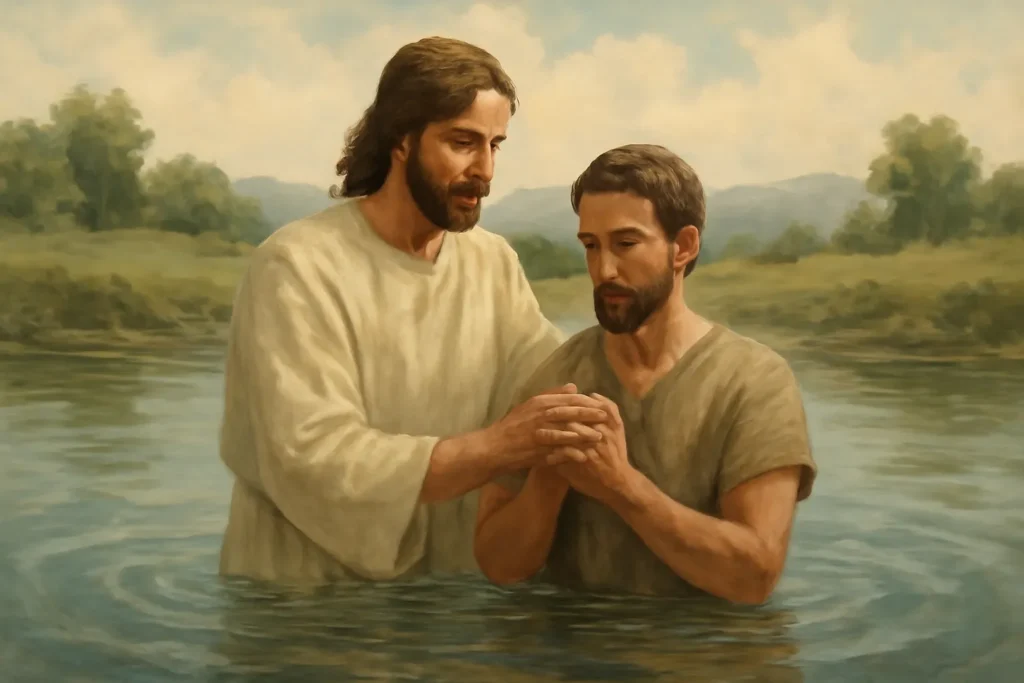
Matthew 3:13–17 – Jesus himself undergoes baptism, not because of sin, but to identify with humanity and to begin his public ministry. The Father’s declaration and the Spirit’s appearance affirm baptism as a legitimate and divinely sanctioned act that inaugurates the Messiah’s mission. The act signals alignment with God’s plan and readiness for ministry.
Matthew 28:19–20 – The Great Commission commands disciples to baptize in the name of the Father, the Son, and the Spirit, and to teach Jesus’ followers to observe all that he commanded. This passage positions baptism as a corporate mandate, marking entry into the trinitarian life of the church.
Mark 1:4–5 – John the Baptist’s ministry of repentance confesses a pivotal connection: baptism as a call to turn from sin in anticipation of God’s kingdom. The crowd’s response demonstrates baptism’s role in public confession and spiritual preparation.
Acts 2:38 – Peter’s preaching links baptism to forgiveness of sins and the gift of the Holy Spirit: repentance, forgiveness, and Spirit reception are woven together in the baptismal act for the earliest Christian community.
Romans 6:3–4 – Paul uses baptism to illustrate believers’ participation in Christ’s death and resurrection: the believer dies to the old life and rises to a new life, a paradigm of ongoing discipleship and moral transformation.
Colossians 2:12 – Baptism is described as a burial with Christ in which the old self is spiritually buried and the believer is raised with him. The rite symbolizes cleansing and the ongoing renewal of the covenant life.
1 Corinthians 12:13 – The one Spirit unites all believers into one body, emphasizing that baptism also functions as the Spirit-initiated entry into Christ’s body, the church. This highlights the ecclesial dimension of baptism.
Galatians 3:27 – Paul says that those who belong to Christ have clothed themselves with Christ through baptism, underscoring the identification and new identity that come with the rite.
These passages together present baptism as a multi-faceted act: it is a public confession of faith, a ritual of cleansing, an initiation into Christ’s death and resurrection, and a doorway into the Spirit-enabled life of the church.
John the Baptist: Preparation and Repentance
John’s baptism is a foundational precursor to Christian baptism. It signals a call to repentance and a readiness to receive the coming kingdom. John’s own baptism was not yet Christian baptism; it prepared the way for Jesus by calling people to turn away from sin and to confess their need for God’s mercy. When Jesus comes to John to be baptized, it confirms Jesus’ solidarity with sinners and his identification with humanity. The event foreshadows the deeper reality of baptism in Christ—what it means to be washed not merely in water, but in the grace and life that flow from the Messiah.
In reading John’s role, we observe the continuity and difference between John’s baptism of repentance and the Christian baptism in the name of Jesus. The former points toward the coming of Jesus; the latter announces that Jesus has come, fulfilled the prophetic hope, and now invites all who believe into a new covenant life.
Jesus’ Baptism: Identification, Mission, and the Beginning of Public Ministry
Jesus’ baptism stands at a crucial hinge in the gospel narratives. Although Jesus was without sin, his baptism serves several purposes that illuminate the meaning of baptism for all followers:
Identification with humanity and solidarity with sinners who seek God’s mercy.
Divine endorsement of Jesus’ mission, as the Spirit descends like a dove and the Father affirms the Son’s identity.
Inauguration of Jesus’ public ministry—baptism marks the turning point from hidden life to visible mission, a pattern echoed in the life of the church.
Thus, Jesus’ baptism anchors Christian baptism in a theological event: the Son receives the Spirit’s empowerment for mission, and believers are invited to participate in that same dynamic by honoring baptism as the sacral moment when God’s gracious action is witnessed and received.
Water Baptism, Spirit Baptism, and the Christian Reality
Scripture often draws a distinction between water baptism and baptism in the Spirit, though they are closely connected. Water baptism is the visible sign by which a believer publicly identifies with Christ and the church. Spirit baptism, in Pauline and Luke-Acts language, refers to the inward work by which the believer is united to Christ, sealed, empowered for mission, and made part of the one body. In Paul’s letters, the Spirit’s work is not opposed to water baptism but completes and clarifies its meaning.
One well-known line is “We were all baptized by one Spirit into one body” (1 Corinthians 12:13), indicating that Spirit baptism levels social and ethnic differences, creating a new, shared identity in Christ. This does not erase the significance of water baptism; rather, it explains how the outward rite and the inward reality work together to form a vibrant Christian life.
Baptism Modes and Practices in the New Testament and Early Church
The New Testament does not spell out a single correct mode for baptism. The Greek text emphasizes immersion, yet the practice of the early church shows flexibility in how water baptism was administerd, driven by practical constraints and available means. The following observations help clarify the biblical landscape:
Mode: The Greek verb and context allow for immersion, but the text does not forbid pouring or sprinkling in some settings. The essential point is not the mechanical method but the symbolic act of being identified with Christ and welcomed into the community.
Agents: Baptism is typically commanded to be carried out in the name of the Father, Son, and Spirit, and administered by those authorized by Scripture (the church or its appointed leaders) who preach the gospel and facilitate entry into the fellowship.
Context: Baptism occurs in the setting of faith, repentance, and conversion, not as a magical turn-by-itself. It is paired with teaching and discipleship in the Christian life.
Early practice: The earliest followers who believed the gospel were baptized after confessing faith, often soon after conversion, as recorded in Acts and the epistles.
In church history, debates emerged about the mode and the age of the baptism recipient. Some traditions emphasize full immersion as the ideal and most faithful expression of the symbolic death and resurrection; others permit pouring or sprinkling in certain circumstances or for infants. The biblical core remains: baptism is a divinely instituted sign and seal of incorporation into Christ and his people, tied to repentance, faith, and discipleship.
Infant Baptism, Believer’s Baptism, and Theological Perspectives
Throughout Christian history, two broad streams have shaped practice and doctrine. It is important to understand the biblical rationale and the main objections or affirmations offered by each position:
Believer’s baptism (adult baptism): Proponents argue that baptism intends a conscious personal profession of faith. The biblical rationale emphasizes the necessity of a response of faith to the gospel, and thus baptism follows belief. This view often foregrounds personal confession, voluntary commitment, and discipleship.
Infant baptism (paedobaptism): Proponents see baptism as the new covenant sign that joins the child to the people of God, paralleling circumcision in the Old Testament as a sign of inclusion and blessing. They argue that faith can be present in the life of the child and that baptism marks the start of a life-long formation in the faith, with the expectation that the child will later respond in personal faith.
Both streams aim to honor the biblical motifs of cleansing, belonging, and transformation. In discussing these perspectives, it is helpful to recognize the shared conviction that baptism points to a deeper reality: the person’s incorporation into Christ and into the community of faith where the Holy Spirit works to form Christlikeness.
Practical Implications for Believers Today
What does all this mean for Christians living in the present day? Several practical implications follow from the biblical vision of baptism:
Profession of faith emerges as a central expectation: baptism is typically connected to a personal trust in Jesus Christ and the confession of that faith before the church.
Public identification with Jesus and his people is a defining aspect: baptism marks a transition from isolation to belonging within the body of Christ.
Spiritual renewal accompanies the rite: baptism is not a magic act but a sign that accompanies the Spirit’s work of inward transformation and ongoing sanctification.
Covenant continuity connects baptism to the broader narrative of God’s covenant people: it places the believer within the story of Israel and the church’s mission to bear witness to God’s grace in the world.
Missional shapes—baptism invites believers into a life of mission and discipleship: the community collects new members who are committed to following Jesus and to teaching others to do the same (the Great Commission).
In contemporary worship and ministry, churches often present baptism as a public celebration of grace, a teaching moment for the faith community, and a visible sign of spiritual reality. This means that baptism Sunday is not merely about water; it is a proclamation of the gospel and a commitment to a life in Christ. Boldly and lovingly, churches remind new believers that they are now part of a family called to love God and neighbor as they grow in faith.
What is the purpose of baptism? It is a public confession of faith, a sign of cleansing from sin, an initiation into the church, and an invitation to live a life empowered by the Spirit.
Who should be baptized? In many traditions, baptism is for those who have confessed faith in Christ; in other traditions, infants may be included as part of the covenant community. The underlying principle is inclusion into God’s people with a call to faith and discipleship.
Is baptism necessary for salvation? Views vary. Some traditions emphasize that baptism is essential as a means of grace connected to salvation; others stress that faith in Christ is primary and baptism is a commanded response that confirms faith. The biblical emphasis, however, consistently links baptism to trust in Christ, repentance, and new life in him.
Does baptism wash away sins? The rite points to cleansing and forgiveness that come from Christ and the Spirit. The outward sign testifies to an inward cleansing that God grants through faith in Jesus.
What about infant baptism? The debate centers on covenant theology, faith, and inclusion. The arguments weigh biblical patterns, covenants, and pastoral concerns about nurture and faith formation in the home and church.
What is the relationship between baptism and communion? Both are Christ-centered rites that nourish faith, symbolize grace, and unite believers in the body of Christ. They function together within the life of the church as visible signs of God’s mercy and faithfulness.
Throughout the biblical record, baptism emerges as a meaningful act that binds a person to God, to Christ, and to a community of faith. It is not an isolated ritual; it is part of a larger story about the old life dying and a new life beginning in Christ. The ritual’s power lies not in the water alone, but in the divine work that accompanies it—repentance turned toward faith, conversion into a life aligned with Jesus, and a Spirit-empowered immersion into the life of the church. The biblical teaching invites believers to view baptism as:
A public confession of trust in Jesus as Lord and Savior.
A sign of inward cleansing that points to forgiveness and reconciliation with God.
A entry into the covenant family of God’s people, united by one Spirit into one body.
A gateway to growth in holiness as believers are strengthened for mission through the Spirit.
In this light, the question “What does baptism mean in the Bible?” can be answered with a synthesis: baptism is a divinely instituted practice that embodies identification with Christ, confesses repentance and faith, inaugurates participation in God’s covenant people, and prepares believers for the Spirit-filled life of service and love. It is both a personal declaration and a communal act that anchors transformation in the gospel narrative. As you study the Bible, allow the various strands—Jesus’ own baptism, John’s preaching, Paul’s teaching on death and resurrection, and the Spirit’s work—to illuminate the rich, multi-layered significance of baptism for faith today.
Key terms to remember: baptism, baptize, water baptism, Spirit baptism, repentance, forgiveness, new life, the church, the covenant, sign, symbol, identification.











Leave a Reply