What Is Tares in the Bible? Meaning, Parable, and Biblical Context
What Is Tares in the Bible? Meaning, Parable, and Biblical Context
The story of tares, often rendered as weeds or darnel, sits at the crossroads of natural observation and spiritual metaphor in the Bible. In the Gospel of Matthew, Jesus tells the Parable of the Wheat and the Tares, a compact teaching that has invited extensive reflection among theologians, pastors, and lay readers for centuries. This article surveys what tares are in historical and biblical context, explains the parable in detail, and considers the wider biblical context in which this imagery appears. Along the way, we will employ variations of the phrase what is tares in the Bible to illuminate semantic breadth and help readers recognize the recurring motifs this term represents across biblical literature.
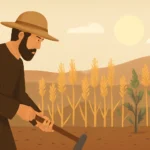
At its most literal level, tares refer to a weed that closely resembles grain crops, especially in its early growth stages. In the Gospel narrative, the field is planted with good seed, but an adversary sows tares amid the crop. The Greek term used in the Gospel of Matthew is zizánion (often transliterated as zizanion), a word that historically denotes a weed that imitates wheat. In many English translations, this term is rendered as tares or weeds, while some renderings use darnel, a real-world plant scientifically identified as Lolium temulentum.
Weeds and darnel are not merely agricultural nuisances; in the ancient Near Eastern rural world, they were a visible symbol of contamination or corruption that could harm crops and, by extension, communities.
In biblical contexts, tares often function as a metaphor for individuals or forces that masquerade as good but harbor a different, often opposing, allegiance.
Theparabolic framework around tares invites readers to consider issues of discernment, patience, and ultimate judgment without prematurely separating the righteous from the wicked.
While a precise botanical identification in ancient times is debated, many scholars highlight the practical truth that darnel looks strikingly like wheat when young and can be mistaken for wheat by the careful observer. The danger lies not only in mislabeling a field’s crop but, in the parable’s deeper sense, in misjudging the true character of persons and communities. The imagery of tares as a counterfeit or deceptive presence sits squarely within biblical poetics that warn against judging by appearances alone.
Historical and Linguistic Background
Greek Roots and Translation
The New Testament Greek word behind tares is zizánion, which appears in the parable in Matthew 13:24-30. In many English Bible translations, zizánion becomes tares or weeds, with some traditions retaining the image of a harmful weed that resembles grain. The choice of translation affects a reader’s mental image: tares carries a more explicit sense of a dangerous plant, while weeds emphasizes an adversarial presence within a cultivated field.
Latin and Early Christian Interpretations
In the Latin tradition, the Vulgate typically uses a term that corresponds to the Greek idea of a weed sown among the wheat. Early Church interpreters often treated the imagery as a moral and theological metaphor: the field represents the world or the church, the good seed the children of the kingdom, and the tares the agents of deceit or the wicked who masquerade as believers. This reading laid groundwork for later Christian moral exhortations about discernment and judgment.
Modern Lexical Variants
Across modern Bible translations, you will encounter a spectrum of renderings for zizánion:
“weeds that look like wheat” (paraphrastic renderings)
Each variant emphasizes a slightly different nuance: the moral peril of deception, the agrarian reality of tangled crops, or the recognition that outward resemblance does not guarantee inner reality. Readers who study the biblical context should note that the image is deliberately provocative: it asks who belongs to the kingdom and who does not, but it also condemns rash, final judgments about that membership.
The Parable of the Wheat and the Tares
The core narrative sits within a concise teaching in Matthew 13, where Jesus speaks to a crowd in parables about the hidden nature of the kingdom of heaven. The parable’s plot unfolds as follows:
A master sows good seed in a field, an act that yields a productive harvest later.
During the night, an enemy sows tares among the standing grain.
When the plants begin to grow and the head bears grain, the servants notice the presence of the tares and ask the master whether to pull them up.
The master forbids uprooting the tares prematurely, explaining that pulling up the tares could also uproot the wheat; instead, both are allowed to mature together until the harvest.
At the harvest, the tares are gathered first and burned, while the harvested wheat is gathered into the master’s barn.
In its narrative symmetry, the parable also includes an interpretation given later in the same chapter. Jesus explains that the field is the world, the good seed are the children of the kingdom, the tares are the sons of the evil one, the enemy is the devil, the harvesters are angels, and the time of harvest is the end of the age. This explicit interpretation clarifies that the parable is not just about agronomy but about moral and eschatological judgment, patience in the present life, and the ultimate separation of good and evil by divine actors at the appointed time.
Key Details to Notice
The instruction not to pull up tares prematurely is a deliberate caution against judging matters before their proper time, a theme echoed in other New Testament warnings against judging motives (for example, in exhortations about love and humility).
The separation at harvest is described as a divine act performed by angels, signaling a shift from human discernment to heavenly judgment at the culmination of history.
The imagery invites reflection on the nature of the field, the growth of the kingdom, and the complexity of human motives—how outward alignment with the visible church does not guarantee inward reality.
A central theological theme in the tares parable is discernment—how to distinguish truth from counterfeit without resorting to rash or cruel judgment. The decision to let both grow together “until the harvest” implies a call to patient discernment, trust in divine governance, and a warning against human overreach in determining who belongs to the kingdom. This has practical implications for church life, including how communities handle rumors, discipline, and fellowship with those who appear to deviate from expected norms yet remain within the broad umbrella of the gospel.
Patience, Endurance, and Eschatology
The parable is not a mere parable about agriculture; it is an eschatological teaching. It underscores that the final judgment belongs to God, not to human communities acting on partial observations. In a broader biblical sense, this aligns with passages that emphasize patience until the Lord’s return and the eventual separation of the righteous from the wicked. The imagery also invites believers to focus on personal faithfulness and corporate integrity while trusting God to bring about complete justice at the end of the age.
Warning Against Hypocrisy and Deceit
The tares are a reminder that appearances can be misleading. The image warns against assuming spiritual status from external signs alone. The parable thus fosters a healthier approach to church life: encourage genuine growth in grace, cultivate a culture of accountability balanced with mercy, and resist the impulse to “pull up” people prematurely based on imperfect assessments.
Across Christian traditions, readers have proposed a spectrum of interpretations about tares, the kind of judgment involved, and the practical implications for ministry and community life.
Symbolic and allegorical readings emphasize that tares primarily symbolize deceitful or hypocritical elements within a community that outwardly resembles believers but lacks true conversion.
Eschatological emphasis frames the parable within end-times expectations, focusing on the certainty of final judgment when “the angels” separate the good from the bad.
Pastoral applications stress patience in discipline, caution against schismatic zeal, and the importance of grace in dealing with apparent outsiders who still belong to the church by faith.
Cosmological readings extend the metaphor to the sovereignty of God over history, reaffirming that divine judgment operates within a larger, often inscrutable, plan.
In Catholic, Orthodox, and various Protestant streams, the parable has been used to discuss the tension between visible church membership and actual internal conversion, the role of angels and demons in spiritual warfare, and the nature of divine mercy. Some traditions stress the need for rigorous pastoral discernment, while others emphasize the transforming power of grace to convert tares into wheat through the work of the Spirit. Regardless of denominational emphasis, the central moral is consistent: the times and motives of people are known to God, and faithful living precedes final judgment.
Related Passages and Cross-References
The imagery of wheat and tares aligns with other biblical passages that discuss purity, judgment, and community life. Notable cross-references help readers see a broader biblical pattern:
Parable of the Net (Matthew 13:47-50) — a final separation of good fish from bad, reinforcing the theme of gathering and division at the eschaton.
1 Corinthians 5 (the discipline of the church) — discussion of purging leaven from the lump and dealing with sin within the community, echoing concerns about purifying the church without prematurely judging individuals.
Romans 14–15 (areas of conscience and discernment among believers) — a call to bear with one another and not to stumble one another over disputable matters, paralleling the parable’s caution about rushing to judgment.
2 Thessalonians 3:6-15 (discipline of disorderly members) — a practical teaching about separation from those who live in disobedience, but within a framework that still emphasizes mercy and order in the church.
Matthew 7:1-5 (judging others) — a reminder to examine oneself before judging others, which complements the tares parable’s emphasis on measured discernment rather than rash condemnation.
Together, these passages illustrate a coherent biblical ethic: live with integrity, exercise discernment guided by truth, and leave ultimate judgment to God, who sees the heart.
Several misconceptions about tares flow from a surface reading of the parable. It is important to distinguish between:
Internal conversion vs. external imitation: Tares symbolize counterfeit believers who imitate the visible signs of faith but lack genuine spiritual transformation. They are not merely “hypocrites” in a casual sense; they embody a deceptive dynamic within the world or church that only final judgment can fully resolve.
Immediate removal vs. eventual judgment: The parable’s prohibition against uprooting tares until harvest cautions against premature, human-driven purging. The ultimate separation is presented as a divine, eschatological act.
Pastoral caution vs. fatalism: While the parable affirms divine judgment, it does not teach passivity in the face of false belief. Christian communities are called to cultivate authentic faith, nurture grace, and pursue truth while trusting God for the final outcome.
A helpful way to think about it is this: tares represent a serious but complex issue—deception and difference—that requires cautious discernment, not a simplistic binary of good vs. evil on every observed line. The emphasis is on fidelity to God’s plan, not on human policing of other people’s hearts.
Practical Takeaways for Modern Readers
Reflecting on what is tares in the Bible yields several practical implications for contemporary faith communities:
Discernment with humility: cultivate spiritual discernment that rests on scripture, prayer, and communal accountability, not on rumor or surface appearance.
Your own heart first: resist the urge to identify tares in others while ignoring your own motives and growth in grace. Self-examination is a constant biblical theme.
Hope in divine justice: recognize that the final, comprehensive separation of good from evil belongs to God. This trust shapes patient endurance in the present while avoiding complacency about falsehood.
Pastoral wisdom in community life: develop practices that preserve unity and integrity—clear boundaries, transparent accountability, and compassionate reintegration where repentance occurs.
The imagery of tares in the Bible is more than a botanical curiosity; it is a compact, multi-layered metaphor that prompts readers to consider authenticity, judgment, and divine sovereignty. In the Parable of the Wheat and the Tares, Jesus crafts a scene that is at once agrarian and cosmic: a field planted with good seed, a hidden foe, and a final, righteous act of separation carried out by divine agents at the appointed time. This literary device invites believers to pursue genuine faith, to resist cynicism about the church, and to entrust ultimate justice to God. By exploring the biblical context, the linguistic background, and the practical implications, readers gain a richer understanding of how the tares image functions within the broader story of Scripture.










Leave a Reply