Seven Words from the Cross: Meanings, Context, and Reflections
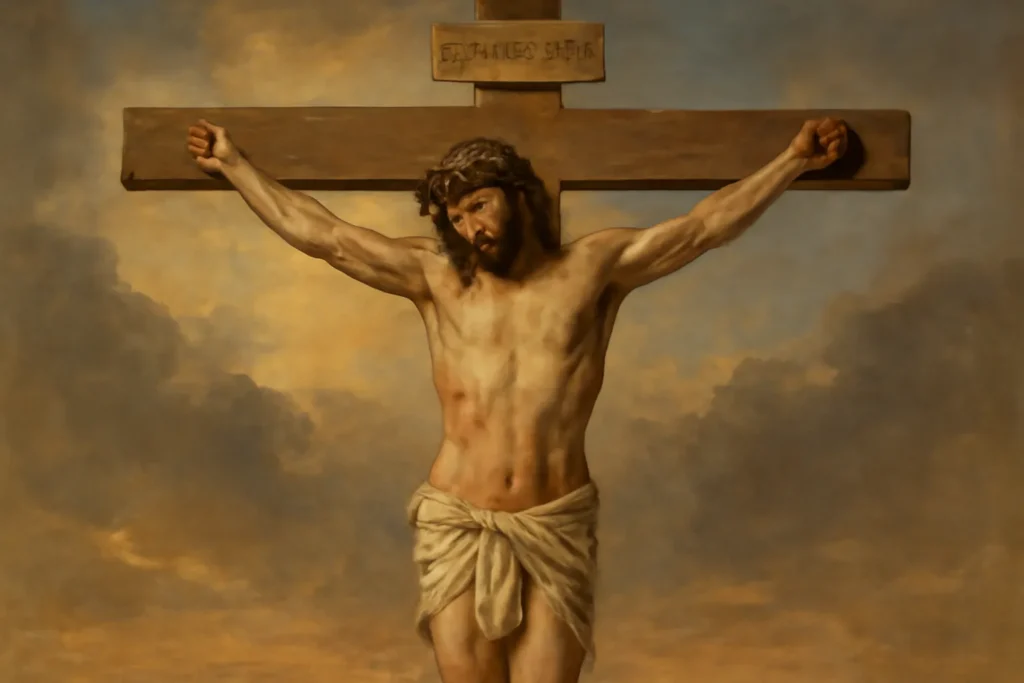
The seven sayings of Jesus from the cross have shaped Christian devotion, theology, and art for centuries. Each brief utterance carries a weight of meaning that transcends its moment in history, inviting readers to contemplate forgiveness, judgment, care, abandonment, thirst, victory, and surrender. This article surveys each saying in its biblical context, explores what it communicates about Jesus’ mission, and offers reflections that readers can apply in daily life, prayer, and ethics. We will use variations in phrasing across translations to show how these words have traveled through language and tradition while maintaining their core significance.
First Saying from the Cross: Father, forgive them, for they know not what they do
The opening cry from the cross is a radical act of mercy. Jesus prays for his executors and for the crowd that has driven him to the impasse of Golgotha, embodying forgiveness in the moment of injury and injustice. This saying appears in Luke 23:34, and its resonance has sparked centuries of reflection about mercy, repentance, and the power of intercession.
Meaning and themes
Forgiveness lies at the heart of this sentence. It redefines the criminals’ and spectators’ actions as opportunities for grace rather than as definitive verdicts of condemnation. The phrase asserts that moral responsibility exists while also offering a higher, divine mercy that surpasses human judgment. In its most distilled form, the saying announces that mercy is available even to those who harm us, a message that challenges natural inclinations toward revenge and retaliation.
Context and setting
Luke places this plea in the crucifixion narrative as Rome’s apparatus of execution performs the ultimate act of coercion. Jesus’ words interrupt the crowd’s and leaders’ responses, creating a counter-narrative to the way humanity tends to respond to violence with retribution. Within the Gospel’s larger program, the cross becomes the stage for forgiveness to be offered before judgment is fully executed.
Translations and variations
“Father, forgive them, for they do not know what they are doing.” (NRSV)
“Father, forgive them, for they know not what they do.” (KJV)
“Father, forgive them, because they do not understand what they are doing.” (various modern paraphrases)
“Father, forgive them, for they know not what they are doing.” (ESV)
Reflections and applications
How does forgiveness extend beyond apology—even to those who crucify another? The call invites readers to practice mercy amid injustice.
Can communities cultivate a culture in which grace is offered before guilt is assessed, breaking cycles of retaliation?
In prayer, this line can become a model for interceding on behalf of others, including those in conflict with us.
Second Saying from the Cross: Truly, I tell you, today you will be with me in paradise
Two cross-era claims fuse into one audience-ready moment—the deathbed mercy that grants immediate entry into the realm of peace. The words spoken to a criminal beside Jesus in Luke 23:43 illustrate a personal dimension of salvation that has long been a source of consolation for believers who fear death or feel unworthy of grace.
Assurance sits alongside forgiveness in this utterance. The promise is not merely that the criminal will be remembered but that a time-anchored proclamation—
Today you will be with me in paradise—asserts an immediacy of divine acceptance and the reversal of shame. The saying foregrounds faith in Jesus as the path to companionship with God, even at the edge of life’s final hour.
Context and setting
Set within Luke’s narrative of mercy, this moment occurs as Jesus is crucified alongside two criminals. One recognizes Jesus, calls him “Lord,” and expresses belief in his kingdom while suffering. Jesus responds with a promise that intersects eschatology (the last things) and soteriology (salvation).
Translations and variations
“Truly, I say to you, today you will be with me in paradise.” (NRSV)
“Truly I say to you, today you will be with me in paradise.” (ESV)
“Truly, I tell you, today you will be with me in paradise.” (NIV)
Reflections and applications
Consider the power of immediacy in grace—no delay is needed when repentance is genuine.
For pastors and lay readers, the saying offers a model for salvation discussions at the end of life, emphasizing hope and personal relationship with Christ.
The phrase also invites reflection on how communities remember those who are marginalized and how mercy can extend across social boundaries.
Third Saying from the Cross: Woman, behold your son; Behold your mother
In these two brief phrases, Jesus broadens the circle of his care to include his mother and the beloved disciple, effectively instituting a new family of faith in the midst of pain. The utterances occur together in John 19:26–27 and are often treated as a paired act that defines human relationship within a divine framework.
Meaning and themes
Care and kinship become sacred, transformative acts. Jesus entrusts Mary to the beloved disciple and vice versa, signaling that mutual obligation and spiritual bonds can form a new family around the cross—one based on shared faith rather than biological ties alone.
Context and setting
John’s Gospel emphasizes intention and meaning as Jesus confronts death. By speaking to Mary and John, Jesus acknowledges human vulnerability and underscores the church’s responsibility to care for the vulnerable. This moment is less about biological relationship and more about creating a new community with a common faith and purpose.
How can communities practice caregiving that mirrors sacred trust—especially for families strained by distance, illness, or conflict?
In church life, this pair of sayings has been invoked to illustrate the formation of a spiritual family when blood ties fail to provide adequate support.
Readers can reflect on the responsibility to protect and support vulnerable elders and dependents in times of hardship.
Fourth Saying from the Cross: My God, my God, why have you forsaken me?
A piercing cry that echoes Psalm 22, this saying raises profound questions about suffering, divine presence, and the mystery of the crucifixion. Found in Matthew 27:46 and Mark 15:34, it has provoked rich theological interpretation and empathetic engagement with Jesus’ experience of abandonment.
Abandonment and solidarity with human pain lie at the center. While some readings describe a sense of felt distance from God, others see this moment as the way Jesus identifies with the full range of human loneliness so that all who suffer might find a line of communication with God through him.
Context and setting
Placed in the crucifixion sequence, the statement resonates with the Jewish, scriptural tradition that links passion and psalmody. Jesus’ quotation of the psalm is a bridge to the crowd and to readers who would recognize the prophetic language. It underlines the paradox of a suffering Messiah who remains faithful in extremity.
Translations and variations
“My God, my God, why have you forsaken me?” (KJV, NIV, ESV mirror)
“My God, my God, why have you left me alone?” (idiomatic paraphrases)
“My God, my God, why have you forsaken me?” (NRSV)
Reflections and considerations
This saying invites readers to sit with mystery: God’s apparent distance does not negate faith; rather, it reveals a path through which believers are invited to trust in God’s overarching plan.
In liturgical contexts, it has often become a moment of lament that moves toward trust, prompting prayers that acknowledge pain while maintaining hope.
Educational discussions may explore how suffering can be a site for spiritual formation and solidarity with the afflicted.
Fifth Saying from the Cross: I thirst
A stark, physical confession speaks volumes about humanity and the body’s limits. John 19:28 records Jesus’ statement as he experiences dehydration and the burden of crucifixion, opening a doorway to symbol and spirituality alike.
Meaning and themes
Hunger and thirst become metaphors for longing—longing for life, for justice, for faithful relationship with God. The word is not merely about physical need; it hints at the deeper hunger of humanity for meaning, mercy, and redemptive action.
Context and setting
In a scene that intensifies the futility and cruelty of crucifixion, Jesus’ thirst also fulfills Scripture and demonstrates his full humanity. The moment connects to the ongoing theme of water and life found in the Gospel’s broader imagery, including living water and spiritual sustenance.
Translations and variations
“I thirst.” (KJV)
“I am thirsty.” (NIV, reflecting a similar sense)
“I am thirsty; I long for a drink.” (paraphrases and devotional adaptations)
Reflections and applications
Contemplate how physical vulnerability can illuminate spiritual longing—we are often most receptive to grace when we acknowledge our neediness.
In pastoral care, this saying can accompany prayers for those who suffer thirst—whether for water, relief, or justice—reminding us to attend to bodily as well as spiritual needs.
It also prompts reflection on how communities translate compassion into action: providing clean water, nourishment, and care for the vulnerable is a form of living out this gospel moment.
Sixth Saying from the Cross: It is finished
With these final words, Jesus signals completion—the completion of his earthly mission, the fulfillment of prophecy, and the triumph of love over sin. John 19:30 records this climactic declaration, often understood as the winning of salvation’s victory and the closing of the work he came to do.
Meaning and themes
Completion marks the culmination of Jesus’ redemptive work. The phrase has long been read as the accomplished work of salvation—not resignation, but the deliberate completion of a mission that had been ordained since the beginning.
The statement occurs at the crucifixion’s climax, just before Jesus yields his life. It reframes the cross not as a tragic accident but as the intended, purposeful act by which God’s plan for humanity unfolds. In this sense, the saying carries both somber gravity and triumphant certainty.
Translations and variations
“It is finished.” (KJV)
“It is completed.” (NRSV, NIV variations)
“It has been accomplished.” (paraphrases and liturgical uses)
Reflections and applications
Reflect on the idea that God’s work of mercy has been completed in the cross, inviting believers to rest in grace rather than striving to earn approval.
In communities and congregations, this moment can anchor faith narratives about redemption accomplished and the invitation to live as those who celebrate what has been finished for the world’s healing.
Consider the call to join in Christ’s work by reflecting the finished work in acts of justice, care, and reconciliation.
Seventh Saying from the Cross: Father, into your hands I commend my spirit
The final words of Jesus on the cross present a stance of trust, surrender, and filial intimacy with the Father. Luke 23:46 records this statement, which many readers hear as the moment when Jesus voluntarily submits his life to God’s care, even at the cost of his own death.
Meaning and themes
Trust and surrender are the core themes. Jesus’ cry is not a cry of despair but a deliberate entrustment: the spirit—our life force—places itself in God’s hands, and the journey from the cross to life beyond is aligned with a faithful departure into divine providence.
Context and setting
As the crucifixion reaches its close, this saying rounds out the arc of Jesus’ life and mission with a model of fidelity. It also resonates with the psalms’ language of trust, echoing a long tradition of Jewish prayer that centers on placing one’s spirit in God’s care at the final hour.
Translations and variations
“Father, into your hands I commend my spirit.” (NIV, ESV, NASB)
“Father, into your hands I entrust my spirit.” (paraphrastic renderings)
“Father, into your hands I commit my spirit.” (KJV, NIV variants)
Contemplate a model of trustful surrender that can guide believers through loss, fear, and uncertainty.
In spiritual practice, this saying invites a rhythm of prayer that places one’s whole life in God’s hands, acknowledging divine sovereignty even at life’s end.
For communities, it offers a framework for moral courage: to live authentically in faith, even when outcomes are uncertain, and to entrust outcomes to God’s care.
Integrated reflections: how the seven sayings connect and sustain faith
Taken together, the seven words form a trajectory from mercy to salvation, from vulnerability to care, from abandonment to trust, and from fulfilled mission to faithful surrender. They are not isolated curiosities but a compact catechesis—a teaching in miniature about who Jesus is, what he accomplished, how God acts in the world, and how human beings might live in response.
overarching themes and connections
Forgiveness and mercy are offered at the outset and shape the entire narrative arc.
The encounter with the thief expresses personal faith and salvation within a public moment of crucifixion.
The care of Mary and the beloved disciple demonstrates that human relationships are reframed by faith into a new spiritual family.
Enduring suffering is traversed through lament, trust, and ultimate completion.
Water, thirst, and sustenance appear as symbols that link the physical body to spiritual life.
The final surrender reveals that God’s plan remains steadfast, even in the face of death.
Practical takeaways for readers
Let the sayings shape your prayer life, using each phrase as a focus for reflection: forgiveness in action, confidence in salvation, care for others, honest grappling with suffering, attention to physical and spiritual needs, trust in God’s finished work, and surrender to divine will.
Consider how your own community can embody these themes: offering reconciliation, extending grace to the vulnerable, supporting the sick and lonely, and fostering a culture of trust and hope.
In teaching or preaching, these seven moments can serve as a framework for sermons, Bible study series, or devotional guides that explore the cross as a central event in Christian faith.
In closing, the seven words of Jesus from the cross invite readers to a contemplative stance toward life, suffering, and hope. They point toward a God who acts mercifully, a Savior who opens the doors to paradise through faith, a community that embodies care and kinship, a faith that endures abandonment with trust, a recognition of human need that invites action, a victory proclaimed in completion, and a life surrendered into divine hands. Through these brief but powerful phrases, the gospel speaks in many voices—across languages, cultures, and generations—yet always with a single, enduring message: grace is offered, faith is possible, and life with God begins in the place where mercy and faith intersect at the foot of the cross.









Leave a Reply