“Very truly I tell you, I am the gate for the sheep. All who have come before me are thieves and robbers, but the sheep have not listened to them. I am the gate; whoever enters through me will be saved. They will come in and go out, and find pasture. The thief comes only to steal and kill and destroy; I have come that they may have life, and have it to the full.” (NIV)— John 10:1-10
🎯 The Occasion
Audience: Jesus was speaking primarily to a Jewish audience familiar with shepherding and temple imagery, as well as to leaders and insiders within Judaism who claimed authority. The message challenged their understanding of access to God's kingdom, emphasizing that true salvation comes only through him, not through legalistic or extraneous means. This matters because it redefines who can access spiritual life and highlights Jesus as the authentic way into God's fold.
This parable occurs during Jesus' ongoing confrontation with Jewish religious leaders, especially in the context of accusations of blasphemy and claims of divine authority. Jesus uses the imagery of shepherding and gates to assert his authority and to expose false shepherds who lead astray. The immediate context is to clarify his unique role as the true shepherd and access point for salvation amid competing claims.
🏺 Cultural Context: What You Need to Know
🏺 shepherding and sheep gates
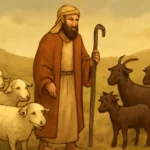
In 1st-century Judea, sheep were vital economically and culturally. Sheep pens often lacked elaborate gates; a shepherd himself would lie across the opening to protect his flock from predators and thieves, providing a direct, personal gate. This imagery was familiar to Jesus' audience, who understood that access to the sheep involved trust in the shepherd’s authority and protection, symbolizing divine care and authority.
The gate imagery also reflected the physical gates of Jerusalem’s temple, which was considered the sole legitimate entry point to God's presence. Religious leaders guarded access, often emphasizing legal and ritual purity. Jesus’ claim as the 'gate' challenged exclusive access, asserting that true entry to salvation is through him, not temple rituals or legalism.
🏺 economic and social customs
Shepherding was a respected but often modest occupation, central to rural life. The image of a gate emphasizes protection and authoritative oversight, reinforcing social values of guidance and trustworthiness. The sacrificial system and priestly roles also framed the idea that access to God was mediated, which Jesus redefines as only achievable through him.
👂 What the Original Hearers Understood
First-century Jewish listeners would have perceived the 'gate' as the entrance to the sheep pen, symbolizing access to safety and provision. They understood that shepherds guarded their flocks diligently, and the idea that only the true shepherd or owner had authority over the gate reinforced God’s sovereignty. The claim 'I am the gate' would evoke images of divine authority and challenge existing religious structures, emphasizing that true access to salvation is through Jesus alone, bypassing legalistic gatekeepers like Pharisees or priests.
Jesus as the exclusive access point to salvation and God's flock
In ancient Judea, the gate was often a simple opening guarded by the shepherd himself, symbolizing trust and authority rather than a grand structure.
the sheep
believers or followers of God
Sheep were a common livestock in rural Israel, symbolizing vulnerability and dependence, often used in Scripture to illustrate God's people.
the thief and robbers
false leaders, false teachers, or any who seek to deceive or steal spiritual salvation
This imagery would remind Jewish listeners of deceptive figures who threaten communal safety, paralleling spiritual threats.
💡 The Main Teaching
The central message of the parable emphasizes that Jesus alone is the rightful and trustworthy gate through which believers enter salvation. Unlike false leaders or thieves who aim to steal and destroy, Jesus offers abundant life. This teaches that authentic spiritual access and safety come only through him, reaffirming his divine authority and role as the good shepherd providing protection and salvation for his followers.
Secondary Teachings
True security and life are found exclusively through Christ, not through works or human institutions.
Religious leaders claiming authority apart from Jesus are false shepherds attempting to lead believers astray.
Entrusting oneself to Jesus as the gate ensures access to God's pasture—abundant, eternal life.
⚠️ Common Misinterpretations
⚠️ Common Misinterpretation
Some might think that Jesus claiming to be the 'gate' dismisses other spiritual paths, but he emphasizes that salvation is uniquely through him, not multiple roads (John 14:6).
⚠️ Common Misinterpretation
Others may interpret the 'gate' as merely a physical entry, missing the deeper spiritual access and authority Jesus claims as the divine way to salvation.
Psalm 118:20 — 'This is the gate of the Lord; the righteous shall enter through it.' (reflection on divine access)
Ezekiel 34:23-24 — 'I will set up one shepherd, my servant David, and he shall feed them,' depicting the Messiah as the true shepherd.
John 14:6 — 'I am the way, the truth, and the life; no one comes to the Father except through me.'
🌍 Application for Today
This parable encourages believers to recognize Jesus as the only true access to spiritual salvation and security. In a modern context, it challenges us to avoid relying on religious rituals, moral deeds, or institutional approvals as gates into God's presence. Instead, trust in Christ's atoning work and authority. Whether sharing the Gospel, guiding others spiritually, or personal faith, acknowledging Jesus as the gate leads to life. For example, a person seeking purpose might be reminded that genuine fulfillment comes through a relationship with Christ, not through material success or human approval.
❓ Frequently Asked Questions
What does Jesus mean by calling himself the 'gate'?
Jesus is asserting that he alone provides the exclusive access to salvation and safety—entry into God's kingdom. This is supported by John 10:9 where he states, 'whoever enters through me will be saved.'
Does this mean only Christians are saved?
While Jesus affirms that salvation is through him, this parable emphasizes the exclusivity of Christ as the gate. Ultimately, salvation is available to all who come through him, though it requires faith in Jesus.
What is the significance of the sheep and shepherd imagery?
Sheep symbolize God's followers, vulnerable and dependent, while the shepherd and gate represent Jesus’ divine authority and protective care, underscoring his role as the true shepherd.
How do we relate this to other religions or spiritual paths?
This parable teaches that, according to Jesus, spiritual access and salvation are only through him. Other faiths may claim different paths, but Christian doctrine confirms that Jesus is the only true gate.
✨ Did You Know?
Archaeological excavations in Jerusalem have uncovered sheep pens from the 1st century with simple stone entrances, some with troughs acting as gates. These real structures reinforce the vividness of Jesus' shepherding and gate imagery in his parables.






Leave a Reply