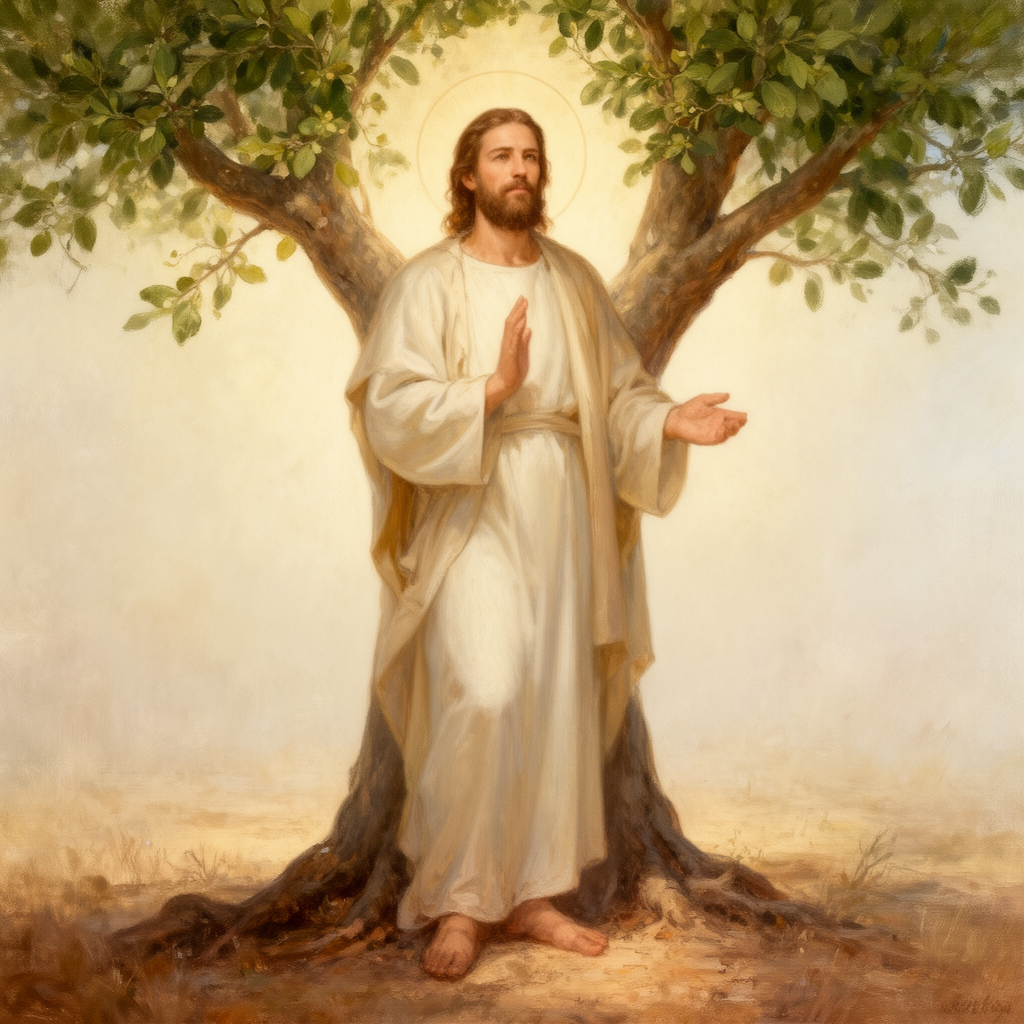
“Learned a lesson from the fig tree: as soon as its branch becomes tender and puts out its leaves, you know that summer is nearby. So also, when you see these things taking place, you know that he is near, at the very gates. Truly, I say to you, this generation will not pass away until all these things take place. Heaven and earth will pass away, but my words will not pass away.” (ESV)— Mark 13:28-31
🎯 The Occasion
Audience: Jesus was speaking to his disciples and a broader crowd aware of the Jewish temple and their agricultural life; understanding the signs of seasons was crucial in a largely agrarian society. This matters because it connects spiritual readiness with everyday life in first-century Judaism.
The parable is delivered during the Olivet Discourse, shortly before Jesus' crucifixion, as he warns about the destruction of the temple and the coming of the end times. The immediate context is Jesus' teaching on watchfulness and discerning the signs of his return.
🏺 Cultural Context: What You Need to Know
🏺 Agricultural Significance of the Fig Tree
In first-century Judea, the fig tree was a common and important fruit-bearing tree, symbolizing well-being and abundance. Farmers understood the cycle of fig trees—when the buds appeared and the leaves grew, summer was imminent, signaling a time of harvest and economic activity. This natural cycle served as a tangible sign for farmers and traders, making it a familiar metaphor for recognizing divine or worldly signs. The fig tree’s seasonal cycle also symbolized the importance of timing and readiness, principles embedded deeply in Jewish thought and daily life.
🏺 Jewish Eschatology and Expectation of God's Judgment
Jewish society in the first century held a strong expectation of divine judgment, especially regarding the temple and Jerusalem. Signs in nature, like fig tree foliage, were often considered symbols of forthcoming events—either God's blessing or judgment. The people looked for signs from God that indicated the nearing of the Messianic age or the impending destruction of Jerusalem. The fig tree, thus, became a metaphor for spiritual discernment—recognizing the signs of God's work and being prepared accordingly.
🏺 Legal and Social Customs Related to Land and Agriculture
Property ownership and land management were central to Jewish life, with clear laws governing land use, tithing, and harvests derived from Mosaic Law. Farmers, landowners, and tradesmen relied on keen awareness of the seasons to maximize productivity. Recognizing signs such as budding fig trees was essential for planning the agricultural calendar, festivals, and economic exchanges. This cultural familiarity underscores why Jesus chose the fig tree as a symbol—it resonated with everyday experiences and collective wisdom.
👂 What the Original Hearers Understood
A first-century Jewish listener would have immediately linked the fig tree's seasonal changes with divine timing and judgment. They understood that when the fig tree sprouted leaves, it signaled that summer was near, a metaphor for readiness and alertness for God's pending actions. The symbolic use of nature's signs reinforced the idea that God's plans are unfolding according to divine cycles, and discerning these signs was essential for spiritual vigilance. This understanding would have heightened their sense of urgency, knowing that signs in nature reflected God's ongoing work in history and judgment.
The nation of Israel or human readiness for divine events
The fig tree was often used in Jewish literature as a symbol of Israel, given its prominence and the frequent allusion in Scripture to its leaves and fruit as representing the spiritual state of the nation.
Leaves and Buds
Signs of approaching summer and divine season
Fig trees produce tender shoots and leaves signaling seasonal transition; in the metaphor, these are external signs indicating preparedness or spiritual alertness.
Jesus' words
Divine authority and prophetic insight
His references evoke a cultural understanding that divine timing is evident in observable signs, emphasizing vigilance.
💡 The Main Teaching
The parable underscores the importance of spiritual vigilance and recognizing the signs of God's imminent plans. Just as one observes the fig tree's leaves to anticipate summer, believers are called to discern the signs of the times concerning God's kingdom and judgment. The central message is that readiness is essential because divine judgment and the fulfillment of God's promises are approaching, and the faithful must stay alert and prepared at all times.
Secondary Teachings
Spiritual discernment involves paying attention to signs in our lives and history, recognizing God’s workings.
The parable reminds believers that God’s promises are firm and will never pass away, even as the world changes.
It encourages active vigilance and ethical living as preparation for Christ’s return and the coming of God's kingdom.
⚠️ Common Misinterpretations
⚠️ Common Misinterpretation
Some assume the fig tree refers solely to Israel's spiritual state; however, it more broadly symbolizes divine signs pointing to judgment and judgment's urgency.
⚠️ Common Misinterpretation
Another misinterpretation is that the parable predicts exact dates; in reality, Jesus emphasizes discernment and preparedness, not specific timings.
{'reference': 'Matthew 24:32-33', 'note': 'Parallel teaching where Jesus uses the fig tree to teach about recognizing signs of His coming.'}
{'reference': 'Luke 21:29-30', 'note': 'Similar imagery used to highlight the importance of observing natural signs for spiritual insight.'}
{'reference': 'Hosea 9:10', 'note': 'Old Testament imagery of Israel as a fig tree, illustrating spiritual condition and judgment.'}
🌍 Application for Today
This parable reminds modern believers to remain vigilant and attentive to the 'signs' of God's work in world events, personal life, and spiritual growth. Just as farmers recognize the season by observing nature, Christians should interpret societal changes, moral shifts, and personal circumstances as cues to prepare spiritually. It encourages cultivating a habit of constant readiness—living ethically, prayerfully, and faithfully—knowing that Christ's return is imminent, even if the exact timing is unknown. Practical steps include regular self-examination, community engagement, and staying rooted in Scripture, ensuring we are spiritually prepared for God's ultimate judgment and renewal.
❓ Frequently Asked Questions
What does the fig tree symbolize?
It symbolizes Israel or the signs of God's approach, indicating when judgment or salvation is near (Matthew 24:32).
Why does Jesus use a natural sign like a fig tree?
Because observable signs in nature were familiar and understood by first-century people as indicators of seasons and divine timing.
Is the parable about predicting specific dates?
No; Jesus emphasizes discernment and readiness, not exact predictions. The focus is on being spiritually prepared at all times (Mark 13:32-37).
How should we apply this today?
By recognizing current events and personal circumstances as signs to remain vigilant, prayerful, and faithful, awaiting Christ's return.
✨ Did You Know?
Archaeological findings show that fig trees in ancient Judea produced leaves and fruit simultaneously, which reinforced their use as reliable seasonal indicators in biblical times. The vivid imagery in the parable would have been immediately recognizable to first-century farmers and Jewish audiences alike.







Leave a Reply