Old Bibles for Sale: Antique & Rare Bible Collectibles
For collectors, scholars, designers, and simply curious readers, old bibles for sale represent a bridge to centuries of faith, typography, and bookmaking. These volumes are more than religious texts; they are artifacts that reveal how communities narrated, preserved, and transmitted knowledge. In this guide, you’ll find an in-depth overview of antique Bibles, rare Bible collectibles, and the practicalities of buying, owning, and caring for these remarkable works. Whether you’re browsing for a dated Geneva Bible, a first King James Bible edition, or a gilded 19th-century Bible with a storied provenance, this article aims to equip you with context, criteria, and strategies.
Historical eras and the forging of Bible editions
Old Bibles come in a broad spectrum of formats, bindings, and languages. Each era reflects technological advances, theological shifts, and regional tastes. Understanding the timeline helps buyers identify what they are looking at—and why it matters when assessing value.
Incunabula and Early Printed Bibles (1450s–1500s)
Incunabula are the earliest printed books produced before 1501. Bibles from this period often feature movable type, woodcut borders, and lavish initials. They may include the Bible in Latin or early vernacular translations that were groundbreaking for their time.
Conditions vary widely; many survive as fragments or small quartos. When authentic, they carry extraordinary historical and scholarly value.
Important considerations: provenance, printer’s mark, and watermarks in the paper, which help identify origin and date.
Renaissance, Reformation, and Early Modern Bibles (16th century)
The 16th century saw a surge in vernacular translations alongside Latin editions. Notable examples include the German Luther Bible, the Coverdale Bible (English), and the Great Bible (1539 English edition).
These volumes often feature elaborate binding work, metal clasps, and significant typographic innovations that reflect the shift from manuscript culture to print culture.
Scholars value the exemplars with marginal glosses, as annotations reveal how readers engaged with scripture during periods of reform and controversy.
Civil War to Enlightenment: 17th–18th centuries
During the 17th and 18th centuries, many Bibles were produced with imperial, royal, or church affixed endorsements. The King James Version (first published in 1611) remains one of the most recognizable and collectible English Bibles.
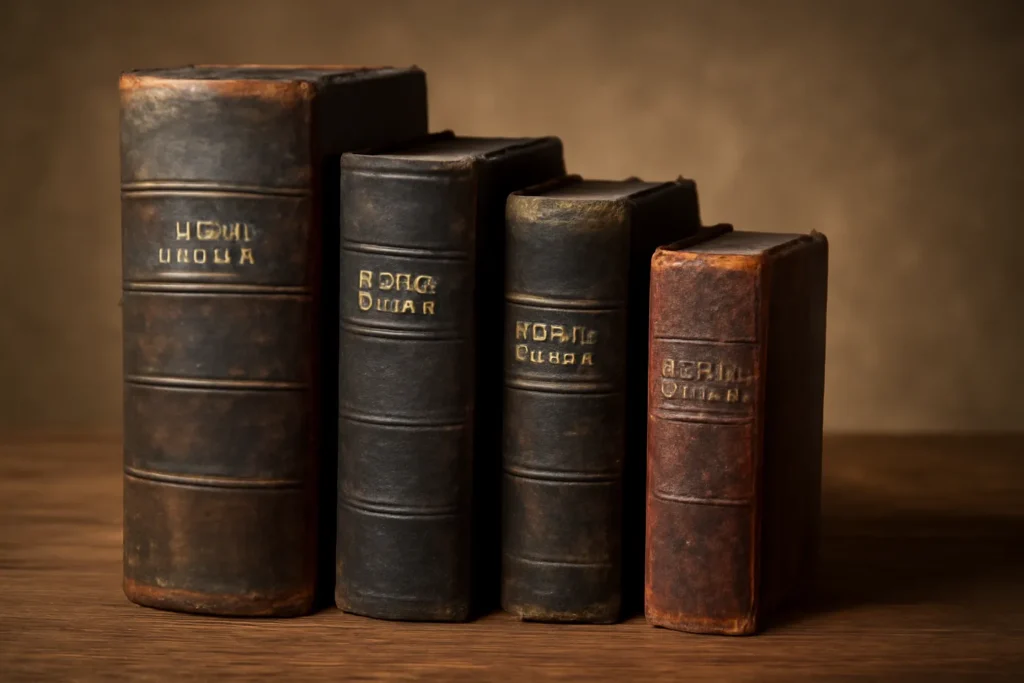
Bindings often feature calfskin, morocco leather, or cloth, with intricate embossing and gilt decorations that reflect evolving tastes in bookbinding.
New formats included compact pocket Bibles, parallel-language editions, and study Bibles that began to include concordances and reference maps.
Romantic and Victorian Bindings: 19th century
The 19th century saw a boom in bible publishing as a mass-market collectible, with a wide array of bindings, sizes, and embellishments. Luxury editions often boasted gilt edges, red or black reticulation designs, and decorative dust jackets or slipcases.
Affluent collectors prize presswork precision, illustrations, and historic binding techniques that speak to the era’s craftsmanship.
Alongside commercial editions, you may encounter Church of England prayerbooks and family Bibles that include family records, genealogies, and dedications as important provenance signals.
What makes a Bible collectible?
“Collectible” is a blend of historical significance, rarity, physical condition, and provenance. Below are the core factors that frequently determine value and interest in old Bibles for sale.
Edition and printing: Early printings, first editions, or unique printings (e.g., incunabula, First Folio-style issues) are highly sought after.
Language and translation: Bibles in Latin, Greek, Hebrew, or early vernaculars (English, German, French) attract different kinds of scholars and collectors.
Provenance: A well-documented history—especially if linked to notable owners, libraries, or events—can dramatically raise a Bible’s value.
Condition and completeness: Original bindings, complete text, intact maps, title page, and front matter significantly impact price and desirability.
Binding and craftsmanship: Leather bindings, gilt tooling, clasps, decorative corners, and inlaid marbled endpapers are prized features.
Illustrations and typography: Hand-colored illustrations, woodcuts, marginalia, and distinctive typefaces add visual and historical interest.
Size and format: Small pocket Bibles are practical, but large folio Bibles with illuminated pages are often more collectible for display and study.
Marginalia and annotations: Notes by historical readers provide a glimpse into how scripture was engaged with in different periods.
Authenticity and attribution: Proper bibliographic attribution—verified by experts—helps avoid misattributions and fakes.
How to verify authenticity and provenance
Buying an old Bible is both an investment and a research exercise. The more you understand about origins, the better you will be at distinguishing genuine antique Bibles from modern reproductions or misattributed items.
Consult bibliographic references: Reputable catalogs, auction records, and scholarly guides provide essential context for dating and identifying editions.
Check physical cues: Title pages, colophons, printers’ marks, page counts, margins, and watermarks are critical in dating and authentication.
Assess binding and materials: Examine leather, stitching, clasps, corner reinforcements, and endpapers. Original bindings in excellent condition are rare but valuable.
Evaluate marginalia and annotations: Handwritten notes can confirm historical use and may indicate ownership lineage (provenance).
Request provenance documentation: A chain of custody, receipts, and prior catalog listings help verify that the item is not a recent fabrication.
Seek expert appraisal: When in doubt, turn to a rare book dealer, a conservator, or a bibliographic society for a professional opinion.
Beware of fakes: Some modern reproductions imitate historic formats. Compare typography, paper quality, and edge staining with known authentic examples.
Provenance matters
A well-documented provenance—the record of ownership—adds depth to a Bible’s story. For example, a first-edition English Bible that later belonged to a notable clergyman, a missionary, or a landmark library has a narrative that enthusiasts find compelling. Even mundane details, like an owner’s inscription, can tilt interest toward a rare collectible versus a more common edition.
Common condition descriptions and grading
Because old Bibles come in various states, grading helps buyers compare items on a consistent scale. Here are typical terms you’ll encounter:
New with no signs of use: Flawless pages, pristine binding, excellent color, no foxing or wear. Extremely rare in antique Bibles.
Excellent: Minor signs of handling; binding may show gentle wear; pages are clean with minimal foxing.
Very good: Consistent signs of use; some browning; minor edge wear; intact but not perfect.
Good: Visible age-related effects; possible small tears, foxing, or staining; binding may show wear but remains intact.
Poor: Significant damage or loss; pages may be missing or detached; binding heavily compromised. Recovery may be possible but affects value.
Restoration considerations: Some collectors value professionally restored Bibles highly, while others prefer untouched originals. Always ask about the extent of any repairs and whether they affect authenticity or value.
Popular models and editions to look for
Across the centuries, several editions and formats have become anchors for collectors. Here are some models to know when evaluating old Bibles for sale:
Gutenberg Bible (ca. 1450s): The prototype of movable-type printing; extremely rare and valuable. Most people will encounter modern facsimiles rather than the original copy, which rarely comes onto the market.
Luther Bible (1522–1534) and related early German Bibles: Key for understanding the Reformation’s impact on vernacular scripture.
Coverdale Bible (1535, English) and the Great Bible (1539): Early English translations that shaped subsequent Bible printing in English.
Geneva Bible (1560): An influential English translation, known for its study aids and marginal notes, favored by readers who valued scholarly apparatus.
King James Version (1611) first editions: A cornerstone of English-language Bible publishing; early editions are highly prized by collectors and historians alike.
Douay-Rheims Bible (1582–1609) and Catholic editions: Latin influence and Catholic tradition offer a different collectible niche, often with unique binding styles and de-luxe illustrations.
Wyckliffe and early English Bibles: Wycliffite texts and their subsequent editions are rare and academically significant.
Companion and study Bibles (17th–19th centuries): Bibles with concordances, maps, marginal notes, and cross-references—valuable for understanding the evolution of biblical study tools.
Family Bibles (18th–19th centuries): Often richly decorated and inscribed with family records, these offer genealogical interest as well as textual value.
Where to find Old Bibles for sale
Finding genuine old Bibles requires reliable sources and careful due diligence. Here are common venues for locating antique and rare Bible collectibles.
Specialized rare-book dealers and bibliophiles
Reputable dealers offer authenticated items with provenance and written descriptions. Expect certificates of authenticity and conservation notes for fragile pieces.
Dealers may provide condition reports, high-resolution images, and access to archival records.
Establish a relationship with a dealer you trust; ongoing conversations often yield insightful suggestions and early access to new acquisitions.
Auctions and auction houses
Major houses periodically feature antique Bibles in specialized bibliographic or book-collecting rounds. Auction results help establish market pricing and demand.
For Bibles, the catalog notes often include edition details, binding type, and any provenance claims. Bidding requires due diligence and sometimes on-site examination before the sale.
Online bidding platforms extend reach, but you should review terms about returns, condition disclosures, and authenticity guarantees.
Antique shops, fairs, and library sales
Local fairs and small shops can surprise you with well-curated shelves of rare Bibles at modest prices, especially if the items are not widely publicized.
Library sale inventories may include donor-bindings or regional editions with historical significance, though buyers should verify that items are not restricted by copyright or other legal constraints.
Online marketplaces and digital catalogs
Online marketplaces broaden access to global inventories. Carefully review seller ratings, return policies, and the availability of close-up photographs or condition descriptions.
Digital catalogs and bibliographic databases enable you to cross-reference items you’re considering, helping you avoid misattributions.
Care and preservation of old Bibles for sale
Proper care ensures that a Bible’s structural integrity and appearance endure for decades. Here are practical guidelines for handling, storage, and light maintenance.
Handling: Wear clean cotton gloves if the item is particularly delicate or valuable to reduce oils and dirt transfer. Use both hands to support the spine when lifting.
Storage: Store away from direct sunlight, heat sources, and damp. Ideal conditions are cool, dry, and stable relative humidity (about 40–50%).
Display: If you display a Bible, use UV-filtered glass and ensure it’s supported securely to prevent strain on fragile bindings.
Conservation: For fragile items, consult a professional conservator. Treatments may include tissue repairs, paper stabilization, or re-binding with minimal intervention to preserve originality.
Cleaning: Light dusting with a soft brush is usually sufficient. Do not use liquids or solvents without expert guidance, as dyes and inks can be compromised.
Documentation: Keep records of provenance, purchase receipts, and any conservation work performed. This enhances the item’s value and research potential.
Responsible collecting of old Bibles for sale involves ethical considerations and legal awareness. Here are some core guidelines to follow.
Provenance transparency: Seek items with clear ownership histories. Ambiguity can indicate potential issues or missing context.
Antiquities and export restrictions: Some older manuscripts may have export restrictions in certain countries or under international conventions. Ensure compliance with local and international laws when purchasing or transporting.
Stolen or looted items: Avoid bidding on or acquiring items with suspected theft histories. Reputable dealers will assist in verifying legitimacy.
Authenticity guarantees: Prefer sellers who offer authentication or scholarly appraisal, especially for high-value pieces.
Scholarly collaboration: Engaging with libraries, universities, or bibliographic societies can provide additional context and help you assess the educational value and rightful ownership of an item.
Pricing and investment considerations
Prices for old Bibles vary widely based on edition, rarity, condition, and provenance. Here are some general patterns and strategic tips to consider when budgeting for antique and rare Bible collectibles.
Edition and model: First editions and incunabula command premium prices. Later 18th–19th century editions with exceptional bindings can also fetch strong sums, especially if complete and well preserved.
Condition: A small difference in condition can translate into a large price swing; a well-preserved binding with intact clasps can add substantial value.
Provenance: Items with documented ownership or institutional associations often command higher prices.
Rarity: The fewer surviving copies, the more valuable a Bible tends to be, all else being equal.
Market dynamics: Demand for certain translations or editions can fluctuate; staying informed about bibliophile communities and auction trends helps anticipate moves in value.
As a practical rule, budget for not only the purchase price but also potential conservation, storage, and insurance costs. A high-quality early edition with solid provenance may be a solid long-term investment for a dedicated collection, while some vintage Bibles with modest condition can offer meaningful historical value at more accessible prices.
Before purchasing an old Bible, run through a concise evaluation checklist. This helps you focus on what matters most to your goals—whether scholarly study, display, resale potential, or personal enrichment.
Edition confirmation: Identify exact edition, printer, and year. Compare against bibliographies and catalog records.
Front matter and layout: Check title page, dedication, preface, marginalia style, map quality, and index accuracy.
Pages and binding: Inspect for tears, stains, foxing, detached leaves, and binding integrity.
Typography and paper: Look for ink consistency, typeface legibility, paper thickness, and any watermarks or fiber content clues.
Completeness: Confirm presence of all plates, maps, concordances, and the final pages (and whether any leaf is missing).
Provenance: Gather any available records of ownership, library stamps, or donor inscriptions.
Conservation history: Inquire about past repairs, rebindings, or restorations and how they affect value and future care.
Value with risk: Weigh potential appreciation against ongoing maintenance and the risk of damage from handling or environmental exposure.
Notable collecting communities and resources
Engaging with the broader community of Bible collectors and scholars can enhance your understanding, expand networks, and protect your investment. Consider these resources:
Bibliophile societies and rare-book clubs: Local chapters and online groups offer guidance, authentication tips, and access to specialized catalogs.
Academic libraries and theological archives: University libraries often have collections, guides, and experts who publish on the topic and may host exhibitions.
Conservators and bookbinders: Professionals who specialize in historical bindings can advise on care, restoration options, and conservation ethics.
Catalogs and bibliographies: Established bibliographies (such as those listing incunabula, early English Bibles, or Latin Bibles) provide authoritative references for dating and attribution.
Putting it all together: a practical buying scenario
Imagine you’re exploring old Bibles for sale at a reputable dealer's stall. You’re drawn to a leather-bound 17th-century English Bible with a full-page map, gold-tooled spine, and a neat inscription inside the cover. Here’s how you might approach the purchase, step by step:
Identify the edition: Check the title page and any colophon to confirm the edition, printer, and year. Note any differences from known bibliographies.
Assess condition: Gently inspect pages for tears, looseness, foxing, and staining. Look for the steadiness of the spine, binding materials, and whether clasps still align.
Evaluate provenance: Read the inscription, study the library stamps, and request any provenance documentation. Does the item come with a credible story?
Consider display and storage needs: Will you be keeping this Bible in a controlled environment, and can you afford the necessary care and insurance?
Consult an expert: If you’re unsure about authenticity or value, seek a second opinion from a bibliographic specialist.
Negotiate thoughtfully: Use the information gathered—edition rarity, condition, and provenance—to negotiate a fair price, factoring in potential conservation work if needed.
Frequently asked questions about old Bibles for sale
Below are common questions that buyers often have, along with concise answers to help guide informed decision-making.
Are incunabula Bibles truly priceless? They are among the most valuable books in the world due to their rarity, historical importance, and the fragility of surviving copies. Prices vary widely based on condition and provenance.
Can modern reproductions be distinguished easily? Yes, with careful examination of paper texture, watermark, typography, and binding. Reproductions may lack authentic aging signs or have uniform, contemporary materials.
Is owning a Bible with marginalia rare? Marginalia add scholarly and historical interest, but their presence can affect value depending on legibility and condition.
What about digital records? Digital catalogs and high-resolution images can aid research, but owning the physical object provides tangible connection and provenance not captured online.
Should I insure an old Bible? Yes. Given the potential value and fragility, insuring against loss or damage is prudent, especially for high-value pieces.
Define your focus: Decide whether you’re drawn to a particular language, era, or binding style. A focused collection often yields more coherent value and narrative.
Set a realistic budget: Start with manageable purchases and allow room for conservation and insurance costs.
Build a reference library: Acquire bibliographies and reference guides to help you verify editions and understand market trends.
Establish a trusted network: Develop relationships with reputable dealers, conservators, and bibliographic societies to ensure ongoing access to high-quality items.
Document every item: Maintain a catalog with details such as edition, year, binding, condition, provenance, and purchase history—this is essential for future resale or scholarly use.
Glossary of terms you’ll encounter
As you navigate the world of antique and rare Bible collecting, you’ll meet a variety of terms. Here are concise definitions to keep handy.
Incunabula: Books printed before 1501, representing the earliest era of movable-type printing.
Colophon: A statement at the end of a book with details about the printing.
Watermark: A pattern or symbol in paper that helps identify origin and age.
Concordance: A cross-reference index of words in the Bible used for study.
Calfskin / Morocco: Types of leather commonly used for bindings.
Binding: The manuscript’s cover and stitching; can be leather, cloth, or vellum, with varying degrees of ornamentation.
Imprimatur: A printer’s or publisher’s mark indicating official print status (from historical contexts).
Gilt / Gilt Edges: Gold edge treatment common in high-end bindings.
Marginalia: Notes or comments written in the margins by readers.
Conclusion: embracing a living piece of history
Old Bibles for sale offer a tangible connection to centuries of devotion, scholarship, and craftsmanship. Whether you pursue antique Bibles as aesthetic treasures, scholarly resources, or historical artifacts, you are engaging with objects that have carried faith, culture, and literacy through generations. The journey from a printed page to a held artifact is as meaningful as the text itself, and with careful study, ethical practice, and ongoing stewardship, these rare Bible collectibles can be appreciated, safeguarded, and shared with future readers and researchers.
If you’re beginning a collection or expanding an existing one, remember that the most compelling items tend to combine authenticity, provenance, and tangible beauty. Approach each potential purchase with curiosity and due diligence, and you’ll join a tradition of care that honors centuries of hands that turned the keystone of faith and knowledge for countless readers.
To start your journey, consider visiting reputable dealers or auctions with a defined focus on old Bibles for sale, and don’t hesitate to ask for condition reports, provenance documents, and expert evaluations. May your exploration of antique and rare Bible collectibles be as enlightening as the texts these remarkable volumes preserve.









Leave a Reply