King James Bible with Apocrypha: A Complete Guide to History, Books, and Reading Tips
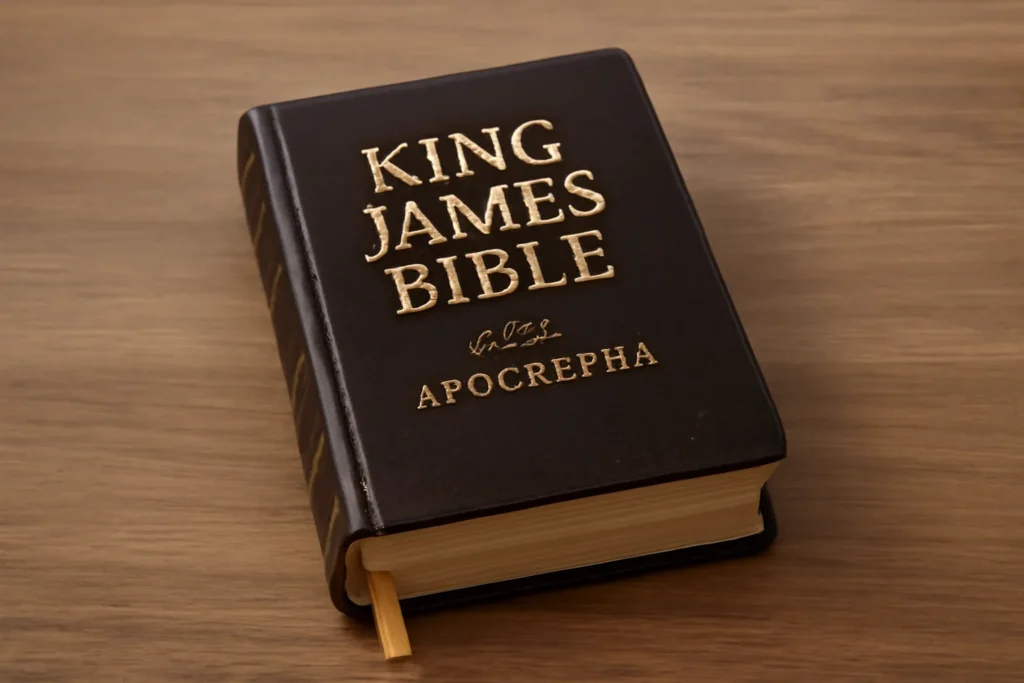
The King James Bible with Apocrypha sits at a crossroads of history, literature, and devotion. Often simply labeled the KJV, this edition is more than a translation; it is a milestone in the history of the Bible in the English language. When the Apocrypha is included, the edition becomes a hybrid document that reflects both the Protestant tradition and historical manuscript practices that shaped early modern English Bible production. This comprehensive guide explores the history, the books contained in the Apocrypha, the debates surrounding canonicity, and practical tips for reading and studying the King James Bible with Apocrypha today.
Throughout this article, you will encounter different ways to refer to the same thing. You may see King James Bible with Apocrypha, King James Version with Apocrypha, KJV with Apocrypha, or King James Version (with the Apocrypha). All of these denote the traditional English Bible produced under royal sanction in the early 17th century, with the Apocryphal books included in some editions. The terminology shifts reflect historical practice, editorial choices, and the evolving canon across Protestant, Catholic, and Orthodox communities.
What is the King James Bible with Apocrypha?
The King James Bible with Apocrypha is the long-form name for a particular edition of the Authorized Version that includes a section commonly called the Apocrypha. In this context, the word Apocrypha refers to a collection of books that some traditions treat as deuterocanonical (canonical in some circles) and others view as non-canonical or non-binding for matters of faith. The apocryphal books are not uniformly accepted across all Christian traditions, but they were included in the early 17th‑century edition of the Bible in English to reflect the state of the text at the time and to provide readers access to these ancient writings in the same volume as the canonical scriptures.
For readers today, the phrase KJV with Apocrypha signals a version that preserves the classic King James style and cadence while also presenting a set of extra books that were valued for historical narrative, wisdom literature, and moral exhortation in many historical Christian communities. When you encounter this edition, you are looking at a blend of Scripture and deuterocanonical literature that has influenced art, theology, and literature for centuries.
Why the Apocrypha matters in this edition
Historical context: The Apocrypha provides a window into Jewish and Hellenistic history, culture, and religious thought that influenced later Christian writers. Reading these books alongside the canonical scriptures can deepen understanding of biblical themes, such as wisdom, justice, suffering, and providence.
Theological nuance: Some books contain sentiments about prayer, piety, and ethics that illuminate, critique, or complement ideas found in the canonical texts.
Literary breadth: The Apocrypha contributes poetry, wisdom literature, and narratives that broaden the range of voices and genres encountered in a single Bible edition.
Historical context and the formation of the King James Bible
The creation of the King James Bible began in a political and religious milieu that valued a single, authoritative English translation accessible to church and lay readers alike. Commissioned by King James I of England in 1604, the project brought together a team of fifty or so scholars from Cambridge, Oxford, and Westminster. The aim was to produce a translation that would be accurate, majestic in style, and suitable for public worship and private study alike. The result was published in 1611 and quickly shaped the language, idiom, and idiomatic expressions of English-speaking communities for generations to come.
In the original printing, the edition was published with a set of marginal notes and cross‑references, and it included the Apocrypha as a separate collection of books. The translation philosophy favored a balance between fidelity to the sources and a dignified, literary English that could be read aloud in church services. The translators drew on a variety of textual sources, including Hebrew and Greek texts, as well as earlier English translations such as the Bishop’s Bible, the Geneva Bible, and the Great Bible, to craft a text that would become a standard for English-speaking Protestant communities.
Over time, later printings and revisions—especially the 1769 Oxford edition standardized the spelling and punctuation to resemble modern English conventions while maintaining the timeless rhythm of the King James language. The Apocrypha, however, would vary in inclusion depending on the edition and publisher, with many modern Protestant Bibles choosing to omit it, while several King James Bibles with Apocrypha continue to offer it as an optional or explicit part of the text.
What is contained in the Apocrypha in the King James Bible?
The Apocrypha portion of the King James Bible includes a collection of fourteen books in most traditional listings. These works are typically divided into two broad groups: historical narratives and wisdom/deuterocanonical writings, with some books containing additions to existing canonical works. The exact order and inclusions can vary by edition, but the following list summarizes the books commonly associated with the KJV Apocrypha in the 1611 and subsequent editions:
1 Esdras (also called Prologue of Ezra in some editions) – an alternative history of some events found in Ezra and Chronicles, offering a different chronology and perspective on repentance and restoration.
2 Esdras (often called 2 Esdras or 4 Ezra in later traditions) – a visionary and apocalyptic work that addresses questions of suffering, divine justice, and the end times.
Tobit – a story of piety, family virtue, and divine intervention, notable for its emphasis on charity, prayer, and fidelity to Torah living.
Judith – a narrative of courage and cunning in a perilous era, illustrating trust in God and the power of righteous action.
Additions to Esther – additional material within the book of Esther that expands prayers, dreams, and providential elements surrounding Esther’s story.
Wisdom of Solomon – a work of wisdom literature exploring themes of wisdom, righteousness, and the fear of the Lord, often aligned with ethical instruction and devotion.
Ecclesiasticus (also known as Sirach) – a compendium of maxims, ethical admonitions, and wisdom literature that resembles the later book of Proverbs in tone and purpose.
Baruch, including the Letter of Jeremiah – a sobering reflection on repentance, exile, and the consequences of idolatry, sometimes presented as Baruch’s lament and prayer.
Prayer of Azariah and Song of the Three Holy Children – liturgical pieces embedded in the narrative of Daniel, highlighting faith in trial and deliverance in exile contexts.
Susanna – a story of virtue and divine justice set within the Daniel narrative frame, emphasizing integrity and discernment.
Bel and the Dragon – a pair of legends that critique idolatry and emphasize the power of God over foreign deities and false worship.
1 Maccabees – a historical account of Jewish resistance and leadership during the Maccabean revolt, with themes of courage and faith under oppression.
2 Maccabees – a supplement to 1 Maccabees, offering theological reflections on martyrdom, providence, and the hope of resurrection.
It is important to note that the above list reflects the traditional compendium found in many King James Bibles with Apocrypha; some modern prints separate or omit certain elements depending on the publisher and the edition. The canonical status of these books varies among traditions, a topic we explore in the next section.
Canonical status and theological debates
The Apocrypha occupies a unique position in the history of Christian canons. In the Jewish and Protestant traditions, these texts are generally not considered part of the canonical books of the Hebrew Bible or the later New Testament. By contrast, in the Catholic and Orthodox traditions, several of these books are treated as canonical or are included in a broader canon. This divergence gives rise to meaningful conversations about authority, inspiration, and the historical development of the biblical canon.
Key points about the debate:
Protestant view: The Apocrypha is often considered non-canonical or secondary material. It is frequently labeled as deuterocanonical in some scholarly contexts, indicating a secondary level of authority compared with the protocanonical books, but Protestant communities typically do not treat it as binding for faith and practice.
Catholic and Orthodox views: In Catholic tradition, certain apocryphal/deuterocanonical books are included in the canon and used for instruction and liturgy. The Orthodox tradition often includes similar or even larger lists in their canons, sometimes with additional texts in different national traditions.
Historical function: Beyond canonicity, the Apocrypha has been influential in shaping Christian liturgy, moral didactics, and devotional life. Its presence in the early English Bible makes it a bridge to pre-Reformation textual culture and to the broader world of early Christian literature.
When you read a King James Bible with Apocrypha, you are stepping into a tradition that recognizes the historical value of these books while acknowledging that the core canon of Christian Scripture—typically treated as binding for doctrine and practice—rests primarily in the canonical books of the Old and New Testaments. Modern readers who use the Apocrypha often approach it with a critical, historical, and devotional posture: it can illuminate historical settings, ethical questions, and spiritual themes, even if it is not treated as final authority in many Protestant communities.
Language, translation rigor, and textual sources
The King James Bible is celebrated for its literary cadence, memorable phrasing, and rhetorical power. The translators worked from multiple textual streams and engaged in a careful process of revision, consultation, and comparison. While the exact manuscript tradition behind the KJV is complex, some broad points can be offered for readers who want a clearer sense of how the text came to be:
Base texts: The translators drew on available Greek texts for the New Testament, notably the Textus Receptus, and on the Masoretic Hebrew text for most of the Old Testament. They also consulted Latin, multiple early English translations, and other textual witnesses as available.
Source materials for the Apocrypha: When rendering the Apocrypha, the translators relied on the Greek Septuagint and related Latin and Hebrew traditions, as well as existing English-language paraphrases and earlier editions of Bible texts. The goal was to produce a coherent English text with a style suitable for public reading and private study.
Editorial approach: The 1611 text was produced in a publication culture that placed emphasis on a majestic and formal register, with ornate typography, marginal references, and elaborate chapter divisions. Later revivals and standardizations—notably the 1769 Oxford edition—streamlined spelling and punctuation for modern readers while preserving the original literary relationships.
Read with attention to its poetic cadence and rhetorical devices, the KJV offers a distinct experience compared to many modern language translations. The book’s handling of names, places, and repeated phrases can enrich literary appreciation and devotional practice, especially when readers take time to study the historical context and the translation choices behind tricky passages.
Reading strategies for the King James Bible with Apocrypha
Reading the King James Bible with Apocrypha can be a rewarding but challenging endeavor. The language, the order of books, and the inclusion of the Apocrypha require deliberate reading plans and practical study habits. Below are a set of strategies designed to help readers engage deeply with this edition.
Starting points and reading plans
Progressive plan: Start with a foundational gospel and its immediate context. A common starting point is the Gospels (Matthew, Mark, Luke, John) and then the Acts, moving to the Epistles, and then to the Old Testament sequence. After establishing the New Testament core, you can return to the Apocrypha as a separate block or as it appears in the edition you own.
Integrated plan: If you own a King James Bible with Apocrypha, consider reading the Apocrypha in the order printed in your edition, which often places Tobit, Judith, Wisdom of Solomon, Sirach, Baruch, and Esther’s additions after Esther or after Ezra and Nehemiah, depending on the edition.
Thematic plan: Read for themes such as wisdom, justice, and perseverance. For example, pair Wisdom of Solomon and Sirach with Proverbs and Ephesians to compare wisdom literature across testaments, then explore how moral instruction is framed in the Apocrypha versus the canonical books.
Historical-literary plan: Read Tobit and Judith for narrative study, then turn to 1–2 Maccabees for a window into Jewish history under Hellenistic rule, and finally engage the framing of prophecy and eschatology in Daniel and 2 Esdras (if included in your edition).
Practical tips for study and devotion
Use a study Bible or commentaries: A good study Bible with notes can help explain cultural references, time periods, and spellings that differ from modern usage. Notes can illuminate Apocryphal material alongside the canonical books.
Cross-reference wisely: Many themes recur across the canon and the Apocrypha. Use cross-references to notice echoes of wisdom, prayer, and providence across different books.
Pay attention to translation notes: In King James editions with Apocrypha, marginal notes sometimes explain variant readings or editorial decisions. Reading those notes can deepen understanding of the text’s history.
Balance historical interest with devotions: The Apocrypha can provide devotional content that complements, rather than substitutes for, the canonical scriptures. Treat it as a source of historical and moral reflection rather than a statement of doctrine for all communities.
Practical considerations for readers today
For modern readers, choosing a King James Bible with Apocrypha edition often comes down to one’s purpose: liturgical use, scholarly study, or personal devotion. Here are some practical considerations to help you decide how to approach this edition.
Liturgy and worship: Some churches and congregations continue to use Bibles that include the Apocrypha in the service readings or in devotional contexts. If your context values historical liturgical practice, a KJV with Apocrypha can be a meaningful tool for worship preparation and study.
Scholarly study: For those studying biblical languages, canons, or the history of translation, the Apocrypha offers valuable primary texts that illuminate the formation of scriptural canons and the diversity of early Christian literature.
Personal reading: If your aim is plain devotional reading in the classic English style, decide whether you want to include the Apocrypha as part of the daily rhythm or read it in a separate session to avoid overloading a single reading plan.
Edition differences: Be aware that some modern printings place the Apocrypha between the Old and New Testaments, while others place it in a separate section or omit it entirely. If you specifically want the Apocrypha present, confirm it in the description or front matter of the edition you purchase.
Historical influence and cultural impact
The King James Bible has left an indelible mark on language, literature, and culture. Even readers who do not accept the Apocrypha as authoritative often recognize its stylistic influence on English prose, poetry, and rhetoric. The Apocryphal books, when included in the edition, contribute further to this cultural resonance by offering narratives and exhortations that have circulated widely in medieval and early modern Christian communities.
Key areas of influence include:
Literary influence: Quotations and phrases from the KJV have shaped English literature, sermons, and public-speaking conventions for centuries. The cadence and elevated diction of the King James Bible have inspired poets, novelists, and playwrights alike.
Linguistic impact: Phrases from the KJV—such as "the powers that be," "a land flowing with milk and honey," and "the word of God"—have entered common idiom and rhetorical practice in English-speaking cultures.
Religious practice: The Apocrypha’s narratives contributed to devotional life, moral instruction, and the way communities reflected on topics like prayer, charity, and endurance under persecution.
Ecumenical dialogue: The status of the Apocrypha has been a point of discussion in ecumenical dialogues among Protestant, Catholic, and Orthodox communities, highlighting differences in canon and liturgical practice across traditions.
Today, readers can access the King James Bible with Apocrypha in a variety of formats, from traditional print to digital editions. Publishers continue to produce both classic and contemporary takes on the King James text, preserving the cadence while offering different supplemental features.
Print editions: Many publishers offer a KJV with Apocrypha in a sturdy traditional format, often with gilt edges, marginal notes, and cross-references. Such editions are popular for study, teaching, and ceremonial use.
Scholarly editions: For academic study, scholarly editions provide apparatus, textual notes, and introductions that explore manuscript evidence, translation decisions, and historical context for each book, including the Apocrypha.
Digital editions: E‑books and online Bibles frequently include the Apocrypha as an accessible option. Digital search and linkable cross-references can enhance study across the canon and deuterocanonical books.
Audio formats: Some publishers offer audio Bibles that include the Apocrypha, enabling listeners to experience the cadence of the King James language in a new way, useful for pronunciation practice and devotional listening.
Frequently asked questions about the King James Bible with Apocrypha
Is the Apocrypha considered inspired Scripture in the King James Bible?
The status of the Apocryphal books varies by tradition. In many Protestant contexts, these books are not considered inspired canonical Scripture in the same way as the canonical books. In Catholic and Orthodox Christian traditions, several of these books are treated as canon or are included in a broader canon. The King James Version with the Apocrypha reflects a historical edition that included these books but does not necessarily imply universal agreement on their binding authority across all Christian communities.
Why were these books included in the original King James Bible?
The editors and translators aimed to provide readers with access to a broad range of scriptural and quasi-scriptural writings that were widely read and valued in early modern Christianity. The Apocrypha represented a substantial portion of early Christian and Jewish literatures that informed moral teachings, history, and wisdom. Including the Apocrypha in the 1611 edition made the volume a comprehensive resource for both scholars and lay readers during that era.
How should a modern reader approach the Apocrypha?
A practical approach is to read the Apocrypha as historical and literary context rather than as a source of doctrinal authority for all Christian beliefs. Readers can benefit from:
Understanding the social and religious milieu of the intertestamental and early Jewish periods.
Engaging with themes of prayer, piety, virtue, justice, and conflict with idolatry.
Exploring how early readers interpreted prophecies, wisdom, and moral exhortation.
Conclusion: embracing a complete, historical edition
The King James Bible with Apocrypha remains a valuable resource for readers who wish to explore the English Bible in its most storied and influential form. Whether you approach it as a devotional text, a historical artifact, or a literary masterpiece, the combined experience of canonical books and apocryphal writings invites a broader understanding of biblical history, theology, and culture. The Apocrypha, with its varied genres—from narrative to poetry to wisdom literature—offers a complementary perspective to the canonical material, enriching reflection on themes such as wisdom, faith, courage, and divine providence.
As you begin or continue your journey with the King James Bible with Apocrypha, consider the following final tips to maximize understanding and enjoyment:
Respect edition differences: Different publishers print the Apocrypha in slightly different orders and with different inclusions. Check the front matter of your edition to know exactly which books are present and how they are divided.
Read aloud with attention to cadence: The King James style invites public reading. If you read aloud, pay attention to rhythm, punctuation, and phrasing to capture the meaning and beauty of the text.
Use supplementary resources: Introductions, maps, historical timelines, and glossaries can illuminate names, places, and cultural references that might be unfamiliar to modern readers.
Engage with modern scholarship: Contemporary commentaries and scholarly articles can help you understand how the Apocrypha has been read and interpreted in different Christian traditions, enriching your own study and reflection.
In sum, the King James Bible with Apocrypha offers a unique window into a pivotal moment in Bible translation and in the history of English literature. It invites readers to engage not only with sacred texts but with the surrounding cultural and theological conversations that have shaped how Christians have read Scripture for centuries. Whether you approach it as a historical artifact, a devotional companion, or a literary landmark, this edition remains a powerful link to the past and a living resource for thoughtful readers today.
For researchers, students, and general readers alike, this guide aims to provide a clear roadmap to understanding the King James Bible with Apocrypha, its contents, its history, and its ongoing significance. By exploring the books within the Apocrypha, the edition’s translation history, and the practicalities of reading, you can gain a richer appreciation for one of the most influential translations in the English language—and for the enduring conversations about authority, tradition, and interpretation that accompany any study of sacred literature.










Leave a Reply