Matthew 25:1-13 Meaning: The Parable of the Ten Virgins Explained
Matthew 25:1-13 Meaning: The Parable of the Ten Virgins Explained
The meaning of Matthew 25:1-13 is a rich and debated topic within biblical interpretation, often titled the Parable of the Ten Virgins. This compact story, set within the Olivet Discourse, invites readers to consider what it means to be truly prepared for the coming of the Bridegroom. In exploring the Matthew 25:1-13 meaning, readers encounter questions about readiness, spiritual vitality, and the demand for steadfast faith in a moment of divine opportunity. Below is a thorough examination that uses variations of the phrase “Matthew 25 1 13 meaning” to articulate multiple angles—literary, historical, theological, and practical—without assuming a single, simplistic answer.
To understand the meaning of Matthew 25:1-13, it helps first to situate the parable within its broader context. The chapter sits in the middle of Jesus’ teaching about the end times, following the prophecies about the destruction of the temple and preceding the final judgment. The hillside audience would have been familiar with Jewish wedding customs of the period, where the arrival of the bridegroom was a moment of communal anticipation. In such a cultural frame, the parable’s drama unfolds around a group of ten virgins who await the bridegroom’s arrival with lamps, a familiar emblem of readiness and zeal. The text uses a simple setup—the lamp and the oil—as a way to convey a deeper spiritual principle: watchfulness and readiness cannot be outsourced or postponed without risking exclusion from the festive moment.
Scholars who study the matthew 25 1 13 meaning note a strong link to the broader theme of the kingdom of heaven being present yet hidden, requiring faithfulness and discernment. The parable isn’t primarily a lesson about earning salvation through works; rather, it emphasizes the posture of the heart in anticipation of Christ’s return. The immediate audience would have recognized the severity of the outcome—entry to the feast is granted to those who are prepared, while the door is shut to those who are not. This opening context invites readers to reflect on two complementary ideas: vigilance in faith and humility in dependence on divine timing.
Structure and Key Components of the Parable
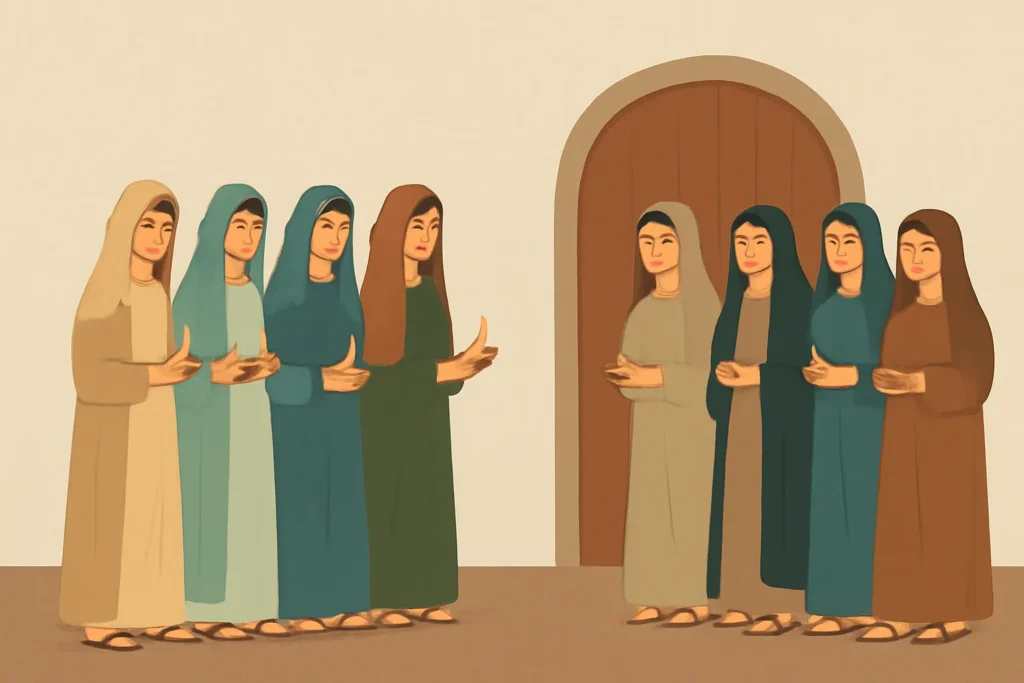
Characters: ten virgins, divided into two groups—five wise, five foolish.
Lashed by delay: the bridegroom’s arrival is uncertain and arrives at a late hour, catching the unprepared by surprise.
Outcome: the wise enter the feast; the foolish are excluded when they seek oil and the door is shut.
Refrain: the admonition to watch and to be ready because you do not know the day or the hour.
The Matthew 25:1-13 meaning is therefore structured to highlight contrast: preparedness versus negligence, spiritual fullness versus depletion, and the irreversible consequence of a missed opportunity. The parable’s form—narrative storytelling that culminates in a moral verdict—invites readers to consider both the inner condition of their faith and the outer circumstances of their lives as they await Christ’s return.
Symbols and Their Possible Meanings in Matthew 25:1-13
Oil and Lamps
Oil is the central symbol in the parable. The oil represents more than literal lamp fuel; it is frequently read as emblematic of inner spiritual vitality, the sustaining presence of the Holy Spirit, and the ongoing practice that keeps faith ready for action. The wise virgins bring extra oil, signaling foresight, personal discipline, and sustained devotion. In the matthew 25 1 13 meaning, oil symbolizes the capacity to respond to the call at any moment, not merely a past moment of decision. The foolish virgins, who lack oil, symbolize a form of religiosity that looks the part but lacks the vitality that sustains readiness through delay and darkness.
Lamplight and Illumination
The lamps are not merely physical light sources; they are outward signs of inward preparedness. A lamp that remains lit in darkness speaks to the believer’s consistent spiritual practice—prayer, Scripture engagement, corporate worship, and acts of service—that sustain hope when expectations are deferred. The parabolic meaning here suggests that illumination is not a one-time event but a sustained posture, especially in seasons of trial or delay.
The bridegroom stands for Christ in the storytelling frame. The delay and eventual arrival test the virgins’ fidelity. The twinned themes of longing and fulfillment are reflected in the believers’ anticipation of the Lord’s return. In many readings, the bridegroom embodies divine initiative—the moment of encounter is not manufactured by the virgins but granted by the Bridegroom’s arrival. The matthew 25 1 13 meaning thus centers on readiness for meeting Christ when he comes, not merely on present religious activity in anticipation of a future event.
The Door
The shut door at the end of the parable intensifies the moral consequence of the choice to be unprepared. The door symbolizes access to salvation, fellowship, or the fullness of the kingdom in that moment. Once the door is closed, the excluded cannot share in what has been prepared for the faithful. In discussions of Matthew 25:1-13 meaning, readers are reminded of the finality that accompanies divine judgment and the seriousness of living with an unswerving readiness that cannot be postponed.
Major Interpretive Approaches to Matthew 25:1-13
Historical-Critical and Traditional Readings
Historically, many interpreters have read the parable as a teaching about watchfulness in expectation of the coming kingdom. The distinction between the wise and foolish virgins is seen as an exhortation to maintain a consistent, living faith rather than a temporary, transient zeal. The emphasis is often placed on the danger of spiritual complacency and the necessity of maintaining a lively relationship with God through sustained spiritual disciplines. In this reading, the matthew 25 1 13 meaning is practical: be prepared, stay faithful, and do not assume you can borrow readiness from others at the moment of reckoning.
Protestant Spirituality and Justification by Faith
Within many Protestant traditions, the parable is discussed in the light of grace and assurance. While the text highlights a decisive moment of exclusion, typical readings emphasize that genuine faith produces ongoing fruit and that true preparedness arises from a life aligned with Christ. The oil is often interpreted as the presence of the Holy Spirit and the vitality of faith, rather than a mere external ritual. The matthew 25 1 13 meaning in this framework stresses that salvation is not earned by works alone but is evidenced by a life shaped by God’s Spirit and sustained faith.
Catholic and Orthodox Perspectives
In Catholic and Orthodox exegesis, the parable can be read within a broader patrimony of sacramental life and communal faith. The oil can be linked to the grace conferred through the sacraments, spiritual disciplines, and ongoing conversion. The door motif aligns with a final judgment that calls believers to persevere in faith and love. For these traditions, the matthew 25 1 13 meaning encompasses both personal conversion and ecclesial endurance—living in a way that the Church recognizes as authentic discipleship.
Adventist and Eschatological Readings
Some readers, especially within Adventist circles, emphasize the imminent nature of the Bridegroom’s arrival and the call to a life characterized by watchfulness and readiness. The oil imagery is read as a symbol of spiritual preparedness that cannot be bought or borrowed at the last minute. The emphasis falls on the necessity of ongoing faithfulness, ethical living, and readiness to meet Christ when the trumpet sounds. In that frame, the matthew 25 1 13 meaning intersects with broader eschatological expectations about events preceding the final judgment.
From a literary perspective, the parable’s structure—lead-in, tension, and verdict—offers a compact meditation on readiness. Theologically, it resonates with the broader scriptural motif that the kingdom requires a steady fidelity rather than a sudden, last-minute conversion. The matthew 25 1 13 meaning thus invites readers to ponder how their daily lives—habits of prayer, service, and love—align with the expectation of divine epiphany.
Wedding Customs and First-Century Context
Understanding the first-century Jewish wedding culture helps illuminate why lamps, oil, and the delay mattered so much. In a culture where weddings could last several days and the exact timing of the groom’s arrival was unpredictable, a lamp-lit procession signified practical readiness. The addition of oil hints at the needs of night-long vigilance. When Jesus frames the parable with a midday-to-midnight rhythm, the audience recognizes the moral weight of having enough light and fuel to participate fully in the celebration. For readers exploring the Matthew 25:1-13 meaning, the cultural lens underscores that this is not merely a metaphor about private piety but a public claim about belonging to the coming reign of God.
Scholars also note the demographic implication: virgins demonstrate readiness in a community wedding ritual, where shared social expectations press upon individuals to maintain a certain standard of preparedness. The difference between the two groups—wise and foolish—can thus be read as a call to personal responsibility within a faith community that expects ongoing faithfulness, not just occasional enthusiasm. In summary, the cultural backdrop provides a more nuanced reading of the matthew 25 1 13 meaning, showing how ritual signs translate into spiritual exhortations.
Practical Implications for Faith Communities and Individual Believers
Personal Spiritual Discipline
Maintain regular habits of prayer, scripture study, and reflection so that faith remains vibrant and ready at all times.
Recognize that spiritual vitality is an ongoing cultivation, not a one-time decision. The oil symbolizes a sustained relationship with God.
Communal Life and Witness
Encourage accountability within bearing witness to the gospel, avoiding the dangers of external religiosity devoid of inner faith.
Foster environments where believers support one another in practical faith—service, generosity, and care for the marginalized—as expressions of preparedness.
Eschatological Readiness in a Modern Context
Engage the tension between hope and responsibility: believers are called to be hopeful about Christ’s return while living intentionally in the present.
Avoid determinism or fatalism; instead, pursue actionable faith that translates into justice, mercy, and righteous living in ordinary life.
Notes on Textual Parallels and Implications
Similar motifs appear in Luke’s gospel (Luke 12:35-40), where watchfulness becomes a universal exhortation to readiness and faithful living in expectation of the master’s return.
The door imagery parallels other biblical warnings about doors that open and close in relation to salvation and judgment, urging readers to ensure current alignment with God’s will.
Interpretive debates often consider whether the oil can be shared; some readings suggest that true readiness cannot be transferred and must originate from an inner, personal turning toward God.
Challenges and Nuances in Interpreting Matthew 25:1-13
Any attempt to articulate the Matthew 25 1 13 meaning must address certain interpretive tensions. One major challenge is balancing the parable’s moral demand with the New Testament emphasis on grace. If the parable is read as a strict gatekeeping narrative, it risks neglecting the broader gospel message that salvation comes through faith and divine initiative. A nuanced reading treats the parable as a teaching about the visible expression of inner faith—where the oil of spiritual life becomes evident in acts of love, perseverance, and faithful waiting.
Another nuance concerns the historical setting. The first-century audience would have understood the wedding imagery intimately, which sometimes leads readers to ask whether the parable applies universally across cultures and eras or speaks more directly to a particular moment in salvation history. The matthew 25 1 13 meaning thus includes both a timeless moral invitation to readiness and a situational retelling that reflects the social realities of its own time.
Key Takeaways: Summarizing the Meaning of Matthew 25:1-13
Across multiple readings, several core insights emerge about the Parable of the Ten Virgins and its Matthew 25:1-13 meaning:
Preparedness matters: The parable calls for a steady, not episodic, posture of faith that is ready to meet Christ at any moment.
Spiritual vitality is essential: Oil is a symbol of ongoing life in the Spirit, not a one-time gift.
Discernment over mere appearance: External displays of piety are insufficient without inner faithfulness and readiness.
Timing is in God’s hands: The delay of the bridegroom emphasizes trust in divine timing rather than human calculation.
Hope and accountability: Believers are invited to live with hopeful anticipation while pursuing ethical and merciful living in the present age.
For readers exploring Matthew 25 1 13 meaning, the parable remains a compelling invitation to attend to one’s own spiritual condition and to participate in a faith that endures beyond momentary enthusiasm. It challenges a complacent posture while offering a hopeful framework for how to live faithfully in a world of delay and expectation.
In reflecting on the matthew 25 1 13 meaning, readers are invited to examine how the imagery of lamps, oil, and a closing door informs a practical faith. The parable does not offer a simple formula for salvation; instead, it invites ongoing discipleship—the kind of life that remains alert, generous, and deeply dependent on God’s grace. By engaging with the parable through its narrative mechanics, symbolic layers, and diverse interpretive traditions, one can appreciate how a seemingly straightforward story can illuminate the enduring question: Are we truly prepared when the Bridegroom comes?








Leave a Reply