Introduction: The Night When Jacob Wrestled with God
The biblical story of Jacob wrestling with God is one of the most enduring and provocative narratives in Genesis. It takes place at a decisive turning point in Jacob’s life, a night of struggle beneath the watchful, private sky before a new chapter in his family’s story begins. The scene is intimate, enigmatic, and deeply human: a man who has spent years maneuvering for advantage discovers that true blessing comes not through clever planning alone but through a costly encounter that leaves him changed. This article surveys the meaning of that night, probes the theological insights it offers, and distills lessons that readers today can apply to their own struggles with faith, identity, and vocation.
Genesis 32: The Text and Its Immediate Context
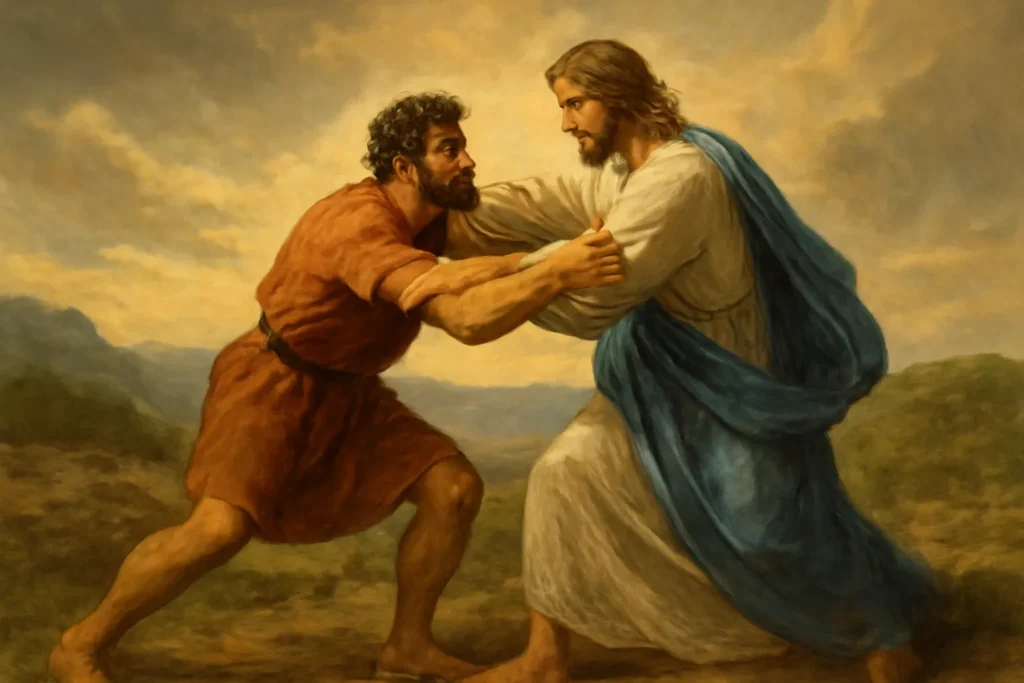
To understand the significance of the wrestling episode, we begin with the narrative frame. In Genesis 32, Jacob is returning to the land of his father Isaac after years of exile and flight. He is in a vulnerable position: he must reconcile with his brother Esau, who once threatened violence when he learned of Jacob’s deception. The atmosphere is tense, and the stakes are high. The text tells us that Jacob sends gifts ahead to Esau, arranges his family in a particular order, and, as night falls, sends his two wives, his two maidservants, and his eleven sons across a ford of the Jabbok River. It is at this liminal crossing, late at night, that a man appears and wrestles with him until daybreak.
Scholars debate the identity of the opponent. Some read the figure as a nameless human adversary; others insist on a theophany—the appearance of God in a visible form. Still others see the wrestling as a symbolic encounter with an angelic being or a manifestation of divine presence. What remains constant across interpretations is that the encounter is not a mere phrasal shift in Jacob’s circumstances but a spiritual crisis that reveals the state of his heart, tests his character, and redefines his future. The narrative’s climactic moment comes when the opponent touches Jacob’s hip socket and dislocates it, enabling a limping, vulnerable posture that becomes a sign of dependence on and trust in God rather than in himself. The text culminates with a blessing and a name change: you have struggled with God and with humans and have overcome, and Jacob’s name is changed to Israel.
In this broader context, the episode is more than a dramatic scene of conflict. It signals a transition from a life organized around scheming and self-preservation to a life oriented toward blessing, covenant fidelity, and a new identity that would shape the people of Israel. The call to new identity is inseparable from the blessing sought and received, and the way in which Jacob seeks and receives blessing becomes a pattern for later generations who seek to encounter God in their own situations of struggle.
Who Is the Opponent? Perspectives on Jacob Wrestling with God
Across Jewish and Christian traditions, there are several prevailing readings of the opponent in Jacob wrestling with God:
Theophany or Angelic Manifestation: Many interpreters view the opponent as a visible manifestation of God or as a mighty angel acting on God’s behalf. This reading emphasizes the divine-human encounter as a theophany—a physical encounter with the divine that leaves the human transformed. The night-long struggle becomes a pedagogy of blessing, humiliation, and awakening to a divine plan.
The Human Challenge: Some commentators stress the strenuous, even primal, character of the struggle as a metaphor for Jacob’s long life of deception catching up with him. In this view, the wrestling embodies his inner conflict—his cunning and his fear—and the encounter functions as a rite of passage from a life of self-reliance to a life under the governance of the divine will.
Symbolic Encounter with the Divine: A more symbolic approach reads the scene as a dramatic representation of the ongoing struggle between human nature and the demands of covenant faith. The limp at the end is then read as a visible sign of a transformed posture before God—humility, dependency, and perseverance in blessing-seeking prayer.
Regardless of which nuance you favor, the core point remains: the struggle is not merely physical but existential. The “wrestling” is a paradigm for the way people encounter God in their deepest fears, hopes, and uncertainties. The Peniel moment—the place where Jacob says, “For I have seen God face to face, and yet my life is preserved” (Genesis 32:30)—gives the encounter a sacramental texture: a place where divine encounter does not erase human pain but sanctifies it.
The Night’s Key Moments: A Close Look at the Narrative
1) The Beginning of the Struggle
The narrative begins with a sudden and ambiguous intrusion: a man appears and wrestles with Jacob. The struggle lasts until the break of day, a long ordeal that forces Jacob to confront his own vulnerability and dependence on God’s mercy. The turning point is not victory in the conventional sense but a reorientation toward blessing, which emerges only after the night’s endurance.
2) The Injury and the Blessing
When the opponent touches Jacob’s hip socket and injures him, an image arises of human frailty and dependence. The blessing that follows is not promised through force or conquest but as a gracious grant that presumes right relationship with God. The phrase that Jacob receives—“You have struggled with God and with humans and have overcome”—is, in a sense, a paradox: to “overcome” in this context means to persevere in faith and be remade by the encounter, not to dominate the divine adversary.
3) The Name Change and Its Significance
The renaming of Jacob to Israel marks a shift from personal achievement to national vocation. The name “Israel” can be read as “one who struggles with God” or “God rules” depending on etymology and tradition. The dual sense is intentional: the people of Israel are those who bear the mark of ongoing relationship with God even when it is difficult and costly.
4) The Limp as a Sign
The limp is not mere injury; it becomes a lifelong reminder of the encounter. It teaches that genuine blessing frequently comes with a price and that a life of faith is navigated not by the absence of weakness but by reliance on God in weakness. The physical sign becomes a symbol for spiritual posture: humility, dependence, and the willingness to endure in faith.
In sum, the night-long wrestle is a compact narrative about transformation under pressure. It dramatizes how a person’s past can collide with a divine calling, producing a new identity that will shape generations.
Theological Insights: Deepening Our Understanding of the Wrestling Narrative
From the text of Jacob wrestling with God, several theological threads emerge that scholars and faith communities have drawn into their broader discussions about God, blessing, and human vocation. Here are some of the central insights that scholars and teachers frequently highlight:
Divine encounter as transformation: The encounter does not leave Jacob unchanged; it reorients his life and his mission. The divine-human encounter becomes the primary vehicle through which God's purposes begin to unfold in history.
Grace before merit: Jacob does not earn the blessing by force or cunning. The blessing is given by grace, often in response to a posture of humility and desperation before God. This theme resonates with broader biblical patterns in which God’s gifts are given in response to trust rather than performance.
Identity formation through struggle: The renaming to Israel encapsulates a core biblical insight: identity in the biblical story is not fixed by one’s earlier deeds alone but is shaped by ongoing encounters with God, which may redefine purpose and vocation.
Ambiguity of the divine appearance: The ambiguity surrounding the opponent invites readers to wrestle with the mystery of God. God’s presence can be both comforting and challenging, inviting trust even when the path is unclear.
Ethical and communal dimensions of blessing: The blessing given to Jacob has ramifications beyond the individual; it becomes the foundation for a people and their covenant relationship with God. The intimate moment has public consequences for family, tribe, and nation.
Dependence as strength: The physical limp becomes a symbol that strength in faith is often expressed through dependence and surrender, rather than through self-sufficiency or triumphal power.
Some theologians also explore the possibility that the wrestling foregrounds a Christological or messianic dimension, reading the episode as pointing forward to a greater, more universal encounter with God through the Messiah. While this reading is debated, it underscores the significance of the narrative for later Christian theological reflection about divine-human encounters, transformation, and blessing in the life of faith.
Across traditions, the core theological message remains potent: God’s blessing often arrives through struggle, and a faithful life is shaped not by avoiding conflict but by engaging God honestly in the midst of it. The night of wrestling thus becomes a metaphor for the believer’s pilgrimage: a journey marked by striving, gift, and redefinition.
Lessons from Genesis 32: Practical Implications for Faith and Life
Readers, whether Jewish, Christian, or from other contemplative traditions, can draw a number of practical lessons from the episode of Jacob wrestling with God. The following points present a structured way to reflect and apply the narrative to contemporary life:
Honest wrestling with God: The scene invites believers to engage in candid prayer and wrestling with their fears, questions, and aspirations rather than suppressing them. Honest grappling can lead to deeper trust and eventual blessing.
Perseverance in prayer and petition: The night-long struggle model emphasizes endurance. When answers do not come quickly or clearly, perseverance becomes a virtue that deepens faith and character.
Humility before grace: The limp signals a transformation through grace. It cautions against confidence in human strategies and highlights dependence on God’s benevolence, even when circumstances are painful or disorienting.
Re framing of identity through encounter with God: Just as Jacob’s name shift reframes his destiny, believers may experience moments that reorient their sense of calling, vocation, or mission in the world. Identity in faith is often clarified through encounter and reception of grace.
Blessing as purpose, not possession: The blessing Jacob receives redirects his life toward service in the divine plan. Blessing becomes responsibility: to live in fidelity to God’s covenant and to extend blessing to others through one’s actions and character.
Transforming fear into faith: The fear of Esau’s anger is transmuted into a fear of disobedience or neglect of God. This shift demonstrates how fear can be channeled toward a more faithful trust in God’s purposes.
Ethics of reconciliation and reconciliation’s costs: The narrative hints that blessing and reconciliation often require honest confrontation, apology, and repair—both within families and in communities seeking peace with God and with one another.
Ritual memory through signs: The body’s memory—the limp—functions as a lasting sign that helps future generations remember the encounter with the divine and its stakes for their own journeys of faith.
In practical terms, readers can apply these lessons by cultivating spaces of honest prayer, seeking God in times of confusion, embracing humility as a strength, and recognizing that genuine blessing often entails a reorientation of one’s priorities toward God’s purposes for others.
Historical and Theological Traditions: How Different Communities Read the Night of Wrestling
The significance of Jacob wrestling with God has been interpreted differently across a broad spectrum of traditions. Here are some notable contours of that conversation:
Rabbinic Judaism: In Jewish exegesis, the encounter at the Jabbok is often read as a test of Jacob’s readiness to become patriarch in a more mature sense. The name change to Israel is celebrated as the birth of a people who will live in covenant faithfulness, even amid challenges and temptations to rely on human cleverness instead of divine guidance. Some traditions emphasize the ethical dimension—Jacob’s reconciliation with his past and his responsibility toward his family and future nation.
Early Christian interpreters: In early Christian reflection, the episode is frequently read as a prefiguration of Christ’s own wrestling with God’s will in Gethsemane—a model for persevering prayer and surrender. The blessing and the renaming are sometimes linked to the Christian understanding of becoming “new creation” through encounter with the divine, with the name Israel echoing a broader spiritual identity in Christ.
Patristic commentary: The Fathers often highlight the moral and spiritual dimensions of the struggle, focusing on how God’s blessing is rooted in dependence, faith, and perseverance. The “limp” is sometimes interpreted as a symbol of humility and a reminder that spiritual triumph is achieved through forgiveness, grace, and renewed trust in God.
Contemporary exegetical perspectives: Modern scholars frequently examine the narrative through literary and historical-critical lenses. They explore how the story of Jacob at the Jabbok functions within Genesis as a hinge between the patriarch’s earlier deception and his later leadership in the lineage that becomes Israel. Some emphasize the narrative’s psychological realism—a portrayal of fear, doubt, negotiation, and faith that resonates with readers’ own experiences of struggle.
Across these traditions, the central motifs endure: the tension between human effort and divine grace, the formation of identity through encounter, and the costly but transformative nature of blessing. The narrative’s staying power lies in its openness to interpretation and its capacity to speak across cultures and eras about what it means to contend with God, to receive a blessing, and to move forward with a new name and a new vocation.
Conclusion: The Transformative Power of a Covenant Night
The story of Jacob wrestling with God is not merely an ancient tale about a man’s struggle with a divine being. It is a timeless meditation on how people are formed by encounters that are at once intimate, painful, and hopeful. The night at the Jabbok River becomes a microcosm of faith itself: a journey marked by conflict, dependence, blessing, and renewal. The narrative insists that blessing is not guaranteed by cleverness or physical prowess but by a posture of trust, a willingness to face one’s vulnerabilities, and a readiness to be renamed in accordance with the divine purpose for one’s life.
Today, readers can approach this story as an invitation to their own transformations. They can ask: What is my own night of wrestling with God? What fears hold me back from fully living into who I am meant to be? How does God’s blessing—whether received quietly in moments of peace or wrestled for through long seasons of trial—reframe my identity and vocation? The answer will often come not as a dramatic, conquer-and-go moment but as a measured, faithful continuing—walking with God with the limp of humility, and stepping into the future as part of a people called by God to bless the world.
In a single night, Jacob’s life becomes a biography of transformation. The Peniel encounter—the place where he sees God face to face—remains a symbolic waypoint in an ongoing pilgrimage from self-reliance to covenant faithfulness. The biblical witness thus teaches that struggle and blessing are inseparably linked, and that the journey from fear to faith often passes through a doorway marked not by triumph but by trust. The saga of Jacob—and the nation that bears his name—continues to speak to generations about how to live under God’s governance, how to forgive, how to seek reconciliation, and how to answer the divine call with courage, perseverance, and grace.








Leave a Reply