Definition of the Great Commission: A Working Definition
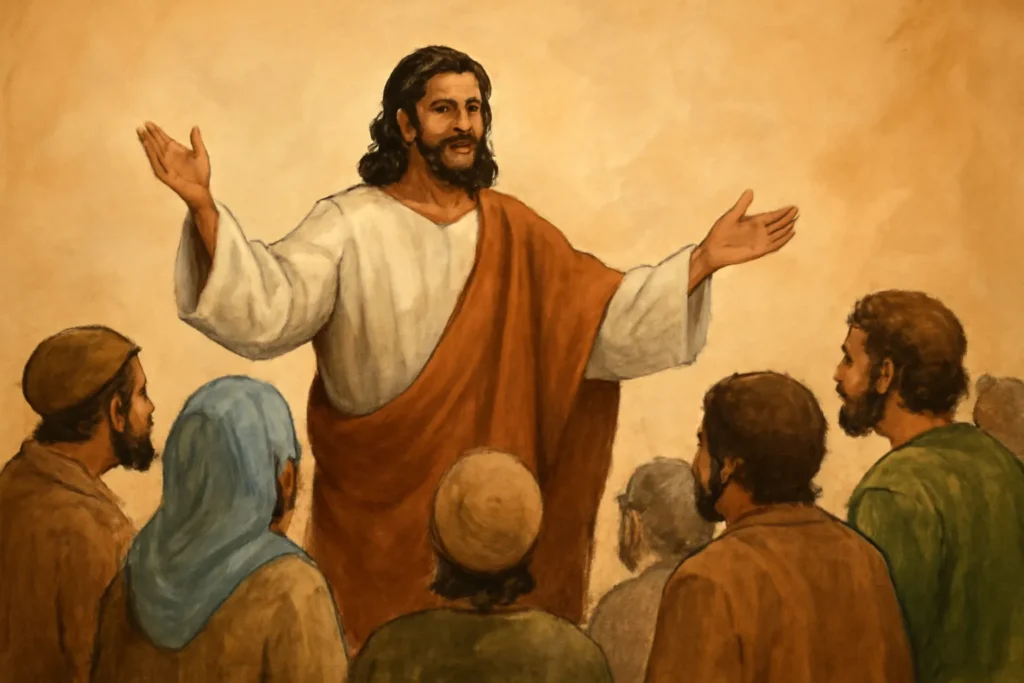
At its most essential level, the Great Commission is a divine command issued by Jesus to his followers following his resurrection. It functions as a mandate rather than a suggestion, a formal charge designed to guide the ongoing activity of the church across generations. The core formulation in Matthew 28:19–20 places emphasis on three interlocking elements: going to all nations, baptizing in the name of the Father, the Son, and the Holy Spirit, and teaching people to observe all that Jesus commanded. In this sense, the Great Commission can be described in multiple, complementary ways:
Mandate: a binding directive given by the risen Christ to his disciples and their successors.
Mission: the ongoing enterprise of declaring the gospel, inviting faith, and forming obedient followers.
Commission: a formal assignment that entrusts the church with a shared task and authority to carry it out.
Call to mission and discipleship: an invitation to participate in Jesus’ own work by making new learners who become mature followers.
Program for breadth of reach: a framework that envisions a global scope—across cultures, languages, and social contexts.
Variations of the definition are common in biblical scholarship and pastoral reflection, because the Great Commission encompasses more than a single action. Some describe it as a gospel-evangelism directive, others as a discipleship imperative, and still others as a church-mission covenant that binds a people to participate in Christ’s redemptive work. Yet all of these formulations share a common core: a call to proclaim, invite, and shape others so that more people become well-formed followers of Jesus Christ. In many contexts, the Great Commission is spoken of as a multifaceted order—one that invites personal transformation, corporate witness, and the cultivation of communities where obedience to Jesus is learned and practiced.
To broaden the semantic reach without sacrificing accuracy, consider these paraphrases:
The call to go and make disciples of all peoples.
The apostolic directive to engage the world with the gospel, baptize new believers, and instruct them in Jesus’ teaching.
A covenantal charge that binds the church to witness, worship, and faithfulness across generations.
A global mission that integrates proclamation with formation and service.
Taken together, these perspectives help us understand the Great Commission as a comprehensive calling to participate in God’s redemptive work by sharing the message, nurturing new believers, and promoting obedience to Jesus’ commands in every sphere of life.
Biblical Context: Where the Great Commission Fit In Scripture
The Great Commission sits at a pivotal moment in the biblical narrative. It arises after the resurrection and before the ascension, within a scene where Jesus appears to his disciples and states authority over heaven and earth. The surrounding context helps readers grasp its scope and intention:
Matthew 28:18–20—the crystal center of the Commission: a command to go, make disciples, baptize, and teach, all under the promise of Jesus’ continual presence (“I am with you always, to the end of the age”).
Mark 16:15–16—the brief, action-oriented version emphasizing proclamation to all creation and the consequences of faith and baptism.
Luke 24:46–48—the expansion of the gospel through the witnesses in Jerusalem, Judea, Samaria, and to the ends of the earth, anchored in scriptural fulfillment.
John 20:21–23—the apostolic breath: Jesus commissioning the disciples with peace, involving the authority to forgive or retain sins as the Spirit enables public proclamation and pastoral care.
Acts 1:8—the Spirit-empowered impetus for mission: “you will be my witnesses in Jerusalem, and in all Judea and Samaria, and to the ends of the earth,” setting the stage for the early church’s expansion.
These passages, together, form a cohesive picture: presence and authority of Christ enable the mission; the church is called to bear witness in every culture; and the task includes both proclamation (the message of good news) and formation (discipleship and obedience).
Beyond these primary texts, the broader biblical narrative—Old Testament expectations of nations turning to the worship of the one true God, and the New Testament emphasis on the church as the instrument through which God gathers worshipers—provides a continuity that helps interpreters understand the Great Commission as not only a new program but a fulfillment of God’s gracious plan to redeem all peoples.
Key Terms and Language: The Core Verbs and Their Meaning
A careful look at the primary verbs in the Great Commission reveals the rhythm of the commanded work. The Greek vocabulary behind the commission helps readers see the depth of the mission and what it requires for real transformation.
Go, make disciples, baptize, teach
Go—the call to move beyond one’s comfort zone, crossing physical and cultural boundaries to reach people where they are.
Make disciples—the heart of the mission: to bring people into lifelong apprenticeship to Jesus, resulting in faith, obedience, and continual growth.
Baptize—an outward, public declaration of faith that marks entrance into the community of believers and the identification with the Triune God.
Teach—the ongoing instruction that leads to maturity, enabling believers to observe all that Jesus commanded.
The sequence—go, disciple, baptize, teach—frames not only the order of operations but also the character of the Christian life. It begins with movement toward others, centers on forming learners who imitate Christ, includes ritual identification with the faith, and culminates in lifelong instruction that shapes thinking, affections, and behavior.
Some scholars emphasize obedience as the culminating aim: the disciples are trained to live in such a way that their practices reflect Jesus’ teaching, not merely to assent to it verbally. Others highlight the community dimension: baptism and teaching happen within a church community that sustains accountability, care, and shared mission.
Theological and Practical Implications: Why the Great Commission Matters
The Great Commission carries both theological weight and practical consequence for individuals, churches, and mission-minded movements. Theologically, it anchors Christian identity in the authority of Christ and grounds the universal scope of the gospel in God’s redemptive plan. Practically, it translates into a lifestyle and institutional priorities that shape how believers live, worship, and engage the world.
Global scope with intimate local practice: The command to reach “all nations” does not negate the importance of a local, gathered faith community. Instead, it requires the church to balance local discipleship with global awareness and cross-cultural engagement.
From proclamation to formation: The Commission includes both the declaration of the gospel and the ongoing formation of believers into mature disciples who observe Jesus’ commands.
Public worship paired with public mission: Baptism in the Triune name and the continual teaching create a rhythm where worship and mission reinforce one another—worship fuels mission, and mission deepens worship.
Authority and empowerment by the Spirit: The Great Commission rests on Jesus’ authority and the ongoing work of the Holy Spirit, enabling believers to bear witness in diverse contexts.
Within this framework, the Great Commission also intersects with other biblical imperatives—justice, mercy, and the care of the vulnerable. While the primary verbs are about witness and formation, many Christian traditions see those actions as inseparable from living out the life of the kingdom, including acts of service, reconciliation, and social righteousness. This broader understanding does not dilute the gospel; rather, it grounds it in a holistic vision of human flourishing under God.
Historical Perspectives and Doctrinal Clarifications
Throughout church history, Christians have reflected on the Great Commission to articulate the church’s mission strategy and its scope. Several recurring themes emerge:
Universality of the mission: The gospel is meant for every people group, language, and culture, not just for the culturally or geographically proximate.
Continuity of the mission: The early church understood the commission as a perpetual mandate, not a one-time event limited to the first disciples.
Intentional discipleship: The emphasis moves from mere conversion to lifelong apprenticeship that results in obedient living.
Community formation: Baptism and teaching occur within the context of local churches where believers gather, worship, and train one another.
There are diverse historical emphases regarding how to implement the Great Commission in different eras and cultures. Some periods emphasized aggressive evangelism and church-planting movements; others highlighted social transformation and holistic ministry. Yet even with these differences, most orthodox traditions affirm the same core commitments: proclamation of the gospel, initiation into the faith through baptism, and ongoing discipleship through instruction and mentorship.
In everyday life, the Great Commission translates into concrete practices that shape worship services, education programs, and mission strategies.
Personal evangelism and witness: Every believer is called to share the gospel with gentleness and clarity, inviting questions, listening, and offering hope in Christ.
Disciple-making within communities: Churches design discipleship pathways—mentoring relationships, small groups, and structured curricula that help individuals grow in knowledge and obedience.
Baptism as a public declaration: Baptism rituals symbolize the believer’s identification with Christ’s death and resurrection and their new relationship within the church community.
Teaching for obedience: Instruction covers Jesus’ teaching across the whole counsel of Scripture, equipping believers to apply it in moral decision-making, relationships, work, and mission.
Cross-cultural and global engagement: Churches support missionaries, partner with overseas ministries, and train leaders who can serve in diverse contexts, recognizing that the gospel breaks down barriers of language, ethnicity, and power.
Equipping the next generation: Emphasis on leadership development, literacy in Scripture, and opportunities for laypeople to lead ministries, ensuring continuity of mission.
A healthy church interprets the Great Commission not as a program to be completed but as a shape of life—a continual movement of sending, accompanying, and empowering believers to be witnesses who model the gospel in every setting.
Modern Applications: How Churches and Individuals Live the Commission Today
In contemporary settings, churches apply the Great Commission through a broad spectrum of activities that reflect both the universal scope of the gospel and the particular needs of local communities.
Local outreach and next-step discipleship: Neighborhood evangelism, seeker-friendly ministries, and a clear path from initial faith to mature discipleship.
Formation through teaching: Regular, biblically faithful teaching that connects doctrinal understanding with practical living.
Cross-cultural mission: Short- and long-term mission trips, partnerships with international churches, and training for intercultural ministry to reach people from different backgrounds.
Online proclamation: Digital platforms used to share the gospel, facilitate Bible study, and enable remote mentoring and teaching across borders.
Righteous living and justice: Integration of gospel witness with care for the vulnerable, advocacy for justice, and community development as expressions of the kingdom of God.
Churches today often frame their mission statements around the Great Commission, but the most resilient expressions of this commission are those that embed discipleship in daily rhythms: worship, study, service, and relational care that model the gospel in tangible ways.
As with any central biblical text, questions arise about scope, timing, and theological interpretation. Here are some common clarifications that emerge in thoughtful Christian discussion:
Who is commissioned? The command is given to Jesus’ disciples and, in a broad sense, to the church—the body of believers through whom the gospel continues to go forth.
What is the scope? The mission is universal—“to all nations” or “to the ends of the earth”—and it unfolds through local churches planting, sending, and training ministry partners worldwide.
What about social action? The Great Commission is primarily about proclaiming and forming believers in Christ; however, many interpret social action, justice, and mercy as natural expressions of a life shaped by the gospel and a means through which the gospel is demonstrated and heard.
How is obedience measured? Obedience is measured in faithfulness to Christ’s commands, including love for God and neighbor, integrity, and a life that reflects the reign of God in words and deeds.
Doctrinal Nuances: Variations Among Traditions
Across Christian traditions, the Great Commission is embraced as a non-negotiable aspect of faithful Christian witness. Yet there are nuances in emphasis:
Evangelical perspectives often emphasize personal conversion, the necessity of hearing the gospel, and making disciples as a measurable goal of ministry.
Foundational church-doctrine views highlight baptism as entry into the covenant community and teaching as the ongoing nourishment that sustains life in Christ.
Missiology debates explore the balance between evangelism, discipleship, and social engagement, as well as the best modalities for cross-cultural mission in different historical moments.
Despite these differences, the consistent thread is that the church exists to bear witness to Jesus’ death and resurrection, to invite people into a transformative relationship with him, and to cultivate communities that live out the values of the kingdom in every corner of the world.
The Great Commission is not a static directive from a distant era but a living call that continues to shape how Christians relate to God, neighbors, and the world. It invites each follower to participate in a global story of redemption—through personal witness, robust discipleship, and a church that gathers, grows, and goes forth to proclaim the gospel in word and deed. The breadth of its language allows for rich interpretation across cultures and times, yet the central aim remains clear: to help people become devoted followers of Jesus who embody his teachings and advance his work until the whole earth is filled with the knowledge of the glory of the Lord.
Whether we describe it as a divine mandate, a mission assignment, a covenant call, or a global program, the essence of the Great Commission endures: the risen Christ authorizes his followers to go, to shape lives through baptism and teaching, and to embody obedience to Jesus in every sphere of life. In doing so, the church participates in God’s unfolding plan for a world in need of grace, hope, and transformation.








Leave a Reply