Why Do Muslims Hate Christians? Debunking Myths, Examining History, and Fostering Interfaith Dialogue
Why Do Muslims Hate Christians? Debunking Myths, Examining History, and Fostering Interfaith Dialogue
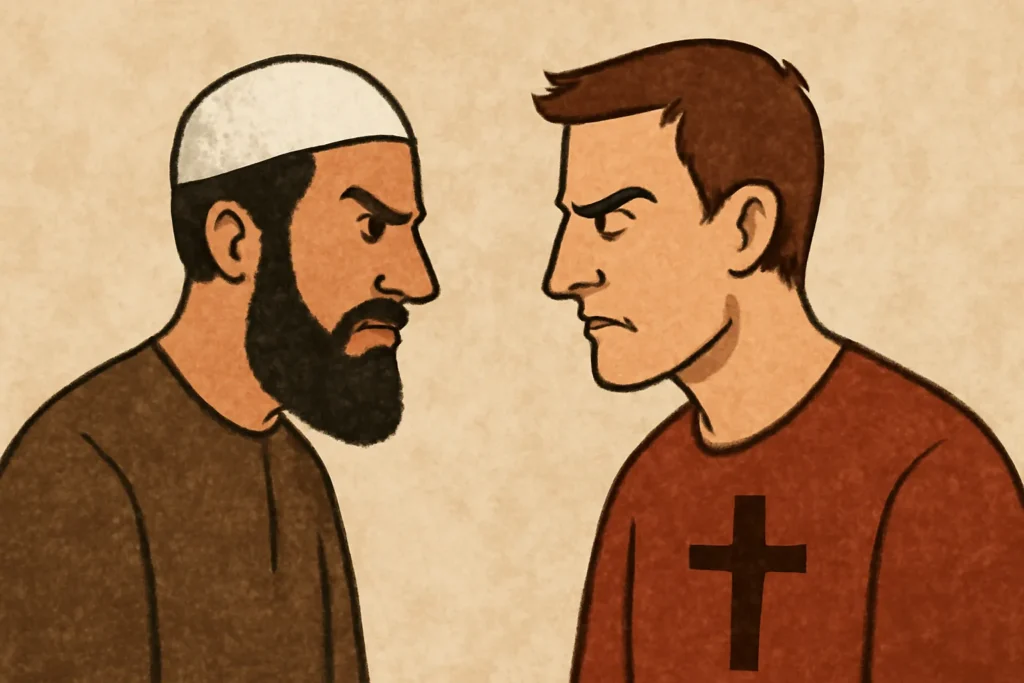
Why Do Muslims Hate Christians? Debunking Myths, Examining History, and Fostering Interfaith Dialogue is a question that appears in many public conversations, classrooms, and media reports. It reflects a mix of fear, misunderstanding, political rhetoric, and selective memory about a long and complex relationship. This article offers a careful, historically informed discussion that challenges blanket statements, highlights the differences between belief and behavior, and suggests practical ways to build interfaith dialogue rooted in mutual respect and shared humanity. While no single faith or community can be painted with a single stroke, examining myths, historical patterns, and paths forward can help readers discern where disagreements come from and how they can be resolved constructively.
Several factors contribute to the persistence of the idea that Muslims hate Christians, or that there is an automatic hostility between the two faith communities. These factors are not evidence of a universal sentiment but rather signals of broader dynamics at work in the public sphere. Understanding them helps distinguish perception from practice and helps people engage more responsibly with one another.
Political conflict and propaganda: In periods of war, occupation, or regional tension, political actors may use religious identity to mobilize support or demonize opponents. Such rhetoric can spread quickly and linger long after the immediate dispute ends.
Media narratives and stereotypes: News coverage often prioritizes sensational or conflictual stories. When reporting on Christian–Muslim relations, coverage can emphasize clashes over coexistence, converting complex histories into simple binaries.
Historical grievances and memory: Past episodes—such as invasions, crusades, or colonial-era policies—leave legacies that some communities remember vividly. These memories can color contemporary attitudes and rumor-spreading about ongoing religious hostility.
Religious education and socialization: In communities where people have limited exposure to members of the other faith, stereotypes can fill gaps in understanding. Without accurate information, myths are more likely to take root.
Geopolitics and local power structures: In some regions, religious identity is entangled with national or ethnic politics, and tensions may be intensified by competition over resources, governance, or legitimacy.
Importantly, the existence of these factors does not prove that all Muslims hate Christians or vice versa. In fact, broad surveys of Muslim communities around the world show that the vast majority endorse peaceful coexistence, cooperate across faith lines, and condemn violence against Christians and other minorities. The core question is less about a universal hatred and more about understanding the sources of friction, addressing them, and amplifying examples of interfaith solidarity.
Historical context: examining how relationships have evolved
Early Islamic era and Christian communities
From the time of Prophet Muhammad, Christian communities existed within the early Islamic world. The Quran and the life of the Prophet mention protections and rights afforded to People of the Book, a category that includes Christians and Jews. In many places, Christians and Muslims shared cities, markets, and scholarly circles. Economic ties, medical and scientific exchanges, and cultural interactions flourished in centuries of coexistence in the Middle East, North Africa, and parts of Asia. This era demonstrates that cooperative relationships were possible under Islamic governance and that religious difference did not automatically equate to hostility.
Medieval Iberia and convivencia
In medieval Iberia, Muslim, Christian, and Jewish communities inhabited the same landscapes, with periods of relative harmony and cultural exchange often described as convivencia. People benefited from shared urban life, translation movements, architectural innovation, and intellectual cross-pollination. While there were times of tension and conflict—as in any multi-faith society—this era also shows that diverse religious communities could maintain practical cooperation and mutual learning when political conditions permitted.
Crusades and mutual hostilities
The Crusades (roughly the 11th to 13th centuries) were a turning point in Christian–Muslim relations. They were primarily military and political campaigns, but their legacies extended far beyond battlefields. In some periods, Christians and Muslims engaged in negotiation, prisoner exchanges, and even exchange of scholars. Yet the Crusades contributed to lasting stereotypes and reciprocal resentments that persisted in some communities for generations. It is essential to distinguish the actions of militarized power structures from the everyday lives of millions of believers who built families, churches, mosques, schools, and neighborhoods side by side.
Under the Ottoman Empire, Christians and Jews lived under a formal system that recognized them as distinct communities with certain protections and responsibilities. The millet system allowed religious groups to govern internal affairs, follow their laws, and practice their rituals within a shared imperial framework. This demonstrates a historical model in which two or more faith traditions coexisted under a common legal and political order, rather than one being forcibly converted or eradicated.
Colonialism, nationalism, and modern geopolitics
The rise of colonialism and the reshaping of global politics in the 18th–20th centuries altered religious landscapes. Missionary movements, geopolitical strategy, and the drawing of new borders often placed Christians and Muslims in new relationships that could foster cooperation or competition, depending on local leaders and communities. In some contexts, colonial policies created or exacerbated tensions between religious groups. In others, local communities found ways to cooperate in public life, education, health care, and mutual aid. The key takeaway is that modern tensions are not simply the product of ancient grievances; they are also shaped by contemporary politics, economic crises, and social change.
Religious doctrines and the space for common ground
People of the Book and shared monotheistic frameworks
In Islamic theology, Christians are recognized as People of the Book, a designation that acknowledges common roots in monotheism and reverence for shared prophets. This framework has historically opened space for dialogue, mutual respect, and protected, though not identical, rights. The recognition of a shared spiritual heritage does not erase theological disagreements, but it does provide a basis for coexistence and collaboration in matters of social welfare, education, and culture.
Ethical common ground: dignity, compassion, and justice
Both Islam and Christianity place strong emphasis on virtues such as compassion, justice, and care for the vulnerable. Many interfaith dialogues highlight these shared ethical commitments as a platform for cooperation. When communities focus on these values, they can build common ground that transcends doctrinal differences and serves the public good.
Debunking myths: what the evidence shows
Myth 1: Muslims hate Christians
Reality: The assertion that Muslims universally hate Christians is not supported by empirical evidence or the lived experiences of numerous interfaith families, communities, and scholars. While political conflicts and misperceptions can inflame tensions, a broad and consistent pattern across diverse Muslim-majority societies shows many Muslims actively engage with Christians in everyday life, collaborate on humanitarian efforts, and advocate for religious freedom and mutual respect. Mutuality, cooperation, and peaceful coexistence are not rare exceptions but common practices in many regions.
Myth 2: Islam prohibits Christians or requires Christians to convert
Reality: Islam does not mandate forced conversion as a universal rule, and various Islamic legal and ethical frameworks historically allowed Christians to practice their faith under certain conditions. The concept of dhimmi in some historical periods granted a form of protected status to religious minorities in exchange for compliance with tax and social norms; this system varied widely by era and locale. In modern times, most Muslim-majority countries recognize freedom of religion to varying degrees, and many Muslim communities actively support interfaith dialogue and Christian worship locations. The practical takeaway is that religious policy is highly context-dependent and cannot be reduced to a single historical formula.
Myth 3: Christian communities are enemies of Islam or seek to undermine Muslim societies
Reality: The idea that Christian populations are inherently antagonistic toward Islam is a political construction more than a theological imperative in most cases. While there are sectarian tensions in some places, there are also numerous examples of long-standing friendships, academic collaboration, charitable programs, and interfaith leadership that cross religious divides. It is essential to distinguish between political conflict and interpersonal or intercommunal relations. People can disagree about doctrine while still treating neighbors with dignity and working together on shared concerns like education, health, and human rights.
Myth 4: All Christians oppose all Muslims across the board
Reality: The Christian world is not monolithic, just as the Muslim world is not. There are many Christian denominations, theological traditions, and cultural communities with diverse views on Islam. Some Christian groups engage in cooperative interfaith work, while others focus on doctrinal debates. Conversely, Muslims around the globe likewise represent a spectrum of attitudes toward Christians, influenced by education, local culture, history, and personal relationships. Emphasizing diversity within each faith helps move beyond blanket judgments to more accurate understandings of where agreement exists and where tensions remain.
Examining history to understand present realities
A chronological lens on key moments
7th–8th centuries: Early Islam interacts with Christian communities in the Arabian Peninsula, Syria, Egypt, and Mesopotamia. Debates and dialogues about theology, scripture, and law occur within a framework that allows peaceful coexistence under Islamic governance in many locales.
10th–12th centuries: Scholarly exchanges in the Islamic world include Christian and Jewish scholars who contribute to philosophy, medicine, and the sciences. Urban centers become hubs of pluralistic intellectual life where religious communities cross-pollinate ideas.
11th–13th centuries: The Crusades shape popular memory and political rhetoric on both sides. While they mark episodes of violent conflict, they do not erase the long-standing relationships of daily life, kinship networks, trade, and shared religious practice that persisted in other times and places.
16th–19th centuries: The Ottoman and Safavid empires, and later colonial contexts, create new administrative and cultural arrangements for Christians within Muslim-majority regions. In many cases, Christians maintained councils, churches, and schools while contributing to regional economies.
20th–21st centuries: Nationalism, state modernization, and geopolitical conflict influence Muslim–Christian relations. Yet there are prominent examples of interfaith coalitions, peacebuilding initiatives, and institutions dedicated to education, humanitarian aid, and civic engagement across the globe.
Fostering interfaith dialogue: pathways to understanding
Principles that shape constructive dialogue
Effective interfaith work rests on several core principles. These include recognizing the inherent dignity of every person, listening with empathy, seeking facts over rumor, and focusing on shared values. When discussions center on common ground and concrete actions, dialogue moves from debate to collaboration, yielding tangible benefits for communities and individuals alike.
Practical steps for communities
Joint education initiatives: Co-create curricula, guest lectures, and study circles that explore each faith’s core beliefs, histories, and ethical teachings. Emphasize sources of peace, mercy, and social justice shared by Islam and Christianity.
Community service and social projects: Partner on charitable programs, disaster relief, refugee assistance, food banks, and health clinics. Shared work builds trust more effectively than talks alone.
Interfaith prayer and ritual exchange (where appropriate): Invite leaders to participate in or observe each other’s services in respectful ways that honor differences while highlighting shared commitments to compassion and service.
Dialogue spaces with trained facilitators: Organize moderated conversations that include scholars, clergy, educators, youth, and community leaders. Focus on listening, not winning an argument.
Media literacy and public discourse: Promote responsible reporting that avoids sensationalism and stereotypes. Encourage diverse voices in media, including Muslim and Christian commentators discussing shared concerns.
Policy advocacy for religious freedom: Work together to defend rights to worship, teach, and practice faith without harassment or discrimination.
Examples of successful dialogue initiatives
Across the world, numerous programs illustrate how Muslims and Christians can collaborate and learn from one another. These initiatives often center on education, humanitarian action, and youth engagement, and they frequently lead to lasting partnerships in local communities. By sharing experiences, leaders from both faiths demonstrate that interfaith collaboration is not only possible but deeply fruitful for social cohesion and moral clarity.
Individual actions that promote healthier relations
Question stereotypes: When you hear a sweeping claim about another faith, ask for sources, consider counterexamples, and seek out voices from that community.
Build personal bridges: Reach out to neighbors, colleagues, or classmates who practice a different faith. Shared daily routines—work, school, sports—offer natural opportunities for respectful conversation.
Learn the basics of both faiths: Read trusted sources, attend interfaith events, or enroll in courses that explain core beliefs, practices, and histories of both Islam and Christianity.
Support inclusive institutions: Patronize schools, mosques, churches, and community centers that welcome diverse congregants and prioritize safety and respect for all.
Speak out against hate when you see it: If you encounter bigoted rhetoric online or in real life, respond with thoughtful, fact-based dialogue and, when appropriate, report harm or threats to the proper authorities.
Institutional roles in shaping dialogue
Educational policies: Curriculum designs that include honest, nuanced histories of Muslim–Christian relations can reduce fear and build empathy.
Religious leadership: Clergy and scholars can model constructive engagement, publish joint statements on peace and justice, and organize shared worship or service projects.
Media responsibility: Journalists, editors, and producers should avoid sensationalism and ensure diverse perspectives are represented in coverage of interfaith issues.
In discussions about Muslim–Christian relations, it can be tempting to rely on quick labels or sensational narratives. A more accurate approach acknowledges both tensions and opportunities, and it emphasizes accountability, context, and the human face of faith communities. Readers are encouraged to examine sources critically, seek out voices from both communities, and prioritize actions that build safety, dignity, and mutual respect for all people.
In many global cities, neighborhood councils or coalitions bring together Muslim and Christian leaders to address shared concerns—youth violence, housing, literacy, and health care. These coalitions demonstrate that religious identity can be a resource for social welfare rather than a barrier to cooperation. They also highlight how common values such as mercy, generosity, and justice unify diverse communities in practical ways.
Educational exchanges
Several universities and schools host joint lectures, academic conferences, and student exchange programs aimed at exploring the intersections of Islamic and Christian thought. Students gain a more nuanced understanding of each tradition, learn to distinguish doctrinal disputes from personal prejudice, and practice respectful dialogue in settings that resemble real-world pluralism.
Transforming rhetoric into relationships
Public rhetoric that frames Muslims and Christians as natural enemies is both misleading and harmful. A healthier narrative centers on dialogue, shared service, and the recognition that religious communities are made up of individuals with diverse experiences, convictions, and commitments to peace. When people encounter each other as neighbors and collaborators, the power of stereotypes diminishes.
Rethinking historical memory
History is not a single script but a tapestry of moments—some peaceful, some violent, many in between. Emphasizing the continuity of coexistence and the multiplicity of experiences across regions helps counter the oversimplified portrait of endless conflict.
Dialogue and understanding do not erase historical wounds or theological disagreements. Instead, they offer pathways to meaningful cooperation, mutual learning, and a more accurate public discourse. The aim is not to erase difference but to ensure that difference does not become a pretext for fear or domination. In this sense, fostering interfaith dialogue is a practical form of peacebuilding—one that honors the dignity of believers on all sides and strengthens the social fabric that sustains diverse communities.







Leave a Reply