Transformation in Christ: A Practical Path to Spiritual Renewal
Transformation in Christ: A Practical Path to Spiritual Renewal
In a world of changing trends and shifting values, many people long for a lasting renewal that anchors life in something enduring. The Christian tradition speaks of a radical event and ongoing work: transformation in Christ. This journey is not merely about moral improvement but about a fundamental change of identity, motive, and purpose, rooted in the gospel and sustained by grace. In this article we explore the practical path to spiritual renewal, what it means to be transformed, and how to live out that transformation in everyday life. The language of transformation in Christ invites us to consider a new kind of life—one that is less about self-assertion and more about alignment with God’s purposes, enabled by faith, nurtured by community, and practiced through intentional disciplines. What follows offers a broad map for individuals and communities seeking to grow into the likeness of Christ through sustained spiritual formation, biblical literacy, and compassionate obedience.
To understand the claim and the journey of transformation in Christ, it helps to distinguish between the theological foundations and the practical implications. At the heart of the Christian message is the gospel: God’s grace offered to sinners through the life, death, and resurrection of Jesus. When a person places faith in Jesus, two transformative realities occur. First, there is a declarative change: justification, a gift of righteousness received by faith. Second, there is an ongoing process: sanctification, the gradual renewal of the inner person and the outward life. This is not purely human striving; it is empowerment by the Holy Spirit that produces a new orientation toward God, neighbor, and the world.
Identity in Christ as a starting point
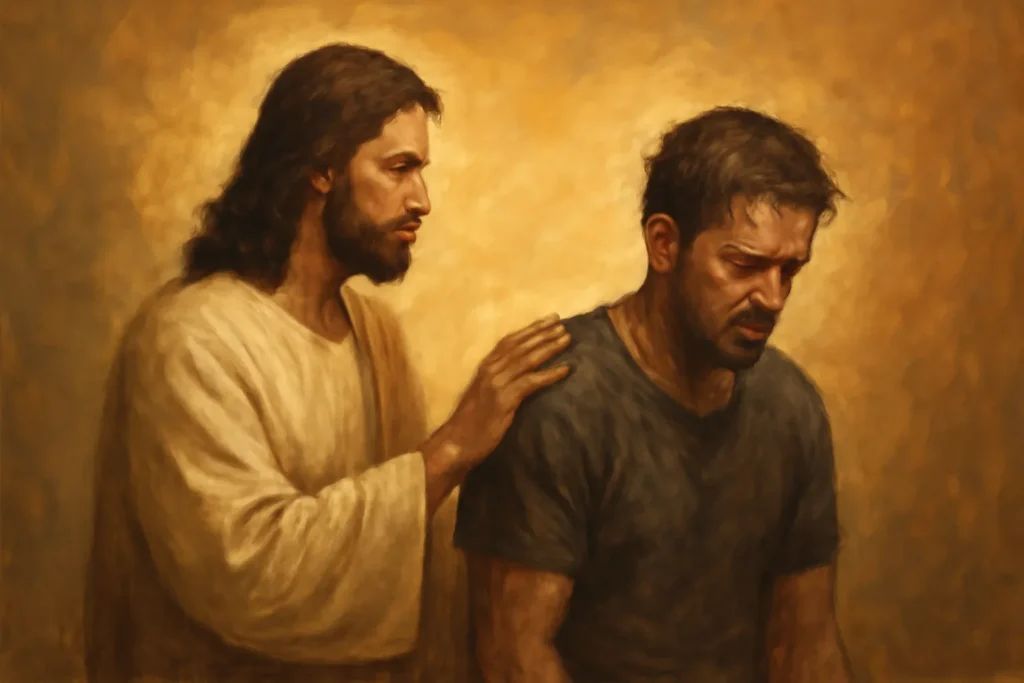
A central aspect of spiritual renewal is a renewed sense of identity. In Christ, readers and believers are understood to be beloved children, reconciled to God, and invited into a mission that transcends patterns of the old self. The phrase renewal in Christ signals that the source of change is not willpower alone but the gracious work of God in the heart. When people begin to see themselves as God sees them—unconditionally loved and purposefully shaped for good—the habits and affections of life can realign toward Christ-centered transformation.
Key theological terms in plain language
Addressing the practical life, it helps to keep some terms clear. Justification refers to being declared righteous in the sight of God for the sake of Christ. Sanctification refers to the process of becoming more like Christ in character and conduct. Regeneration is the Spirit-empowered rebirth that makes transformation possible. These concepts are not abstract doctrines; they describe the trajectory of a life that moves from self-rule to divine rule. When combined, they outline a path of honest self-examination, sustained grace, and an intentional response to God’s invitation to cooperate with His work.
Paths and practices: shaping daily life around Christ
Transformation in Christ unfolds most clearly in everyday rhythms. The following practices anchor spiritual renewal in concrete, repeatable steps that can be adopted by individuals, families, or church communities. Each practice is a doorway to deeper change, not merely moral improvement, and together they create a holistic ecology of spiritual formation.
Prayer as a posture of dependence
Prayer is more than petition; it is a posture of dependence that aligns the will with God’s will. Through prayer, a believer’s heart is opened to receive the transformative power of God’s presence. A consistent habit of prayer helps cultivate a rhythm in which transformation through Christ becomes less about trying harder and more about abiding in the truth of God’s grace. Prayer can include confession, intercession, praise, and listening, all aimed at acknowledging God’s lordship over every corner of life.
Scripture as the seedbed of renewal
Scripture is the primary means by which God reveals truth about Himself and the human person. Reading, meditating, and applying biblical passages fosters a renewal by the Spirit that reshapes desires, affections, and decisions. The practice is not a one-time event but a continuous conversation with God. The aim is not merely to know more but to be transformed into a more faithful and compassionate person who thinks biblically about work, family, and relationships.
Worship and gratitude in daily life
Worship, in its broadest sense, is the life of acknowledging God as ultimate worth. It happens in gathered worship and in the ordinary duties of life—work done with integrity, meals shared with generosity, and struggles met with hopeful trust. Christ-centered transformation finds its expression in habits of gratitude and humility, recognizing that every moment can become an occasion to honor God when life is lived under His gaze.
Community and accountability
Transformation thrives in relationship. The Christian life is not a solitary ascent but a communal journey in which believers encourage, challenge, and support one another. In healthy communities, mutual accountability helps surface hidden patterns of sin, idols, and fear that impede growth. A strong community offers safe spaces for confession, prayer, and practical help, enabling transformation in Christ to move from theory to real-life grace and renewal.
Disciplines—such as fasting, Sabbath rest, soul care, journaling, and silence—provide structure for spiritual growth. They are not legalistic checkpoints but gracious opportunities to reorient the heart toward God. A well-balanced rhythm includes times of work and rest, action and contemplation, confession and celebration. When these rhythms are practiced consistently, they become the scaffolding of transformed living in Christ.
Sacraments and sacred moments
In many Christian traditions, the sacraments (or ordinances) are visible signs of invisible realities. Baptism marks the entry into the faith, burial and resurrection symbolically enacted in the believer’s life, while the celebration of the Lord’s Supper reinforces dependence on Christ’s atoning work. These sacred moments strengthen memory, hope, and communion, grounding the ongoing journey of transformation through Christ in concrete acts of worship and remembrance.
Serving others as a form of renewal
Transformation through service is a practical counter to self-centered living. When people extend mercy, justice, and practical help to neighbors in need, they embody the love of Christ. Service is not a distraction from spiritual growth but a primary arena where renewal becomes visible. It expresses the truth that transformation in Christ is intended to bless others and to reveal God’s character to a watching world.
The Spirit’s work: renewing the mind and heart
Central to any realistic vision of renewal is the role of the Holy Spirit. The Spirit is not a force to manipulate but a Person who accompanies believers, convicts of sin, imparts spiritual power, and leads into truth. The apostle Paul describes a mind that has been renewed as a key mark of growth, replacing self-centered patterns with a worldview shaped by the gospel. When we speak of renewal by the Spirit, we are naming a divine initiative that enables human participation in God’s mission without erasing the necessity of human choice and discipline.
Fruit of the Spirit as evidence of change
Galatians 5 presents a list of character traits that emerge when the Spirit is at work: love, joy, peace, patience, kindness, goodness, faithfulness, gentleness, and self-control. These virtues are not acquired by willpower alone; they arise from a heart reshaped by grace. A practical approach to discernment and growth is to identify one or two fruits to cultivate at a time, inviting God to intensify them in everyday situations—at home, at work, and in the public square. Such growth reflects a transformation in Christ that is observable, reproducible, and sustainable.
Battling old patterns with new loves
Renewal is often a conflict between competing loves—the affection for God versus the allure of self-protective or status-driven desires. The Spirit empowers believers to prefer the good of others and to pursue righteousness even when it costs comfort. This shifting of loves is a practical sign of regeneration taking root. A simple method is to pause and ask: What do I want most in this moment? If the answer centers on personal advantage rather than love for God and neighbor, a transformation of choice is possible through repentance and reinvigorated devotion to Christ.
Scripture, conscience, and moral imagination
The Spirit does not work in a vacuum. He uses Scripture to recalibrate conscience and expand moral imagination. A transformed life learns to read situations through a biblical lens, considering both obedience to God and the well-being of others. This holistic renewal reshapes decisions in finances, work, friendships, and public life, enabling followers to engage culture with wisdom and grace. In this sense, transformation through Christ becomes a compelling witness to the world—an alternative way of living that does not retreat from society but seeks to redeem it.
Living as a transformed community
Individual renewal is essential, but the most enduring form of spiritual growth often happens within a community that is itself being transformed by the gospel. A church or faith-based community that embodies Christ-centered transformation creates spaces for prayer, confession, learning, and mission. When a community practices hospitality, generosity, and mutual accountability, it becomes a living sign of the gospel’s power to renew social life as well as individual hearts.
Shared practices that nurture communal renewal
Regular worship gatherings that center the gospel and celebrate God’s grace
Small groups or accountability circles for spiritual formation and mutual care
Missional living that joins acts of mercy with proclamation of hope
Generosity and stewardship that reflect trust in God’s provision
Cultural discernment that evaluates practices, media, and ambition through a gospel lens
Mentorship and leadership development
Transformational leadership in a faith community includes mentoring younger believers, modeling humility, and cultivating leaders who shepherd with grace. A healthy mentor-mentee relationship offers guidance, accountability, and practical wisdom for applying biblical truth in real-life situations. The objective is not merely knowledge but the formation of character that can sustain long-term faithfulness in the midst of trials and opportunities alike.
A transformed community is hospitable to outsiders, inviting people into a relationship with Christ without coercion or judgment. The gospel is best communicated through lives that reflect integrity, kindness, and courage. When communities embody mercy, justice, and truth-telling, they offer a compelling invitation to others seeking renewal, showing that the power of God can reshape broken systems and personal stories alike.
Obstacles on the path of renewal and practical remedies
Even with clear vision and practices, the journey of transformation can encounter obstacles. Recognizing and addressing these barriers helps strengthen the resilience needed for sustained renewal. Below are common challenges and practical strategies to overcome them.
Busyness and distraction: In a fast-paced culture, time with God can be squeezed out. Remedy: schedule intimate moments with God as non-negotiable appointments; start with short, consistent practices that compound over time.
Legalism and performance mindset: The danger of turning grace into a checklist. Remedy: cultivate a theology of grace that rejects moral scoring and invites gratitude for God’s initiatives.
Cynicism or spiritual dryness: Doubt can harden the heart. Remedy: adopt honest prayer, seek community, and bring questions to trusted mature believers or mentors.
Fear of change or failure: Change can be intimidating. Remedy: embrace small, measurable steps and celebrate progress as evidence of God’s work.
Comparison and longing for another life: Envy or insecurity harms growth. Remedy: cultivate contentment in Christ, resist social benchmarking, and deepen one’s own unique calling.
In response to these challenges, a practical approach emphasizes grace-filled discipline—practices done with reliance on the Spirit rather than in self-reliance. It also invites believers to embrace a long view: transformation is a generational effort that grows through seasons of pruning, faithfulness, and hopeful perseverance.
Contexts of transformation: work, family, and suffering
Transformation in Christ manifests differently across life contexts. It does not erase the messiness of life but reframes it through a gospel lens. The following examples illustrate how transformation in Christ can shape decisions, relationships, and vocation in meaningful ways.
Marriage and family life
A Christ-centered home becomes a living classroom of grace where spouses practice forgiveness, cultivate humility, and model sacrificial love. Transformation occurs when partners prioritize the well-being of the other, seek reconciliation, and invite God into the rhythms of daily life. In this setting, renewal in Christ becomes a witness to children and extended family, showing that the gospel has practical effects on household dynamics and intergenerational faith.
Work and vocation
Work is not merely a means to earn a paycheck; it can be a field for spiritual formation. By bringing integrity, generosity, and diligent service to the workplace, believers enact a form of transformed living in Christ. This might include ethical decision-making, healthy teamwork, and a viewpoint that sees work as a calling to love neighbors and serve the common good.
Suffering and resilience
In seasons of pain or injustice, transformation often reveals the depth of God’s faithfulness. Rather than denying or minimizing hardship, Christians are invited to respond with trust, hope, and visible acts of mercy. Suffering can become a catalyst for deeper reliance on God, a richer compassion for others, and a more resilient faith that remains confident in God’s purposes even when outcomes are uncertain. In such moments, the journey of transformation through Christ can become a powerful testimony to the sufficiency of grace.
Mission and service to others
Renewal is not only inward; it overflows outward in mission. Transformative faith prompts courageous outreach, advocacy for the vulnerable, and creative expressions of love that meet real needs. When communities live out the gospel in public life—through acts of mercy, justice, and evangelism—transformation in Christ becomes a public witness to God’s renewing power in a broken world.
How does one know when transformation is taking root? The following indicators offer practical signals that renewal is real and ongoing. They are not exhaustive but can serve as useful checkpoints for personal or communal spiritual health.
Increased love for God and neighbor as the governing motive of choices and actions
Desire for holiness that grows alongside measures of humility and repentance
Consistency in spiritual disciplines such as prayer, Scripture, and worship across seasons of life
Resilience in trials with a posture of trust rather than despair
Increased generosity and a concern for the marginalized and the vulnerable
Clearer vocation or sense of purpose that aligns with God’s justice and mercy
It is important to assess growth with honesty and grace. Renewal is often gradual and may come in layered forms—one season reveals inner depth, while another displays outward fruit. Regular reflection, journaling, and accountability conversations can help track this development over time, ensuring that the journey remains anchored in the gospel and not in mere moralism.
Terminology and variations: a semantic map for the journey
Throughout Scripture and Christian tradition, a variety of phrases are used to describe the same essential work of God in human life. Below are some phrases that communities and individuals frequently use, each highlighting a facet of the broader transformation in Christ framework.
Transformation through Christ as the overarching aim of renewal
Transformed life in Jesus emphasizing personal encounter and obedience
Renewal in Christ focusing on the inner work of the Spirit and the reorientation of desires
Christ-centered transformation stressing a life oriented toward the person and mission of Jesus
Spiritual formation in the gospel highlighting growth shaped by biblical truth
Sanctified living underscoring progressive righteousness and obedience
These variations are not competing claims but different lenses for understanding a single reality: God’s gracious work to remake people from the inside out. By embracing multiple expressions, communities can articulate a robust, inclusive vision of renewal that resonates with diverse backgrounds while remaining anchored in the central message of Christ crucified and risen.
Putting it into practice: a practical plan for ongoing renewal
Real transformation is not a one-time decision but a lifelong apprenticeship in the way of Jesus. The following plan offers a practical, repeatable sequence that individuals and groups can adopt to cultivate lasting renewal.
Clarify the gospel by revisiting the core message of grace, faith, and union with Christ. Remind yourself and others that renewal begins with God’s initiative, not human achievement.
Set concrete spiritual goals that are specific, measurable, and time-bound (for example, “read the gospel of John with daily reflection for 30 days”).
Create a manageable rhythm of prayer, Scripture, worship, and service that fits daily life. Consistency beats intensity when it comes to long-term transformation.
Invite accountability by partnering with a trusted friend, mentor, or small group who can pray, ask honest questions, and encourage perseverance.
Practice practices—commit to a handful of spiritual disciplines and rotate them seasonally to renew interest and engagement.
Review and adjust quarterly, noting both victories and blind spots, and recalibrating goals to align with God’s ongoing work.
In embracing these steps, you move toward a credible, productive form of renewal that can be described as transformation in Christ that is tangible, shareable, and sustainable. The aim is not merely interior change but outward fruit—character that shines in relationships, work, and cultural engagement.
A final note on patience and grace
Growth in grace rarely happens in a straight line. There are times of deep renewal and seasons that feel stagnant. In every season, the gospel offers a steady center: God’s love for you in Christ remains constant, and His Spirit is at work, shaping you for love, trust, and courage. The most transformative works of God occur gradually, through daily acts of obedience and a lived faith that refuses to abandon hope. When you persist in pursuing renewal, you participate in a divine drama in which you are both learner and witness, being shaped by Christ while also shining His light into the world.









Leave a Reply