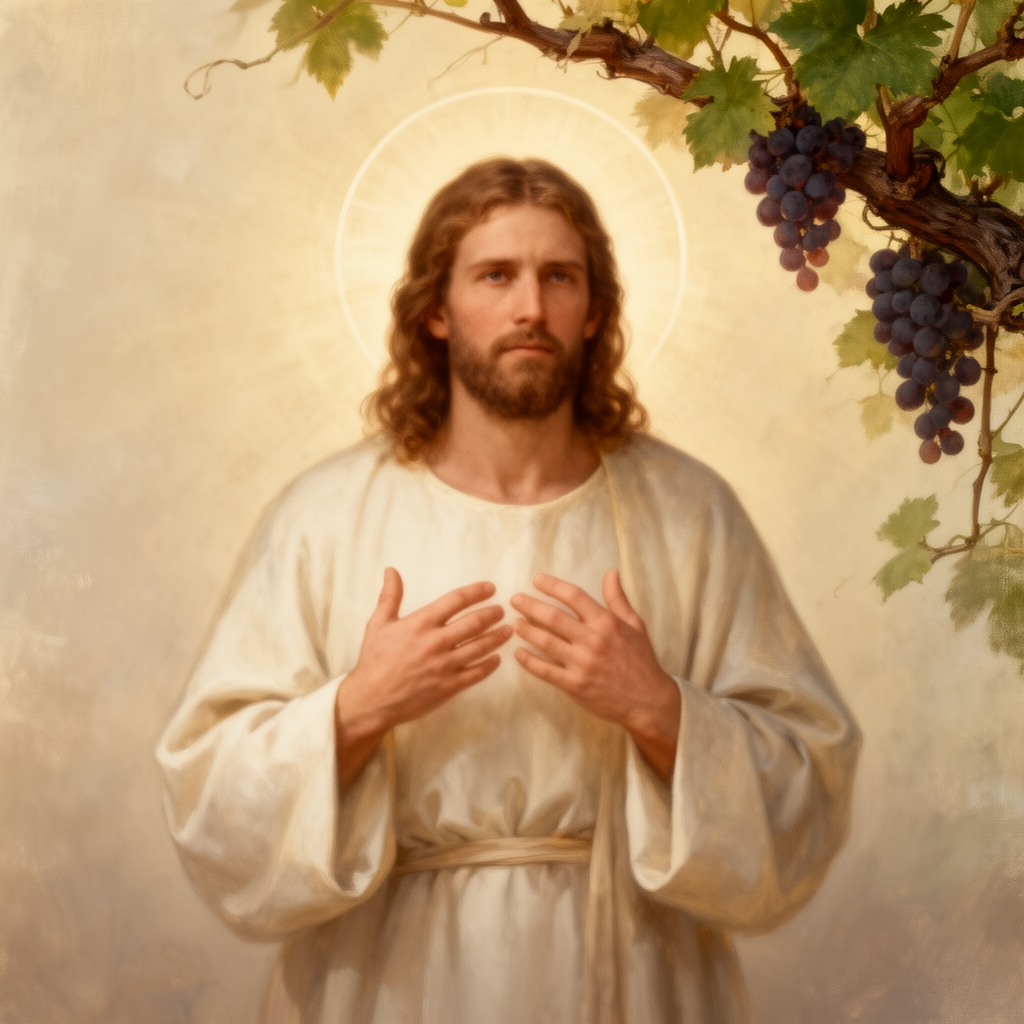
I am the true vine, and my Father is the vinedresser. Every branch in me that does not bear fruit he takes away, and every branch that does bear fruit he prunes, that it may bear more fruit. Already you are clean because of the word that I have spoken to you. Abide in me, and I in you. As the branch cannot bear fruit by itself, unless it abides in the vine, neither can you, unless you abide in me. I am the vine; you are the branches. Whoever abides in me and I in him, he it is that bears much fruit, for apart from me you can do nothing. If anyone does not abide in me, he is thrown away like a branch and withers; and the branches are gathered, thrown into the fire, and burned. If you abide in me, and my words abide in you, ask whatever you wish, and it will be done for you. By this my Father is glorified, that you bear much fruit and so prove to be my disciples.— John 15:1-8
🎯 The Occasion
Audience: Jesus was speaking primarily to his disciples during his final teachings, emphasizing the importance of maintaining a close, obedient relationship with him for spiritual vitality and growth. For first-century Jews, this was a call to live in covenant with God, rooted in understanding the vine as a symbol of Israel, but expanded to include a new, personal relationship through Jesus, the true vine. This matters because it highlights the essential nature of discipleship and dependence on Christ for spiritual life and fruitfulness.
This parable occurs during the Last Supper discourse, shortly before Jesus’ arrest. Jesus aims to prepare his disciples for his departure, emphasizing their ongoing spiritual connection with him, and warning against apostasy or fruitlessness. It is also a response to their questions about true discipleship and divine approval.
🏺 Cultural Context: What You Need to Know
🏺 Agricultural significance of vineyards
In 1st-century Palestine, vineyards were a vital economic resource. Cultivating and maintaining vines involved meticulous pruning, trellising, and care, representing labor, patience, and divine blessing. Vines were common symbols in Jewish tradition, often representing Israel’s relationship with God. The image of the vine conveyed stability, life, and divine provision, making it a meaningful symbol for Jesus to use in illustrating spiritual life and dependence on God.
🏺 Social and legal customs regarding inheritance and kinship
Vineyards often symbolized family inheritance and kinship bonds within Jewish society. Owning a vineyard was a sign of wealth and social standing, and vineyard work was often family-oriented. The legal practice of pruning and tending vines reflected community and covenant responsibilities. For Jesus’ audience, the imagery of pruning and pruning knives could evoke notions of divine assessment, discipline, and reward aligned with their understanding of covenant obligations.
🏺 Greco-Roman influence on spiritual and philosophical ideas
Hellenistic thought often used botanical metaphors to express philosophical ideas about growth, virtue, and transformation. The emphasis on the vine as a symbol of life and the importance of union could resonate with Greco-Roman ideas of authenticity and natural order. This cultural context helped Jewish audiences appreciate the universality and depth of Jesus’ metaphor, blending Jewish covenant themes with broader Greco-Roman notions of growth and harmony.
👂 What the Original Hearers Understood
Jewish listeners would immediately recognize the vine as a symbol of Israel, rooted in prophetic Scripture like Isaiah 5:1-7 and Psalm 80:8-16. The idea that God, depicted as the vinedresser, cares for the vine by pruning, would evoke images of divine discipline and covenant renewal. They would understand that being part of the vine implied active faithfulness, and that fruitfulness indicated divine approval. The danger of branches withering and being gathered for fire echoed the warning against unfaithfulness and judgment. The emphasis on abiding in the vine would stress the importance of remaining within God's covenant community and adhering to His commandments, with spiritual vitality dependent on sustaining a close relationship with the divine.
Jesus as the true source of spiritual life and connection to God
The vine symbolizes Israel and divine blessing; Jesus redefines it as available through himself, emphasizing a new covenant relationship.
The branches
Disciples and believers who are connected to Christ
Branches signify active participation in the community of faith; their fruitfulness depends on genuine union with the vine.
The vinedresser (God)
God the Father, caretaker and cultivator of spiritual prosperity
Pruning reflects divine discipline aimed at enhancing spiritual growth, a familiar practice in vineyards.
💡 The Main Teaching
The core theological message is that true spiritual life and fruitfulness depend entirely on an active, ongoing relationship with Jesus as the vine. Disciples must remain in close union with Him through obedience, prayer, and reliance on His word. Just as a branch cannot bear fruit alone, believers cannot succeed spiritually unless connected to Christ. Divine discipline, as symbolized by pruning, is necessary for growth. Ultimately, the parable underscores that authentic discipleship results in glorifying God and producing meaningful spiritual fruit, with separation from Christ leading to spiritual death and judgment.
Secondary Teachings
Discipleship requires intentional abiding—staying connected to Jesus through obedience and spiritual disciplines.
God’s discipline (pruning) is for spiritual growth and increased fruitfulness, not punishment without purpose.
Fruitfulness demonstrates authentic discipleship and glorifies God, serving as evidence of true union with Christ.
⚠️ Common Misinterpretations
⚠️ Common Misinterpretation
Some assume the vine represents the church universally, rather than Jesus himself as the true vine; the context clearly points to Christ, not institutional church.
⚠️ Common Misinterpretation
Others think the branches are saved or unsaved individuals indiscriminately; the focus on pruning and fruit suggests an emphasis on fruitful, obedient disciples rather than mere profession of faith.
{'reference': 'Isaiah 5:1-7', 'note': 'Prophetic imagery of Israel as a vineyard, emphasizing divine judgment and calling for righteousness.'}
{'reference': 'Psalm 80:8-16', 'note': "Poetry about God's care for Israel as a vine or vineyard."}
{'reference': 'John 15:9-17', 'note': 'Further teachings on love, obedience, and remaining in Christ.'}
🌍 Application for Today
For modern believers, the parable emphasizes the importance of maintaining an intentional relationship with Jesus through prayer, Scripture, and obedience. Just as a vineyard requires diligent care and pruning for optimal yield, our spiritual lives require discipline, repentance, and reliance on God's guidance. Fruitfulness can be seen in acts of love, service, and personal spiritual growth, which reflect our connection to Christ. Recognizing that apart from Him we can do nothing encourages believers to continually ‘abide’ in Christ amidst daily challenges, nurturing their faith community, and bearing lasting spiritual fruit that honors God and benefits others.
❓ Frequently Asked Questions
What does it mean to 'abide' in Jesus?
To abide means to remain in a close, obedient relationship with Jesus through prayer, obedience, and trust, ensuring spiritual vitality (John 15:4-7).
Is the pruning process negative or positive?
Pruning can be challenging but is ultimately for growth and increased fruitfulness, reflecting God's loving discipline (John 15:2).
Can someone be a disciple without bearing fruit?
According to this parable, genuine disciples are characterized by spiritual fruitfulness; those who do not bear fruit may be disconnected or unfaithful (John 15:6).
How does this parable relate to Jewish identity?
It redefines Israel's relationship with God, showing that true belonging comes through connection with Christ, the true vine, rather than solely ethnic or cultural identity.
✨ Did You Know?
Archaeological findings in ancient vineyards reveal sophisticated trellising systems and pruning tools similar to those depicted in biblical texts, underscoring how integral vineyard care was to daily life and economy in the ancient Near East—making Jesus’ metaphor even more vivid and culturally resonant.










Leave a Reply