The sons of Issachar occupy a distinctive place in the biblical narrative as a tribal designation, a set of genealogical lines, and a symbolic archetype. The name Issachar itself carries meaning that scholars connect to the Hebrew root for “reward” or “recompense.” In the biblical text, the given name is often read as a reflection of Leah’s hope or God’s blessing at the moment of Issachar’s birth, with the broader implication that this tribe represents a reward or provision within the unfolding story of the patriarchs. In various translations and commentaries, Issachar’s name is treated as a linguistic pointer to destiny and function within the people of Israel.
Across the Bible, the phrase the sons of Issachar is not merely a genealogical label. It signals a particular set of gifts, concerns, and patterns of life associated with this lineage. In ancient Israel, names were often more than identifiers; they suggested vocation, destiny, and social role. Thus, when the text refers to the Issacharites or the tribe of Issachar, it invites readers to consider not just who they were in lineage, but what they contributed to the national life of Israel.
Lineage and Family Context
Issachar is one of the twelve sons of Jacob, born to Jacob and Leah. This places him squarely in the foundational framework of the Israelite tribes. The siblings and half-siblings surrounding the lineage of Issachar help situate him in a larger narrative about family dynamics, alliance, and geographic settlement. In biblical lists, Issachar is often presented alongside his brothers Zebulun, together forming part of the northern and central land allotments. The genealogical record of Issachar’s descendants is preserved in several key passages, underscoring the tribe’s ongoing presence in Israel’s history.
A distributive genealogical record in 1 Chronicles gives a concise note on the line of Issachar: among his children were Tola, Puah, Jashub, and Shimron. This enumeration emphasizes that, while Issachar might be a smaller or less prominent tribe in some political accounts, it had identifiable familial clusters and a defined lineage. The emphasis on these named descendants highlights the importance of memory, lineage, and tribal affiliation in biblical Israel.
Blessings, Prophecy, and the Imagery of Issachar
A central biblical moment channels the voice of a patriarchal blessing toward Issachar. In Genesis 49, Jacob pronounces blessings upon his sons, and the blessing for Issachar is memorable for its imagery and practical implications. The blessing describes Issachar as a strong donkey who sees that rest is good and the land is pleasant, and therefore he will bear burdens and serve others. Interpretations of this passage vary: some read it as a note about a pragmatic, labor‑oriented people who prefer stability, productive work, and a settled life; others see in the donkey metaphor a symbol of endurance and the willingness to carry heavy loads for the sake of the larger community.
The poetic turn of Genesis 49 invites readers to understand Issachar’s role as one of practical intelligence coupled with endurance. Rather than a martial, conquest-centered image, the description points toward a tribe whose strength lies in agriculture, crafts, and social stability—a people who contribute by making the land productive and by establishing enduring relationships within Israel’s confederation of tribes.
The Tribe of Issachar: Geography and Historical Setting
The biblical map places the tribe of Issachar in a strategic but not always dominant position within the land of Canaan. The territory associated with Issachar was situated in the northern part of the hill country, near the Jezreel Valley and adjacent to the lands of Zebulun and Naphtali. This location placed Issachar in proximity to major trade routes and fertile farmland, supporting both pastoral economies and agricultural settlements. The boundaries and cities listed in the tribal allotments, especially in Joshua and related census material, reflect Issachar’s role as a landholding tribe with a significant emphasis on agricultural productivity and civic life.
In the broader historical arc of Israel, Issachar’s geography explains some of the biblical writers’ emphasis on its people’s connection to the land and to agricultural cycles. The valley and hillside terrain would have shaped daily life, religious practices, and the kinds of knowledge prized within the community. It is not accidental that the blessing emphasizing rest and pleasant land aligns with a geography of productive fields and stable settlements.
Linguistic and Cultural Dimensions of Issachar’s Territory
The linguistic texture surrounding Issachar in the biblical text often threads together ideas of work, time, and season. The land’s fertility offered a natural classroom for life organized around planting, harvest, and sabbatical rhythms. Thus, the Issacharite identity emerges as one shaped by agricultural knowledge, seasonal planning, and intertribal collaboration rather than solely by armed prowess. This cultural profile helps explain the New Testament and post‑biblical reception that sometimes elevates the phrase “the sons of Issachar” to describe people who read the times with discernment and who offer practical counsel for communal action.
Key Biblical References and Notable Mentions
The biblical record provides several anchor points for understanding the role and reputation of the sons of Issachar. These references illuminate their identity, influence, and the way this tribe is used by later writers to illustrate certain virtues.
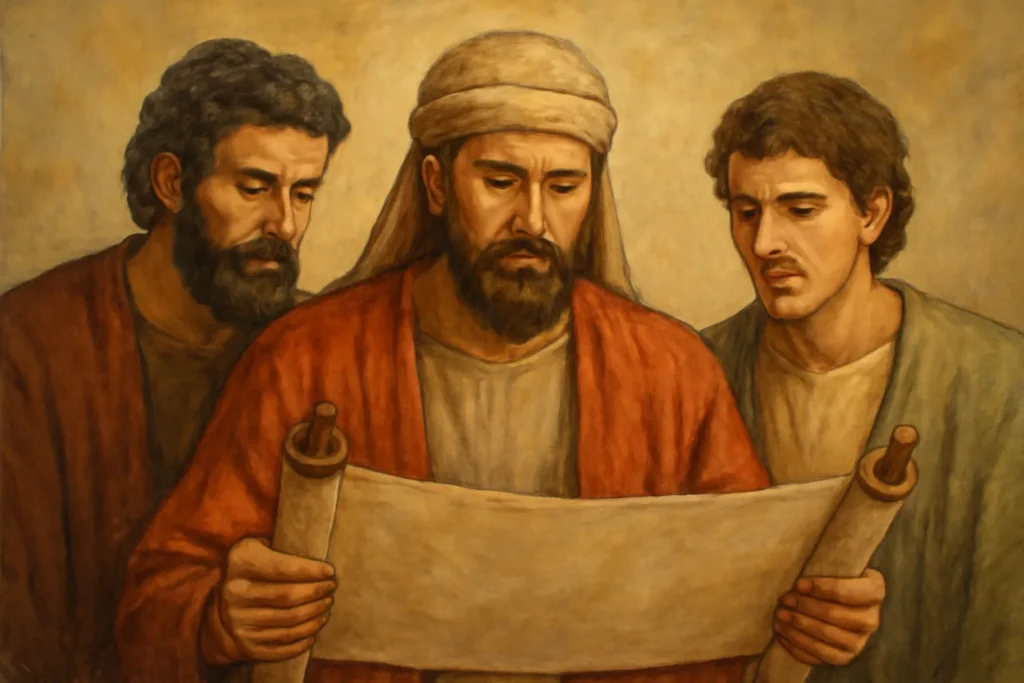
1 Chronicles 12:32—The men of Issachar are described as those who understood the times and knew what Israel should do. This is perhaps the most famous reference to Issachar in the context of discernment and political strategy within the united and later divided monarchy. It has shaped Jewish and Christian readings of the tribe as a source of practical wisdom and timely advice.
1 Chronicles 7:1–5—This passage lists the descendants of Issachar, including the figures Tola, Puah, Jashub, and Shimron. The enumerations underscore the continuity of lineages and the importance of memory and family lines in genealogical traditions.
Genesis 49—The patriarchal blessing to Issachar and the associated imagery of a hardy, productive people serve as a doctrinal lens through which readers interpret the tribe’s vocation—especially in relation to labor, land, and the rhythms of agrarian life.
Various prophetic and historical narratives place Issachar in conjunction with neighbors such as Zebulun and Naphtali, indicating alliances and cooperative efforts in battles, census reports, and territorial distribution. These mentions illustrate a pattern of intertribal collaboration rather than isolated independence.
Character, Identity, and Strengths
The biblical presentation of the Issacharite identity invites readers to consider a composite profile: practicality, patience, and a strong affinity for land and seasons. The imagery in Genesis 49 presents a person who recognizes a favorable resting place and a pleasant land, followed by a willingness to shoulder burdens for the sake of others. This points to a social virtue: a people who contribute to the common good by creating productive spaces, organizing resources, and stabilizing communities. The Issacharites are not primarily portrayed as conquerors; rather, they are noted for their ability to organize, plan, and sustain a population through times of scarcity or upheaval.
In terms of leadership style, the tribe’s influence is often described as consensual and practical, focused on governance, agriculture, and civic duties. The descendants of Issachar are frequently depicted in lists of warriors or in contexts where the defense and maintenance of the land depend on steady, reliable work. This does not minimize their importance; rather, it highlights a complementary model of national strength that coexists with the martial prowess of other tribes.
Interpretation in Jewish and Christian Traditions
Across biblical exegesis and later religious literature, the sons of Issachar have been read as a symbol of discernment, timing, and informed counsel. In Jewish tradition, the emphasis on “understanding the times” connects Issachar to a way of life that honors the seasons and the word of God within a community’s political life. In Christian exegetical circles, this image has been employed to describe modern communities or individuals who seek to interpret the cultural and spiritual climate of their own era with wisdom and responsibility. The enduring resonance of Issachar’s blessing lies in the way it reframes success not as dominance but as perceptive action aligned with God’s purposes for Israel.
The contrast with other tribes—some known for military exploits, others for priestly function—helps readers appreciate the biblical tapestry that values diverse gifts within the body. The Issacharite tradition, with its emphasis on time, season, and land stewardship, complements motifs of courage, prophetic speech, and covenant fidelity found elsewhere in the biblical narrative.
Variant Readings and Theological Depth
Across commentaries, readers encounter a spectrum of readings about Issachar. Some scholars emphasize the agricultural and landholding aspects, arguing that the tribe’s strength lay in fertility, crop knowledge, and social organization. Others focus on the prophetic dimension—how the phrase “understood the times” functions as a social credential, enabling Issachar to contribute timely counsel in moments of national decision. A third line of interpretation highlights the relational dimension: Issachar’s role as a partner with Zebulun and other northern tribes in securing borders, trade, and mutual defense.
The flexibility of the biblical text allows modern readers to appreciate the diverse competencies represented by the sons of Issachar. This includes not only agricultural and civic capacities, but also a symbolic recognition that discernment and prudent planning are legitimate forms of strength within a people chosen for mission and land.
Legacy and Modern Relevance
In contemporary discourse, the phrase “the sons of Issachar” has entered Christian and Jewish thought as a descriptor for people who have a keen sense of the right timing and the ability to recognize strategic opportunities. Some church leaders and communities use the term to describe groups of believers who study culture, politics, and spiritual trends to guide collective action in faithfulness to biblical aims. While some usage emphasizes spiritual discernment, others highlight practical wisdom—planning, organization, and stewardship—as hallmark traits associated with Issachar’s legacy.
The modern appropriation of Issachar’s identity often takes care to distinguish symbolic interpretation from historical reality. It is not simply a matter of mapping ancient territory onto contemporary borders, but rather acknowledging how the Bible invites its readers to value diverse gifts within a community. The Issachar example models how a nation can benefit from a strong foot in the soil of its land, a mind alert to opportunities, and a long-term commitment to the well-being of the people.
Practical Takeaways: Lessons from the Sons of Issachar
Discernment matters: The biblical phrase about understanding the times invites readers to cultivate discernment and to seek wisdom in shaping communal decisions.
Value of land and labor: The Issacharite emphasis on productive land teaches that agriculture and stability can be legitimate foundations for spiritual and communal life.
Balance among gifts: The historical narrative shows how diverse tribal gifts—military prowess, priestly function, agricultural skill—cooperate to form a resilient nation.
Loyalty to covenant identity: The tribe’s place within the confederation of Israel underscores fidelity to covenantal relationships and shared purpose.
Memory and lineage: The genealogical records remind readers of the importance of memory, heritage, and the role of family lines in shaping communal memory.
The biblical portrayal of the sons of Issachar offers a nuanced portrait of a tribe defined not by conquest alone, but by a fusion of wisdom, labor, and timeliness. Their blessing in Genesis 49, their place in Israel’s tribal map, and their notable stand in 1 Chronicles 12:32 combine to present Issachar as a symbol of measured influence—an archetype of a people who know how to read the times, prepare for the future, and contribute to the collective life of their nation. This portrait remains meaningful for readers in every era who seek to understand how culture, land, and faith intersect in the story of God’s people.
Whether one reads the text as historical record, spiritual allegory, or both, the narrative of the sons of Issachar demonstrates the Bible’s insistence that strength is not a single style of power. It is a mosaic of gifts—each tribe contributing its distinctive contribution to the great enterprise of Israel’s covenant life. In the biblical canon, Issachar stands as a robust reminder that wisdom, labor, and discernment are valuable measures of a people’s fidelity and a nation’s health.










Leave a Reply