Psalm 23 is one of the best-known scriptures in the Bible, celebrated for its intimate portrait of a trusting relationship between
human beings and the divine. When readers encounter The Message, Eugene Peterson’s popular paraphrase, they
often discover a fresh cadence that speaks into modern life. This article explores Psalm 23 the Message as a guide
to meaning, a source of practical lessons, and a wellspring of comfort for times of calm and crisis alike. We will keep the discussion
anchored in the imagery and rhythm of the psalm while widening its scope to hear how the core ideas resonate across cultures, ages, and
circumstances.
In The Message, as in many traditional translations, the central figure is the shepherd, and the central promise is guidance
through living waters and green pastures. But The Message invites readers to hear the voice of the ancient text with contemporary
clarity: steps taken in the path of right living, the presence that steadies nerves in danger, and the generous hospitality of
a divine host. Throughout this exploration, we will notice the way one short psalm can emit multiple resonances—of protection, of
renewal, of fearless trust, and of intimate companionship.
Core Imagery: Shepherd, Green Pastures, and Still Waters
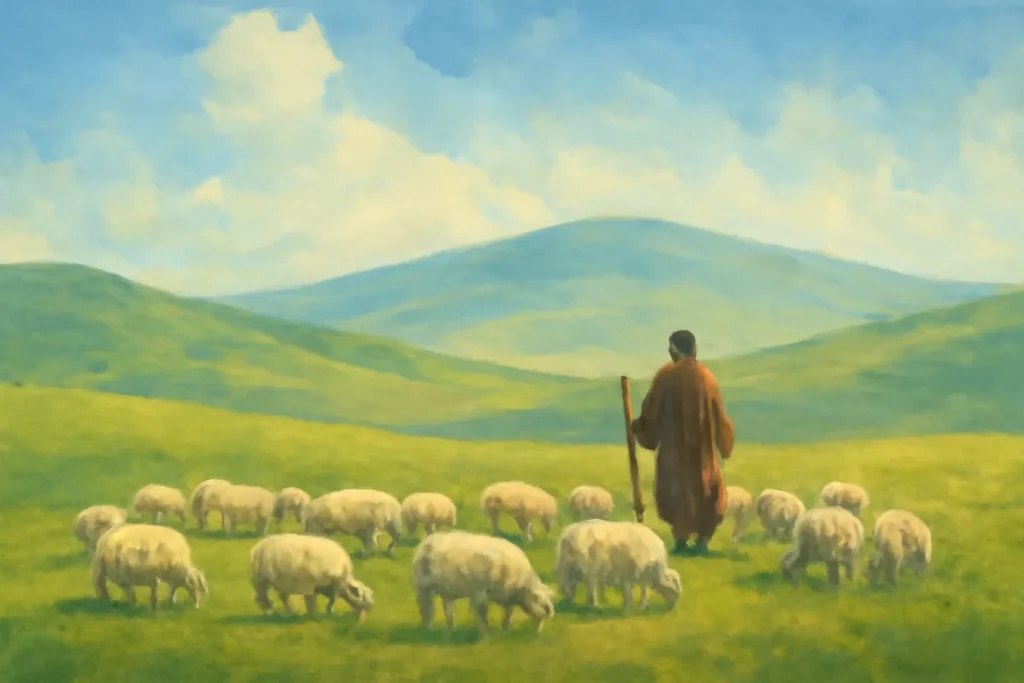
The opening images of the Lord as shepherd and the promise of green pastures and still
waters set up a language of care, nourishment, and rest. In The Message, these images are not merely pastoral; they
describe a reliable relationship in which the divine guides, sustains, and refreshes.
Key themes to notice:
Provision and care are ongoing. A shepherd tends the needs of the flock, supplying what is necessary for life and growth.
Restoration is not a single moment but a rhythm—quiet spaces where the soul’s energy is renewed for the journey ahead.
Safety arises from intimate knowledge of terrain and seasons. The shepherd walks beside the sheep, guiding them away from danger.
In practical terms, these images encourage us to cultivate environments in which our needs—emotional, spiritual, and social—are recognized
and met. They invite readers to seek places of rest amid busy lives, to permit refreshment after strain, and to trust the one who provides
without fail.
Paths of Righteousness: Guidance for Living
A recurring phrase in Psalm 23 is the sense of guidance along the right paths. The Message reframes this as a concrete
invitation to live with integrity and purpose, not merely to avoid danger but to pursue a life aligned with what is good and true.
Choosing the right paths in daily life
The psalm’s guidance is not merely about avoiding harm but about pursuing what contributes to human flourishing and communal harmony.
The Spirit of the text is communal and relational: the path you choose affects others, and your choices reflect the kind of life you
want to cultivate in the world.
Integrity in small choices: honesty, humility, and consideration in everyday decisions build a reliable character.
Stewardship of resources, time, and relationships as a discipline of trust.
Willingness to be corrected: the staff and rod imagery suggests guidance that sometimes requires gentle interruption for safety and growth.
In The Message, the idea of “paths” becomes a lived practice: a daily alignment between inner motive and outward action, a rhythm
of reflection and then action. This is not sterile moralism; it is a practice of dependency that honors the good shepherd who sustains
and sustains community.
Walking Through the Valley: Fear, Presence, and Courage
One of the most striking aspects of Psalm 23 in any version is the line about walking through the valley of the shadow
of death. The Message emphasizes not merely the danger of that valley but the enduring presence that accompanies the traveler.
From fear to fearless trust
The psalm reframes fear as a natural human response to danger, but it does not leave readers there. It pivots toward trust: even in
the darkest places, the shepherd’s presence dispels fear. The tools of care—the rod and staff—provide
guidance and protection. They are symbols of direction, discipline, and comfort that a shepherd uses to shepherd the flock through
peril.
Presence over absence: companionship matters more than mere safety alone.
Guidance in danger: a path laid out, even when the way is hard or uncertain.
Courage through companionship: fear diminishes when one is not isolated but accompanied by a caring guide.
The Message’s cadence invites readers to hear the valley not only as a place of threat but also as a place where the divine steadfastly
remains with the traveler. This combination—risk and resilience—can transform how one faces trials, whether in personal health, career
challenges, or relational strain.
Hospitality, Restoration, and the Cup that Overflows
A striking movement in Psalm 23 is the transition from fear and danger to generous hospitality and abundant blessing. The imagery of
a table set in the presence of enemies, along with anointing with oil and a cup that runs over, conveys both protection and blessing
that defies casual description.
The phrase restoration of the soul emphasizes a deep renewal—not only emotional comfort but a reordering of one’s inner life.
This restoration enables renewed purpose, courage, and clarity. It is a gift offered by the one who tends the flock, a divine renewal
that restores hope after weariness.
Table in the presence of enemies
The image of a table prepared amid opposition reframes conflict as a context in which blessing can be received openly and publicly.
It suggests that generosity, protection, and favor are not withheld because of danger; rather, the divine host confronts danger with abundance.
Anointing with oil is a sign of blessing, honor, and care. The overflowing cup represents abundance that surpasses what is needed for
personal survival; it signals a life marked by generosity, gratitude, and the ability to bless others as one itself is blessed.
Comfort and blessing flow together in the presence of adversity.
Honor and renewal accompany daily sustenance, transforming simple provisions into a meaningful feast.
Generosity toward others follows from an experience of abundance, not merely personal gain.
Goodness, Mercy, and the Promise of Forever
The closing lines of Psalm 23 weave together goodness and mercy as governing forces that accompany the
psalmist through life. The image of dwelling in the house of the Lord forever places the present life within a larger
frame of divine fidelity and eternal companionship.
Goodness and mercy as daily companions
In The Message, goodness and mercy are portrayed as daily travelers who pursue the one who trusts in the shepherd. Rather than a theoretical
gift, they are active, dynamic forces shaping choices, relationships, and communities. They invite readers to expect small mercies in daily
moments as well as larger acts of steadfast love that endure beyond time.
Daily mercy that meets us in ordinary life—patience, kindness, forgiveness, and renewal.
Goodness that mirrors a life well-ordered by love, generosity, and responsibility toward others.
Continual presence that makes a future with God not a distant hope but a near reality.
The progression from present blessing to lifelong companionship invites readers to imagine a horizon where one’s life is measured not by
scarcity but by the abundance of divine faithfulness. The idea of dwelling “in the house of the Lord” becomes a metaphor for being at home
in God’s care, wherever life takes you.
The psalm’s beauty lies not only in its poetry but in its potential to shape ordinary life. Here are practical ways to live with the same
spirit of trust and generosity that Psalm 23 models in The Message.
In daily prayer and contemplation
Begin with gratitude for provision, recognizing blessings in small, steady ways.
Use the shepherd metaphor as a friend and guide in decision-making rather than a distant doctrine.
Invite stillness and restoration into routine breaks—moments to refill and refresh the soul.
In times of anxiety or crisis
In communities of care and leadership
Lead with service, following the shepherd’s example of guidance, protection, and hospitality.
Offer tables of fellowship where people can share bread and encouragement in the presence of challenges.
Practice mercy and goodness toward others, becoming agents of restoration in neighborhoods, workplaces, and churches.
Variations and Global Resonance: A Broad Hearing of Psalm 23
Across translations, the core message of Psalm 23 remains consistent: a life lived under a caring guide, marked by provision, safety,
and hope. The Message emphasizes a conversational rhythm that resonates in modern contexts, helping readers see timeless truths in fresh
ways. Other translations (such as the traditional King James Version and more contemporary paraphrases) highlight different textures—poetic
cadence, formal dignity, or practical clarity—yet all converge on the same basic landscape: a relationship with a benevolent guide who walks
with us through every season.
Some readers find that The Message helps bridge the gap between ancient poetry and present-day experience—especially for those who are
exploring faith in a secular or plural environment. Others may prefer the musicality of older translations or the precise language of newer
ones. No matter the version, the psalm’s landmarks persist: a shepherd’s care, nourish ment, safe passage, solemn trust, generous blessing,
and a home that endures.
To appreciate the breadth of Psalm 23, consider how different readers might hear it in various life stages: a student facing exams,
a parent managing a busy household, a caregiver tending to a loved one, or someone entering retirement and contemplating meaning. The imagery
remains adaptable, inviting readers to personalize the shepherd’s care in ways that align with their experiences while preserving the
psalm’s timeless motifs of mercy, goodness, and presence.
Frequently Asked Questions About Psalm 23 in The Message
What is the central promise of Psalm 23 in The Message?
The central promise is intimate companionship with a faithful guide who provides nourishment, protection, renewal, and hope that extends beyond present life.
How does The Message differ from traditional translations in tone?
The Message favors everyday language and a conversational cadence, aiming to capture the felt sense of the psalm for contemporary readers, while retaining its core ideas.
Why is “the valley” section important for readers today?
It reframes fear as a common human response and emphasizes fearless trust grounded in the shepherd’s constant presence and guidance.
How can I apply the table of blessing in present life?
It invites hospitality, generosity, and resilience in the face of adversity—sharing resources, encouraging others, and recognizing abundance as a gift.
What role does restoration of the soul play in daily living?
Restoration indicates ongoing renewal of inner life, enabling healthier relationships, better decision-making, and more hopeful outlooks.
Psalm 23, as rendered in The Message, invites readers into a practice, not merely a belief. It asks for eyes that notice provision, ears
tuned to reassurance, and hearts ready to respond with gratitude and generosity. The psalm does not promise a life free from trouble; it
promises a life under steady care, with a guide who walks beside us in green pastures, through challenging valleys, and toward a table
of blessing that speaks of abundance and grace. It is a text that remains relevant because it speaks to the human longing for direction,
safety, and belonging.
Engaging with Psalm 23 the Message is less about memorizing a formula for success and more about entering into a relationship
that shapes perception, behavior, and hope. In daily life, this means approaching others with kindness, choosing paths that promote integrity,
and trusting in a presence that never abandons. Whether you read it as poetry, prayer, or a compact guide for living, the psalm’s core
invitation is the same: allow the shepherd’s voice to guide you into fullness, mercy, and a deep sense of home wherever you go.







Leave a Reply