Oxford English Verse: A Complete Guide to Oxford Poetry
Oxford English Verse: A Complete Guide to Oxford Poetry
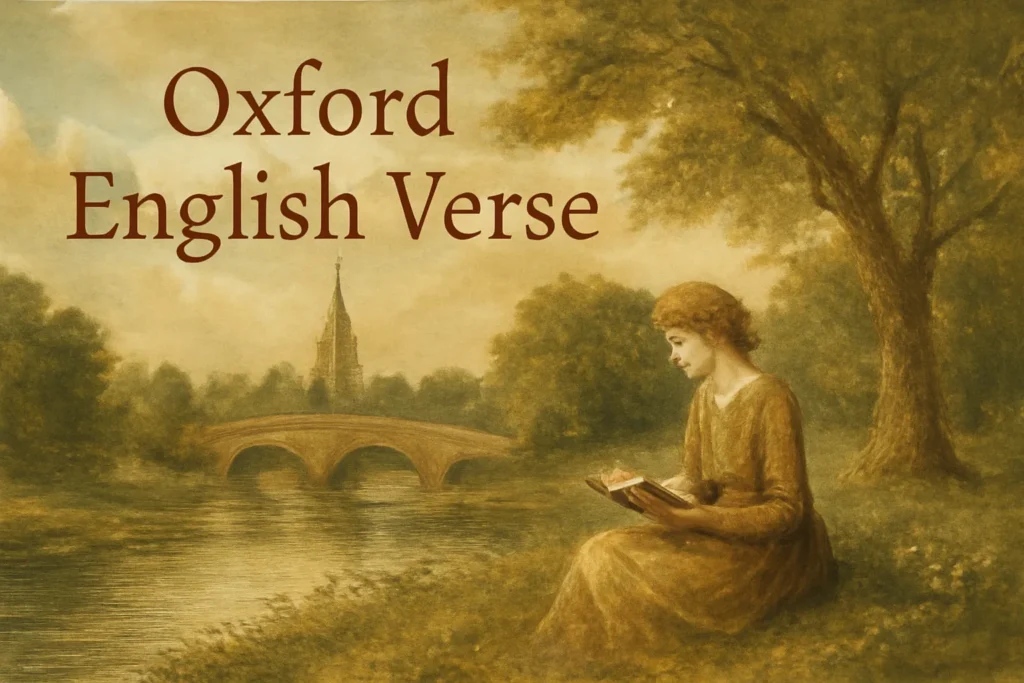
Welcome to Oxford English Verse, a comprehensive guide to the rich and multifaceted world of Oxford poetry. This article surveys the history, institutions, practices, and textual habits of the Oxfordian verse milieu, and offers readers a practical pathway to reading, understanding, and producing poetry within this distinctive tradition. Whether you come to Oxford English Verse as a student, a scholar, or a lifelong admirer of English poetry, you will find in these pages a structured map of ideas, forms, and professional practices that have shaped the Oxford poetry scene across centuries.
At its core, Oxford English Verse refers to the body of English poetry that has emerged from, or been profoundly shaped by, the intellectual and institutional life of the University of Oxford and its surrounding literary culture. It is not a single school with a fixed doctrine; rather, it is a broad constellation of poets, critics, editors, and readers who have interacted with Oxford's colleges, libraries, presses, and universities to produce, study, and circulate verse. In this guide, the phrase Oxford verse is used interchangeably with Oxford poetry, Oxfordian verse, and the Oxford poetry tradition to emphasize the common inheritance while acknowledging local variation.
Key features that commonly characterize the Oxford English Verse canon include:
Rigorous formal craft and attention to meter, rhyme, and structure
Intertextual dialogue with classical, biblical, and literary allusions
Intellectual themes—philosophy, ethics, history, science, and theology
Pedagogical strands—poetry taught, studied, and refined in academic settings
Public and private reading cultures—societies, journals, readings, and debates
In discussing the Oxford verse ecosystem, we also emphasize the practicalities of living with this tradition: how to read with a critic’s eye, how to engage with editors and publishers connected to the Oxford University Press, and how to participate in ongoing conversations about form, meaning, and value within the Oxford poetry community.
The Historical Arc of the Oxford Poetic World
Oxford’s long history as a scholarly powerhouse has created a fertile ground for verse in many eras. The medieval and early modern periods produced a culture of learning in which poets often moved in tandem with theology, philosophy, and the humanities. In later centuries, the Renaissance and Enlightenment periods intensified the exchange between classical models and English verse, with Oxford acting as a site where poets and scholars debated tradition against innovation. In the modern era, the Oxford poetry community helped shape new movements and bibliographic practices that defined how poets were taught, published, and read in Britain and beyond.
In this timeline, a few broad phases are useful for orienting readers to the Oxford English Verse landscape:
Medieval and early modern foundations—Oxford’s manuscript culture, Latin pedagogy, and early vernacular verse
19th-century expansion—academic societies, reading rooms, and the growing culture of literary criticism in universities
Early 20th century—the emergence of organized publishing programs, journals, and the formalization of student and faculty poetics
Mid to late 20th century—new voices, cross-Atlantic exchanges, and the expansion of the Oxford Poets through press series and university affiliation
21st century and digital age—online archives, digital scholarship, and global conversations about form and tradition
Each phase contributed distinct techniques, motifs, and ethical questions that continue to inform Oxford English Verse today. The beauty of this tradition lies in its adaptability: to value form and craft while inviting the reader into complex intellectual inquiries.
The Oxford Verse Toolkit: Forms, Techniques, and Practice
Readers of the Oxford English Verse will notice a persistent attention to the mechanics of verse—how lines are shaped, how music is felt in the line, and how argument is staged within a poem. The following toolkit highlights core elements that recur across much of the Oxford poetry tradition.
Iambic and metrical variation as a vehicle for argument and mood
Use of blank verse and rhymed couplets to balance spontaneity with order
Rhythmic elision and punctuation as dramatic devices
Poems that watch the line for breath, pause, and emphasis
Forms Common in Oxford Verse
Sonnets—formal compression, argument, and musical resolution
Odes—elevated address, public or moral themes
Elegies—memory, loss, and moral reflection
Ballads—narrative drive, dialogue, and storytelling
Lyric sequences—longer meditations built from linked lyrics
Rhetoric, Allusion, and Intertext
Strategic allusions to classical myths, biblical narratives, or historical events
Self-conscious dialogue with other poets and poets’ traditions
Irony, paradox, and moral inquiry used to test ideas
Voice, Persona, and Perspective
Voice as a cultivated persona—public-facing or intimate and private
Distance and proximity—how the speaker locates authority or doubt
Dynamic between personal memory and impersonal knowledge
These tools are not merely technical; they are ethical resources in Oxford English Verse that help poets articulate complex moral and intellectual concerns while maintaining a disciplined craft.
The Oxford Poetry Ecosystem: Institutions, Presses, and Readership
Oxford’s poetry ecosystem is shaped by a constellation of institutions, press houses, journals, and reading communities. This ecosystem sustains the invention, circulation, and critique of Oxford English Verse, enabling poets to develop craft, reach audiences, and engage in dialogues about value and meaning.
Colleges and Universities
Collegiate life as a crucible for poetics seminars and reading groups
University-wide lectures, fellowships, and visiting poet programs that foster cross-pollination
Academic departments of English, literature, and classics as pedagogical engines for verse study
Libraries and Archives
The Bodleian Library and other archive collections housing manuscript and print poetry
Rare book rooms and digital collections enabling close textual study
Scholarly editions and annotated volumes that shape how readers approach Oxford English Verse
Publishers and Journals
Oxford University Press and affiliated imprints publishing poetry, criticism, and reference works
University-affiliated journals and series that publish contemporary and historical verse
Independent presses with strong ties to Oxford poets and readers, contributing to the dissemination of the Oxford poetry tradition
Public Readings and Festivals
Poetry readings, symposiums, and festivals that bring Oxford verse into public spaces
Interdisciplinary events exploring poetry’s relationship to philosophy, science, and theology
Digital spaces and online platforms expanding access to Oxford English Verse
In short, the Oxford verse ecosystem is a web of scholars, editors, readers, and institutions that collectively nurture, critique, and expand the reach of the Oxford poetry tradition.
How to Read Oxford English Verse: A Practical Guide
Reading Oxford English Verse with understanding requires a combination of close textual attention and historical awareness. The following approach is designed to help readers, students, and enthusiasts engage with the complexity and beauty of the Oxford poetry tradition.
Close Reading as a Habit
Read through once for sense, then again for sound and shape
Note the lineation, punctuation, and rhythm; mark pauses and emphasis
Identify the speaker, the voice, and the audience; consider who speaks and why
Context as a Lens
Situate the poem in its historical moment, including academic and cultural debates
Consider intertextual references and allusions; ask what they illuminate or complicate
Reflect on the ethical and intellectual stakes the poem raises
Form and Function
Ask questions about form: How does the poem’s structure serve its argument or emotional arc? How does meter support or undermine its mood? How do rhyme, half-rhyme, or free verse contribute to meaning?
Voices and Thematic Webs
Track the themes that recur across the Oxford poetry tradition, such as faith, doubt, history, memory, and moral inquiry. Notice how the poem negotiates the tension between knowledge and uncertainty, science and belief, tradition and innovation.
Practice as Reading and Writing
Keep a reader’s notebook. Copy favorite stanzas, annotate curious choices, and rewrite lines to test how form and meaning shift. This practice is a time-honored method in Oxford English Verse scholarship and learning.
Recommended Reading Pathways
Introductory surveys that frame Oxford verse in literary history
Textual editions with reliable annotations and critical introductions
Critical essays exploring the relationship between the Oxford portion of English verse and wider movements
By adopting this guided approach, readers gain not just comprehension but also the critical pleasure of engaging with the Oxford poetry tradition as an ongoing conversation rather than a closed archive.
Case Studies: Interpreting Works in the Oxford Milieu
To illustrate how the principles of Oxford English Verse come alive in practice, consider two illustrative case studies. Note that these are representative exercises designed to illuminate technique and approach rather than to argue for a definitive reading of any particular author.
Case Study A: A Sonnet of Moral Inquiry
Imagine a sonnet in which the poet addresses a philosophical dilemma—perhaps the problem of whether knowledge should always compel responsibility. The octave sets up a conflict between doubt and duty; the sestet offers a cautious resolution that emphasizes stewardship and humility. In reading this imagined Oxford verse work, a reader should:
Examine the volta’s placement and its effect on the argument
Notice how dense allusion to classical or theological sources reframes the moral question
Track the musical lineation; observe how meter and rhyme shape the pace of reflection
Case Study B: An Elegy for a Scholar
Picture an elegy that contemplates a teacher or mentor who passed away. The voice might blend personal memory with public memory, using precise diction to honor the life and influence of the person. Reading this imagined piece, consider:
How precise imagery anchors memory in a particular time and place
The tension between absence and presence as the poem progresses
How diction choices—whether austere or warm—reveal the poet’s stance toward mortality
These exercises show how the Oxford poetry tradition often operates at the intersection of private voice and public discourse, with form acting as a disciplined instrument for ethical and philosophical exploration.
Oxford English Verse in the Digital Age
The advent of digital scholarship has transformed how readers access and engage with the Oxford poetry tradition. Online archives, digitized editions, and scholarly databases provide new pathways to study and enjoy Oxford verse. Key developments include:
For readers and researchers, digital resources enable more robust textual criticism, cross-referencing, and collaboration across continents, ensuring that Oxford English Verse remains a living, evolving practice rather than a static museum.
Misconceptions and Debates in Oxford Poetry
Like any living literary tradition, Oxford English Verse is subject to debates about value, accessibility, and canon formation. Some common misconceptions and points of debate include:
Exclusivity: The belief that the Oxford verse tradition only belongs to a narrow scholarly élite. In reality, it engages broad audiences through festivals, reading groups, and open-access resources.
Arid formality: The idea that formal verse cannot be energetic or modern. In truth, many Oxford verse practices demonstrate vibrant doxology, wit, and social commentary within strict forms.
Canon rigidity: The fear that canonical status stifles innovation. On the contrary, the tradition often invites reimagination, adaptation, and dialogue with contemporary poetics.
Ongoing debates about the value of form, the role of lecture rooms in shaping poetic taste, and the inclusivity of editorial practices continue to animate discussions about Oxford English Verse today.
Getting Started: A Practical Plan for Students and Enthusiasts
If you want to explore Oxford English Verse systematically, here is practical guidance designed for self-directed learners, course designers, and book clubs.
Step 1: Build a Core Reading List
Foundational introductions to the history and practice of the Oxford poetry tradition
Selected poems that exemplify formal techniques associated with Oxford verse
Critical essays that discuss the relationship between form, ethics, and knowledge in Oxford English Verse
Step 2: Practice Close Reading
Work through a poem line by line, identifying rhythm, diction, and allusion
Annotate the text with possible interpretations and textual questions
Compare a poem’s structure with a parallel piece to see how form drives meaning
Step 3: Engage with the Community
Attend or organize readings and seminars focused on Oxford English Verse
Join online forums and scholarly groups that discuss Oxford-based poetics
Contribute to journals or blogs with thoughtful analyses or translation notes of difficult passages
Step 4: Write in the Tradition
Draft a short lyrical sequence or a sonnet in dialogue with the methods described in this guide
Seek feedback from peers or mentors who are familiar with the Oxford poetry tradition
Refine your work by revisiting formal choices, allusion, and ethical intention
Following this plan helps cultivate a robust, thoughtful, and engaged practice of reading and writing within Oxford English Verse.
A Quick Glossary of Key Terms in Oxford Poetry
Oxford English Verse
The broad body of English poetry associated with the life of the University of Oxford and its literary culture.
Oxford verse ecosystem
The network of institutions, presses, journals, readers, and events that sustain Oxford poetry.
Formal verse
Poetry that adheres to set metrical patterns and rhyming schemes.
Intertextuality
The practice of drawing on other literary works within a poem through allusion or quotation.
Close reading
A careful, detailed analysis of a poem’s language, form, and meaning.
Editorial practice
How editors shape a text through annotations, notes, and apparatus.
Conclusion: The Living Line of Oxford English Verse
Oxford English Verse is not a static archive but a living conversation among poets, critics, students, and readers. Its strength lies in the synergy of formal craft, philosophical inquiry, and institutional support—a combination that has enabled a long and varied tradition to flourish. By appreciating the Oxford poetry world as an interconnected system—where manuscripts, print editions, library archives, and live readings meet—you can experience poetry as both art and discipline. This guide has offered a framework for reading, interpreting, and writing within the Oxford tradition of verse, with an eye toward growth, curiosity, and rigorous thought. Whether you study it academically or encounter it through a quiet afternoon of close reading, the lineage of Oxford English Verse invites you to join a centuries-long conversation about how language can be crafted, tested, and shared in the service of understanding the human condition.







Leave a Reply