Miracle That Jesus Did: Exploring His Greatest Wonders
The life and ministry of Jesus in the Gospels is filled with stories that speak not only of awe but also of meaning. The miracles attributed to Jesus—whether they demonstrate control over nature, compassion for the sick, or authority over spiritual forces—have shaped Christian belief, art, theology, and daily practice for two millennia. This article surveys the most enduring and widely discussed signs attributed to Jesus, offering context, themes, and reflection for readers curious about the breadth and depth of these extraordinary acts.
The Context of Jesus’ Signs: What Makes a Miracle?
To understand the significance of miracles of Jesus, it helps to situate them within the broader world of Second Temple Judaism and the early Christian communities that recorded them. The Gospel writers present these acts not primarily as magic tricks but as revelations of character, mission, and divine purpose. In many accounts, miracles function as signals of the arrival of the Kingdom of God, a time when God’s rule is breaking into ordinary life in decisive ways. They also reveal Jesus’ authority, his compassion, and his call to trust and imitate his love in action.
Scholars often describe Jesus’ miracles with several recurring patterns. They frequently:
- address human need (hunger, illness, fear, oppression),
- invite faith or response (direct faith, gestures of obedience),
- reveal a new understanding of who God is and what God can do,
- foreshadow the eschatological and cosmic implications of God’s plan.
Across the four Gospels, these signs take multiple forms: nature miracles, healings, exorcisms, and raises from the dead. The diversity is matched by a unity of purpose: to reveal who Jesus is, what God is doing through him, and how people are invited to respond. As you read each story, you’ll notice both the human needs at the center and the divine initiative at work.
Nature Miracles: Jesus Demonstrates Mastery Over Creation
Several miracles attributed to Jesus center on nature itself. They show that the ordinary rules of weather, physics, and matter are not barriers to God’s action through Jesus. These signs often occur in moments of danger, doubt, or communal need, making them both dramatic and illustrative of deeper truths about trust and divine provision.
Calming the Storm: A Sign of divine Peace
Story summary: In a boat on the Sea of Galilee, a violent storm roars, and the disciples fear for their lives. Jesus rebukes the wind and the waves, and the sea becomes calm.
Thematic focus: This miracle emphasizes Jesus’ power over the sea and wind, symbols of chaos and danger. It also invites the question: who is Jesus, that even the forces of nature obey him?
Theological import: The calming of the storm is often read as a parable of peace—when Jesus is present, fear yields to trust, and life moves from turmoil toward order.
In devotional and scholarly reflections, the scene is read as a profound demonstration that faith in Jesus brings stability in the most unstable situations. Some readers draw moral courage from the narrative, while others emphasize its cosmic scale: the Creator’s voice addressing creation in a moment of crisis.
Walking on Water: A Demonstration of Trust and Mission
Story summary: After the feeding of the five thousand, Jesus sends his disciples ahead by boat while he prays. In the fourth watch of the night, he walks on the water toward them, and they are astonished.
Thematic focus: This sign highlights Jesus’ mastery over natural laws and his presence in the midst of fear. It also serves as a call to a posture of faith in the midst of confusion.
Theological import: Walking on water is read as a symbol of Jesus inviting people into a life that follows him beyond what seems possible—the realm where God’s power is made evident.
These nature miracles are often discussed alongside healing narratives because both genres reveal that in Jesus, creation itself responds to God’s will made flesh. They invite readers to reflect on the fullness of Jesus’ authority and the way faith engages with the extraordinary.
Provision Miracles: Feeding the Multitude as a Model of Compassion
Jesus’ miracles of provision—where he creates or distributes food to large crowds—signal more than literal sustenance. They speak to God’s care for human beings, the sharing of resources, and the hope of abundance in places of scarcity. The gospel writers describe multiple instances of miraculous feeding, each with its own context and significance.
Loaves and Fishes: The Feeding of the Five Thousand
Story summary: A large crowd gathers to hear Jesus. A boy’s small supply of five loaves and two fish is blessed and distributed, and everyone eats until they are satisfied, with leftovers collected afterward.
Thematic focus: This miracle demonstrates Jesus’ ability to take what seems insufficient and make it plenty for all. It also highlights themes of community, sharing, and the inclusion of those on the margins.
Theological import: The act points to Jesus as the bread of life, the one through whom true sustenance—spiritual and physical—comes to humanity. It is also read as an emblem of the new covenant’s generosity and abundance.
Readers often note that this miracle is not merely about food but about the trust of the disciples and the invitation to participate in God’s provision. The leftovers, gathered in baskets, symbolize that God’s grace is ample and not limited by human perception of need.
Loaves and Fishes: The Feeding of the Four Thousand
Story summary: In another context, Jesus feeds a vast crowd with seven loaves and a few fish, with leftovers collected afterward.
Thematic focus: This event emphasizes mission to diverse groups, including Gentiles in some accounts, and the sufficiency of God’s provision across different circumstances.
Theological import: The miracle underscores the inclusive reach of Jesus’ ministry and the idea that divine generosity can meet the needs of disparate communities when people respond in faith and practical collaboration.
Provision miracles invite readers to consider modern applications: generosity, solidarity, and the trust that God can magnify human effort when given to him. They challenge communities to address hunger and need with both practical action and a faith that looks beyond immediate limits.
Healing Miracles: Restoration, Compassion, and Restoration of Dignity
One of the most recognizable aspects of Jesus’ ministry is his healing work. The gospel records describe a broad spectrum of healings—from physical restoration to spiritual renewal—each demonstrating the compassionate heart of Jesus and the restoration of dignity for the afflicted. These stories also illustrate a recurring pattern: faith, sometimes explicit, sometimes implicit, is connected to the release of healing in response to Jesus’ presence and word.
Physical Healings: Sight for the Blind and Movement for the Paralyzed
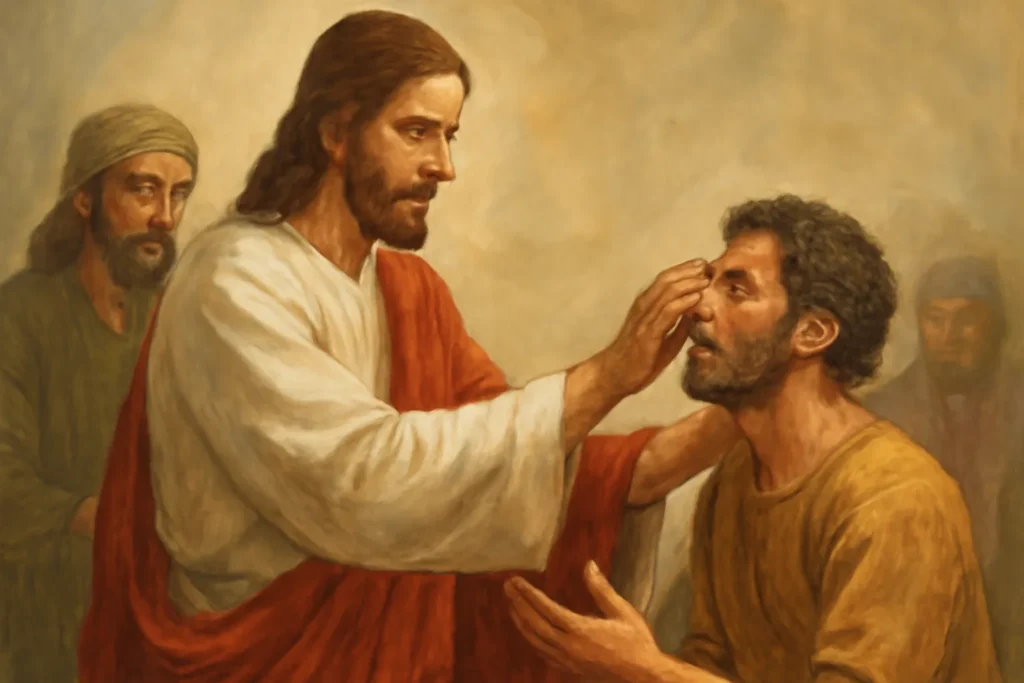
Blind Bartimaeus: A blind man cries out to Jesus, who opens his eyes, prompting praise and testimony. The miracle is not only about sight restored but also about the restoration of social and personal standing for someone who is marginalized.
The Paralytic’s Forgiveness and Healing: A man lowered through a roof is told his sins are forgiven, then is healed to rise, take up his mat, and go home. The sequence foregrounds the intimate link between forgiveness and physical restoration.
Healing of Leprosy: Jesus touches or speaks to those with leprosy, leading to cleansing and restoration to the community. This act embodies solidarity with the marginalized and a reversal of social exclusion.
The healing miracles often feature immediacy and compassion. The narratives show Jesus meeting people in their vulnerability and responding with both physical relief and spiritual renewal. For readers, they offer an image of a God who is intimately attentive to human suffering and who invites rescue and wholeness.
Other Healing Signs: Restoration and Deliverance
Healing in the Bethesda pool scene, where the afflicted person receives healing after Jesus speaks a word of power.
Healing of a woman with a hemorrhage, illustrating faith as a catalyst for healing and illustrating the value of persistent trust.
Restoration of a mute or demon-possessed person, demonstrating Jesus’ authority over spiritual forces that affect health and social life.
Healing miracles are often read as revelations of divine mercy and as invitations to personal and communal transformation. They depict healing not only as restoration of body but also as reconciliation with community and God.
Raising the Dead: Demonstrations of Ultimate Authority over Life and Death
Among the most dramatic accounts are stories of Jesus raising people from death. These episodes are not merely miracles of timing; they point to a deeper claim about life, eternity, and God’s plan for humanity. They foreshadow the fulfillment of God’s rescue in the eschaton (the end times) and illustrate the hope that transcends ordinary life.
Lazarus: A Sign of Jesus’ Power Over Death
Story summary: In Bethany, Jesus speaks a word and calls Lazarus from the tomb after four days. The miracle is public, dramatic, and reveals Jesus’ intimate knowledge of his friends’ grief.
Thematic focus: This sign emphasizes the temporary nature of death and the promise of future, resurrection life for all who are connected to Jesus.
Theological import: The Lazarus narrative invites reflection on belief, friends-as-family, and Jesus’ role as the one who gives life beyond the grave. It also raises questions about timing and the purposes of divine interventions in human history.
Other accounts of raising the dead, though fewer in number, reinforce the claim that Jesus is the bringer of life, not merely a healer of symptoms. The stories invite readers to trust in a power that can reverse separation, fear, and finality, and they invite communities to persevere in faith even in the face of apparent despair.
Exorcisms and Authority Over Spiritual Forces
Jesus’ miracles also include signs of his victory over spiritual powers. Exorcisms in the Gospels demonstrate that evil has real presence in the world, but that divine authority can dislodge it, restore persons to full humanity, and reveal God’s sovereign plan for creation. These signs are often paired with words about the coming of the Kingdom of God and the defeat of the domain of darkness.
Deliverance Encounters: From Demon-Influenced Suffering to Freedom
Stories of possession: Various accounts depict Jesus commanding demons to depart, freeing individuals from oppression and restoring social and spiritual wholeness.
Righteous authority: In each encounter, Jesus speaks with authority and compassion, demonstrating that spiritual forces are subject to God’s plan and that his presence brings liberation.
Exorcism narratives invite readers to consider the dimensions of human life beyond the physical and to reflect on the role of faith, repentance, and community in experiencing liberation. They also emphasize that Jesus’ mission includes the defeat of evil, a theme that resonates with many readers across time and culture.
Turning Water into Wine: A First Sign at Cana
At the beginning of Jesus’ public ministry, the Gospel of John records a notable sign at a wedding in Cana, where water is transformed into wine. This miracle serves as a symbolic overture to the rest of Jesus’ signs, signaling abundance, blessing, and the initiation of a new era in which God’s grace is poured out in generous measure.
The Wedding at Cana: Significance and Symbolism
Story summary: When the host runs out of wine, Jesus orders the jars to be filled with water, which then becomes wine of exceptional quality.
Thematic focus: The transformation points to Jesus as the source of new life and joy, and it introduces the idea that obedience to Jesus brings spiritual vitality and practical blessing to the community.
Theological import: This sign is often read as a microcosm of the Kingdom: life, joy, and generosity flowing from God into human relationships through Jesus’ presence and action.
For readers, Cana’s miracle is a reminder that Jesus cares about daily life and communal celebrations as well as profound spiritual truths. It invites believers to trust that Jesus can bring transformative grace into ordinary moments, turning scarcity into abundance and ordinary water into the best of what life offers.
Patterns, Theologies, and Meanings Across the Miracles
Across these diverse signs, several thematic strands recur, providing a framework for interpretation and application. The following are some of the most persistent motifs found in the Gospel accounts of Jesus’ wonders:
Authority and identity: In many miracles, Jesus asserts or demonstrations an identity and mission that challenge prevailing expectations and reveal God’s presence among people.
Compassion and mercy: The majority of signs meet a human need—hunger, sickness, fear, oppression—and express the Father’s care for the vulnerable and marginalized.
Faith and response: Faith is often triggered by the miracle, but it is not merely a precondition. In several accounts, the act of healing or the miracle itself increases trust, obedience, and discipleship.
Kingdom announcement: Many miracles function as tangible previews or foretaste of God’s redemptive rule breaking into the world, inviting people to align with God’s purposes.
Participation and mission: The miracles frequently involve human agents—disciples, bystanders, and communities—playing a role in sharing and extending the effects of God’s grace.
Miracles as Narrative and Theological Tools
Beyond their immediate dramatic impact, the miracles in the Gospels serve as narrative devices that shape how readers understand Jesus’ life and mission. They are not isolated episodes; they are integrated into longer arcs that culminate in the events of the Passion, Death, and Resurrection. The signs help to illuminate Jesus’ role in salvation history, his relationship to the Father, and the invitation to all people to participate in God’s work.
Several scholars highlight how these wonders of Jesus function as both confirmation and invitation: confirmation of his divine authority and invitation to a living response of faith, obedience, and love. The miracles encourage readers to see Jesus not merely as a historical figure but as a transformative presence who can still be encountered today through prayer, devotion, and ethical action.
Historical and Theological Reflections: How to Read the Miracles
Navigating the miracles of Jesus requires careful attention to context, genre, and purpose. Different Gospel writers emphasize different aspects, and readers should be mindful of literary devices, audience, and theological aims. Here are a few points that scholars and thoughtful readers commonly consider:
Historical context: The miracles take place in a world of religious expectation, political tension, and daily need. The acts speak to that setting while offering a broader message about God’s initiative in history.
Literary context: Miracles are embedded within larger narratives that include teachings, parables, and Passion predictions. Their placement and sequence shape their meaning.
Theological purpose: The signs are often meant to reveal Jesus’ identity, inaugurate the Kingdom, and invite trust and discipleship rather than simply to awe.
Ethical and spiritual application: The miracles invite contemporary readers to practice compassion, generosity, and courage in the face of suffering and injustice.
When approaching these accounts, readers may find it helpful to distinguish between the historical core (what Jesus did and when certain events occurred) and the theological interpretation (what the signs reveal about God and how they invite a response). Both layers contribute to a robust understanding of the narrative’s meaning for faith communities today.
The New Testament contains four canonical accounts of Jesus’ life, and each Gospel writer highlights different facets of the miracle tradition. While the core claims converge on Jesus’ authority and divine association, the nuance, emphasis, and selection of miracles vary. For example, the Gospel of John emphasizes signs that reveal Jesus’ identity as the Son of God and the source of eternal life, often presenting miracles as “signs” with explicit meaning. The Synoptic Gospels (Matthew, Mark, Luke) tend to situate miracles in the context of Jesus’ teaching and the responses of crowds, opponents, and disciples.
Readers who explore these variations gain a more nuanced picture. They see how a single event can be interpreted in multiple ways, depending on narrative goals, audience expectations, and theological aims. The breadth of the miracle tradition is one of its strengths: it allows readers to approach the life of Jesus from various angles while still encountering a coherent portrait of a figure whose actions demonstrate God’s gracious rule in the world.
For two thousand years, the miraculous acts attributed to Jesus have influenced a wide range of human activity. They have inspired prayer and liturgy, art and music, literature and film, and countless acts of charity and service. The moral and spiritual lessons drawn from these stories continue to guide people in their relationships, communities, and how they understand suffering, generosity, and hope. The effects extend beyond church walls into education, social reform, and even public discourse about the nature of wonder and possibility in human life.
In everyday life, people who reflect on the miracles of Jesus often discover themes of compassion, community, and hope that can be lived out in practical ways. From acts of mercy to the creation of relief programs in times of disaster, the impulse to imitate Jesus’ generous and courageous response to need remains a powerful legacy of these signs.
Believers and scholars alike continue to ask questions about what these miracles mean for faith, ethics, and reality itself. Some of the central theological questions include:
What do the miracles reveal about God’s character and purposes in the world?
How should readers understand the relationship between miracles, faith, and human responsibility?
What is the role of miracles in the ongoing life of the Church and in personal spiritual growth?
In what ways do the signs point to a future hope—whether in personal restoration or universal restoration?
Different traditions emphasize various answers. Some see miracles as ongoing possibilities for divine intervention in the world today, while others read them primarily as historical acts that reveal timeless truths about God’s affinity for healing, justice, and grace. Regardless of methodological perspective, the miracles offer a language of hope and a compelling invitation to trust in a God who acts for the good of humanity.
While the miracle narratives are ancient, their implications are timeless. Here are a few practical takeaways that readers often find meaningful:
Compassion in action: Let stories of healing and mercy inform contemporary acts of care for the sick, the poor, and the marginalized.
Faith and trust: The accounts invite a response of trust in the face of fear, suffering, and uncertainty, encouraging believers to lean into God’s presence.
Community and sharing: The feeding miracles highlight the value of communal generosity and the responsible sharing of resources.
Hope beyond hardship: The miracles that overcome physical death and spiritual oppression offer enduring hope about life, justice, and God’s ultimate victory.
Across the varied scenes of Jesus’ miracles, a consistent message emerges: God is near, and divine power is invoked not to impress but to heal, renew, and restore. The acts of nature, the healing of bodies, the casting out of demons, the feeding of crowds, and the raising of the dead all point toward a single invitation—to respond in faith, to participate in a mission of love, and to live with hope in a world that longs for peace, justice, and wholeness. The great wonders of Jesus are not simply stories of ancient times; they are invitations to recognize the ongoing work of God in the world today and to engage in acts of mercy, generosity, and courage that reflect the heart of the one whose presence changed history.
As you reflect on these stories, you may find it helpful to approach them with a balance of reverence, curiosity, and practical application. Read them not only as marvels but as windows into the character and priorities of Jesus—an invitation to a life shaped by steadfast faith, neighbor-love, and a hopeful vision of God’s forthcoming Kingdom.









Leave a Reply