The Jordan River baptism refers to the historic and symbolic rite of baptism associated with the Jordan River valley, most famously connected to the baptism of Jesus by John the Baptist in the first century CE. Across centuries, this geographic hinge—where water, prophecy, and devotion converge—has become a focal point for Christian pilgrims, theologians, archaeologists, and travelers who seek a tangible connection to biblical narratives.
The phrase Jordan River baptism encompasses a spectrum of meanings: it can denote the original baptismal event described in the Gospels, a historical pattern of ritual cleansing in the region, and a contemporary practice at designated baptism sites that welcome visitors to participate in immersion or simply observe. The river itself runs through a landscape of deep religious memory, geopolitical complexity, and fragile ecosystems, and its banks host some of the most visited sacred sites in the Christian world.
For readers exploring this topic, it is helpful to understand that this baptism is not a single monument but a constellation of places, stories, and traditions. In this article, we trace the history of baptism by the Jordan, explore its theological significance across Christian denominations, and highlight the top spots to visit along the Jordan River where pilgrims and curious travelers alike can experience a sense of connection to antiquity.
Historical background: Tracing the practice along the Jordan
Ancient roots: ritual washings and purification in the region
Water plays a central role in many religious traditions in the Near East. Before the birth of Christian baptism as a distinct rite, the region already housed ritual washings and purification practices in Judaism and neighboring cultures. In Jewish tradition, the mikveh and other forms of ritual immersion signified purity, conversion, or devotion. While these practices differ in purpose from the Christian rite later associated with the Jordan River baptism, they illuminate why rivers and pools were meaningful spaces for spiritual renewal.
The Jordan River itself became a natural symbol of crossing from one phase of life to another—an apt backdrop for a ceremony that would emerge as a defining moment in early Christianity. The river’s course, linking the Sea of Galilee to the Dead Sea, carries a dramatic sense of movement—from north to south and from old to new. This geographic symbolism is mirrored in many gospel narratives, where water represents cleansing, transformation, and a renewed covenant with God.
John the Baptist and the baptism of Jesus: a decisive moment in Christian memory
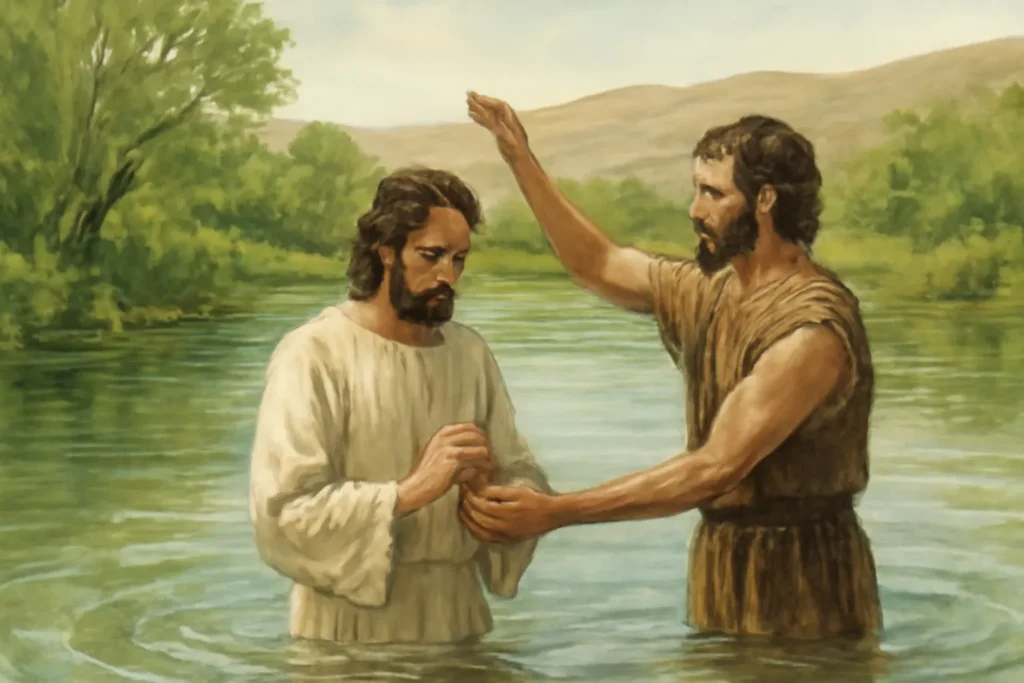
The most influential and widely known instance of baptism in this landscape is the baptism of Jesus by John the Baptist at the Jordan River. The Gospel accounts describe a moment when Jesus approaches John to be baptized, signaling the beginning of Jesus’ public ministry. In Christian theology, this event is often read as an affirmation of Jesus’ identity and mission, as well as a revelation of the Holy Trinity.
Although the precise location of the baptism is the subject of ongoing scholarly discussion, the broader tradition holds that the event took place somewhere along the Jordan River basin. Over time, the account of Jesus’ baptism became a touchstone for believers who seek to recall the moment when heaven opened and the Spirit descended, affirming the Son, and the Father’s voice proclaimed blessing. The phrase “the baptism at the Jordan” thus acquired a layered meaning: it is both an event in salvation history and a model for personal faith journeys.
From antiquity to the medieval period: evolving landscapes of pilgrimage
After the early centuries of Christian history, pilgrimage to the Jordan River region intensified as churches, monasteries, and sanctuaries were established around key sites. The river’s banks attracted monks, pilgrims, and contemplatives who traveled to trace biblical geography, chant liturgies near the water, and perform acts of devotion that echoed the ancient rite. Throughout the Byzantine and later medieval periods, the Jordan became a living map of sacred memory, with communities generating stories about where the baptism might have occurred, where riverside pools could be found, and where relics or markers were kept.
The physical sites associated with the Jordan River baptism have shifted over time due to political borders, construction, and shifts in religious administration. Yet the central idea persisted: water remains a potent symbol of repentance, renewal, and divine invitation. Today, modern pilgrimage routes often weave together biblical geography, archaeological discoveries, and contemporary ecumenical encounters across the Israeli, Jordanian, and Palestinian landscapes.
Theological significance across Christian traditions
Trinitarian baptism and revelation at the Jordan
Across Catholic, Orthodox, and many Protestant traditions, the baptism at the Jordan River is understood as a moment when divine revelation became publicly visible. In Catholic and Orthodox theology, Jesus’ baptism is not merely an example for believers but a divinely sanctioned entry into the public life of the Messiah. The Holy Spirit is described as descending in the form of a dove, and the voice of the Father proclaims, “You are my beloved Son.” This event is often cited as a manifestation of the Holy Trinity—the Father, the Son, and the Spirit—present in a single moment of salvation history.
For many Protestant communities, the Jordan River baptism emphasizes repentance, forgiveness, and baptism as a public declaration of faith and alignment with Jesus’ mission. While the sacramental character of baptism is understood differently across denominations, the Jordan River remains a powerful symbol of a decisive spiritual turning point—an outward sign of inward renewal.
Denominational perspectives: Catholic, Orthodox, and Protestant nuances
Within Catholic and Orthodox spirituality, baptism is a sacral act that imparts grace and marks a person as part of the body of Christ. Pilgrims may visit the baptismal sites with reverence, often receiving blessings or participating in guided liturgies that echo ancient practices. In the Orthodox tradition, images of the Jordan’s baptism are embedded in iconography and liturgical life, emphasizing the mystery of God’s self-revelation.
In many Protestant denominations—whether Anglican, Lutheran, Methodist, Baptist, or Pentecostal—the emphasis can be on the believer’s conscious faith and repentance. Some communities practice believer’s baptism by immersion as a personal profession of faith, while others may emphasize infant baptism as a sacrament of entry into the covenant community. Across these variations, the Jordan River baptism continues to function as a symbol that invites personal scrutiny, communal remembrance, and global hospitality toward visitors who come to learn from this ancient narrative.
Ritual practice, pilgrimage, and the experience of immersion
Today’s Jordan River baptism culture is a blend of sacred memory and practical hospitality. Along the river’s banks, designated sites provide controlled spaces where pilgrims can observe or participate in immersion, guided meditations, and formal rites conducted by local clergy. Visitors often walk the river’s edge, reflect on gospel passages, and engage in short devotional acts that echo early Christian piety.
What to expect at baptism sites along the Jordan
Depending on the site, you may encounter:
Guided tours that explain the biblical, archaeological, and spiritual context of the location.
Immersion pools or dedicated water spaces where individuals may be baptized or renewed their baptismal vows.
Informational displays that summarize biblical passages, historical timelines, and local cultural intersections.
Shaded walking paths, prayer benches, and spaces for quiet contemplation along the riverbank.
Access considerations such as modest dress codes, accessibility of boats or paths, and seasonal weather patterns.
It is important to approach these experiences with respect for the local faith communities and the natural environment. Cleanliness, responsible photography, and following posted guidelines help preserve the sanctity of the sites while making the experience meaningful for everyone.
The Jordan River basin holds several baptism sites that are widely recognized by Christian communities for their spiritual significance, historical associations, and accessibility for visitors. Below are some of the most prominent destinations known for their connection to the baptism of Jesus and related biblical events.
Al-Maghtas: Bethany Beyond the Jordan (the Baptism Site on the East Bank)
Al-Maghtas, also called Bethany Beyond the Jordan, is a UNESCO World Heritage Site located on the eastern bank of the Jordan River in modern-day Jordan. This area is traditionally associated with the baptism of Jesus by John the Baptist and is central to the eastern Christian pilgrimage narrative. The site contains the remains of early churches, baptismal pools, monasteries, and cisterns that offer a tangible glimpse into the rituals and communities that once thrived here.
As a pilgrimage destination, Al-Maghtas presents a sweeping landscape of archaeological and devotional zones. Pilgrims can follow ancient routes, visit baptismal wells and chapels, and contemplate the sacred geography of the Jordan Valley. The site’s status as an official UNESCO designation helps protect and interpret its historical layers, while local guides provide insights into how communities commemorated the Jordan River’s memory through the centuries.
Qasr al-Yahud: Baptism Site (West Bank/Israel boundary area)
Qasr al-Yahud (often translated as the “Castle of the Jews”) is a prominent baptism site located on the Jordan River’s western bank, near Jericho and within the broader area controlled by Israeli authorities. This site has become a focal point for both Jewish and Christian visitors who seek to reconnect with the biblical landscape associated with early Christian memory.
The area at Qasr al-Yahud features a modern, accessible layout with facilities for immersion and reflection. Visitors should note that access to some parts of the site can be subject to security considerations and seasonal schedules. For many pilgrims, this site offers a powerful sense of continuity with the gospel narratives, particularly the moment when the heavens opened and the Spirit descended, marking the beginning of Jesus’ public ministry.
Yardenit Baptismal Site: A modern immersion experience near the Sea of Galilee
The Yardenit Baptismal Site is a purpose-built pilgrimage location along the Jordan River, situated near the Sea of Galilee in northern Israel. Unlike some ancient ruins, Yardenit is a contemporary center designed to accommodate visitors who wish to participate in baptism rites or to learn about the Jordan River’s biblical associations. Immersion pools and serene riverfront settings create a contemplative environment for prayer and renewal.
For travelers, Yardenit provides accessible facilities, multilingual guides, and organized programs that balance reverence with tourism. It remains a popular day-trip stop for groups visiting northern Israel, with proximity to other biblical sites around the Sea of Galilee adding to the overall pilgrimage experience.
Bethany Beyond the Jordan: East Bank continuity with the Jordan River narrative
While many visitors focus on Al-Maghtas as the central site, the broader Bethany Beyond the Jordan tradition highlights the same riverine geography from the east bank perspective. In some narratives, this framing emphasizes the continuity of Jesus’ baptism memory across both banks of the river and across generations of Christian devotion. The landscape here includes modern visitor facilities and interpretive displays that help visitors situate biblical memory within a present-day pilgrimage route.
Beyond the headline sites, there are numerous smaller chapels, monasteries, and interpretive stops along the river’s course that offer quiet spaces for prayer, reflections on biblical passages, and the chance to engage with local communities. Some travelers combine a visit to the Jordan River with a broader itinerary that includes the Dead Sea, the Qumran caves, and historic towns along the Jordan Valley.
Whether you pursue the Jordan River baptism as a canonical event, a modern-day immersion experience, or a spiritual walk through sacred geography, these destinations invite travelers to contemplate how water, memory, and faith intersect in one of the region’s most enduring narratives.
Practical tips for pilgrims and travelers
Plan ahead: Check opening hours, accessibility, and any travel advisories for border areas and religious sites.
Dress respectfully: Many sacred sites encourage modest attire; shoulders and knees should be covered in religious spaces.
Seasonal considerations: Spring and autumn offer mild weather for outdoor exploration; summers can be hot, especially along the river’s banks.
Immersion etiquette: If participating in baptism or immersion, follow the guidance of site staff and clergy; immersion is optional and should be conducted with reverence.
Photography rules: Some areas limit photography, particularly inside churches or near active worship services—respect posted signs and local sensitivities.
Accessibility and mobility: Some ancient sites involve uneven terrain; check accessibility options if traveling with guests who require assistance.
Timing: Early morning visits may offer cooler temperatures and fewer crowds, enhancing the contemplative experience.
For families, scholars, and faith travelers, the Jordan River baptism sites can be integrated into broader itineraries that explore biblical geography, regional history, and contemporary religious life. By balancing study with prayerful reflection, visitors can gain a nuanced appreciation for how the Jordan River has shaped belief, art, and culture across generations.
Preservation, ecology, and the modern relevance of the Jordan River
The modern Jordan River basin faces environmental challenges, including water scarcity, pollution concerns, and competing demands from agriculture, urban development, and cross-border cooperation. These factors influence not only the river’s ecology but also the experience of pilgrims who come to stand on its banks. Conservation efforts, river restoration projects, and international collaborations aim to safeguard the waterway’s health while honoring its sacred associations.
The UNESCO World Heritage designation for certain baptism sites reflects a commitment to preserving historical venues of global significance. Protecting these areas requires careful management of tourist flows, infrastructure development, and respectful engagement with local communities and religious custodians. Visitors can contribute positively by supporting responsible tourism practices, learning about the sites’ histories, and recognizing that these locations are living places of worship for many people.
Beyond heritage protection, the Jordan River’s continuity as a geostrategic and cultural corridor remains important. The river is a corridor that has linked peoples and cultures for millennia, and today it continues to host a dynamic interchange of faith, scholarship, and everyday life. The way modern visitors approach the river—whether through a solemn visit to the baptismal pools or a more exploratory journey along its banks—speaks to a broader human impulse to recall, renew, and reimagine old narratives in new contexts.
Conclusion: The enduring memory of the Jordan River baptism
The Jordan River baptism remains a powerful symbol of repentance, renewal, and the invitation to live in alignment with the gospel story. From the biblical account of John the Baptist preparing the way in the wilderness to the baptism of Jesus that opens the public ministry of the Messiah, this river has stood as a threshold between old life and new possibility for countless believers across two millennia. The contemporary sites—Al-Maghtas, Qasr al-Yahud, and Yardenit—carry this memory forward into the present, offering pilgrims a tangible chance to reflect on sacred time, sacred space, and the ongoing act of faith in a world that constantly seeks sources of renewal.
Whether you come as a scholar, a spiritual traveler, or a curious reader seeking to understand how an ancient river can shape modern devotion, the Jordan River baptism invites a respectful engagement with history, faith, and geography. The Jordan River remains not just a body of water but a living map of sacred memory—a place where people of many backgrounds find inspiration, challenge, and a sense of belonging to a long and shared story.










Leave a Reply