Jonah and the Big Fish: The Bible Story, Meaning, and Lessons
Jonah is one of the most widely discussed figures in sacred literature, not only for the dramatic sequence of events but also for the questions it raises about obedience, mercy, and divine sovereignty. The tale often appears in discussions about prophetic calls, repentence, and the reach of compassion beyond the borders of a single people. In many English translations you will encounter the phrase “the big fish” or “the great fish”, while other renderings may refer to a large aquatic creature that swallows and later releases the protagonist. No matter which translation you read, the core arc remains: a prophet’s flight, a tempest at sea, a miraculous rescue, and a mission redirected toward a city known for its violence and idolatry. This article surveys the biblical story, clarifies historical and theological context, and draws out the meaning and lessons for readers today.
The account of Jonah occupies a compact book in the Hebrew Bible, often classified among the “Twelve Minor Prophets” though its message resonates far beyond the prophetic genre. The narrative unfolds primarily through a sequence of actions and responses: a divine commission, human hesitation, a perilous voyage, a miraculous deliverance, a reluctant mission, a city-wide response, and finally a sobering personal reaction that invites readers to examine their own attitudes toward mercy and justice.
At the center of this story is the central question of obedience: will the prophet listen to God’s instruction or attempt to run away from responsibility? The tale is structured to force the reader to consider not only Jonah’s actions but also God’s motives—especially God’s desire to communicate a message of repentance and mercy to a non-Israelite audience. The narrative’s dramatic elements—storm, sea, a living creature, three days in the belly of a large fish, and the spectacular deliverance—function as a stage on which profound theological themes are played out.
The Biblical Context: Setting, Language, and Key Terms
To appreciate the full depth of the Jonah story, it helps to place it within its ancient Near Eastern milieu and within the prophetic literature of the Hebrew Bible. The core phrase often introduced with “The word of the LORD came to Jonah” signals a divine summons that unsettles expectations. In this case, the summons is not to a typical message against Israel’s enemies, but to a call to preach repentance to Nineveh, the capital city of Assyria, a great power with aggressive history and idol worship. This setting immediately raises questions about national boundaries, moral scope, and divine mercy.
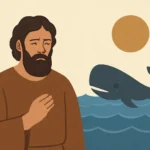
When we encounter the creature described as a great fish or big fish, the term used in Hebrew is dag gadol, literally “large fish.” The precise identification—whether it was a whale, a shark, a giant fish, or a sea monster—has been the subject of debate among scholars, theologians, and readers of modern translations. What matters more than the species is the role this beast plays in the story: it is the vehicle of deliverance and a device that reorients Jonah’s mission. The miraculous nature of being swallowed and later regurgitated by a sea creature emphasizes the transcendent power of God and the extraordinary means by which God works to accomplish intended ends.
In addition to the drama of the sea and the fish, the city of Nineveh itself functions as a living symbol within the narrative. Nineveh’s reputation for enormity of sin and moral complexity helps to set up a contrast: a rogue city receives a pardon when it humbles itself, while the prophet, who should embody fidelity, must confront his own grumbling and limited vision for mercy. This juxtaposition invites readers to reflect on whether they, too, have their own biases that hinder a fuller grasp of God’s mercy for all peoples.
Key Episodes and a Timeline of Events
Below is a clear outline of the major episodes in the story, using terms that highlight variations of Jonah and the big fish across translations and scholarly discussions. The list follows the core sequence of events and provides a ready reference for study or teaching.
God’s commission to the prophet Jonah to go to Nineveh and announce judgment against its wickedness. Jonah’s initial response is to flee in the opposite direction toward Tarshish, seeking to escape the divine assignment.
The voyage and the storm aboard a ship bound for distant waters. The sailors, unaware of Jonah’s role, cast lots to determine the cause of the tempest, and Jonah admits that his God is the source of the trouble, prompting him to request being thrown overboard.
Salvation by the sea creature as Jonah is swallowed by a great fish (the big fish) and spends three days and three nights in the creature’s belly. The narrative emphasizes a period of crisis, prayer, and repentance on the part of Jonah.
Deliverance and eruption of mission as the fish spits Jonah onto dry land. The prophet then obeys the divine command and travels to Nineveh, delivering a terse but powerful warning that God’s judgment is coming in forty days.
Nineveh’s response—the people of the city, from the king to the animals, repent, fast, and turn from their violent and idolatrous ways. This communal response leads to divine mercy and the anticipated judgment is averted.
Jonah’s anger and divine correction as the prophet resents God’s mercy toward Nineveh. God uses a plant and then a scorching sun to teach Jonah about compassion, highlighting the contrast between human bias and divine generosity toward all nations.
The book’s close with an invitation to consider the breadth of God’s concern for the city and its inhabitants, and a call to reflect on the readiness to extend mercy beyond familiar or comfortable boundaries.
Thematic Exploration: Obedience, Mercy, and Inclusivity
Obedience and Human Reluctance
At its core, the story is a kinetic meditation on obedience. The prophet is called to deliver a message of warning and opportunity to a foreign capital. Instead of listening, Jonah attempts to flee, boarding a distant voyage in an attempt to escape responsibility. This act of flight is not only a personal failing but also a dramatic literary device that highlights the tension between human will and divine purpose. The narrative uses irony and reversal to expose the folly of human planning in light of God’s all-encompassing sovereignty. Readers are invited to examine their own impulses to avoid difficult assignments or to prioritize personal comfort over public good.
The Nature of Divine Mercy
One of the most striking features of the Jonah story is God’s willingness to extend mercy to a city renowned for its violence and idolatry. The language of repentance in Nineveh is vivid and decisive: the citizens proclaim a fast, put on sackcloth, and heed the message delivered by Jonah the prophet. The reversal—divine forgiveness granted to Nineveh—challenges assumptions about who deserves mercy and who has the right to call others to change. The phrase “God relented from the calamity” in response to Nineveh’s repentance is a theological pivot point with lasting implications for discussions about grace, justice, and the breadth of divine compassion.
Dialogue Between Faithfulness and Nationalism
Because Nineveh is a key non-Israelite city, the narrative invites reflection on universalism versus particularism in faith. The book of Jonah shows that the true God is not limited to a single people or land. The sailors’ responses, the city’s repentance, and Jonah’s discomfort all function as conversations about who is included in God’s mercy. The story’s punchline—Jonah’s irritability and God’s gentle rebuke—asks readers to consider whether their own loyalties or prejudices blind them to the moral breadth of divine mercy. In this sense, the tale has served as a catalyst for ethical discussions about migrants, enemies, and those who are marginalized by power structures in both ancient and modern contexts.
Why study a story set in a distant past? Because the themes in the tale of Jonah and the big fish carry present-day relevance. Here are several strands of meaning that modern readers can apply in personal life, communities, and faith communities alike:
Obedience over convenience: The story challenges readers to embrace duties that may be uncomfortable or challenging rather than seeking safety or ease. The implication is that responsibility often comes with discomfort, but faithfulness matters more than personal safety.
Mercy without borders: Nineveh’s repentance demonstrates that compassion and forgiveness can extend to those outside one’s own in-group. Today this invites discussions about refugees, interfaith engagement, and social justice across national or cultural divides.
Repentance as a communal act: The whole city responds to a message of warning, illustrating how communal change can be more powerful than individual reform alone. Communities can reflect on how public spirituality, policy, and culture intersect during times of crisis or moral awakening.
The danger of resentment: Jonah’s anger at God’s mercy toward Nineveh reveals the personal cost of harboring resentment. The lesson is not to suppress emotions but to examine them in light of a larger, merciful vision for humanity.
Prayer as resilience: Jonah’s prayers—first from the ship in distress and later from within the fish—are archetypes of turning to God in crisis. They model how to seek steadfastness and clarity when the path forward is unclear.
God’s sovereignty and human limitation: The narrative repeatedly emphasizes that human plans are subordinate to divine purposes. This invites humility and trust, especially in moments of uncertainty or when outcomes seem unlikely.
Linguistic and Literary Notes: How the Story Works
Beyond its moral and theological content, the tale employs a number of narrative techniques that make it memorable and teachable. Some key features include:
Irony and reversal: Jonah’s flight and later discomfort with God’s mercy create a circular irony that keeps the reader engaged and prompts questions about what true faithfulness looks like.
Character contrast: The steadfastness of God stands in contrast to the wavering faith or xenophobic tendencies of human characters, highlighting a larger cosmic perspective.
Symbolic elements: The sea, the storm, the fish, and even the plant that provides shade later become symbols that animate the narrative’s moral and theological points.
Concise storytelling: The short book packs a multi-layered message into a compact form, inviting readers to read slowly and reflectively rather than skimming for drama alone.
When teaching or studying this material, it can be helpful to compare multiple translations and to discuss how different terms—such as “great fish” versus “big fish”—influence interpretation. Some readers also explore possible parallels with New Testament references to Jonah and his sign as a type or foreshadowing figure connected to Jesus’ own “sign of the prophet” motif, which invites a broader ecumenical conversation about biblical typology and fulfillment themes.
Frequently Asked Questions about Jonah and the Big Fish
What is the big fish in Jonah supposed to represent?
The large sea creature serves as a vessel for divine deliverance and a dramatic turning point in the story. While some readers seek to identify the exact species, the more important effect is symbolic: God’s power to save, his authority over creation, and his willingness to redirect a wayward servant toward a transformative mission.
The narrative implies that Nineveh’s people did, at least in the moment of repentance. The king’s decree to humble themselves reflects a sincere turn from violence and idolatry. The broader message invites readers to consider how mercy and justice operate in a world with diverse moral landscapes, and whether compassion can extend beyond cultural or national boundaries.
Why did Jonah resist going to Nineveh?
Jonah’s reluctance is often understood in terms of national loyalty and fear of facing an unfriendly audience and potential political consequences. Some interpreters suggest that his resistance also reveals a deeper struggle with God’s inclusive mercy and the possibility that God’s mercy might be extended to enemies.
The ending is deliberately open-ended in many translations, with God’s questions to Jonah inviting readers to fill in the rest with personal reflection. The open conclusion emphasizes ongoing ethical choices about mercy, community life, and how one’s own biases shape moral action in the world.
Enduring Value of the Jonah Narrative
The tale of Jonah and the big fish remains a cornerstone narrative in biblical literature precisely because it surfaces perennial questions about responsibility, grace, and the scope of compassion. It challenges readers to consider not only what they believe about God but how they live in relation to others who may be very different from themselves. The prophet’s journey—from flight to faithfulness, from fear to trust, from reluctance to renewed mission—offers a template for how people today can approach difficult calls with honesty and humility, while still clinging to a vision of a merciful and inclusive divine intention for the world.
Whether you refer to the classic phrasing “great fish” or the more colloquial “big fish”, the central moral questions stay the same: Are we willing to listen to a divine command even when it disrupts our plans? Can we extend mercy to those we deem unworthy or dangerous? And will we cultivate a compassionate perspective that aligns with the breadth of God’s concern for humanity?
Reading the Jonah narrative side by side with other prophetic accounts can further illuminate its significance. Consider how the call to repentance in Nineveh echoes themes of repentance and transformation found elsewhere in scripture, and how the sea voyage motif resonates with stories of danger, discovery, and deliverance across many cultures. In this light, the tale of the big fish becomes not only a historical or theological artifact but a living invitation to examine one’s own heart, to consider the reach of mercy, and to reflect on what it means to fulfill a divinely entrusted mission in the modern world.
For educators, pastors, and curious readers, this story remains a fertile ground for discussion. It invites debate about interpretation, encourages empathy for those outside one’s in-group, and offers a framework for addressing ethical challenges in family life, workplaces, and civic communities. The enduring value of Jonah and the great fish lies in its ability to provoke ongoing conversation about obedience, justice, and the expansive reach of mercy in a complex world.




Deja una respuesta